Quick Summary
- "Near me" matters less for cut parts than for site visits. Judge a shop on process, files and inspection, then confirm shipping.
- Vet a metal fabrication shop with five checks: scope fit, equipment, inspection, file handling, and communication.
- A complete RFQ package (drawings, material, volume, finish, packaging, inspection) cuts quote delays and surprises.
- Compare quotes line by line. Same scope, same tolerances, same inspection level, or the numbers mean nothing.
The best metal fabrication shop near you is the one whose equipment, scope and inspection habits match your part, not simply the closest pin on a map. Start with what the shop actually does in-house, ask how it checks parts, and send a complete RFQ so the quote you get back is one you can compare.
Blueline Industries is a tube laser cutting and precision metal fabrication shop in Chino, CA 91710. We cut tube and sheet for OEMs, general contractors, steel erectors and data center builders. This guide is how we would vet any shop, including ours, before sending a request for quote (RFQ). An RFQ is the package of drawings and requirements a buyer sends so a shop can price a job.
What does "metal fabrication shops near me" really mean for a buyer?
For most parts, "near me" means a shop you can reach, communicate with and receive from reliably. Distance matters for site visits and rush pickups. For cut tube and sheet parts shipped to your dock, process fit and inspection matter more than the shop's zip code.
Search results for this phrase are dominated by map listings and directories. Those show who is nearby. They do not show who can cut your 4 inch square tube, hold your hole pattern or document an inspection.
Metal fabrication itself is broad. Wikipedia defines it as the creation of metal structures by cutting, bending and assembling processes. Most shops specialize in part of that chain. Some cut, some bend, some weld, some machine. A shop that is great at one step may subcontract the rest, and that changes your lead time and your accountability.
So the first filter is scope. Ask which steps the shop performs on its own floor and which it sends out.
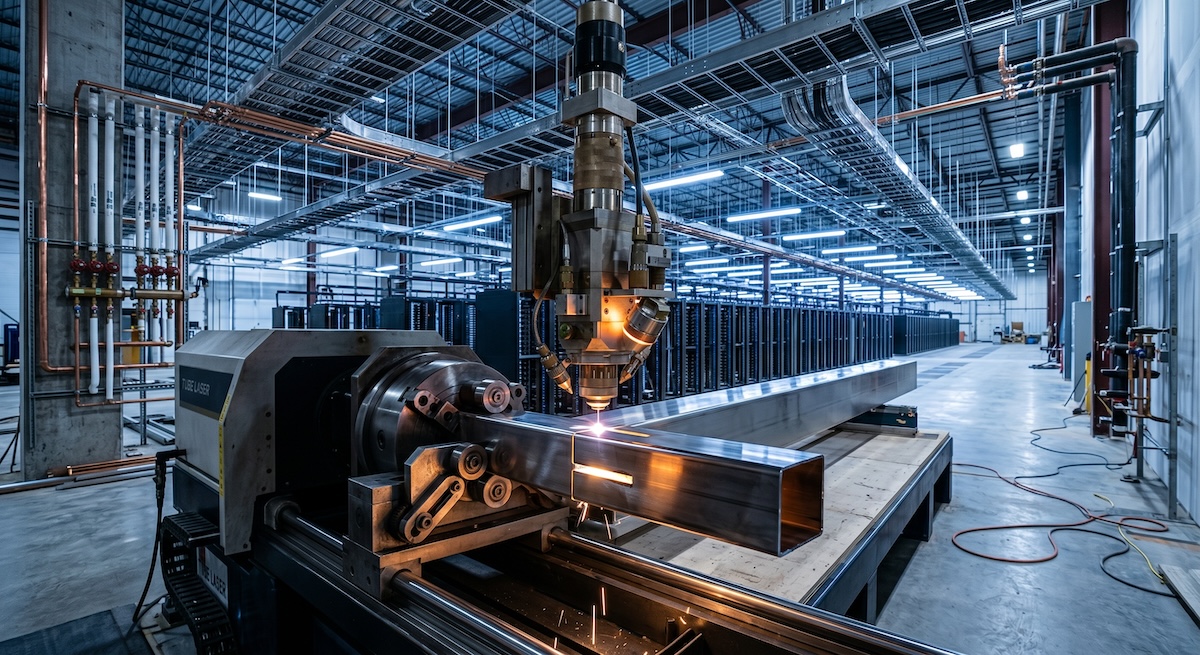
Blueline's scope is cutting and forming. We run tube lasers, a sheet laser and press brakes for sheet bending, all in Chino. We do not offer welding or finishing as services, so if your part needs those, you would plan for them elsewhere in your supply chain. A shop that tells you plainly what it does not do is easier to plan around.
What should you check about a fabrication shop before you send an RFQ?
Check five things: scope fit, equipment, inspection, file handling and communication. A shop that answers all five clearly before you send drawings will usually quote and deliver the same way. Gaps in any of them tend to show up later as rework or missed dates.
1. Scope fit
Match the shop's core process to your part. A tube-heavy frame belongs with a tube laser shop. A flat bracket may belong with a sheet laser and press brake. Our tube laser cutting services page lists what we cut, and the services overview covers the rest.
2. Equipment and capacity
Ask for machine types and size limits, then compare them to your stock. Blueline states that its LT7 tube lasers are 4kW, fully automatic and handle up to 6 inch square or round tube. Our site also states that we process tube up to 13 inch diameter, with 5-axis beveling capability. Ask any shop for the equivalent numbers in writing.
3. Inspection and documentation
Ask how parts are checked and what paperwork comes with them. If you need first article approval, say so up front. Our receiving checklist for laser cut tube parts shows what to verify when parts arrive.
4. File handling
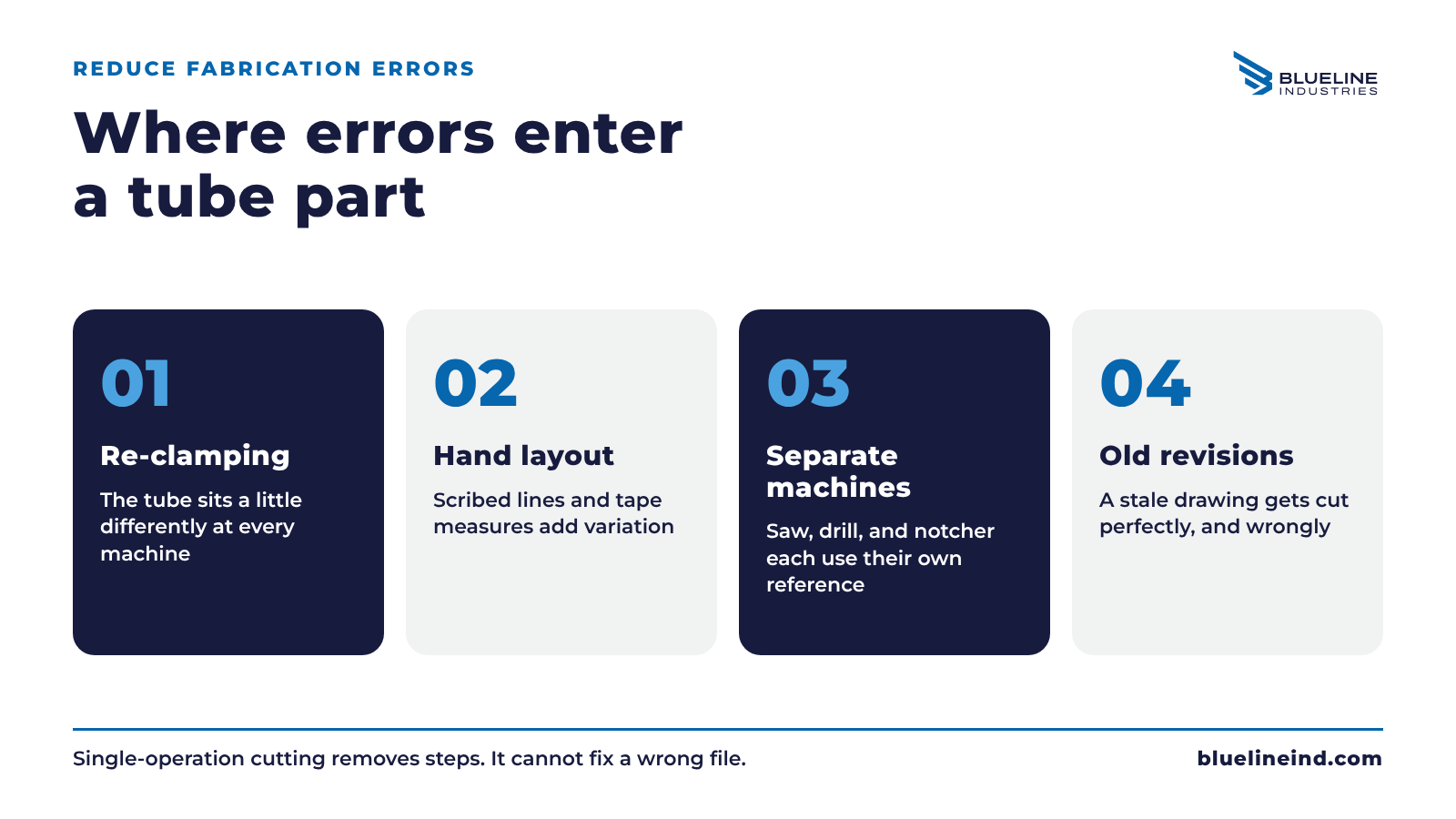
Ask which file formats the shop accepts and who reviews them. A shop that reviews your model before cutting can catch problems early. Blueline states that single-operation processing can reduce error rates by up to 70%, because fewer handoffs mean fewer chances for variation.
5. Communication
Note how fast and how specifically the shop answers your first questions. Vague replies at the quoting stage rarely get sharper at the production stage.
What goes into a good RFQ package?
A good RFQ package contains current drawings or 3D models, material and grade, quantity, finish, packaging, inspection requirements and a target date. Staub Manufacturing lists six similar items in its guide to fast fabrication quotes. The more complete the package, the fewer follow-up questions slow the quote.
IncludeWhat to specifyWhy it mattersDrawings and modelsCurrent revision of the drawing plus a 3D file such as STEPPrevents quoting from an outdated revisionMaterialType, grade, wall thickness or gauge, tube profile and sizeMaterial drives cut parameters and stock sourcingQuantityFirst order, expected annual volume, and release scheduleChanges setup planning and nestingTolerancesCall out only the dimensions that truly need to be tightOver-tight callouts add inspection and riskFinishCoating, plating or bare, and who handles itTells the shop whether to leave coating clearancesPackagingPallets, bundles, labeling, part orientationProtects edges and speeds receivingInspectionFirst article, sampling plan, reports requiredSets the quality level the quote must coverTimelineNeed-by date and whether it is firmLets the shop confirm what it can commit to
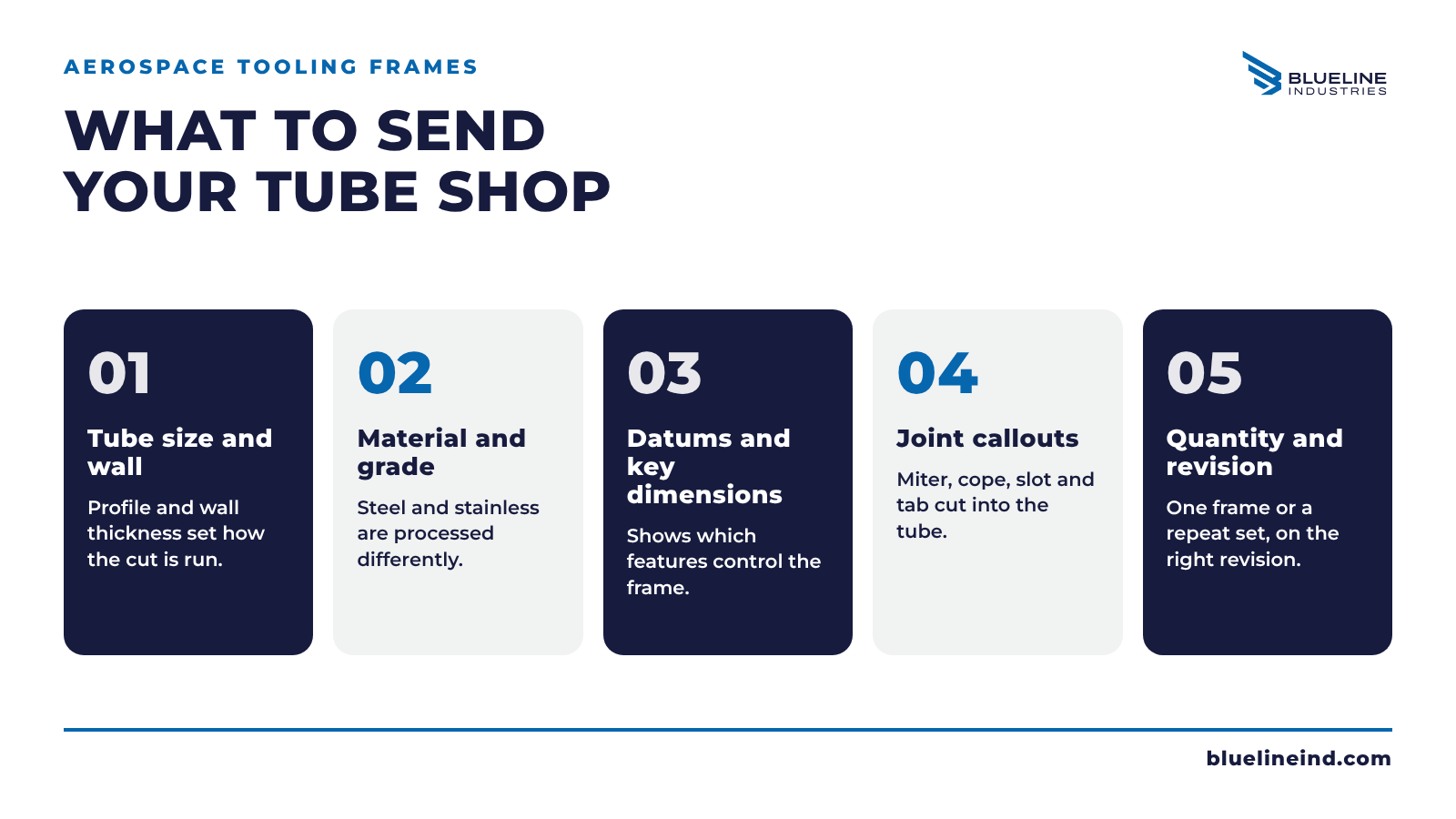
For tube work, add the orientation of the weld seam if it matters, and any datum features. Our RFQ checklist for data center tube work goes deeper on that kind of package.
How do you compare quotes from different fabrication shops?
Compare quotes on scope first and price second. Confirm each quote covers the same material, tolerances, inspection level, packaging and delivery terms. A lower number often reflects a narrower scope, not a better deal.
Build a simple side-by-side sheet with one row per requirement. Mark anything a shop left out or assumed. Then send the gaps back as written questions so every shop prices the same job.
Watch for three common differences between quotes:
- Assumed tolerances. One shop quotes standard cutting tolerances while another prices a tighter callout. Blueline states tolerances of plus or minus 0.003 inch for its precision work, so confirm which tolerance each quote assumes.
- Hidden steps. Deburring, marking and sorting may be included in one quote and extra in another.
- Delivery terms. Check who pays and who arranges freight, and what the packaging protects.
Do not ask a shop to guess. If a requirement is unclear in your drawing, fix the drawing and resend it to everyone.
Does a shop need to be local to handle your project?
No. Many buyers work with a shop in another city when the process fit is right and shipping is straightforward. Local helps when you need frequent visits, in-person reviews or same-day pickups. Everyone else should weigh capability above distance.
Blueline operates from one facility in Chino, CA. Our service area page lists the cities we serve, and buyers in other markets can send files to the Chino shop and confirm shipping details with us directly.
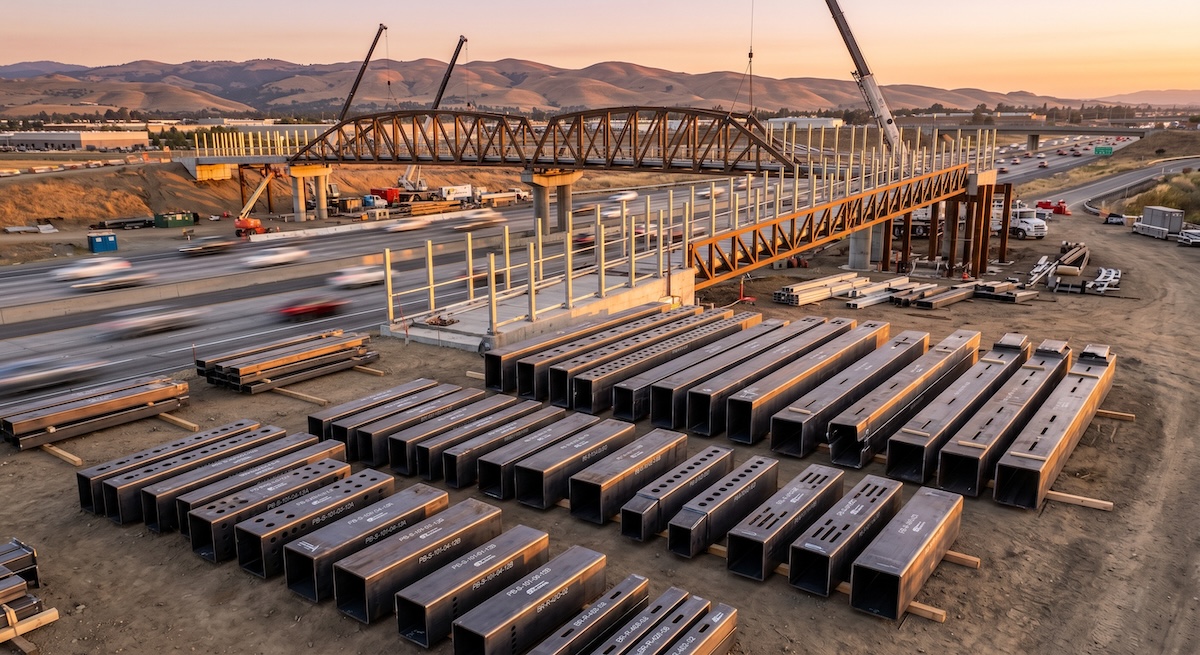
Scale is also a fair test. Blueline's verified projects include a Caltrans I-5 pedestrian bridge in Irvine, at more than 500,000 pounds of steel in 2025, and an AI data center cooling project in Sacramento that used 16 truckloads of stainless steel in 2025. Ask any shop for project examples at a similar scale to yours, and ask what part of the work the shop performed itself.
What questions help you screen out a poor-fit shop?
Ask direct questions with answers you can verify: what processes happen in-house, what the first-article approval step looks like, how revisions are handled, and who your contact is. Good shops answer plainly. Evasive answers are useful information.
- Which steps of this job will you perform on your own floor?
- Which machines will run my parts, and what are their size limits?
- How do you handle a drawing revision after quoting?
- What inspection will you do, and what documents will I receive?
- How will the parts be packed and labeled?
- Who is my single point of contact?
Also be careful with claims. Blueline is not ITAR registered and holds no ISO or AS9100 certification, so if your program requires any of those, we would tell you that up front. Ask every shop to state its certifications in writing instead of inferring them from a website.
Our own tube fabrication partner questions cover this in more detail for tube-specific work. You can also read why buyers work with Blueline.
FAQ
How do I find a good metal fabrication shop near me?
Start with a short list of shops whose core process matches your part. Check equipment limits, ask about inspection, and send the same complete RFQ to each. Compare the answers, not only the prices.
What is the difference between a fabrication shop and a machine shop?
Fabrication shops typically cut, bend and assemble metal into structures and parts. Machine shops remove material with tools such as mills and lathes to reach tight features. Wikipedia lists machining separately from fabrication, though many shops do both.
What files should I send with a metal fabrication RFQ?
Send the current drawing and a 3D model such as a STEP file. Include material, grade, quantity, finish and inspection requirements so the shop can quote without guessing.
Can I send my project to a shop in another city?
Yes, in many cases. For cut parts, shipping is common. Confirm freight terms, packaging and timelines with the shop before you place the order. Blueline accepts files from buyers outside Chino and can confirm shipping details on request.
Does Blueline do welding or finishing?
No. Blueline's services are tube laser cutting, sheet laser cutting, press brake bending of sheet, and related precision cutting and fabrication of tube. If your part needs welding or finishing, plan for it separately.
Ready to send an RFQ?
If tube or sheet cutting is part of your project, send us your drawings and requirements. We will tell you plainly whether the job fits our shop. Get a Quote or call (951) 833-5597.
Sources: Wikipedia, Metal fabrication; Staub Manufacturing, six things you need for fast, accurate fabrication quotes.