Assist Gas for Tube Laser Cutting: Nitrogen vs Oxygen

Assist gas for tube laser cutting clears molten metal and sets the edge finish. This guide compares oxygen, nitrogen and compressed air, explains how each affects paint, powder coat and welding, and lists what to tell your tube shop before the cut. Blueline Industries cuts tube in Chino, CA.

Quick Summary

Infographic comparing oxygen, nitrogen and compressed air as laser cutting assist gases

Assist gas for tube laser cutting is the stream of gas that clears molten metal from the cut and sets the finish of the edge. The main choice is oxygen or nitrogen, with compressed air as a lower-cost option on some jobs. Blueline Industries runs tube laser cutting from its shop in Chino, CA.

This post explains how to think about the choice so your parts arrive ready for the next step. Most published figures come from flat sheet and plate work, so treat the numbers here as general guides and confirm your own tube with your shop.

What does assist gas do in tube laser cutting?

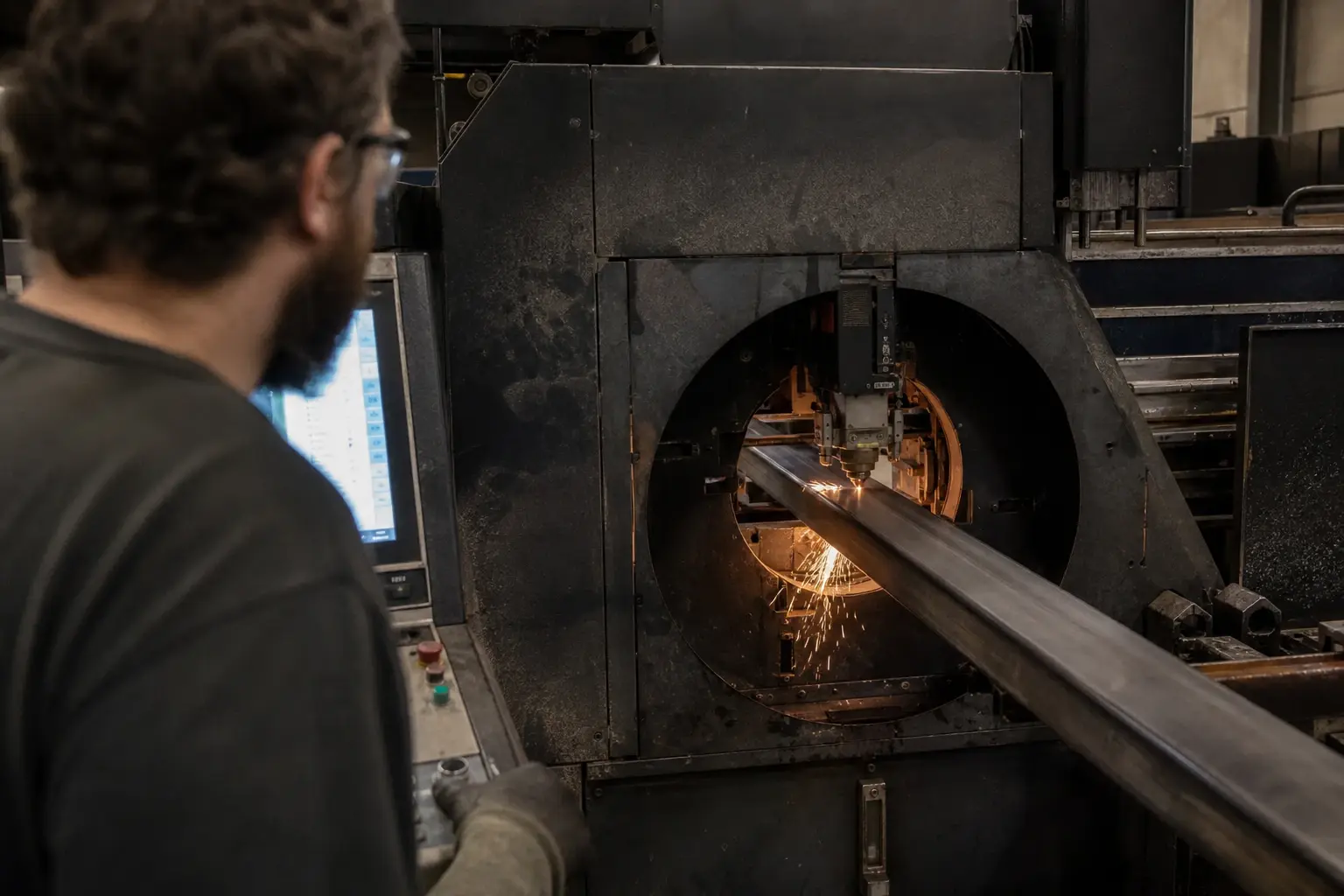
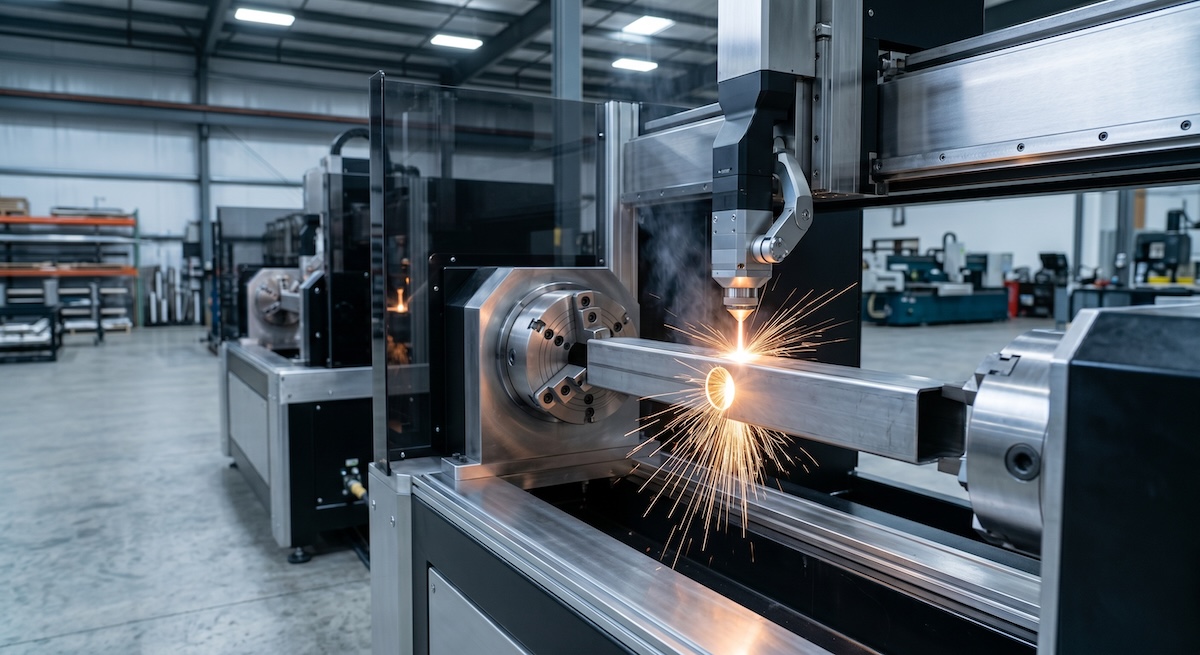
Assist gas flows through the nozzle alongside the laser beam. It blows molten metal out of the cut, and its chemistry shapes the edge. Oxygen reacts with the metal and adds heat. Nitrogen does not react, so it leaves a clean edge. The gas you pick changes edge color, speed and what you do next.

The laser melts the metal, but the gas does the cleanup. Without it, molten material would stay in the cut and weld itself back to the part. With it, the cut stays open and the edge is left in a known state.

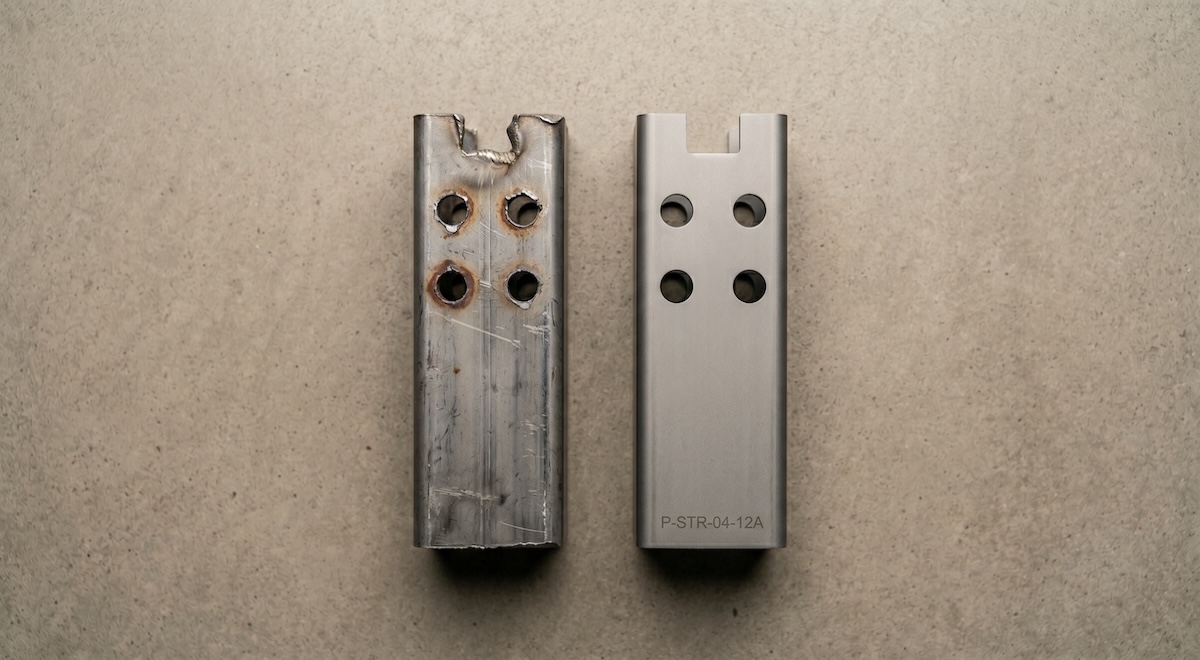
That known state is the real question for a buyer. A bright metal edge can go straight to the next step. A dark, oxidized edge may need cleaning first. Choosing the gas is really choosing what your part looks like when it comes off the machine.

When does oxygen make sense?

Oxygen suits thicker mild and low-alloy steel. It reacts with the metal and adds heat, which helps cut through heavy sections. The tradeoff is an oxidized edge. That oxide layer usually has to be removed before paint or powder coat, and oxygen is usually not the right call for parts headed straight to welding.

A gas supplier describes the oxygen-cut edge as typically dark yellow or brown. It says the oxide can be removed with a chemical bath or mechanical brushing before coating. An industry magazine article says oxygen is low in cost and workable on flat steel up to 3/4 inch at 3 kW and 1 inch at 4 kW and higher.

Those thickness figures are for plate, and tube walls are usually thinner. For many tube parts the real question is not whether oxygen can cut the wall. It is whether you want the oxide on the edge. Learn more about steel tube laser cutting at Blueline.

When does nitrogen make sense?

Nitrogen suits stainless steel, aluminum and any part where a clean edge matters. It is inert, so it prevents oxidation and leaves a bright edge with no oxide layer. It is also used for faster cutting on thinner material. The cost is higher gas use, which grows quickly with high-power fiber lasers.

One trade article says nitrogen is the gas of choice because it keeps the cut edge from oxidizing, and notes that paint and powder coat often do not adhere well to oxidized edges. The same article says nitrogen use rises sharply on high-power fiber lasers, and that shops manage the cost with bulk supply or on-site generators.

For stainless tube, nitrogen is the standard answer because the clean edge keeps the material's finish intact. See Blueline's stainless steel tube processing page for the service.

Can compressed air work as an assist gas?

Sometimes. Compressed air is the lowest-cost option on mild steel and aluminum, and a trade article reports it can match nitrogen speeds on mild steel. It has limits. Air is about 21% oxygen, so it can blacken stainless edges, and it can leave an oxygen layer that affects some powder coating.

The same article gives thickness limits for air on mild steel of up to 1/8 inch at 3 kW or up to 1/4 inch at 6 kW and above. On aluminum, it reports air greatly reduces burr and can raise speed. These are flat-material figures from a 2022 article, so use them as a rough guide only.

Air can be a good fit for parts that will be cut, then machined or ground, where edge color does not matter. It is a poor fit for stainless and for parts that go to a tight coating spec. Ask your shop whether air is even used on your material.

How does edge finish affect paint, powder coat and welding?

An oxidized edge can interfere with paint, powder coat and welding, while a clean nitrogen edge usually avoids that extra step. Oxygen edges often need cleaning first. If the part has a coating spec, say so up front so the shop can pick the gas that fits it.

Assist gasTypical useEdge resultWatch forOxygenThicker mild and low-alloy steelOxidized, dark edgeCleaning before paint, powder coat or weldingNitrogenStainless, aluminum, thinner material, coated partsBright, oxide-free edgeHigher gas use and costCompressed airThin mild steel and aluminum where edge color is not criticalVaries by materialBlackened stainless edges and oxygen layers under coatings

Some shops use gas mixes. The trade article reports that a 95% nitrogen, 5% oxygen mix accepted paint well enough in some tests, but led to more salt spray test failures in others. If your part has a corrosion or coating requirement, test any mix against your own spec before you commit.

Edge heat is a related topic. Blueline's post on the heat affected zone in tube laser cutting covers what the heat does to the metal next to the cut.

What should you tell a tube shop before cutting?

Tell the shop the material and grade, the wall thickness, what happens to the part next, and any edge or appearance needs. Add the quantity. With that information, the shop can pick a gas that gives the edge you need, instead of guessing or cutting a part that needs rework.

Blueline cuts tube on LT7 tube lasers that handle tube up to 6 inches square or round, and states it processes tube up to 13 inch diameter with 5-axis beveling capability. See tube laser cutting services for the full list.

FAQ

What is assist gas in laser cutting?

It is the gas that flows through the nozzle with the laser beam. It blows molten metal out of the cut and affects the edge finish. The common gases are oxygen, nitrogen and compressed air.

Which assist gas is best for stainless steel tube?

Nitrogen is the usual choice for stainless steel. It prevents oxidation and leaves a bright edge. Compressed air can blacken stainless edges because it contains about 21% oxygen.

Do I need nitrogen if my part will be powder coated?

Often, yes, or at least cleaning after cutting. Oxygen-cut edges are oxidized and usually need cleaning before powder coat. Tell your shop about the coating so it can choose the gas or plan the cleaning step.

Does the gas choice change how fast the cut runs?

It can. Published guides report that nitrogen is used for faster cutting on thinner material, while oxygen is often used on thicker steel. Speeds vary by laser power and material, so ask your shop about your specific parts.

What should I send to get a quote?

Send the drawing or CAD file, material, wall thickness, quantity and the next step for the part. Add any edge or coating requirements. A complete package lets the shop respond faster.

Next step

If you are planning a tube job and the edge finish matters, tell Blueline before the cut. Blueline cuts and fabricates tube at its shop in Chino, CA, and ships to customers across the West. Get a Quote or call (951) 833-5597.

Sources opened for this post: The Role of Assist Gases in Laser-Cutting Applications (Fabricating & Metalworking, 2022), High-powered lasers and the evolution of assist gases (The Fabricator, 2021), and Assist Gases in Laser Cutting (nexAir).

Newsroom

The latest industry news
and insight from Flowpoint.

Tube laser machine with a long feed conveyor and lengths of steel tube on the shop floor
Normal to Surface Cuts in Tube Laser Cutting: Model It Right
Bundles of laser-cut steel tube with rows of round holes on a shop floor
Tube Laser Cutting Hole Size: Match Holes to Wall Thickness
Exterior of an LS5 laser cutting machine with control panel and warning light in a fabrication shop
Tube Wall Thickness vs Gauge: How to Call It on a Drawing
Forklift moving bundled steel tube stock in an outdoor yard beside a fabrication building
Metal Table Base Fabrication: Cut the Leg Joints Right
Blueline Industries graphic: packaging laser cut tube parts for shipping
Packaging Laser Cut Tube Parts for Shipping: What to Ask
Blueline Industries graphic: modular data center steel fabrication and tube parts that repeat
Modular Data Center Steel Fabrication: Tube Parts
Stack of rectangular steel tubes with cut holes inside a metal fabrication shop
Tube Laser vs Sheet Laser: Which Process Fits the Part?
Stacked rectangular steel tubes with laser-cut slots, tabs, and holes in a metal fabrication shop
Tab and Slot Tube Fabrication for Faster Field Assembly
Four cards: bow, twist, out-of-square and sag, tube variations to plan for before laser cutting
Tube Straightness and Laser Cutting: Plan for Bow and Twist
Four cards: freeze the revision, define the material, approve a first article, agree on checks
High Volume Tube Fabrication: Keep Every Part Identical
Infographic listing four causes of burrs and dross in laser cutting and what each one changes
Deburring Laser Cut Tube Parts: What Still Needs Hand Work
Tube handling and loading system on a shop floor with a bundle of steel tube beside it
Galvanizing Vent Holes in Tube: Cut Them In Early
Infographic comparing oxygen, nitrogen and compressed air as laser cutting assist gases
Assist Gas for Tube Laser Cutting: Nitrogen vs Oxygen
Infographic: five items to send a tube shop for an aerospace tooling frame order
Aerospace Tooling Frame Fabrication From Laser-Cut Tube
Graphic comparing ERW, DOM, and seamless tube, plus what to tell your shop.
ERW vs DOM vs Seamless Tube: What Matters for Laser Cutting
Four-step graphic: lock the revision, cut from one program, group by frame, prove one first.
Data Center Skid Frame Fabrication: Repeatable Tube Frames
Four step checklist for dimensioning machine frame tube from one datum
Machine Frame Tube Fabrication: Build From One Datum
Four step checklist for cutting tube truss chords and web members
Tube Truss Fabrication: Cutting Chords and Webs to Fit
Five-step process for approving first article tube parts before a production run
First Article Tube Parts: Approve a Run Before Release
Four-step checklist for calling out precision tube cutting tolerances on a drawing
Precision Tube Cutting Tolerances: How to Call Them Out
Infographic: four checks for square tube corner radius before laser cutting
Square Tube Corner Radius: What It Changes in Laser Cutting
Infographic: four rules for where to place the weld seam on laser-cut and bent steel tube
Tube Weld Seam Orientation: Where the Seam Should Sit
Infographic of four things to compare between fiber and CO2 lasers for tube cutting
Fiber vs CO2 Laser for Tube Cutting: What Matters
Infographic of five checks before cutting thin wall tube with a laser, from naming the tube to prototyping first
Thin Wall Tube Laser Cutting: Protect the Walls
Infographic of tube material waste sources: offcuts, end scrap, part length, and cut list
Tube Laser Nesting: How Layout Affects Material Yield
Infographic of five items to send in a data center RFQ: design data, material, finish, scope, delivery
Data Center Fabrication RFQ Checklist: What to Send a Tube Shop
Six-card checklist for inspecting laser cut tube parts: identity, size, end cuts, features, edges and records
Inspecting Laser Cut Tube Parts: A Receiving Checklist
Six-card checklist: size and grade, cut features, end conditions, finish, delivery order and spec requirements
Steel Fabrication for Infrastructure California: Scope First
Infographic listing five steps to settle before cutting tube, from nominal sizes to a first piece check
What Is Kerf in Tube Laser Cutting? Slot Fit Explained
Infographic listing six items to send with a roll cage notch list, from tube size and wall to part label
Roll Cage Tube Notching: How to Spec Your Cut List
Infographic comparing miter and cope cuts in structural tube with gap and file checklist
Miter and Cope Cuts in Structural Tube: Choose by Joint
Infographic: four steps for metal furniture frame fabrication, from tube profile to first run
Metal Furniture Frame Fabrication: Plan the Finish First
Blueline Industries graphic: heat affected zone in tube laser cutting and what to put on the drawing
Heat Affected Zone in Tube Laser Cutting: A Plain Primer
Blueline Industries graphic: nitrogen cooling tube site checks, a receiving checklist for fabricated stainless tube
Nitrogen Cooling Infrastructure Tube Fabrication Checks
Blueline Industries Honored at the Illuminate Life Gala
Blueline infographic: five-step tube laser prototype loop from questions to revision
Tube Laser Prototyping Services: Iterate Before You Commit
Blueline infographic: five checks before sending large diameter tube for laser cutting
Large Diameter Tube Laser Cutting: Plan the Fit-Up First
Infographic: five design checks for tube laser cutting, from hole size to weld seam location
Design for Tube Laser Cutting: Choices That Cut Rework
Infographic: five items to send when a custom tube part changes, from part number and revision to parts already cut
Custom Tube Fabrication for OEMs: Handling Design Revisions
Infographic: what to specify for chassis tube and exhaust tube before laser cutting
Chassis and Exhaust Tube Laser Cutting: Steel vs Stainless
Infographic: notch, cope, miter, and bevel cuts a tube laser makes in one pass
Tube Notching and Coping: Joints That Fit Off the Machine
Infographic: four places errors enter a tube part, from re-clamping to old revisions
How to Reduce Fabrication Errors With Single-Operation Cutting
Infographic: four tube laser joint features that make furniture frames repeat
Furniture Tube Laser Cutting: Build Frames That Repeat
Blueline infographic: five items in a Las Vegas quote packet for a Chino, CA tube laser shop
Tube Laser Cutting Las Vegas: Shipping Work In From Chino, CA
Blueline infographic: five items a complete data center fabrication release needs before parts are cut
Data Center Construction Fabrication Lead Times Explained
Infographic: four questions that decide stainless vs carbon steel tube, covering exposure, edge, paint and duty
Stainless vs Carbon Steel Tube for Fabrication: How to Choose
Infographic: four steps from drawing to install for stage tube parts, from sending the model to shipping in install order
Fabrication for Stage and Entertainment Structures: Parts That Fit Fast
Infographic: five questions to ask when choosing a tube fabrication partner
How to Choose a Tube Fabrication Partner: Questions to Ask
Infographic: four steps to design laser cut tube assemblies where parts locate themselves with slots and tabs
Laser Cut Tube Assemblies for OEMs: Parts That Self-Locate
Infographic comparing square, rectangular, and round tube by load direction, twisting, and joints
Square vs Round vs Rectangular Tube: How to Choose
Infographic comparing air bending, bottoming, and coining in press brake bending
What Is Press Brake Bending? A Shop-Floor Primer
Infographic: five steps for how a Chino shop delivers laser-cut tube parts to Los Angeles buyers
Tube Laser Cutting Los Angeles: What a Chino Shop Ships You
Infographic: four steps from CAD file to a proven tube prototype, ending in revise and scale
Aerospace Tube Prototypes: Prove the Geometry Fast
Stack of square steel tubes on a table in a fabrication shop
Tube Laser vs Waterjet for Tube: Matching Process to Part
Four-step graphic: start from the schedule, bundle by assembly, mark every part, release in phases
Data Center Steel Fabrication: Ship Parts in Install Order
Blueline logo on a glass entrance door beneath an OFFICE sign
Tube Laser Cutting San Jose: What to Send for a Chino Quote
Infographic: four checks for exposed tube joints, from seam placement to a clean model
Architectural Steel Tube Cutting for Exposed Joints
Infographic: what is 5-axis tube beveling, four steps from tilting the head to fit and weld
What Is 5-Axis Tube Beveling? A Weld-Prep Primer
Infographic: count the steps on every part, tube laser versus saw and drill, in four steps
Tube Laser vs Saw and Drill: Counting Steps Per Part
Blueline Industries at FABTECH 2026 Las Vegas: Meet Our Tube Laser Cutting Team
Operator using the control panel of an industrial laser machine on a shop floor
Tube Laser Cutting Salt Lake City: Sending Work to Chino, CA
Infographic: four sources of tube laser cutting tolerance: the tube, the drawing, the features and the process
What Tolerances Can Tube Laser Cutting Hold?
Blueline infographic: six factors that affect tube laser cutting cost
What Affects Tube Laser Cutting Cost? Factors, Not Prices
Blueline infographic: six items to send with an aftermarket tube fabrication quote request
Automotive Aftermarket Tube Fabrication: Fit Before Finish
Infographic: five steps of a first tube laser order from Chino, CA
Tube Laser Cutting Seattle: Your First Order From Chino, CA
Infographic: four checks for choosing stainless tube for cooling systems
Stainless Steel Tube Fabrication for Cooling Systems
Blueline checklist of six material details to give a tube laser cutting shop
What Materials Can a Tube Laser Cut? Steel to Aluminum
Blueline checklist of six items to send with a structural tube quote request
Structural Steel Tube Laser Cutting for Faster Fit-Up
Glass entrance door with the Blueline logo at a Blueline building
Tube Laser Cutting San Francisco: Buying From Chino, CA
Bundle of square steel tube in a fabrication shop with a tapping machine and equipment in the background
Short Run Tube Fabrication: Prove the Design Before Scaling
Blueline graphic: What tube sizes can a tube laser cut, profiles and diameters
What Tube Sizes Can a Tube Laser Cut? Capacity Explained
Blueline graphic: Prepare your CAD files for tube laser cutting, a pre-send checklist
How to Prepare CAD Files for Tube Laser Cutting
Blueline infographic: five-item spec package checklist for aerospace tube laser cutting
Aerospace Tube Laser Cutting: A Spec Checklist for Engineers
Blueline infographic: five steps of a Tucson tube laser cutting order from Chino, CA
Tube Laser Cutting Tucson: Ordering From a Chino, CA Shop
Infographic on choosing tube laser or plasma: wall thickness, features, edge and weld, volume
Tube Laser vs Plasma Cutting: Which Fits Your Tube Job?
Infographic listing four items to send for a data center support quote: geometry, tube spec, material, fit and finish
Tube Laser Cutting for Data Center Supports: What to Specify
Blueline Industries graphic: tube laser cutting for Portland buyers from Chino, CA
Tube Laser Cutting Portland: Working With a Chino Shop
Blueline Industries graphic: tube laser cutting for bridge fabrication
Tube Laser Cutting for Bridge Fabrication: What to Ask
Hiring For Hearth: Blueline Industries Builds A Culture for Growth
How tube laser cutting improves roll cage fabrication
How to get a tube laser fabrication quote for your manufacturing OEM project
Tube Laser Cutting San Diego, CA: Services, Capabilities, and How to Get a Quote
Custom Metal Furniture Frames: A Manufacturer's Guide to Tube Laser Cutting
Tube Laser Cutting Explained: How It Works and Why It Matters for Manufacturers
Tube Laser Cutting: What It Is and How It Works
CNC Tube Cutting vs. Manual Fabrication: Why Production Shops Are Making the Switch
Tube Laser Cutting Services: A Complete Guide for OEMs, Contractors, and Engineers
Why AI Data Center Builders Are Switching to Tube Laser for Nitrogen Cooling Infrastructure
Structural Steel Fabrication for Data Center Construction: Meeting the Demands of AI-Scale Infrastructure
Custom Tube Fabrication for High-Volume Production: What to Look for in a Fabrication Partner
Structural Steel Fabrication for California Infrastructure: What GCs Need to Know About Tube Laser Processing
The Hidden Bottleneck in Data Center Construction and the Fabrication Technology Solving It
Stainless Steel Fabrication for Data Centers: How Single-Process Cutting Reduces Lead Times by Weeks