Quick Summary

Nitrogen cooling infrastructure tube fabrication succeeds or fails at the receiving dock as much as on the laser. Check every bundle against the drawing, the part marks, and the paperwork on the day it arrives, before a single part goes to a crew. Blueline Industries is a tube laser cutting shop in Chino, CA that cuts, slots, and etches stainless tube for data center cooling work.
This post lays out a practical receiving check for the people who take delivery. It is for project engineers, site superintendents, and buyers who want problems found early. It does not repeat our earlier posts on shipping parts in install order or choosing a stainless grade. It starts where those end: the truck is at the gate.
Where does tube fabrication fit in a nitrogen cooling loop?
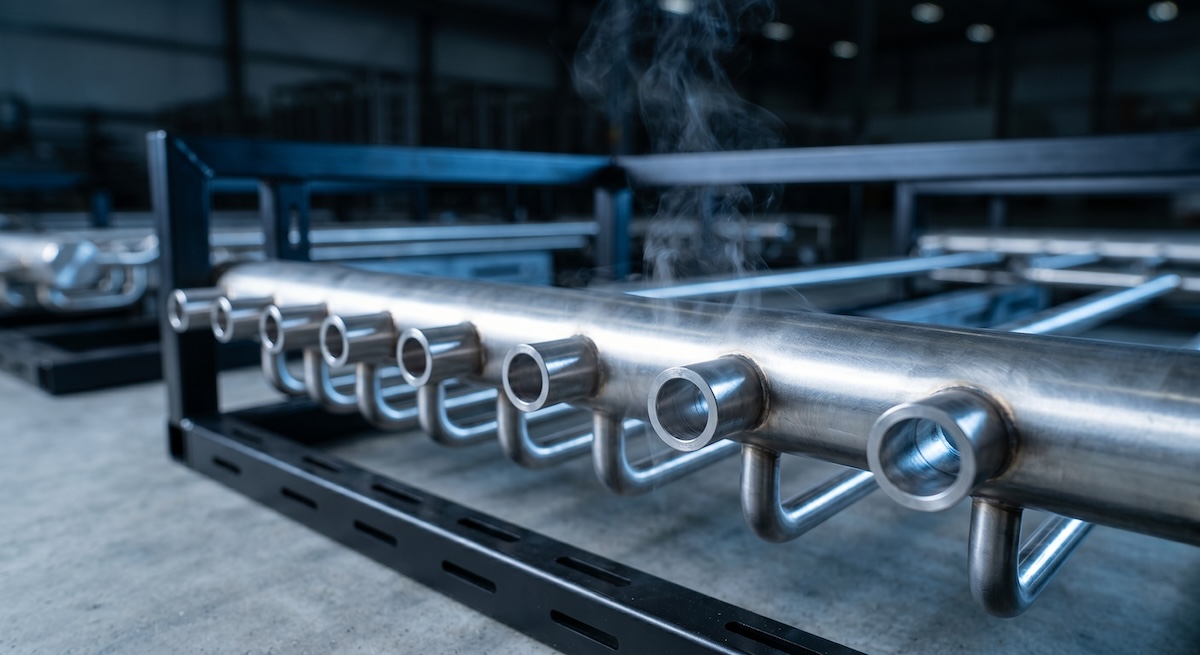
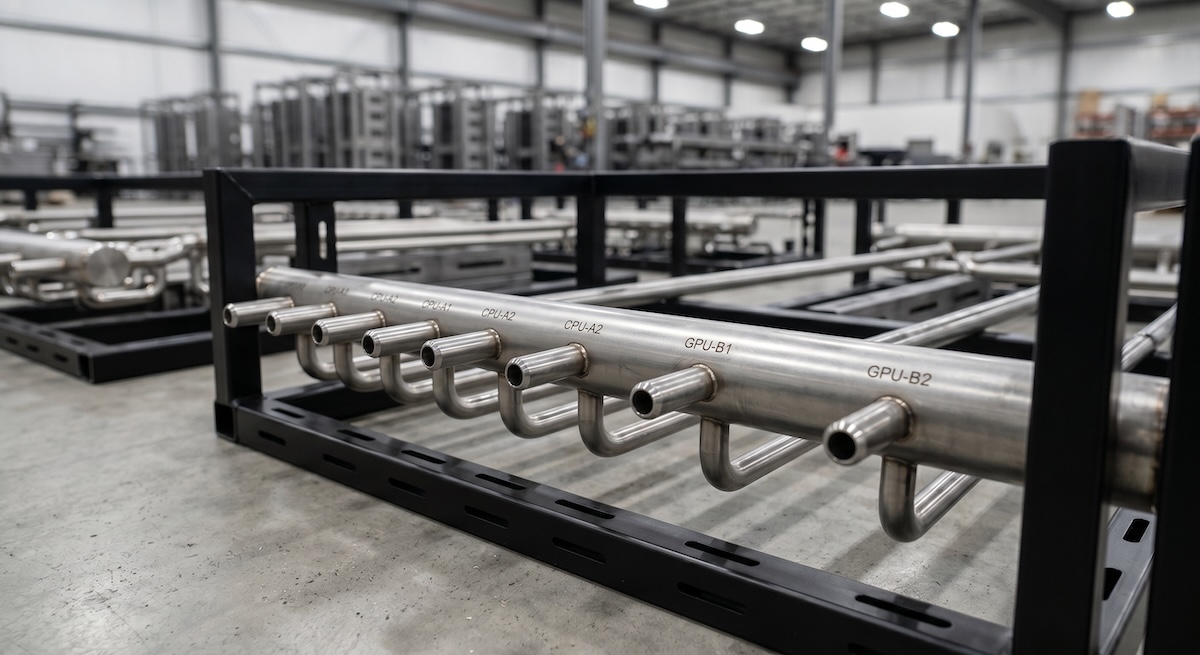
Fabricated tube parts sit in the piping and support structure that moves coolant from central plant equipment toward the data hall. Vertiv describes row manifolds as piping assemblies that distribute coolant from central coolant distribution units to server racks. Blueline states that nitrogen and liquid cooling systems specify stainless steel for corrosion resistance and thermal stability.
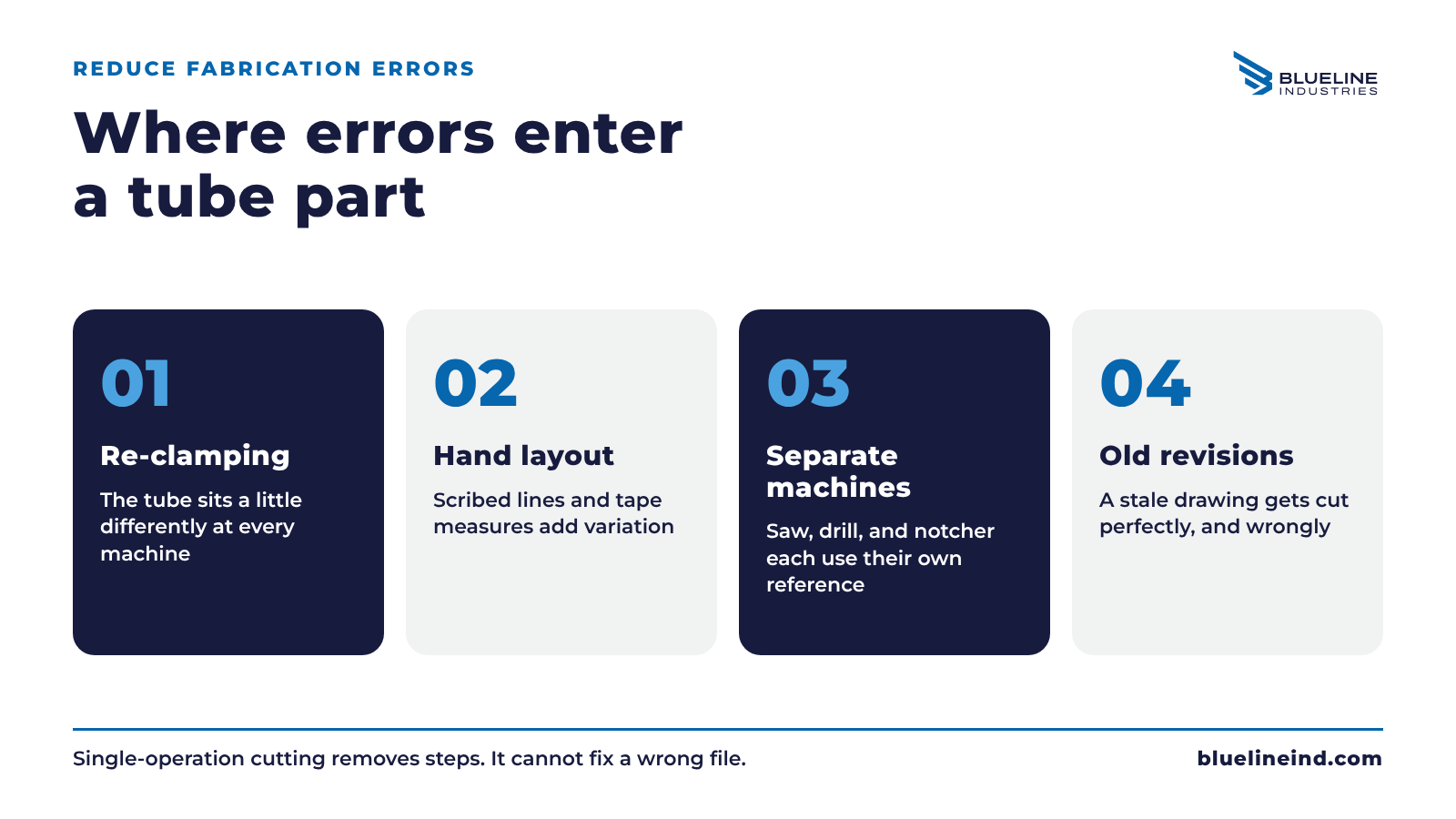
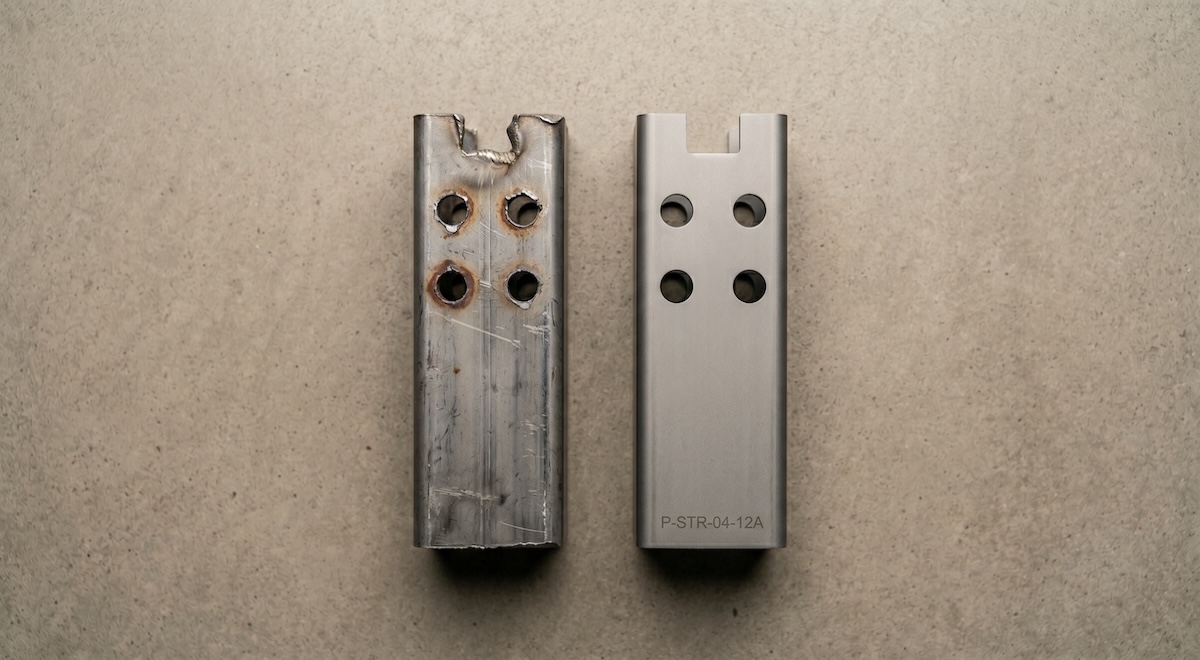
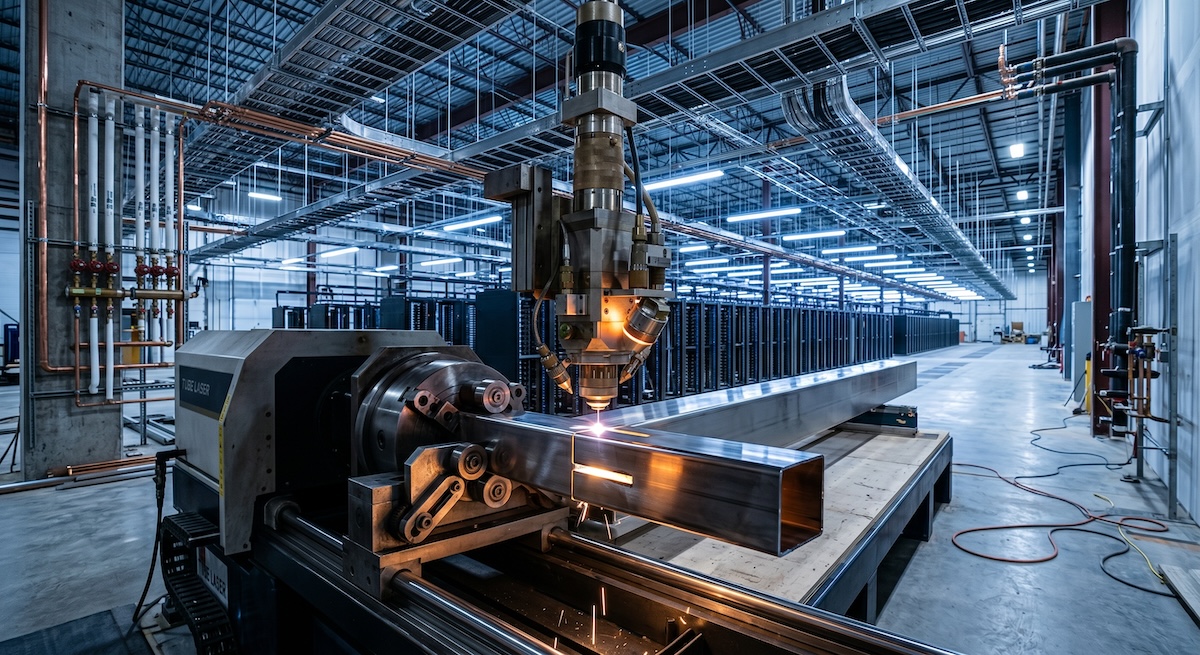
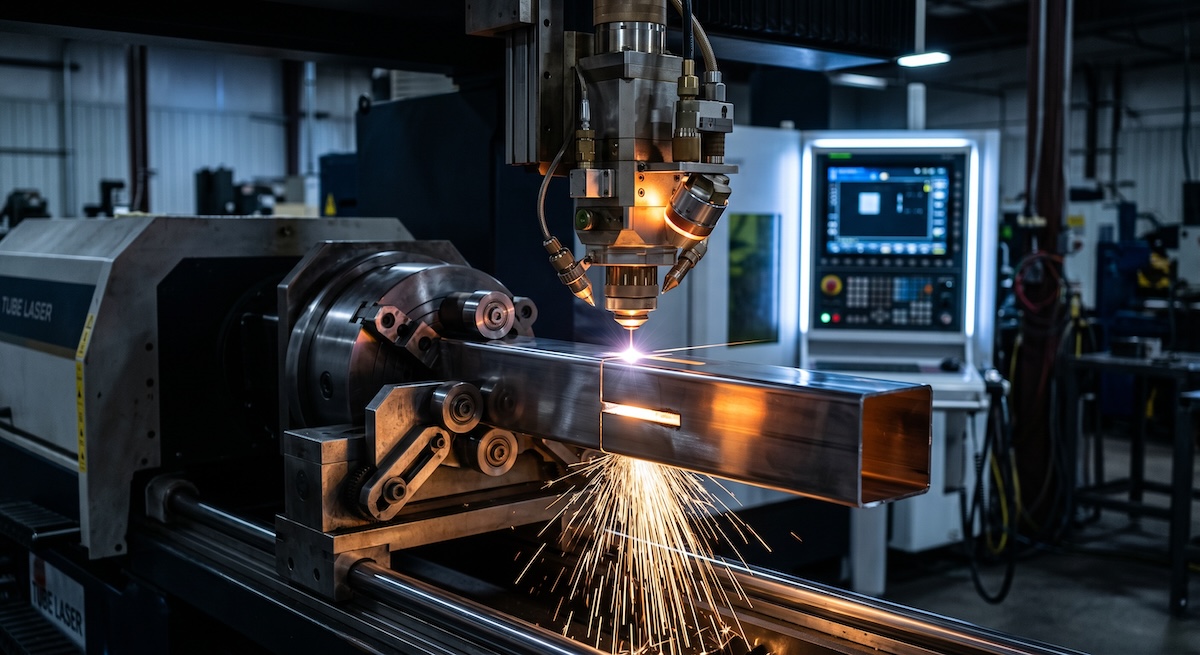
Those parts arrive as cut, slotted, and notched tube. The features cut into each part decide how it fits its neighbor. A slot that sits a little off or a hole that lands in the wrong place shows up later as a fit-up problem. That is why the receiving check looks at features, not just lengths.
Why check fabricated tube on arrival instead of at install?
A problem found on the dock costs a phone call. A problem found in the data hall costs crew hours and a stalled row. A receiving check catches shipping damage, wrong parts, and missing paperwork while the truck, the driver, and the fabricator's records are all still close.
Install crews work to a schedule. They should not be the first people to find that a bundle was crushed in transit or that a part number is missing. A short, written receiving check gives the crew confidence that what reaches them is ready to use.
It also protects every party. When the check is documented the day of delivery, a claim is clear and fast. Without it, nobody can say whether damage happened in transit, in storage, or on the lift.
What should a receiving check cover?
Cover four things: physical condition, dimensions against the drawing, identification marks, and paperwork. A published structural steel quality checklist from Process Street names the same areas. It calls for checking for visible damage, comparing dimensions to the engineering drawings, verifying identification and heat numbers, and reviewing mill certificates.
CheckWhat to look atWhat to do if it failsConditionDents, bends, scratches, rust, damaged cut edgesTag the part, photograph it, note the part numberDimensionsLength, feature location, and tolerance against the drawingMeasure a second time, then flag it with the measurementMarksPart numbers, heat numbers, batch numbersHold the part until the mark is confirmedPaperworkPacking list, mill certificates, material test reportsRequest the missing document before install
Condition and cut edges
Walk each bundle before it is unstrapped. Look for bent ends, crushed corners, and surface damage. Then check cut edges. Fractory notes that heat tint on cut metal runs from light yellow at about 290 degrees C to dark blue at about 600 degrees C. Strong color at a cut edge is worth a photo and a question to the fabricator.
Dimensions against the drawing
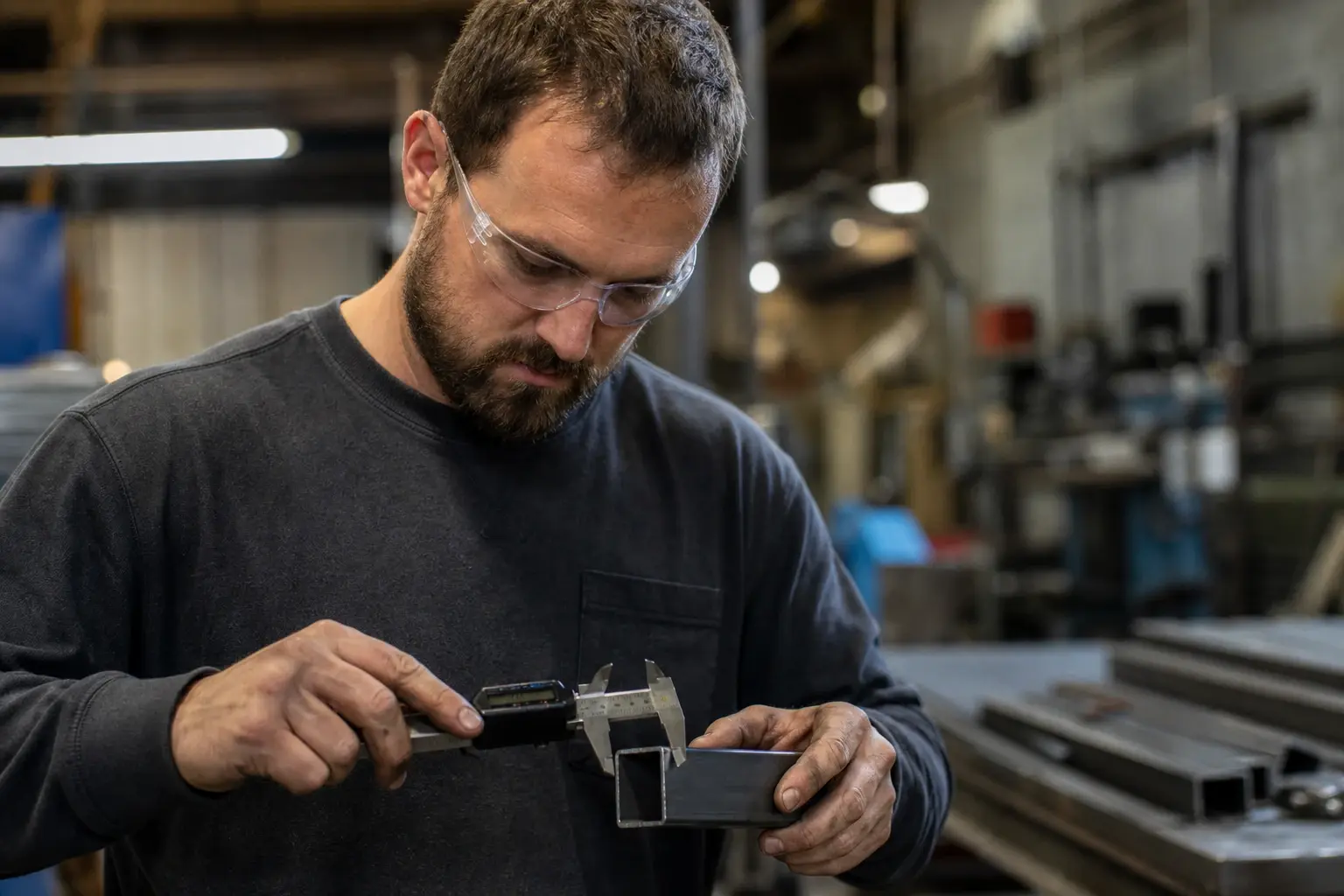
Pick a sample of parts from each bundle and measure them against the drawing. Check overall length and the position of slots and holes. Measure against the tolerance on your drawing, not against a number from a brochure. According to Blueline, its tolerances reach plus or minus 0.003 inch, but the tolerance that counts is the one on your print.
Marks and traceability
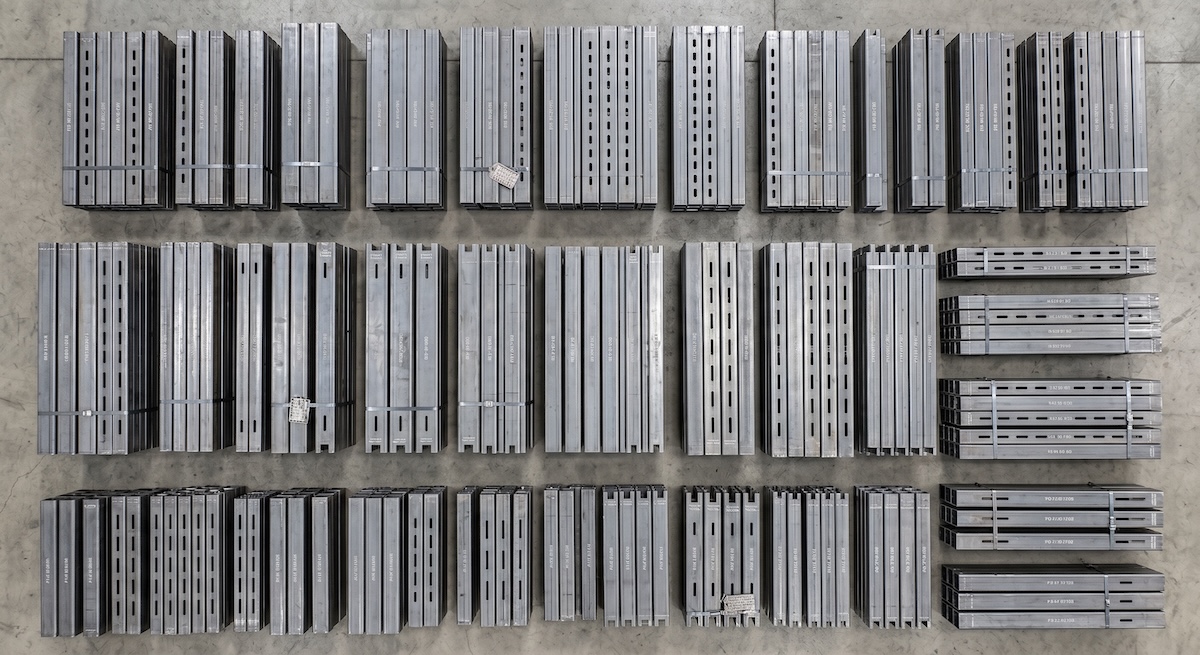
Every part should carry a mark you can match to the drawing and the packing list. Process Street's checklist also calls for checking heat numbers and batch numbers on the steel. Record them. If a part later turns up with a problem, traceability tells you which lot it came from.
Paperwork
Keep the packing list and any material documents with the delivery record. Match counts on the packing list to what is on the truck. A count mismatch found on the dock is a quick fix. A mismatch found in week three is a schedule problem.
How should you handle a part that fails the check?
Tag it, photograph it, and write down the part number before anything else moves. Then separate it from accepted parts and tell the fabricator the same day. A clear photo and a part number let the shop answer fast and keep the install on track.
Keep rejected parts in a marked area. Mixing them with accepted stock is how a bad part ends up in the loop. Send the fabricator the photo, the measurement, and the drawing revision you checked against.
Revision control matters here. If the drawing changed after release, say which revision the crew is building to. A revision mismatch can look like a fabrication error, and a note on the delivery record settles the question quickly.
How does volume change the receiving plan?
Volume turns a quick look into a process. Assign one person to own the receiving log, set a sampling plan for each bundle, and decide in advance where accepted parts are staged. Large cooling packages ship in many loads, so the plan has to work on the tenth truck as well as the first.
Blueline processed 16 truckloads of stainless steel for an AI data center cooling project in Sacramento in 2025. A job that size shows why receiving needs an owner. Sixteen truckloads means sixteen chances for a damaged bundle or a short count. A simple log with the truck, the bundle, the part numbers, and the result keeps the whole job traceable.
Share the plan with the fabricator before the first ship date. A shop that knows how you will check can mark, bundle, and document parts to match. Our earlier post on shipping parts in install order covers the bundle side of that conversation.
Frequently Asked Questions
What is nitrogen cooling infrastructure tube fabrication?
It is the cutting, slotting, notching, and etching of tube used in nitrogen and liquid cooling systems for data centers. Blueline states these systems specify stainless steel for corrosion resistance and thermal stability. The fabricated parts are then assembled into the piping and supports that carry coolant.
Who should inspect fabricated tube when it arrives?
One named person on the receiving side should own the check and the log. That is often a project engineer or a site quality lead. The fabricator should know who that person is before the first shipment.
What documents should be on hand at receiving?
Bring the current drawing revision, the packing list, and any material documents your project requires. Without the drawing, you cannot check features. Without the packing list, you cannot check counts.
What tolerance should I expect on laser cut tube parts?
According to Blueline, its tolerances reach plus or minus 0.003 inch. Confirm the tolerance that applies to your parts when you request a quote, and put it on the drawing. Our stainless steel tube processing page explains what we run.
Can Blueline ship cooling tube to a data center site?
Blueline ships finished parts from its Chino, CA facility. Tell us the delivery location, the number of loads, and any bundling or marking needs when you request a quote.
Send Your Cooling Tube Drawings to Blueline
A good receiving plan starts with a good conversation before the first cut. Share your drawings, your delivery schedule, and your receiving process. Read about our data center and AI infrastructure tube cutting, then get a quote or call (951) 833-5597.