Quick Summary
- Raw tube is not perfectly straight. Common commercial specifications allow some bow and twist.
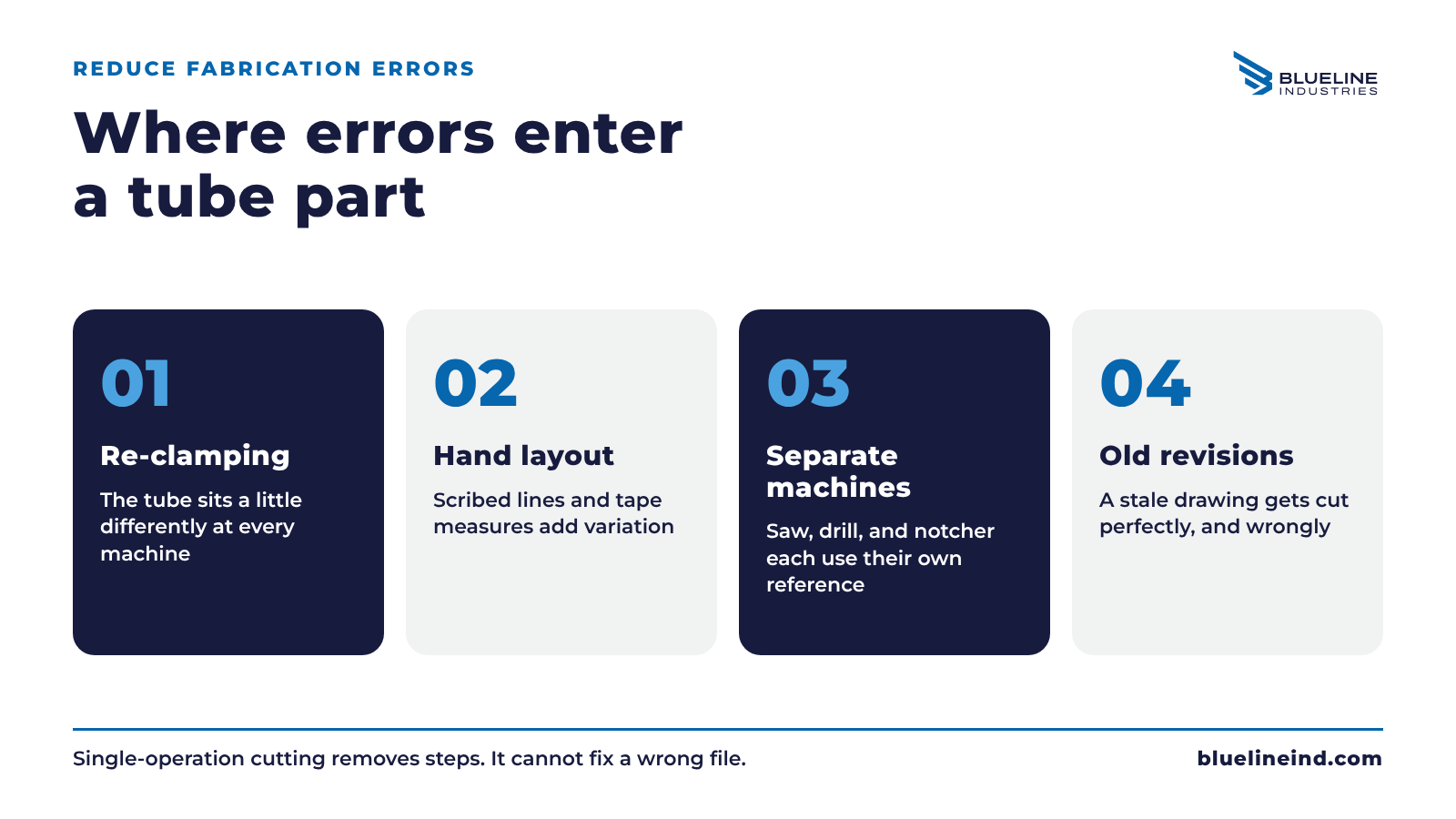
- Bow, twist, out-of-square sides and sag can all shift where a cut lands.
- Tell your shop which tube you buy, how long it is and which dimensions matter most.
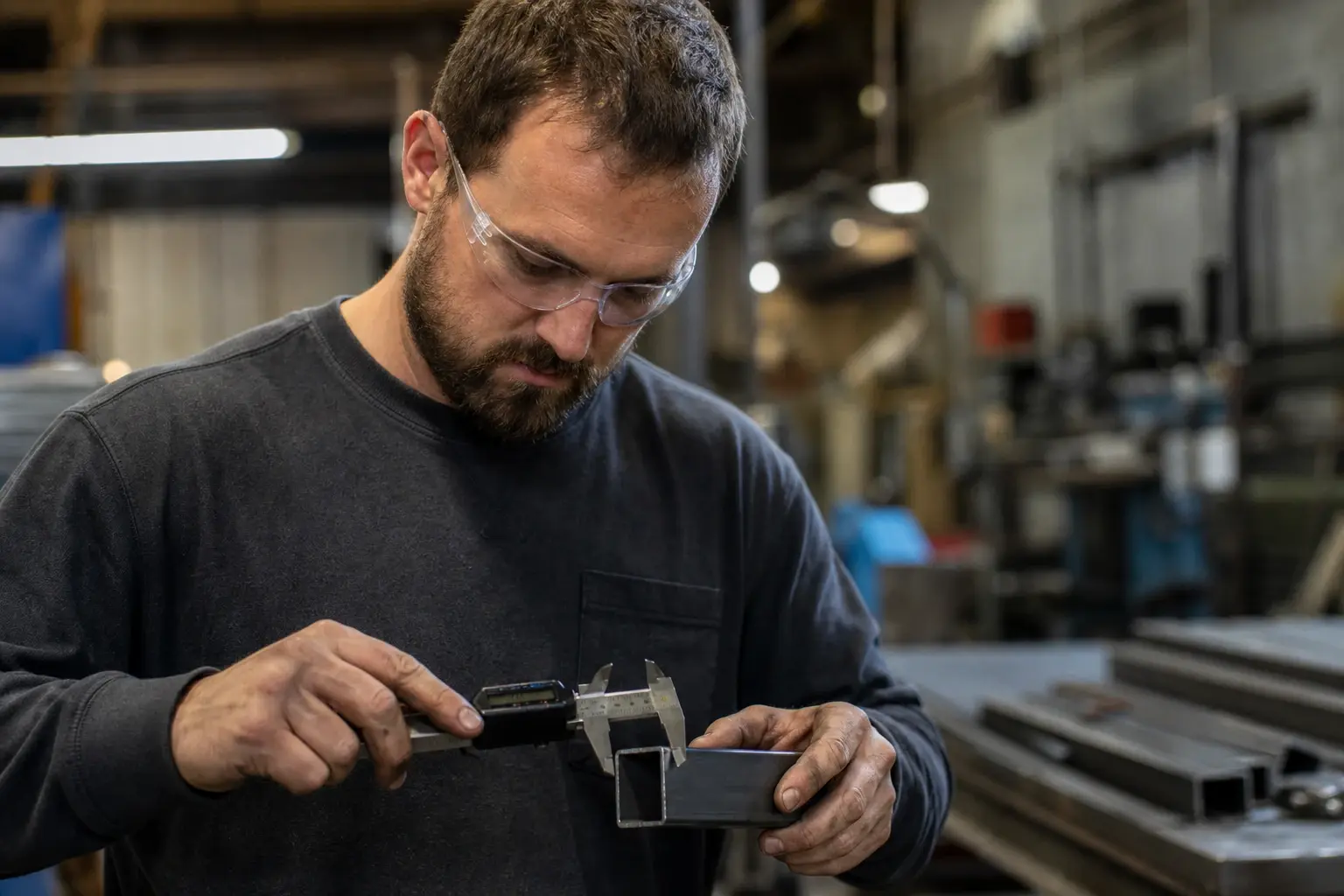
- Ask how a shop measures tube before cutting, then confirm the tolerance on your own part.
Tube straightness matters for laser cutting because a bent or twisted tube puts a cut in a slightly different place than the CAD file expects. Blueline Industries is a tube laser cutting and precision metal fabrication shop in Chino, CA. This post explains what bow and twist are, why they affect fit-up, and what to tell your shop before you order.
You do not need to be a metallurgist to plan for it. You need to know what kinds of variation exist and which ones your part can tolerate.

What does tube straightness mean for laser cutting?
Tube straightness describes how closely a tube follows a straight line along its length. Real tube has some bow, a gradual bend, and some twist, a rotation along its length. A laser cuts to a programmed position, so any shape the tube has that the program does not expect can move a feature off its intended location.
Think of a slot meant to sit on the centerline of a face. If the tube bows between the chucks, the face is no longer where the file says it is. The cut can land close, but not exactly where the drawing placed it.
Most parts tolerate small variation. Parts that mate with other tube, plate or hardware are the ones that show it.
Why isn't all tube perfectly straight?
Tube is formed, welded or drawn, cooled and shipped, and each step can leave it slightly off. Common commercial specifications allow some amount of bow and twist. Welded tube also carries residual stress from forming and welding. Storage and transport can add sag, so even good tube arrives with some variation.
An article in The Fabricator's Tube and Pipe Journal explains the background. It says welded tube is rolled, coiled, formed, welded and quenched, which leaves residual stress. The article dates from 2016, so treat it as background rather than a current spec.
The same piece notes that many suppliers do not provide tolerances tight enough for laser work, and that thicker walls are harder to straighten. Both points matter when you choose a tube grade and wall.
The four kinds of variation to know
- Bow: a gradual bend along the length.
- Twist: rotation of the cross section along the length.
- Out-of-square sides: square tube that leans into a parallelogram shape.
- Sag: droop between supports, which grows with length and wall thickness.
How do bow and twist change where a cut lands?
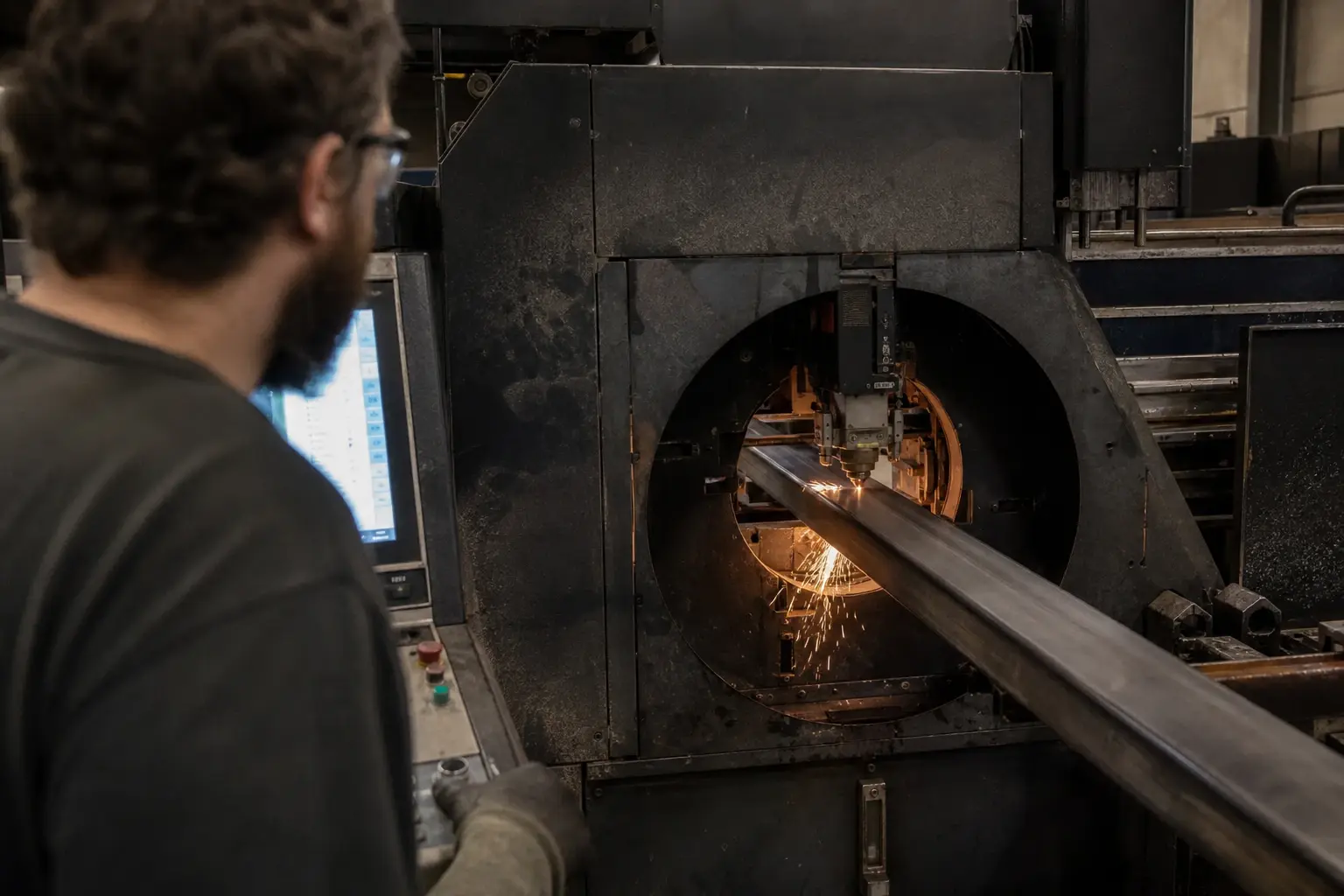
Bow and twist move the surface the laser is aiming at. A feature cut from the programmed position can end up slightly off its intended place, and the error can vary along the tube. Shops reduce the effect by measuring the tube first and correcting the program, but the amount of correction depends on the machine.
The Fabricator's article describes how modern laser heads use height sensors or touch probes to take several measurement passes. It says varying twist along a tube takes longer to measure. For square tube, the article notes the shape may be a parallelogram, and the measuring cycle feeds corrected hole locations to the control software.
The table below summarizes the four variations and what each one can do to a part.
VariationWhat it isWhat it can affectBowBend along the lengthPosition of features on the facesTwistRotation along the lengthSlot and hole alignment end to endOut-of-squareParallelogram cross sectionHole location and joint angleSagDroop between supportsLong cuts and long parts
Which parts are most sensitive to straightness?
Parts with features that must line up end to end, such as hole patterns on opposite faces, are most sensitive. So are long parts, thin walls and parts that mate with machined or purchased hardware. Short parts with forgiving fit-up usually tolerate normal tube variation without special handling.
Structural and fabrication guidance reflects the same split. The American Institute of Steel Construction notes that variations in member straightness are usually absorbed during erection because members are flexible relative to the frame. That page covers structural members, not laser-cut parts, but the idea carries over. Flexible assemblies forgive variation. Rigid, tight assemblies do not. See the AISC straightness FAQ for the source discussion.
If your part is rigid and tight, say so when you request a quote.
How should you specify tube so straightness is not a surprise?
Name the tube standard or product you buy, the shape, size, wall and length, and the dimensions that matter most for fit. Tell the shop what the part mates with. A shop that knows the critical features can measure and inspect those first and plan the cut around them.
The Steel Tube Institute has published a guide, approved as an ASTM standard guide, on checking dimensional tolerances for hollow structural sections. A 2022 news item in The Fabricator says it covers length and straightness, squareness of sides, corner radius and member twist. Ask your supplier or shop whether a shared method like this applies to your material.
What to send with your request
- Tube shape, size, wall, grade and length.
- Whether you or Blueline supplies the material.
- The features that must line up and the parts they mate with.
- Your tolerance for each critical dimension, and how you will check it.
- The CAD file with a revision, plus the drawing.
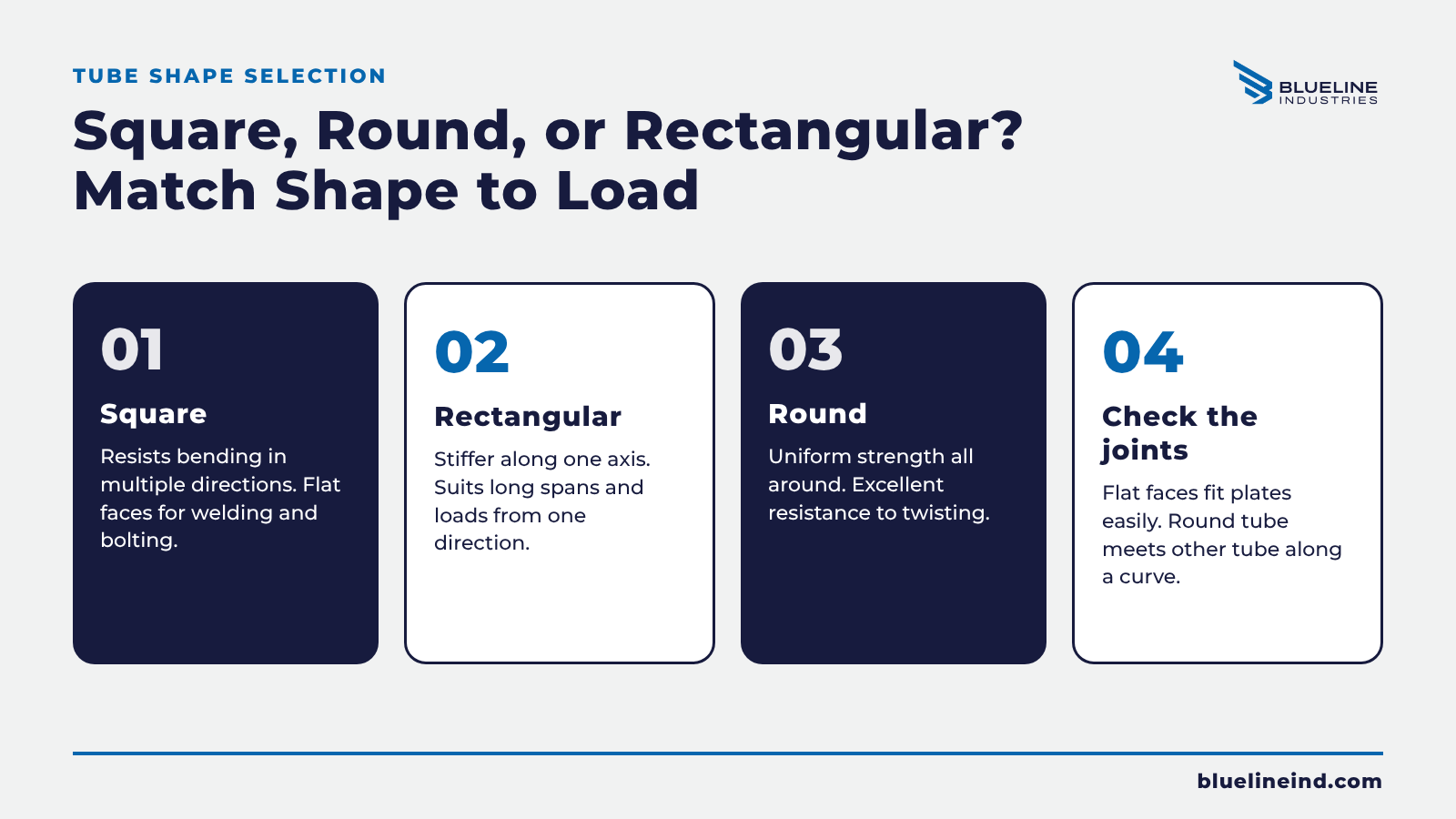
For more on choosing tube type, see our guide to ERW, DOM and seamless tube. For tolerance basics, read What Tolerances Can Tube Laser Cutting Hold?
What can Blueline do for tube parts?
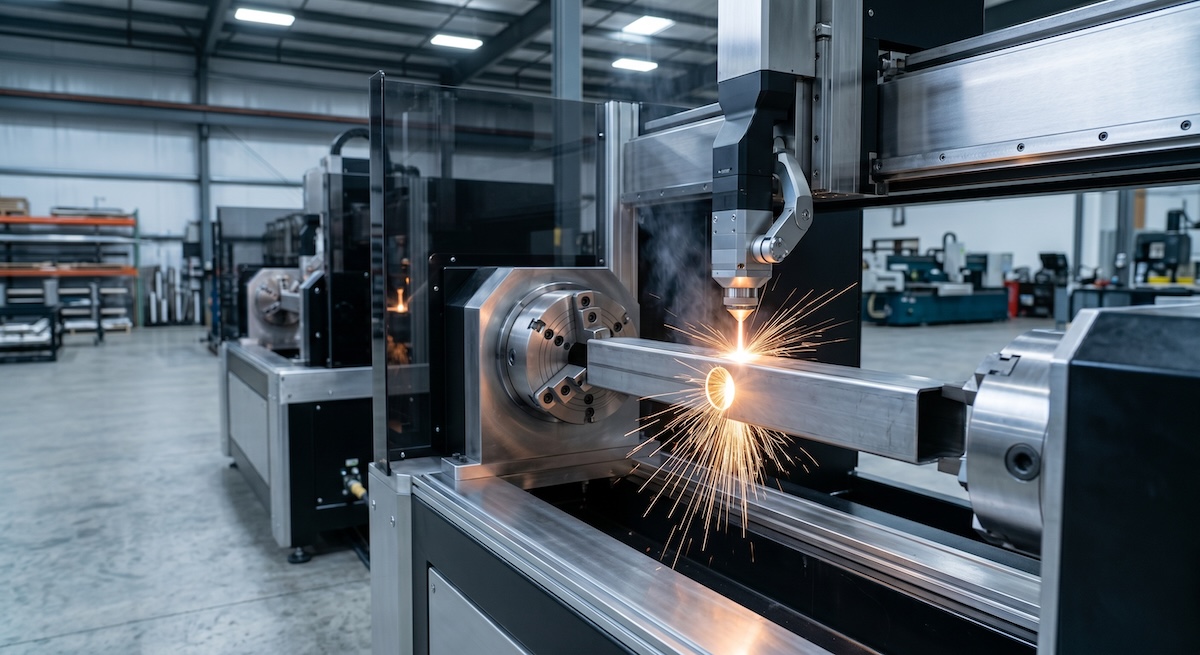
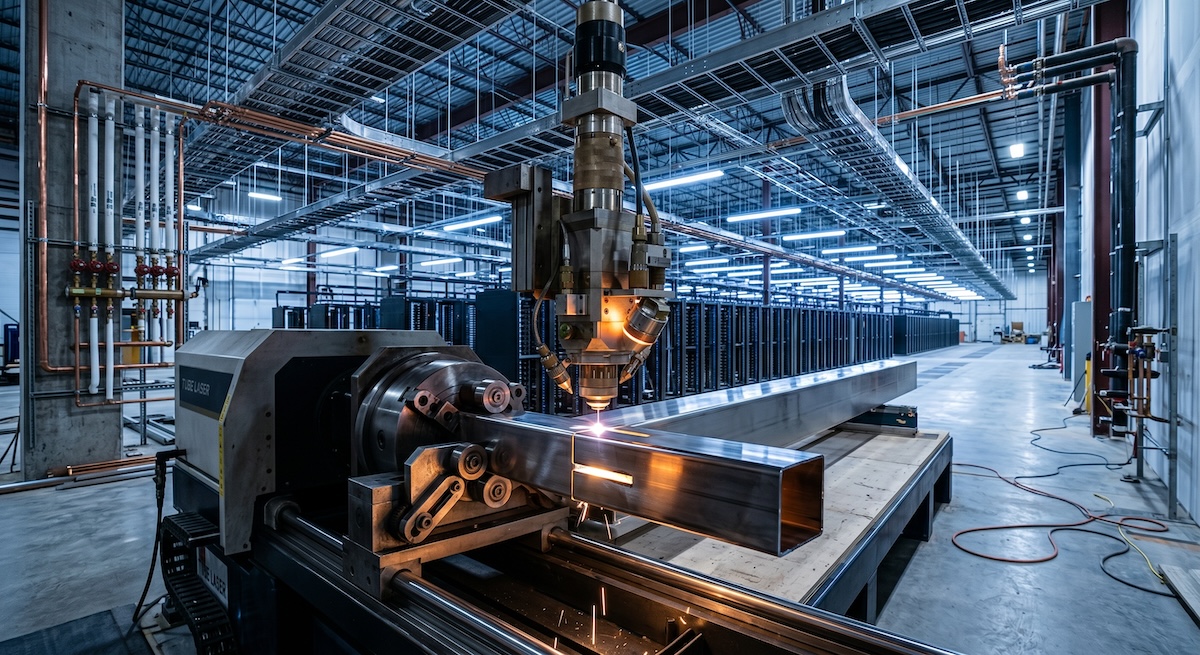
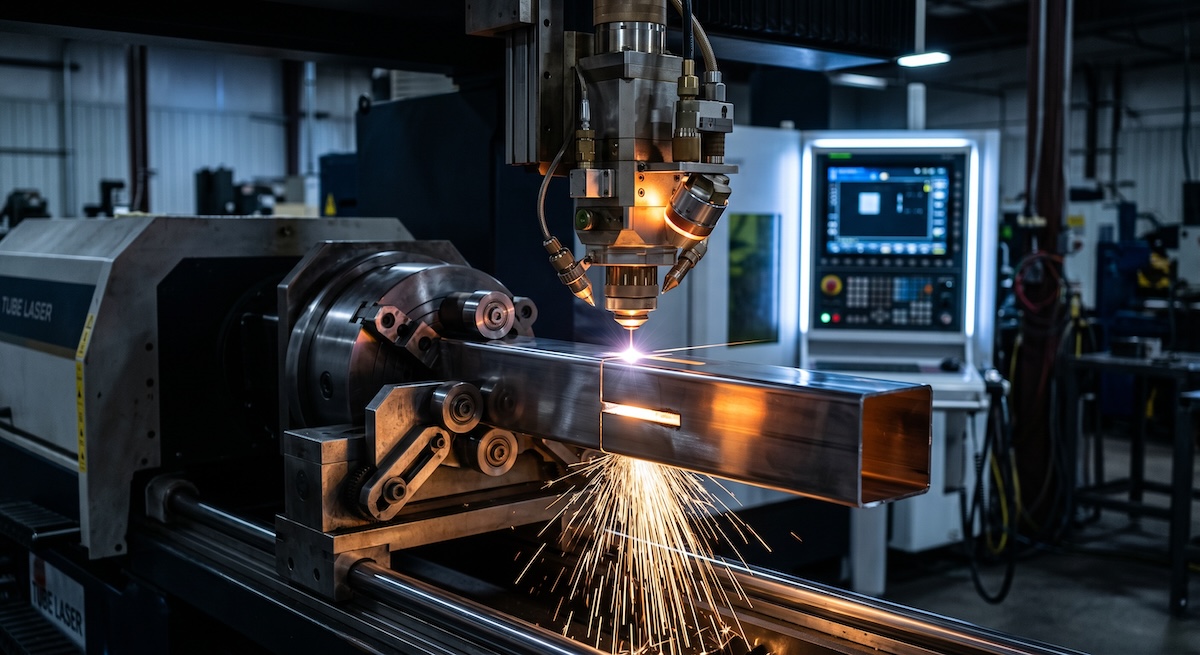
Blueline cuts tube with LT7 tube lasers, which are 4kW and fully automatic and handle tube up to 6 inch square or round. Blueline also states it processes tube up to 13 inch diameter with 5-axis beveling capability. Blueline states tolerances of plus or minus 0.003 inch, so confirm that figure against your part and material.
Tube variation is a real input to that number. Send your drawing and tube details and ask how the shop plans to handle them. That conversation is part of a good quote. Learn more about steel tube laser cutting at Blueline.
FAQ: Tube straightness and laser cutting
Does a laser cut a bent tube correctly?
It can, when the machine measures the tube and corrects the program. Results depend on how much the tube varies and what the machine can compensate for. Ask your shop how it measures tube before cutting.
Is welded tube less straight than seamless tube?
Not always. Welded tube carries residual stress from forming and welding, which can show up as bow or twist. Seamless and drawn products have their own variation. Match the product to the part, and ask your supplier what it controls.
How much bow or twist is acceptable?
That depends on the part. Common commercial specifications allow some bow and twist, and the right limit is the one your assembly can absorb. State the limit on your drawing so everyone checks to the same number.
Do longer tubes cause more trouble?
They can. Sag grows with length and wall thickness, and a tube supported only at its ends droops more as it gets longer. Tell the shop the finished length and where the critical features sit.
What should I check when I receive cut tube parts?
Measure the dimensions that decide fit first. Our receiving checklist walks through the steps.
Straightness is a manageable variable. Know the four kinds of variation, tell your shop which features matter, and agree on how each one will be checked. Then the tube arrives as a known quantity instead of a surprise.
Have a tube part with tight fit-up? Get a Quote or call Blueline Industries at (951) 833-5597.