Quick Summary

The heat affected zone in tube laser cutting is the thin band of metal next to the cut edge that got hot enough to change, but never melted. A laser keeps that band small, though it does not remove it. Blueline Industries runs tube laser cutting from its shop in Chino, CA, and this primer explains what the HAZ is, what drives it, and what to put on your drawing.
The short version for buyers and engineers: know your material, state your edge requirement, and ask how the shop handles it. The sections below give you the plain-language background.
What is a heat affected zone?
The heat affected zone is the area between the melted cut edge and the unaffected base metal. Heat changes the metal's structure there without melting it. Fractory describes the HAZ as a zone formed between the melted metal and the unaffected base metal, and notes that the weakest sections of a structure exist in the HAZ.
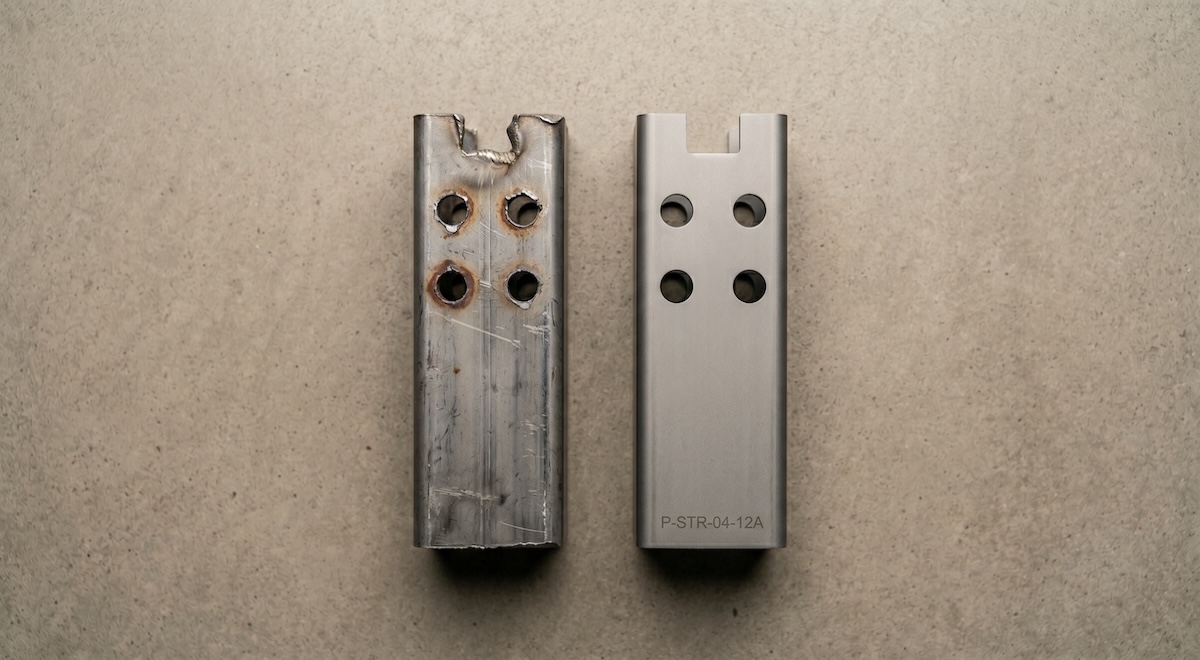
You can often see a trace of it. Surface oxidation leaves colored bands near the cut. Industrial Machinery Digest says those colors roughly indicate the temperature the metal reached. Fractory puts heat tint between light yellow at about 290 degrees C and dark blue at about 600 degrees C.
Why should a buyer care? The zone sits right where parts get welded, bent, or exposed to fluid. Knowing it exists helps you ask better questions and write better drawing notes, even if you never measure it yourself.
What decides how wide the HAZ gets?
Four things drive it: how much heat goes in, how long the heat stays, how thick the material is, and how fast the metal moves heat away. Fractory lists thermal diffusivity, heat input, exposure time, and material thickness. Less energy for a shorter time gives a narrower zone.
Thermal diffusivity is how quickly a material spreads heat. Both sources give the same two figures. Stainless steel AISI 304 is 4.2 mm squared per second. Structural steel is 11.72 mm squared per second. Higher diffusivity means faster cooling and a smaller zone, so structural steel tends to form a smaller HAZ than 304 stainless under similar conditions.
For tube, wall thickness matters as well. A thin wall and a thick wall behave differently, and a shop sets cutting parameters for the job in front of it. That is one reason to share the exact material and wall on your quote request.
How does laser cutting compare with plasma and flame cutting?
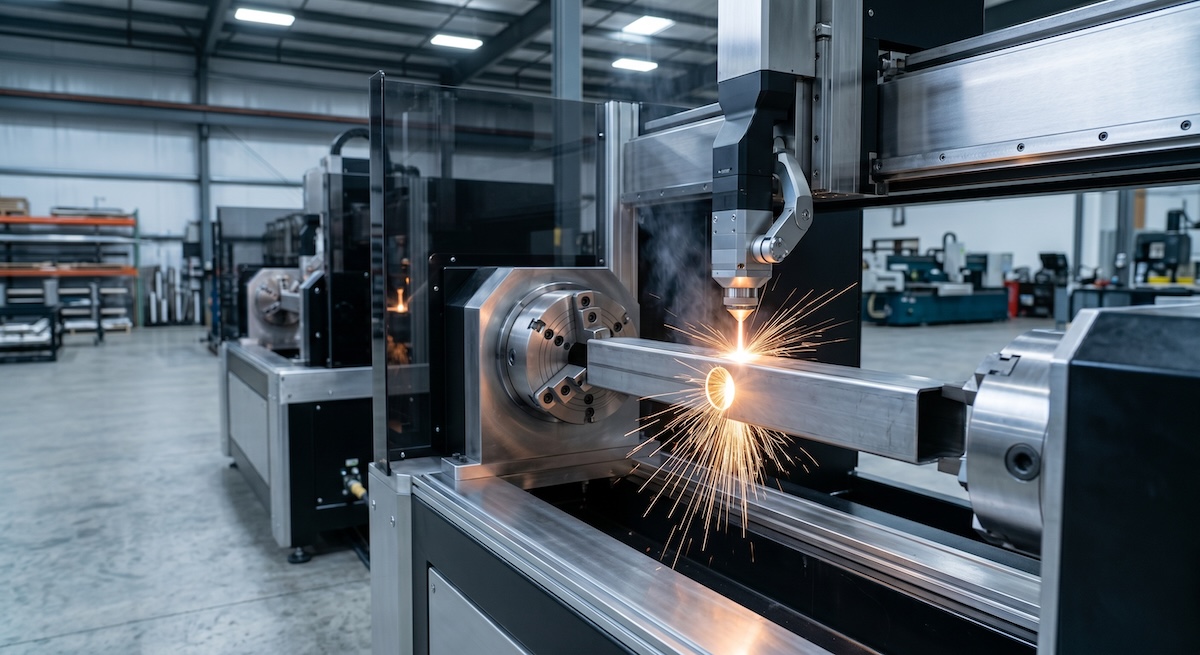
Laser cutting forms a smaller HAZ than plasma or flame cutting. Fractory says flame cutting and arc welding produce the widest HAZ, plasma cutting produces a relatively thin one, and laser cutting creates an even smaller one because it has a narrow cutting kerf. Industrial Machinery Digest calls laser the smallest among thermal cutting methods.
ProcessRelative HAZWhyFlame cuttingWidestProduces the most heat of the thermal methods listedPlasma cuttingRelatively thinSpeed can be adjusted to keep it thinLaser cuttingSmallestNarrow kerf heats a very small area
Neither source says laser removes the HAZ. Treat "smaller" as exactly that. For a side-by-side look at the processes, see our post on tube laser vs plasma cutting.
Why does the HAZ matter more on stainless steel?
Heat can reduce the corrosion resistance of stainless steel near a cut. Industrial Machinery Digest explains that intense heat causes chromium carbides to form around grain boundaries. Where chromium drops below 10.5 percent, the steel can lose its protective passive film. Fractory notes that passivation after welding is commonly used to restore some corrosion resistance.
This is why edge condition matters on parts that will see moisture or coolant. A cut edge on a carbon steel bracket that gets painted is a different case from a cut edge on stainless tube in a fluid system. Tell your fabricator which case you have.
Our stainless steel tube processing page covers the stainless work we run at Blueline. A job like our 16-truckload stainless cooling project in Sacramento in 2025 is the kind of work where the edge requirement belongs on the drawing before the first cut.
What can you do about the HAZ on a tube part?
State the edge requirement on the drawing, name the exact material and wall, and ask your fabricator how they manage heat on that job. If a part needs a clean, unaffected edge, say so before the quote. Waiting until after the cut leaves only slow and costly fixes.
Specify the material and wall
Grade and wall thickness change how heat behaves. For example, write the exact grade and wall, such as 304 stainless at your design wall, rather than just "stainless tube." Use the numbers from your own design.
Say what the edge must do
Will the edge be welded, painted, or left exposed? Will it see fluid? The answer changes what is acceptable. Put it in a drawing note so the shop sees it when programming the part.
Match the edge to the next step
A tube edge that will be welded is judged differently from one that will be painted or left bare. Tell the shop what happens to the part next. That one line helps them decide how to plan the cut and whether the edge needs any follow-up.
Know the cost of removing it
Industrial Machinery Digest says light heat tint can be sanded or ground off, though this may weaken the part, and that fully removing the HAZ requires machining it away, which wastes material and time. It is better to specify the edge up front than to fix it later.
Frequently Asked Questions
Does a laser cut have a heat affected zone?
Yes. Laser cutting is a thermal process, so some HAZ forms. Sources describe it as smaller than the HAZ from plasma or flame cutting because the kerf is narrow. It is smaller, not absent.
Can you see the heat affected zone?
Often you can see its surface effects. Oxidation leaves colored heat tint near the cut, and the color roughly shows how hot the metal got. The structural change itself is not visible to the eye.
Is the HAZ a problem for stainless steel tube?
It can be, because heat can lower chromium near grain boundaries and reduce corrosion resistance. Whether it matters depends on the part's use. Tell your fabricator if the part will see moisture or coolant.
Should I put the HAZ on my drawing?
Put the requirement on the drawing, not the term alone. For example, note that an edge will be welded, exposed, or exposed to fluid. The shop can then plan the cut around it.
What tolerance does Blueline state for laser cut tube?
According to Blueline, its tolerances reach plus or minus 0.003 inch. Confirm the tolerance for your parts when you request a quote. Our post on tube laser cutting tolerances covers how to dimension a part.
Ask Blueline About Your Edge Requirement
Send your drawing, your material, and what the cut edge has to do. We will tell you what we can run. Read more about our tube laser cutting services, then get a quote or call (951) 833-5597.