Quick Summary
- Design for tube laser cutting means choosing part geometry that the laser cuts cleanly and that fits after cutting.
- Five checks catch most rework: hole size against wall thickness, kerf clearance on tabs and slots, centerline dimensions, real corner radii, and weld seam location.
- Tolerance only the features that need it. Tight tolerances everywhere can force extra machining.
- Combine miters, copes, notches, slots and holes into one cutting operation when the design allows it.
What does design for tube laser cutting mean? It means shaping a tube part so the laser can cut every feature cleanly and the finished piece fits its mating parts without rework. The work happens before you export a file, at the point where you choose hole sizes, joints, tolerances and tube type.
Blueline Industries runs tube laser cutting from our facility in Chino, CA, and we see the same design choices come up on part after part. This guide covers five of them, in plain shop-floor terms. It is written for manufacturing engineers, fabricators and buyers who draw tube parts and want fewer surprises at the cutting stage.
Already past the design stage? Our checklist on how to prepare CAD files for tube laser cutting covers file setup. This post covers the geometry decisions that come first.
What does design for tube laser cutting actually cover?
It covers the choices that decide whether a part cuts cleanly and assembles easily: feature sizes, joint clearances, how you dimension, which tolerances you call out, and how you treat the tube's own corners and seam. File hygiene matters too, but geometry comes first.
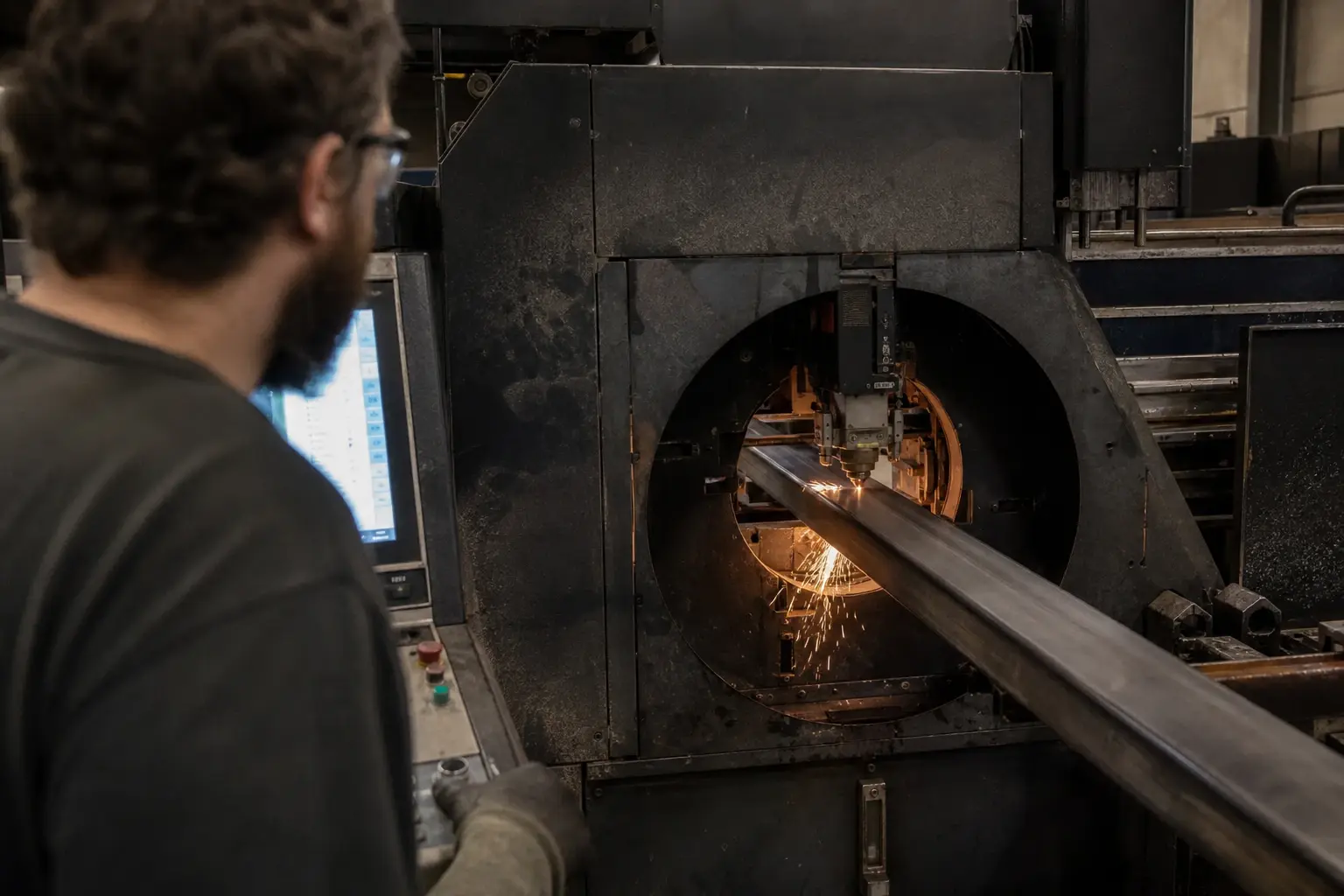
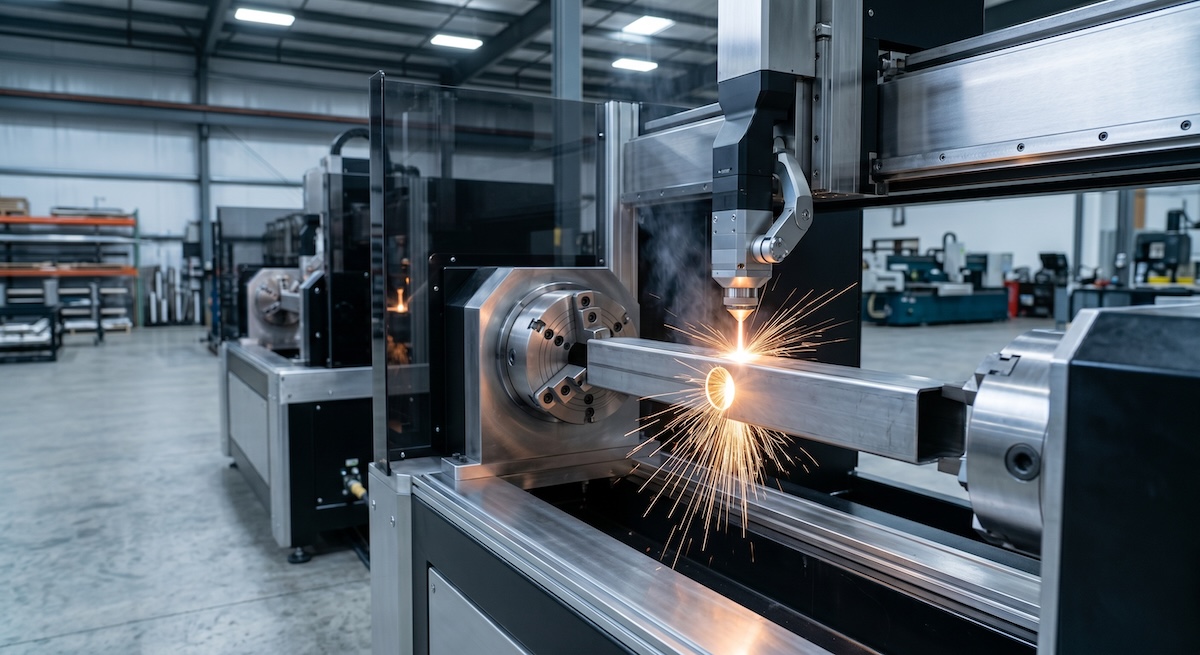
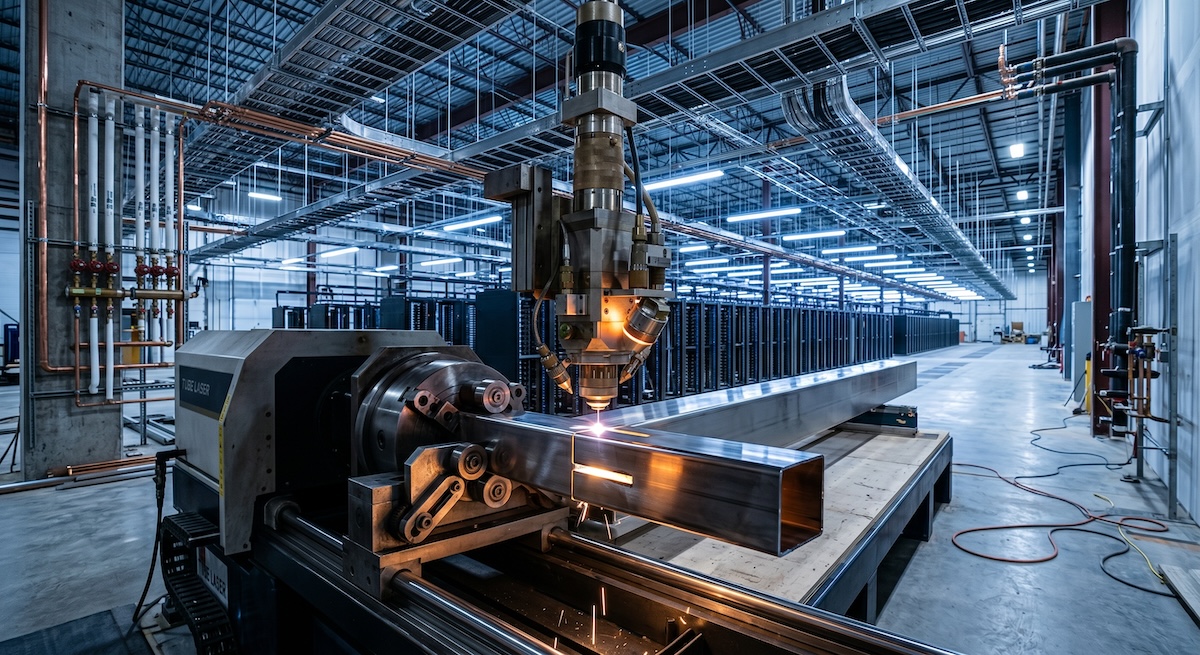
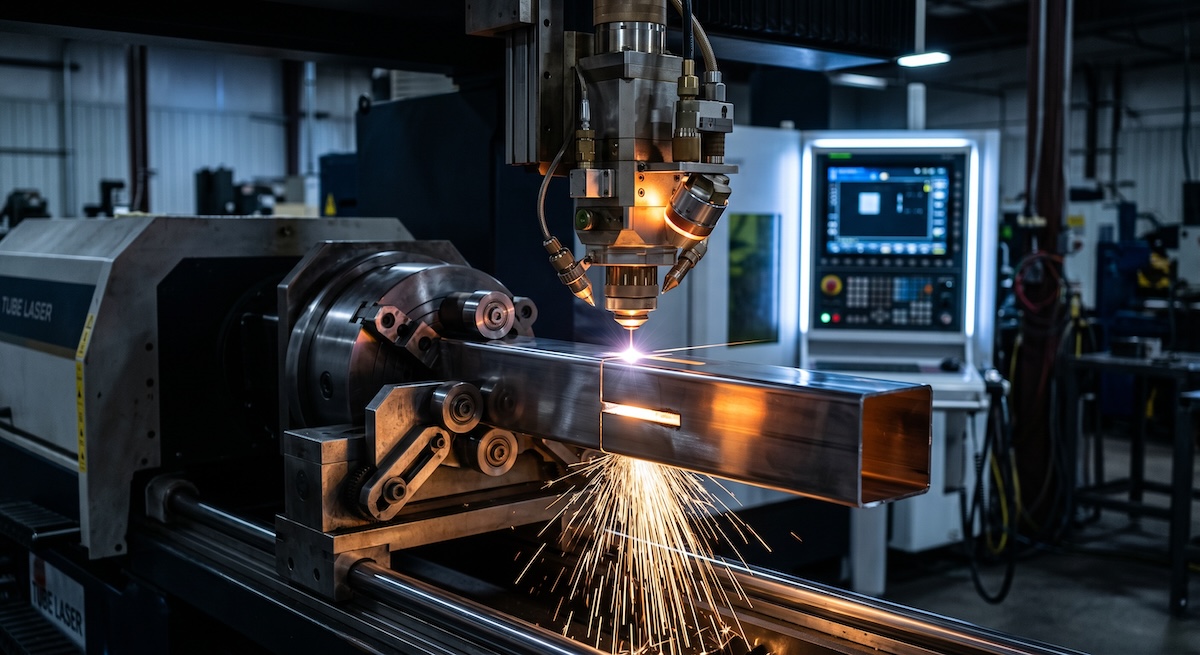
A tube laser cuts through a rotating tube, so the part is cut around its profile, not flat on a table. Features near corners, near the weld seam, or on thicker walls behave differently than the same feature on flat stock. Designing with that in mind removes most of the guesswork later.
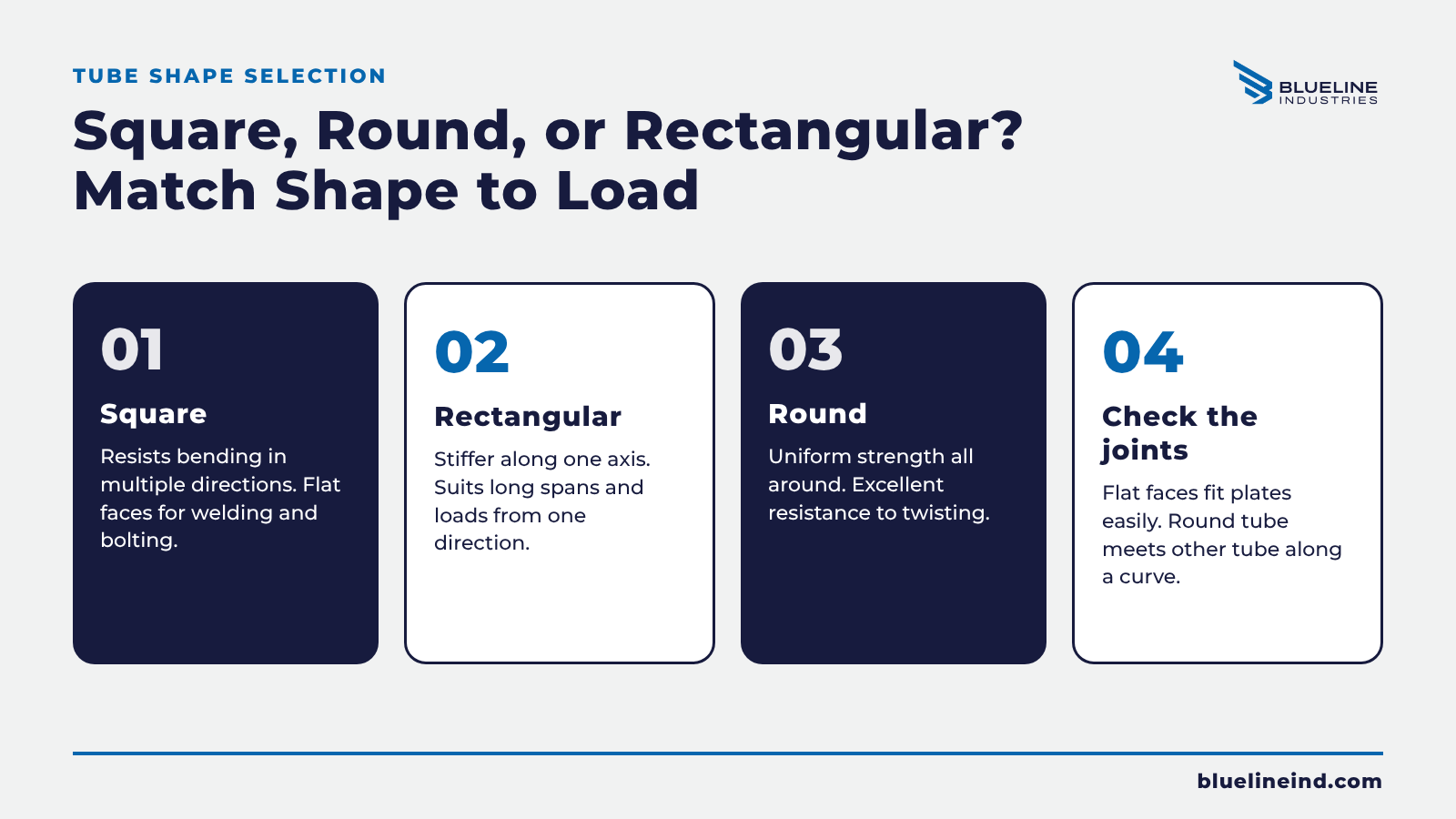
Blueline processes square, rectangular and round profiles in carbon steel and stainless steel, plus other metals. Our LT7 tube lasers are 4kW and fully automatic, and cut tube up to 6 inch square or round. The five checks below apply across those profiles.
How big should holes and slots be compared to the wall?
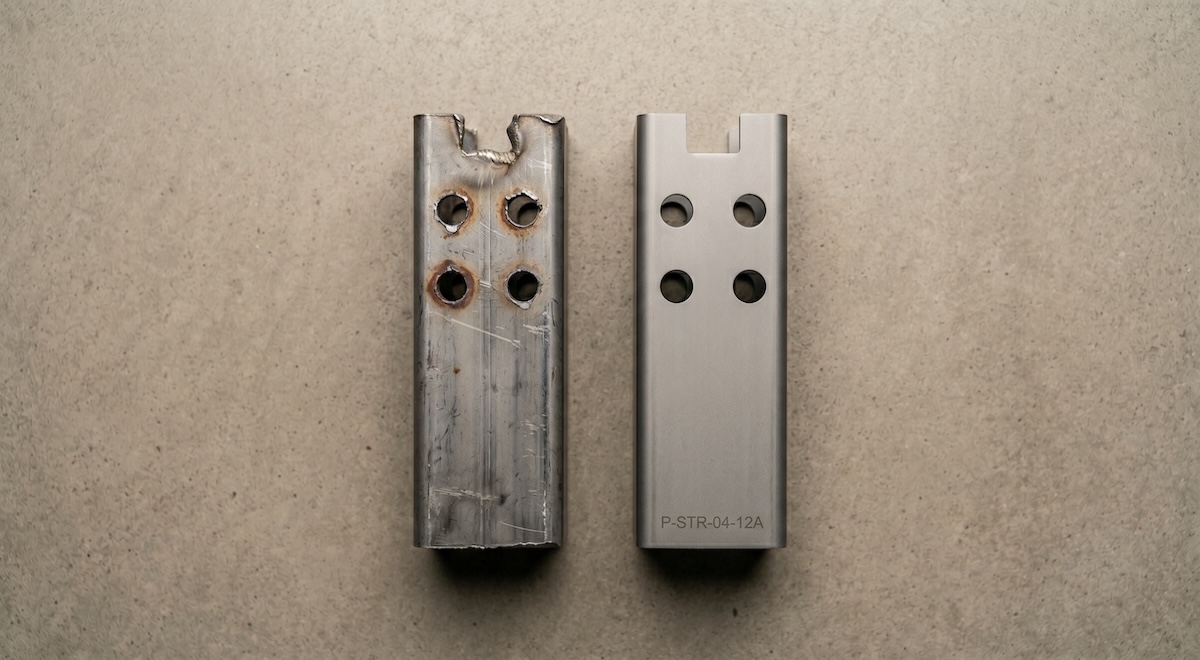
A common rule of thumb in published tube laser design guidance is to keep hole diameters at or above the tube wall thickness. Holes smaller than the wall are more likely to land out of tolerance. For tabs and slots, leave clearance for the width of the cut.
The width of material the laser removes is called kerf. If a tab and a slot are drawn at exactly the same width, the cut itself can leave the joint too tight or sloppy. Allow a small clearance, and expect cut taper to matter more on thicker walls.
When parts need to self-locate during welding, tab-and-slot joints are worth the effort. Our post on laser cut tube assemblies for OEMs shows how that works in practice. For the cut types themselves, see our precision slotting, notching and hole cutting service.
Which tolerances should you call out?
Call out tolerances only on features that control fit or function. Tight tolerances on every dimension can force secondary machining at any shop. Dimension critical features from the tube centerline, not from the outside edges, since outside edges are less precisely cut.
Blueline states cutting tolerances of plus or minus 0.003 inch. That figure is Blueline's own, and what a given part can hold also depends on the tube itself, its wall, its length and the feature type. Ask for confirmation on any dimension you plan to inspect.
A simple habit helps. Mark which dimensions are critical, which are reference only, and which can float. Your fabricator can then spend effort where it matters and not guess.
How do tube corners and weld seams change your design?
Tube corners are rounded, and welded tube has a seam. Model the real corner radius where fit matters, and show the seam location on the drawing. If the seam must not sit in a certain spot, say so, or ask for tube made without a weld seam, which typically costs more.
A sharp corner in your model is a simplification. The real tube has a radius that depends on the tube and its wall, and a cope or notch near a corner has to account for it. If a mating part must sit tight against a corner, check the real profile first.
Seam location is easy to forget. Features cut across or near the seam can behave differently, and a visible seam may matter on an exposed or finished part. Putting the seam on the drawing removes the question.
Which cuts should you combine in one operation?
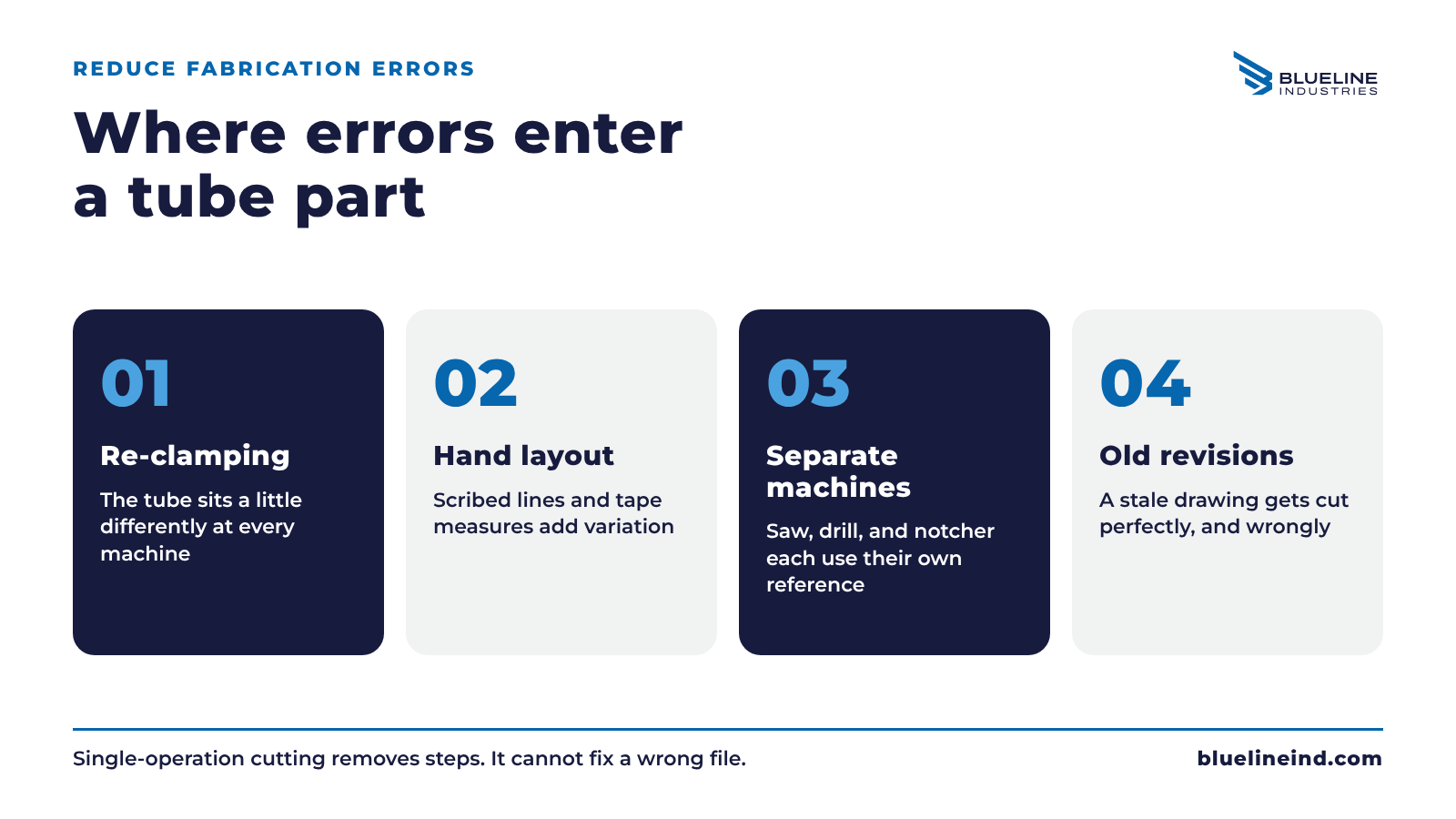
Combine as many features as the design allows. Blueline cuts to length, miters, copes, bevels, slots, notches and holes in one machine cycle. Every feature you can fold into that cycle is a step you do not need to run on a separate saw, drill or fixture.
Blueline states that single-operation processing reduces error rates by up to 70%. That figure comes from Blueline, so ask which parts of your design drive the most benefit. For tube up to 13 inch diameter, Blueline also offers 5-axis beveling for weld prep.
The table below turns the five checks into do and avoid pairs you can use during design review.
Design choiceDo thisAvoid thisHole sizeKeep the diameter at or above the wall thicknessHoles smaller than the wallTabs and slotsLeave clearance for kerf and cut taperDrawing tab and slot at the same widthDimensioningReference critical features from the tube centerlineDimensioning from outside edgesCornersModel the real corner radius where fit mattersAssuming a sharp cornerWeld seamShow the seam location on the drawingLeaving the seam to chanceTolerancesTolerance only functional featuresTight tolerances on every dimension
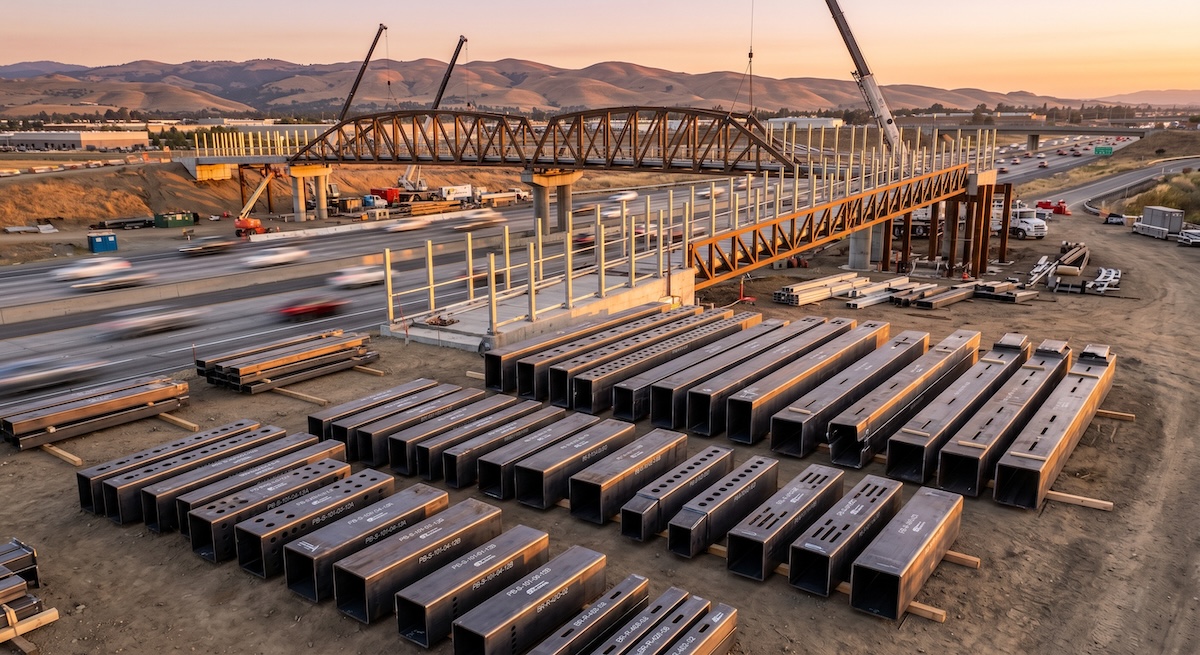
Repeatable geometry matters most at scale. Blueline has worked on large builds, including the Coachella Sahara Stage (1M+ lbs of steel, 2025). Parts that are drawn with these checks in mind are easier to repeat, whether the run is ten pieces or a few thousand.
FAQ
What is kerf in tube laser cutting?
Kerf is the width of material the laser removes as it cuts. It affects how tightly tabs fit into slots. Designers add small clearances so joints go together without forcing.
Should I dimension from the tube edge or the centerline?
Use the centerline for critical features. Outside edges are less precisely cut, so dimensions measured from them can drift. Centerline references keep matching features aligned.
Does the weld seam location matter for tube laser cutting?
It can. Show the seam on your drawing so features are placed with it in mind. If the seam must be hidden or avoided, tell your fabricator, or ask about tube made without a weld seam.
What file types does Blueline accept for tube laser cutting?
Blueline's tube laser cutting services page lists production-ready DXF, STEP and SolidWorks files. Our engineering team can also convert conceptual drawings into shop drawings.
Can tube laser cutting handle tapped holes?
Blueline lists tapping among its tube laser operations. Tell us the thread size and the wall thickness, and we will confirm what works for your part.
Good tube design is mostly a handful of habits repeated on every part. Check hole size, leave kerf clearance, dimension from the centerline, respect the real corner and mark the seam. Blueline is made in America and built on integrity, and our team in Chino is happy to review a design before you commit to it. See our tube laser cutting services for the full capability list.
Have a tube part to review? Get a Quote or call (951) 833-5597.