Quick summary
- Start with wall thickness. Published design guides tie the smallest hole to it, but the exact ratio changes from shop to shop.
- One published guide says to keep holes at least as large as the wall. Another sets the floor at 0.7 times wall thickness.
- Locate critical holes from the tube centerline, not from the outside edges.
- Send your hole list with the wall thickness and tolerance, and ask for the shop's minimum before you release the drawing.

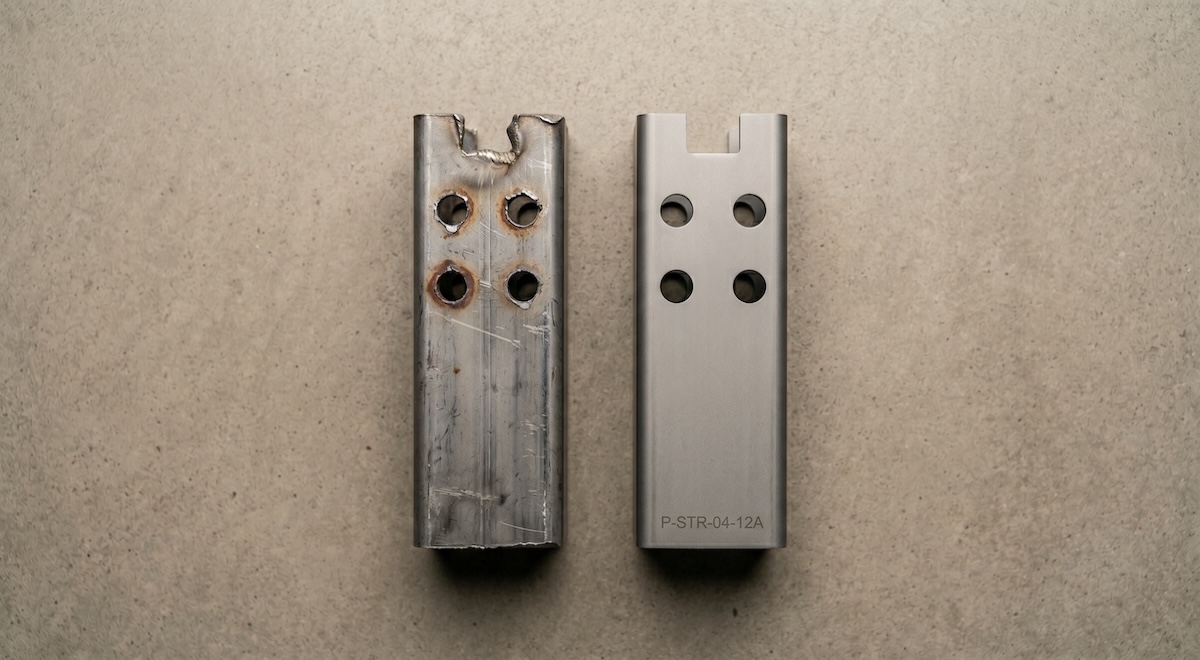
Tube laser cutting hole size depends first on wall thickness. The thicker the wall, the larger the smallest hole you can count on. Published design guides put that floor between 0.7 and 1 times the wall thickness, so confirm the exact number with your shop before you release a drawing.
Blueline Industries runs tube laser cutting in Chino, CA, and ships finished parts to buyers across the West. This post covers how to size holes in tube, what pushes the answer up or down, and what to send with a quote request.
What is the smallest hole a tube laser can cut?
There is no single number. Published design guides tie the smallest hole to wall thickness. One says to keep hole diameters equal to or greater than the wall. Another sets a minimum of 0.7 times material thickness. Treat those as a range, then ask your shop for its own minimum on your material.
The table below puts the published rules side by side. None of them is a Blueline rule. They show how much the guidance varies, which is why a quick check with your shop matters.
| Rule of thumb | What the published guide says | How to use it |
|---|---|---|
| Hole at least equal to wall thickness | Holes smaller than the material is thick are more likely to be out of tolerance. | A safe starting point for holes that matter to fit or fasteners. |
| Hole at least 0.7 times wall thickness | Set as a minimum to protect cut quality. | Treat it as a hard lower limit, not a design target. |
| Hole up to about half the tube diameter | One guide caps standard cylindrical cut holes in round tube at roughly 0.5 times tube diameter. | Check large holes in small round tube early. |
Here is a simple illustration. Say a tube has a 0.120 inch wall. The stricter rule points to a hole of at least 0.120 inch. The looser rule allows 0.084 inch. That gap is real, so do not assume one shop's minimum is another's.
Why does wall thickness limit the smallest hole?
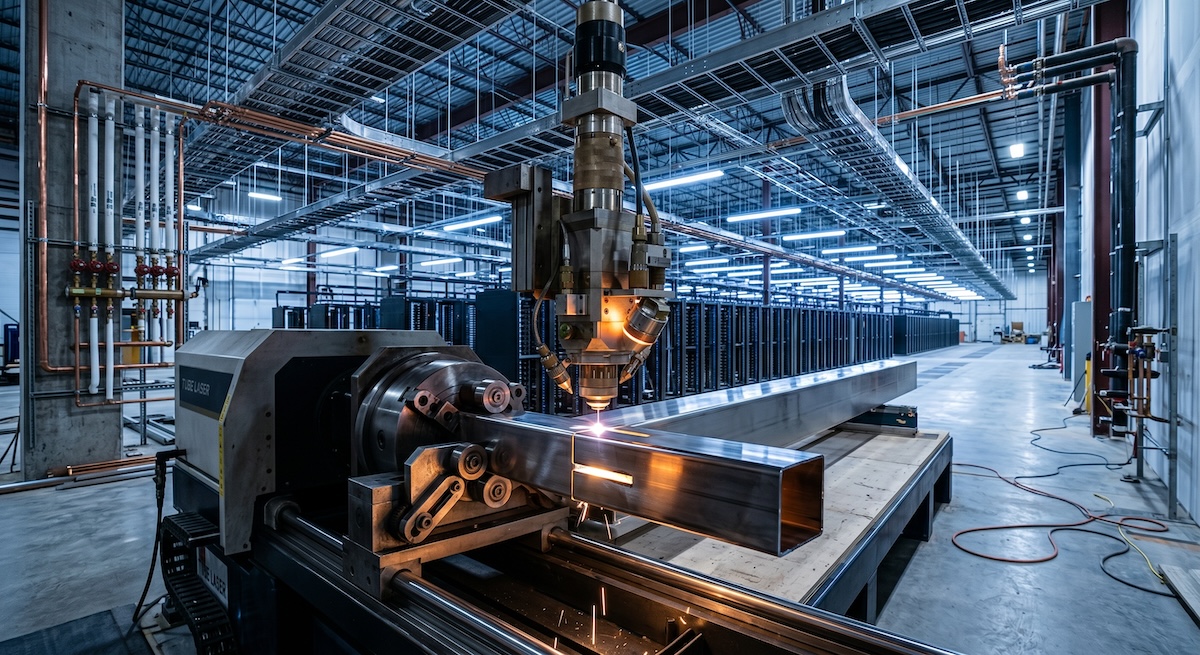
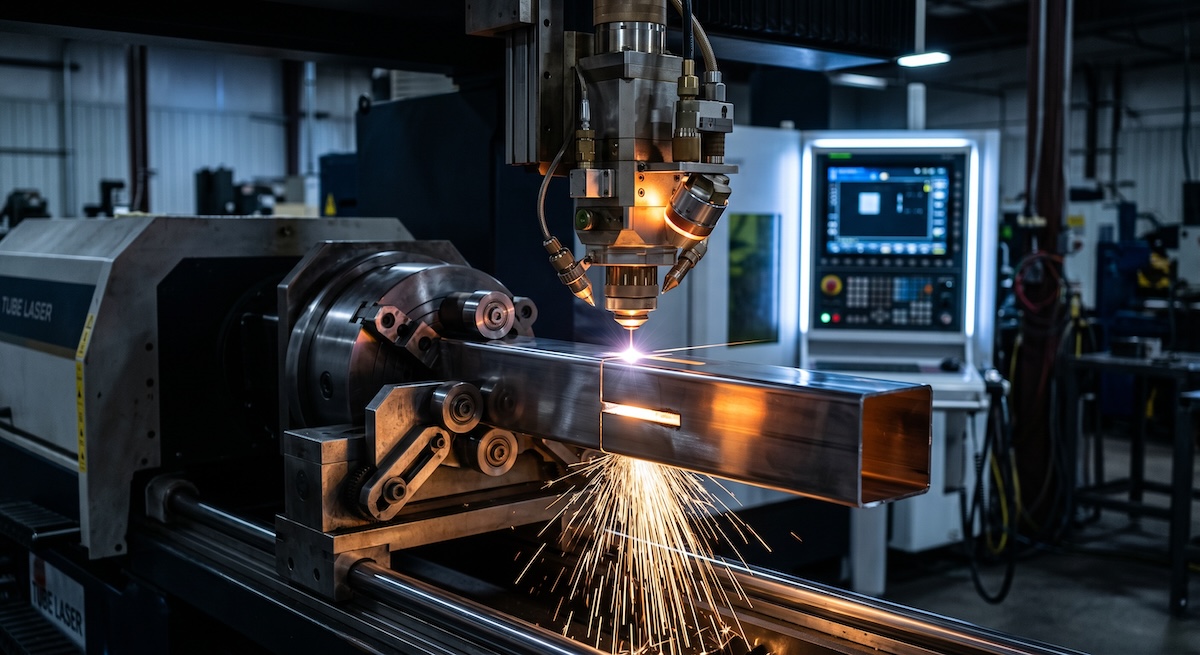
A tube laser cuts through the full wall, and every cut has some width and a little taper. When the hole is small compared with the wall, that width and taper take up a bigger share of it. Size and roundness then drift more easily.
Thicker walls make this worse. Published guidance asks designers to leave enough clearance for kerf and possible cut taper, especially with thicker-walled tube. Kerf is the width of material the laser removes. Our explainer on kerf in tube laser cutting shows how it affects slot fit.
The same thinking applies to the wall itself. If you are unsure how to call it out, read how to state wall thickness on a drawing. A clear wall callout makes every hole decision easier.
Dimension holes from the centerline
Published guidance says to avoid dimensioning from the outside edges of a tube and to reference critical features from the tube centerline instead. The reason given is that the outside edges of tubing tend to be less precisely cut.
In practice, that means a hole table with positions measured from the centerline and from one clear datum along the length. Do not chain dimensions from hole to hole. Each link adds a little error, and the last hole pays for all of them.
If a hole sits near the weld seam of welded tube, call out the seam location on your drawing. Published guidance recommends designing around the seam. Ask for tube without a weld seam only when welded material is not acceptable for the part.
What hole tolerance should you call out?
Call out only the tolerance the part needs. Blueline states tolerances of plus or minus 0.003 inch. Separately, one published guide advises against hole-to-hole tolerances tighter than plus or minus 0.010 inch, because tighter values may need secondary operations. Ask which figure fits your tube, wall, and feature.
Those two numbers are not a contradiction. They describe different parts, different features, and different shops. A hole for a loose clearance fit does not need the same callout as a locating hole for a precision assembly.
Whatever you choose, put it on the drawing. A verbal expectation is not a tolerance, and it will not survive a handoff between buyer, engineer, and shop floor.
A good habit is to split your holes into two groups. Mark the few that control fit-up or alignment as critical. Leave the rest on a general tolerance. Our guide on calling out tube cutting tolerances walks through that split.
What should you send with your hole list?
Send the model or drawing, the tube shape and size, the wall thickness, the material, the quantity, and a hole table with each diameter and position. Mark the holes that matter most. Then ask Blueline to review the list against its minimums before release.
- Tube shape, outside size, wall thickness, and material grade.
- A hole table with diameters and centerline-referenced positions.
- The holes that control fit-up, fasteners, or alignment.
- The seam location if the tube is welded.
- Quantity and whether the part will repeat.
Keep the hole table short and readable. Group matching holes together and give the count, so nobody has to find them in the model. A clean table also makes it quick to spot a hole that falls below the minimum before it ever reaches the machine.
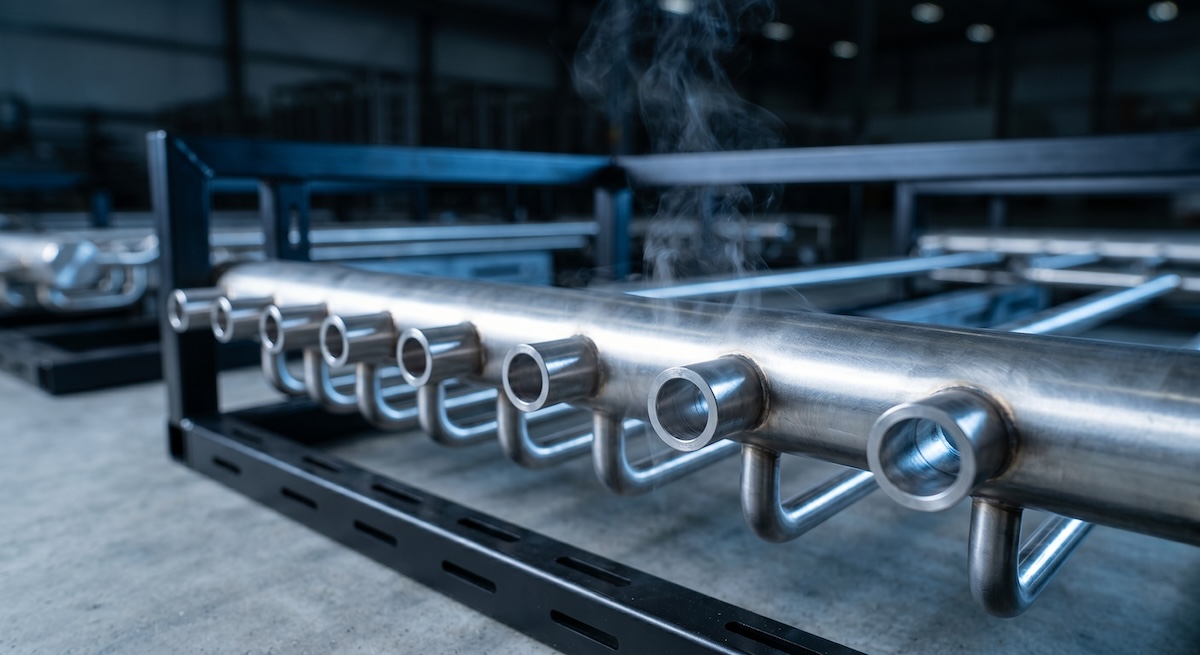
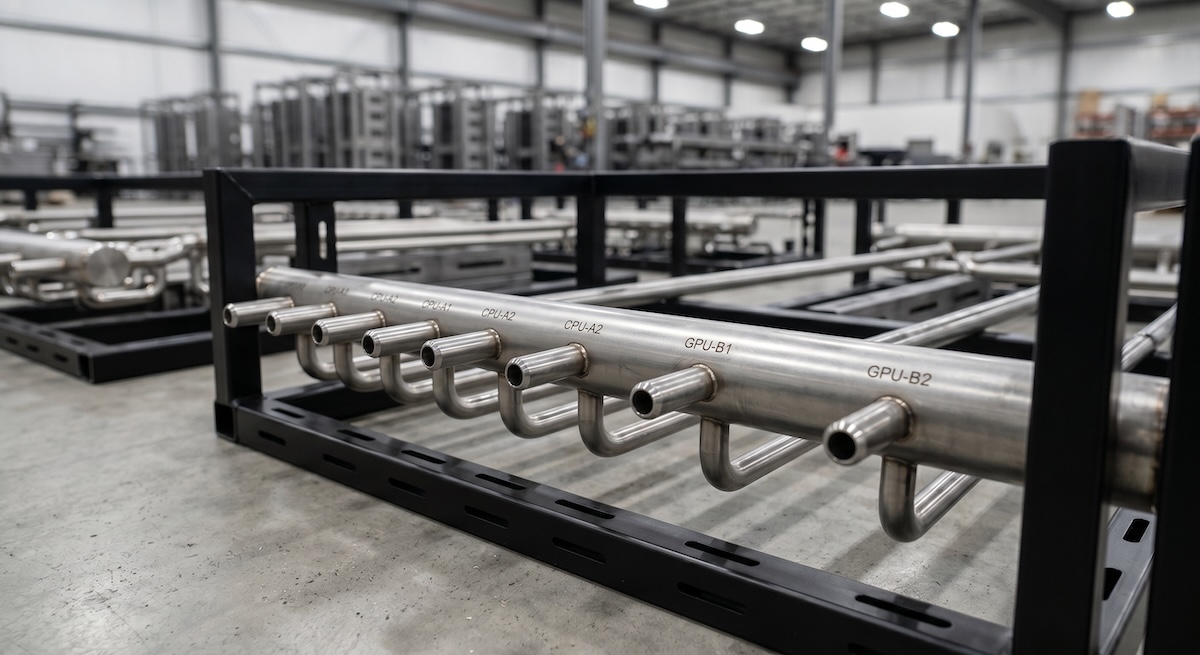
Scale raises the stakes on all of this. Blueline's AI data center cooling project in Sacramento moved 16 truckloads of stainless steel in 2025. At that volume, one wrong hole callout repeats on every part, so a check up front beats rework later.
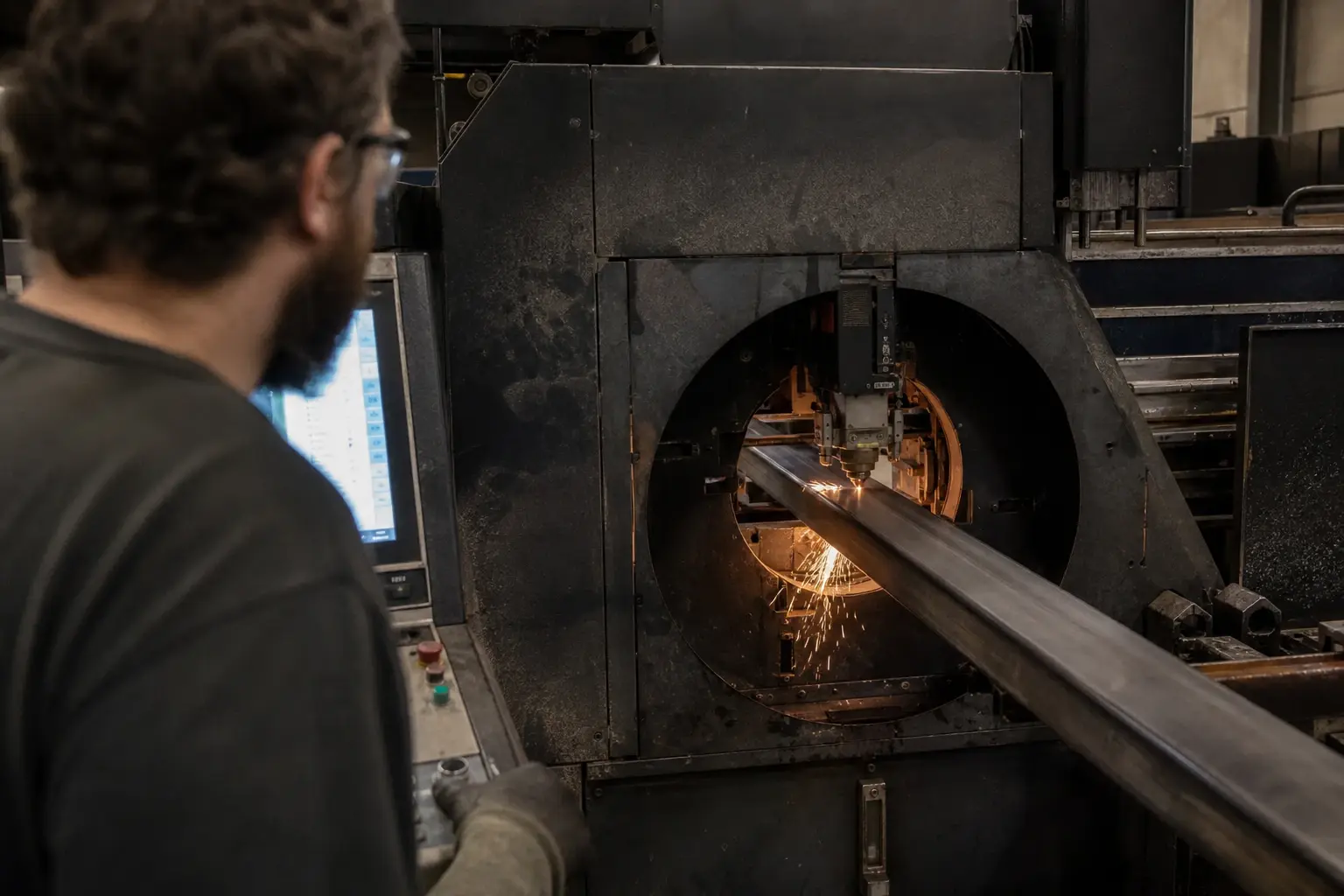
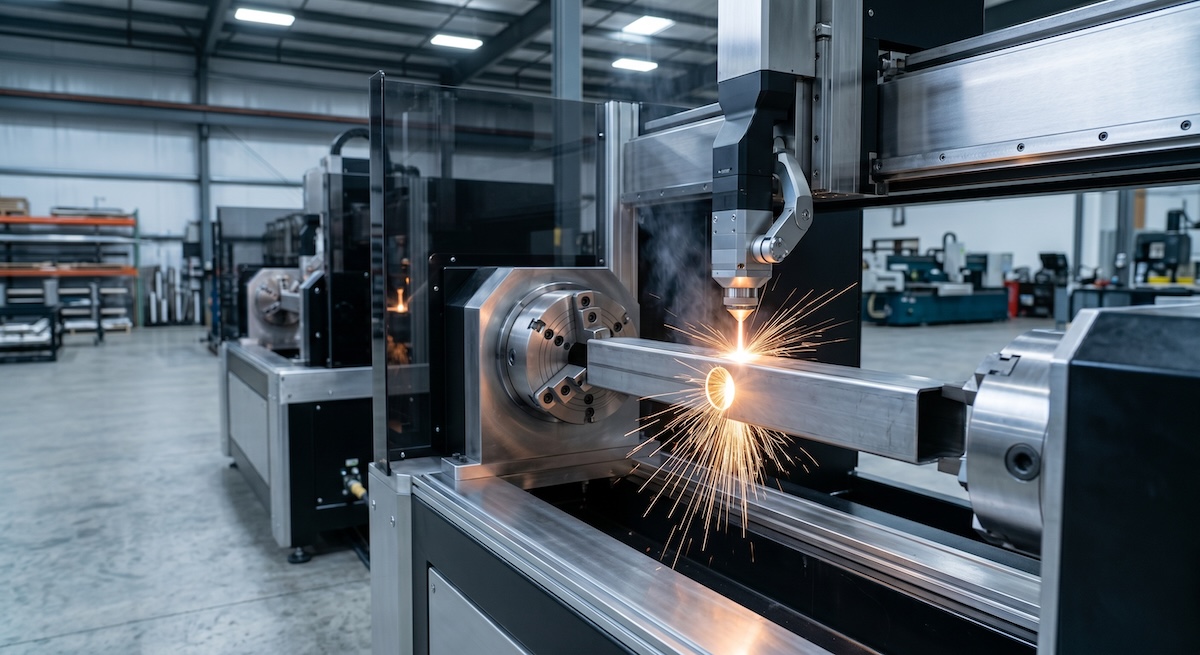
Blueline's precision slotting, notching, and hole cutting service covers this kind of work in a single operation on the tube laser.
Frequently asked questions
Can a tube laser cut a hole smaller than the wall thickness?
Sometimes, but published guidance warns that holes smaller than the wall are more likely to be out of tolerance. If the part truly needs a smaller hole, ask your shop whether another approach makes sense.
How large can a hole be in round tube?
One published guide caps standard cylindrical cut holes in round tube at roughly half the tube diameter. Larger openings are better treated as cutouts, so confirm the limit with your shop.
Should I dimension holes from the outside edge of the tube?
No. Published guidance recommends referencing critical features from the tube centerline, because the outside edges tend to be less precisely cut.
What tube sizes does Blueline process?
Blueline runs LT7 tube lasers with 4kW power, fully automatic, for tube up to 6 inch square or round. Blueline states it processes tube up to 13 inch diameter with 5-axis beveling capability.
Does the weld seam change where I can put a hole?
It can. Published guidance recommends designing around the seam on welded tube and calling out the seam location on the drawing.
Hole size is a small callout with a large effect. Settle the wall thickness, pick holes you can defend, and reference them from the centerline. Then let your shop confirm the minimum before the run starts.
Ready to check your hole list? Get a Quote or call (951) 833-5597.