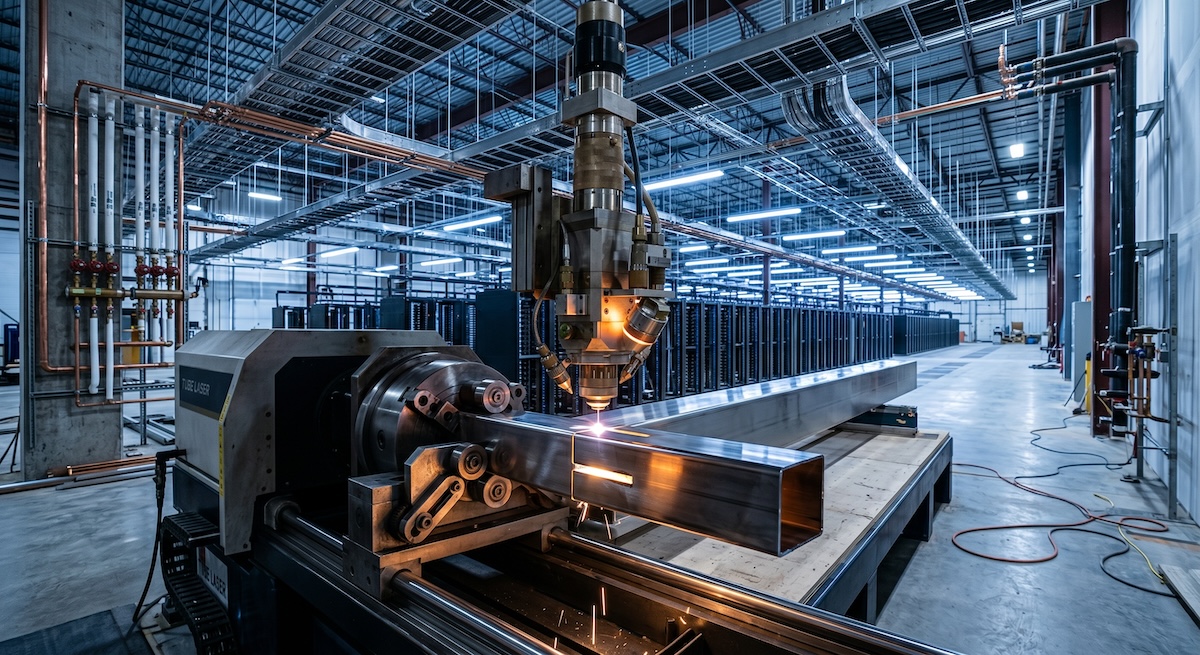
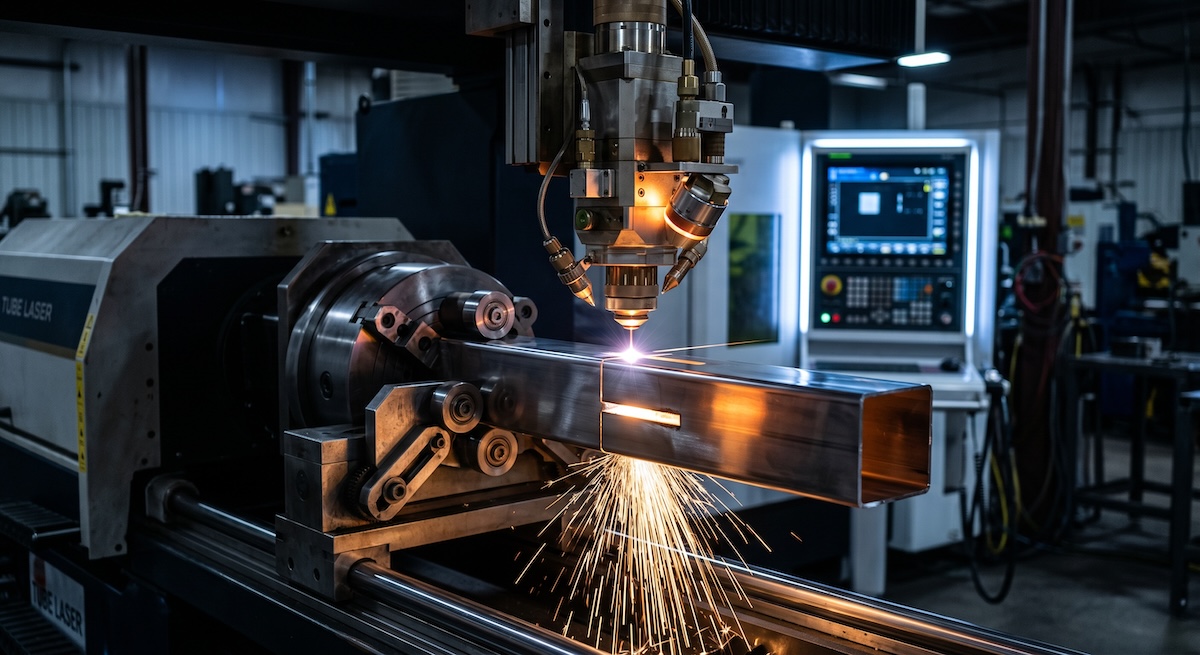
Quick Answer: AI data centers are not larger versions of traditional facilities. They are fundamentally different structures. Rack densities exceeding 50 kW (with next-generation Nvidia systems pushing toward 300+ kW per rack) require liquid cooling piping networks, reinforced structural frameworks for heavier equipment loads, and complex cable management systems that multiply the volume of precision steel components per megawatt of capacity. With global data center capital expenditures surpassing $700 billion in 2025 and the data center physical infrastructure market projected to reach $80 billion by 2030, the structural steel fabrication supply chain is under unprecedented pressure to deliver more components, faster, with tighter tolerances. Single-process tube laser fabrication is emerging as the critical enabling technology, compressing multi-step metalworking into one automated operation that cuts lead times by 40 to 60% while maintaining ±0.003-inch accuracy across production runs of thousands of identical parts.
Something fundamental changed in data center construction between 2023 and 2026. The buildings got heavier.
Not figuratively. The structural loads inside an AI-optimized data center are categorically different from what the industry designed for even three years ago. A traditional enterprise data center supported rack loads of 5 to 8 kilowatts, cooled by air handlers pushing conditioned air through raised floor plenums. The structural steel requirements were modest: cable tray supports, overhead busway frames, and standard equipment mounting brackets.
An AI data center in 2026 supports rack loads of 50 to 100 kilowatts as baseline. Nvidia's Blackwell GB300 racks hit 163 kW. The upcoming Vera Rubin NVL144 systems may require over 300 kW per rack. Google's Project Deschutes has unveiled a 1-megawatt rack design. These are not incremental increases. They represent a tenfold to hundredfold jump in power density within the same physical footprint, and every watt of power consumed becomes a watt of heat that must be removed.
That heat removal is where structural steel fabrication enters the picture. Direct-to-chip liquid cooling has moved from a niche technology to the expected baseline for dense AI racks. The piping networks, manifold systems, distribution headers, structural supports, and containment frameworks required by liquid cooling infrastructure demand precision-fabricated steel and stainless steel tube components at volumes the data center construction industry has never before required. And the timelines to deliver them have not expanded to match the scope. They have compressed.
Why AI Data Centers Consume More Structural Steel
The relationship between computing density and structural steel requirements is not linear. It is exponential. Each step up in rack power density creates cascading requirements across multiple building systems, and nearly all of those systems rely on fabricated tube and structural steel components.
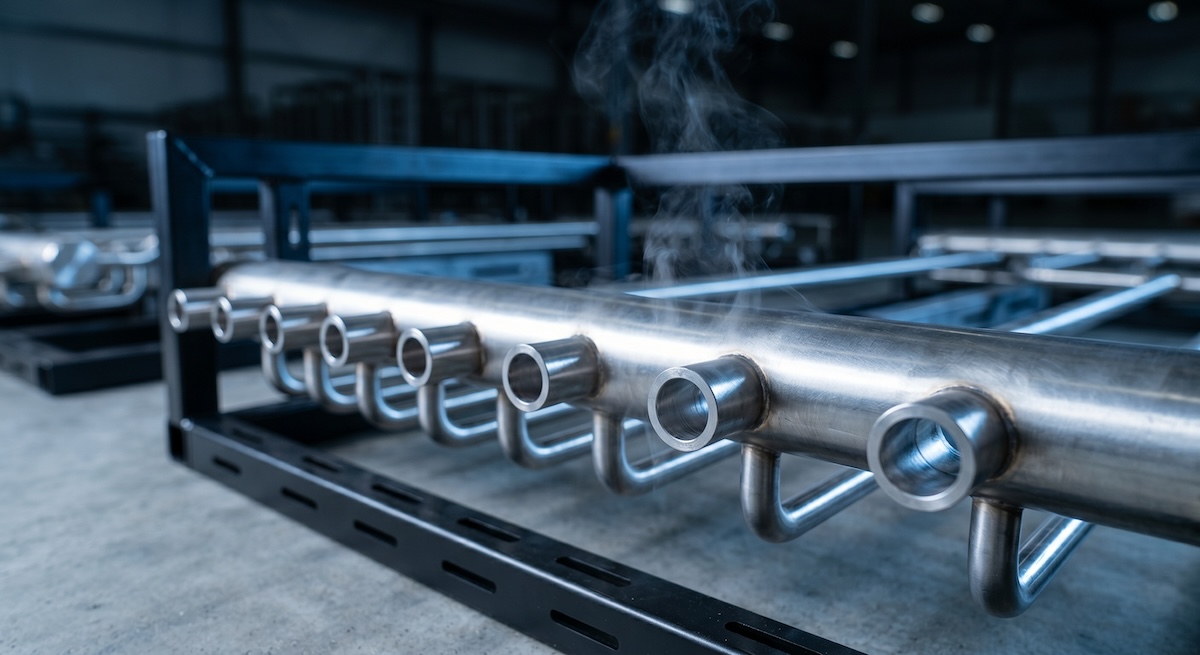
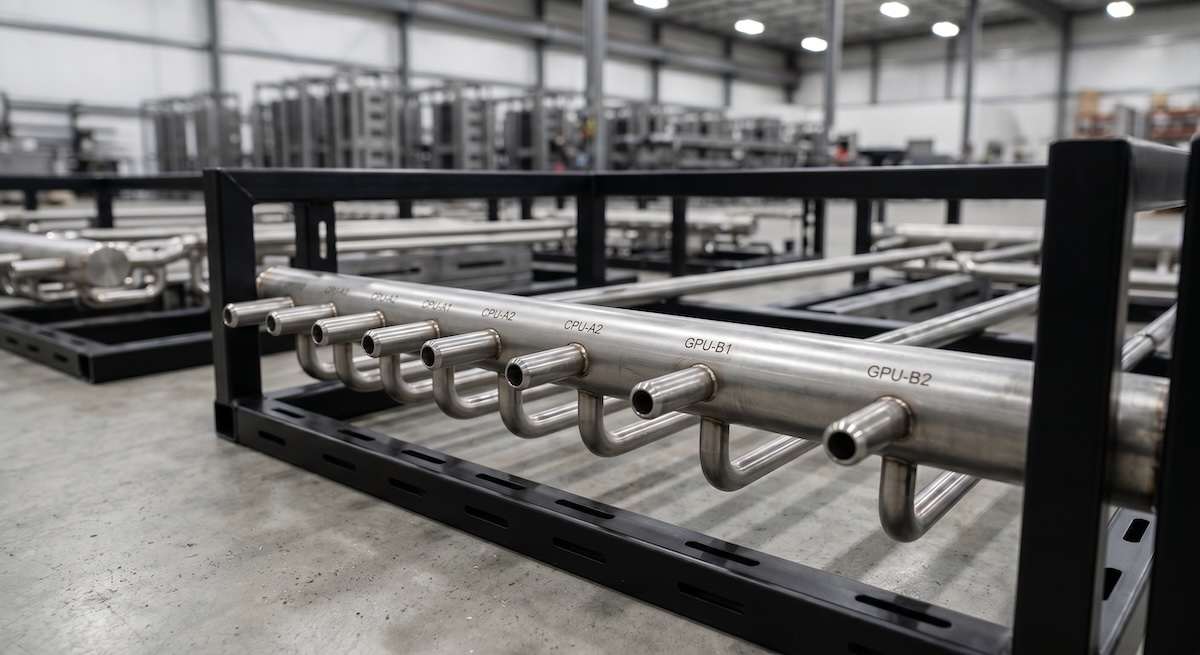
Liquid cooling infrastructure. At rack densities above 40 to 50 kW, air cooling reaches its physical limits. Liquid cooling systems use chilled water, dielectric fluid, or refrigerant circulated through piping networks to remove heat directly from processors. A single data hall with 200 liquid-cooled racks requires supply and return headers, branch connections to each rack row, isolation valves, sensor ports, and mounting provisions, all fabricated from stainless steel tube stock (typically 304L or 316L) to withstand years of continuous contact with coolant fluids. The total linear footage of precision-fabricated stainless steel piping in a modern AI data hall dwarfs what traditional air-cooled facilities required.
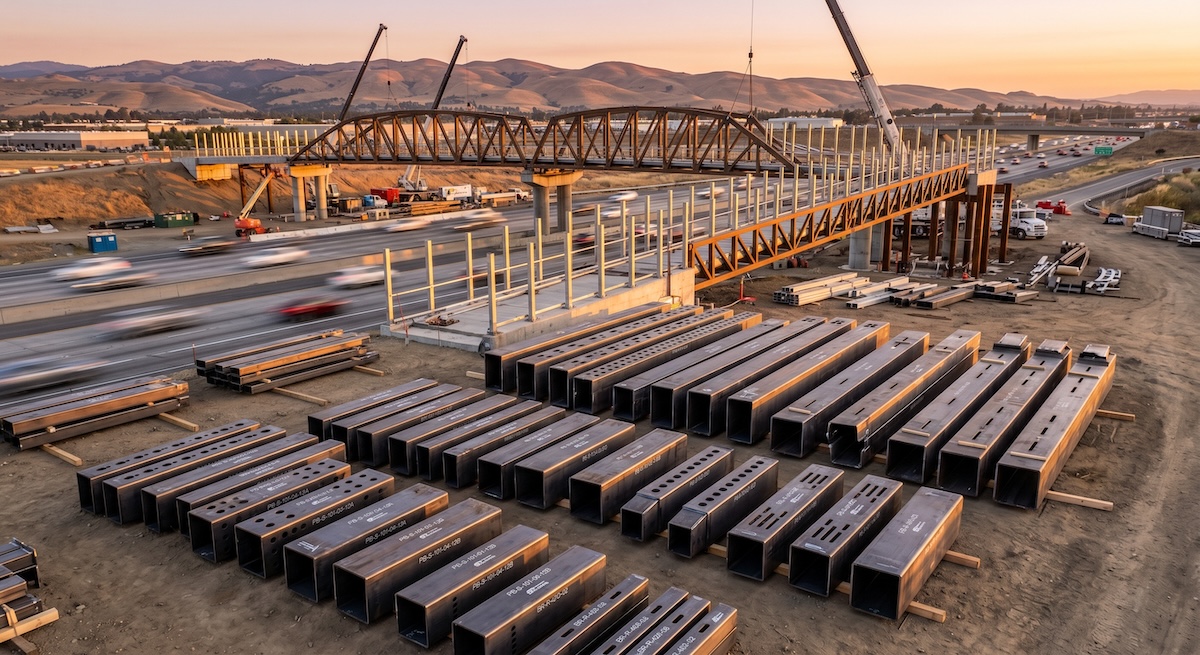
Structural support systems. AI server hardware is denser and heavier than traditional IT equipment. GPU clusters, high-bandwidth memory, and liquid cooling hardware add weight that overhead cable tray systems, busway supports, and equipment platforms must bear. These support structures are typically fabricated from structural steel tube, and they require precisely located mounting holes, connection slots, and alignment features to integrate with the building structure and the equipment they carry. As facilities scale to 100+ MW campuses with multiple data halls, the quantity of structural steel support components scales proportionally.
Cable management at density. High-density AI racks generate enormous data throughput, which translates into dense fiber and copper cable runs between racks, between data halls, and between buildings on a campus. The cable tray and ladder rack systems that organize these runs are fabricated from steel tube and channel stock, with precisely punched or laser-cut mounting provisions. At AI scale, a single campus may require miles of cable management framing.
Containment and separation systems. Hot-aisle and cold-aisle containment becomes more critical as rack densities increase, because mixing supply and return airstreams wastes energy and reduces cooling effectiveness. Containment frameworks are fabricated from steel tube with precisely located panel attachment points, door hinge mounts, and sealing surfaces. The tolerances required for effective containment are tighter than what general structural steel work demands.
Equipment platforms and raised structures. Liquid cooling plants, heat exchangers, pump skids, and electrical distribution equipment often require elevated platforms or mezzanine structures within the data hall or in adjacent mechanical rooms. These platforms are fabricated from structural tube and angle steel with precisely located connection points for field assembly.
The aggregate effect is that a modern AI data center at 100 MW may require two to three times the volume of precision-fabricated structural steel components compared to a traditional enterprise facility at the same power rating. And the construction timelines are shorter, not longer.
The Timeline Pressure on AI Data Center Construction
The financial mathematics of AI data center construction create schedule pressure unlike anything the industry has previously experienced. Research from STL Partners estimates that a 60 MW data center loses approximately $14.2 million for every month of delay, including lost lease revenue and carrying costs on committed capital. A six-month slip can cut project returns nearly in half.
This pressure is reflected across the industry. CBRE reported that capacity under construction declined nearly 6% year over year during the second half of 2025 despite vacancy rates hitting a historic low of 1.4%. Sightline Climate data shows that 26% of projects expected to come online in 2025 were delayed. JLL found that 57% of projects in 2025 experienced construction delays of three months or more.
The causes are well documented: power procurement challenges, equipment lead times stretching to 8 to 24 months, permitting delays, and a construction labor shortage of approximately 439,000 workers. But within these macro constraints, the micro-level delays accumulate from hundreds of individual procurement and fabrication decisions, and structural steel fabrication is one of the procurement streams where schedule compression is most achievable.
This is because the traditional multi-step fabrication process for structural steel tube components (sawing, drilling, slotting, notching, tapping, deburring) contains enormous embedded non-productive time: queue time between machines, setup time at each station, and inspection holds between operations. Eliminating that non-productive time through single-process fabrication does not require changes to the design, the material, or the installation method. It requires a change in how the components are manufactured.
How Tube Laser Fabrication Meets AI-Scale Requirements
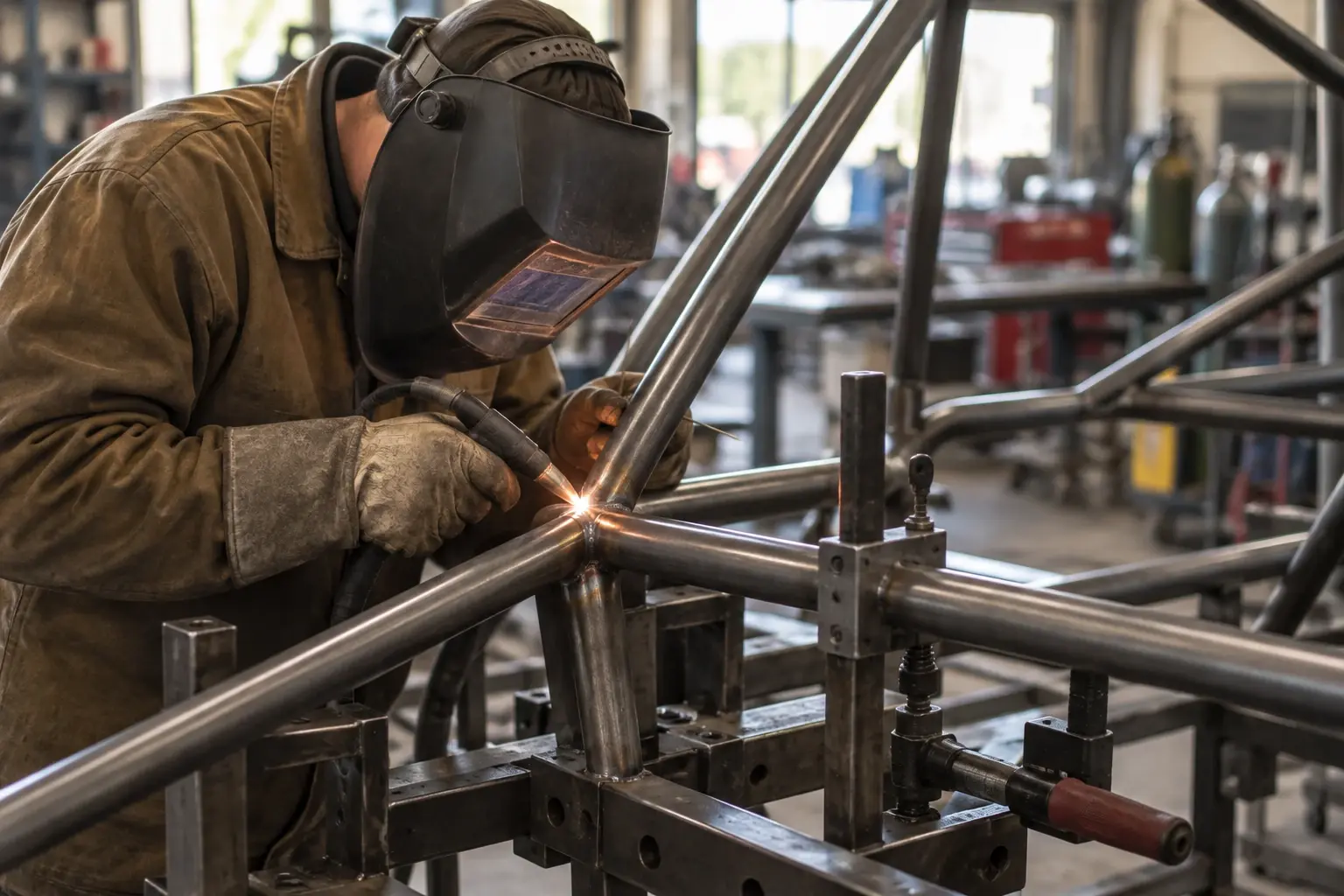
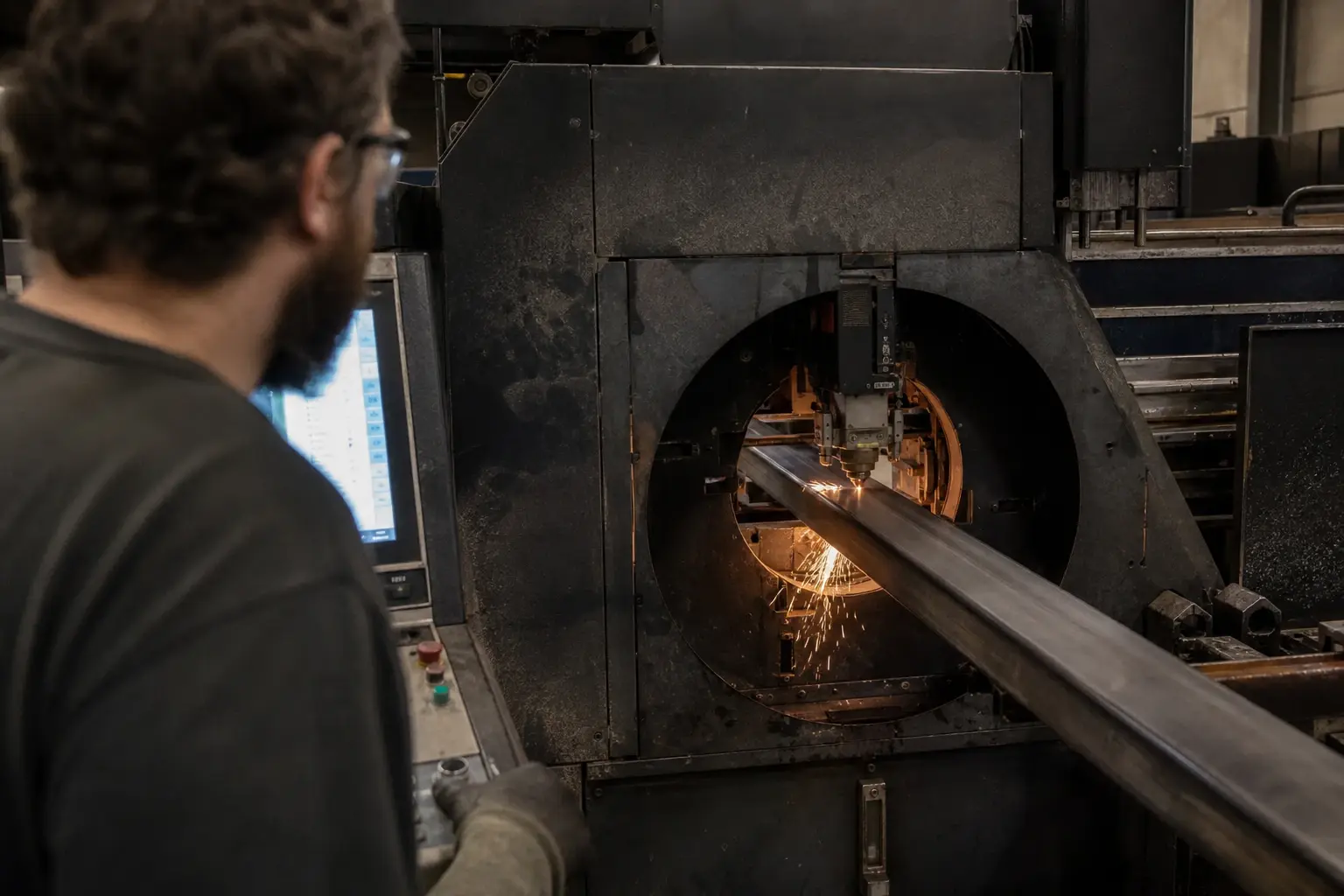
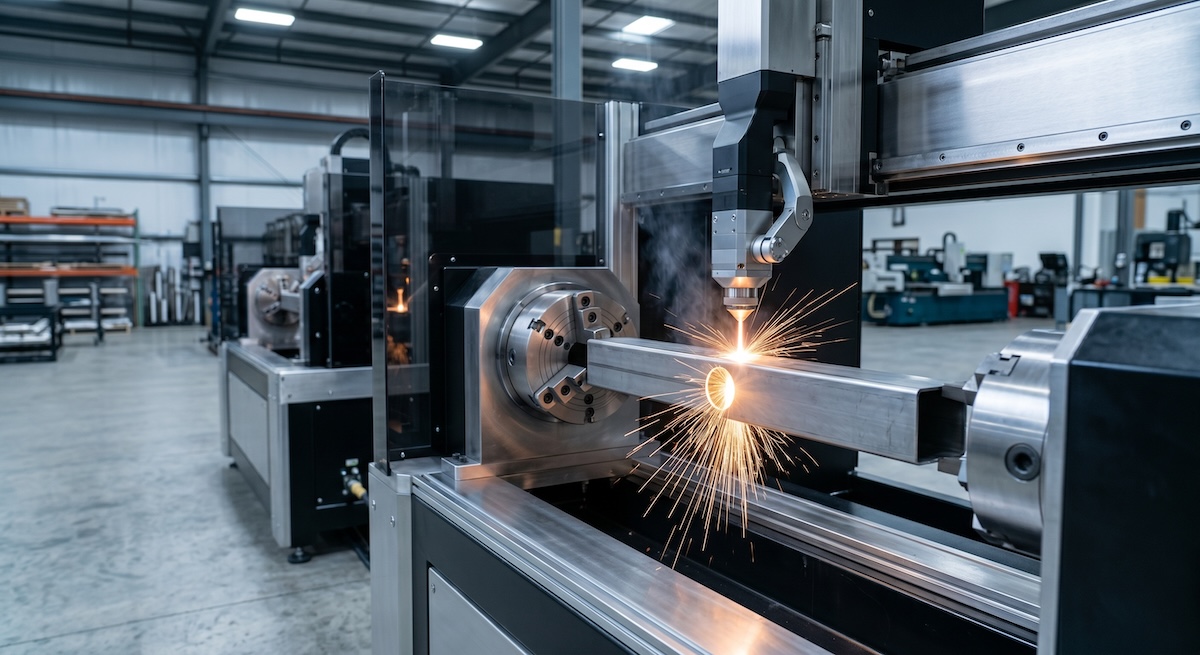
Tube laser fabrication consolidates the entire multi-step structural steel processing workflow into a single CNC-controlled operation. A fiber laser cuts, drills, notches, slots, copes, and profiles structural tube and stainless steel material while the workpiece remains in one fixture. For AI data center construction, this technology addresses the specific challenges that make these projects different from traditional builds.
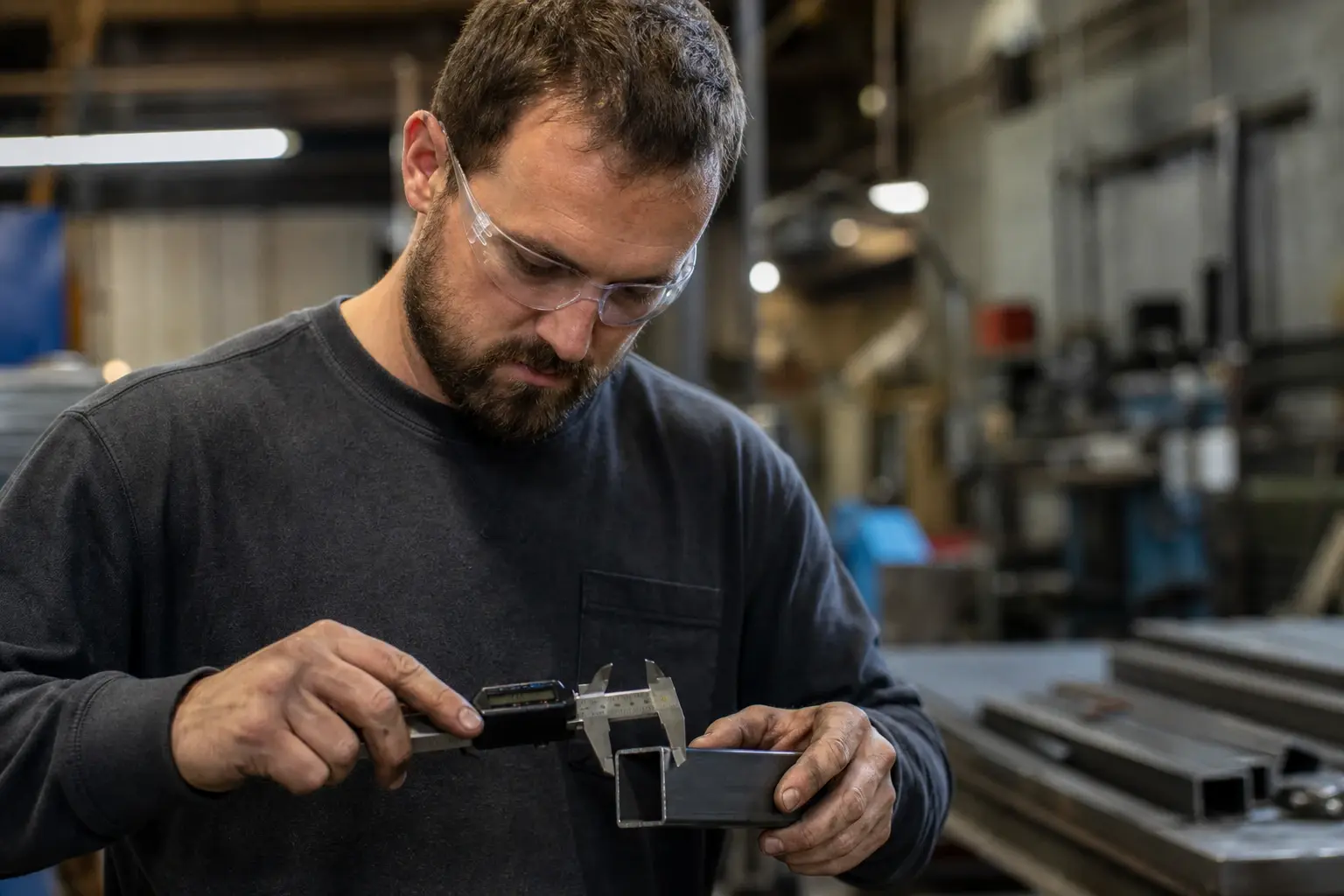
Volume with consistency. A liquid cooling infrastructure package for a 50 MW AI data hall might involve 2,000 to 4,000 stainless steel tube components across 100+ distinct part numbers. Tube laser processing maintains ±0.003-inch positional accuracy from the first part to the last because the workpiece never leaves the machine between operations. For cooling manifold headers where branch connections must align precisely with rack-mounted heat exchangers across hundreds of identical assemblies, this repeatability eliminates the field rework that plagues conventionally fabricated components.
Speed at scale. The fabrication phase for a 2,000-component structural steel package compresses from 8 to 12 weeks (conventional multi-step) to 3 to 5 weeks (tube laser). The time savings come primarily from eliminating queue time between stations and reducing setup between part numbers from hours to minutes. For a data center project where a month of delay costs $14.2 million, recovering 4 to 6 weeks of fabrication lead time represents extraordinary financial value relative to any per-piece cost difference.
Material versatility. AI data center structural steel packages involve multiple material types: carbon steel for structural framing and cable management, 304L and 316L stainless steel for cooling piping, and sometimes aluminum for lightweight overhead systems. Tube laser machines switch between materials through CNC program parameters (power, speed, assist gas) without mechanical changeover, allowing a single fabrication partner to process the complete material range.
The cut-and-fold advantage. Tube laser technology enables a technique where three sides of a rectangular tube are laser-cut so the material folds to create a precise 90-degree joint without welding. For structural frameworks and mounting brackets in data centers, this eliminates welding labor, welding inspection, and the heat distortion that degrades dimensional accuracy on long assemblies. In a construction market where certified welders are among the scarcest trades, reducing weld count is both a schedule and cost advantage.
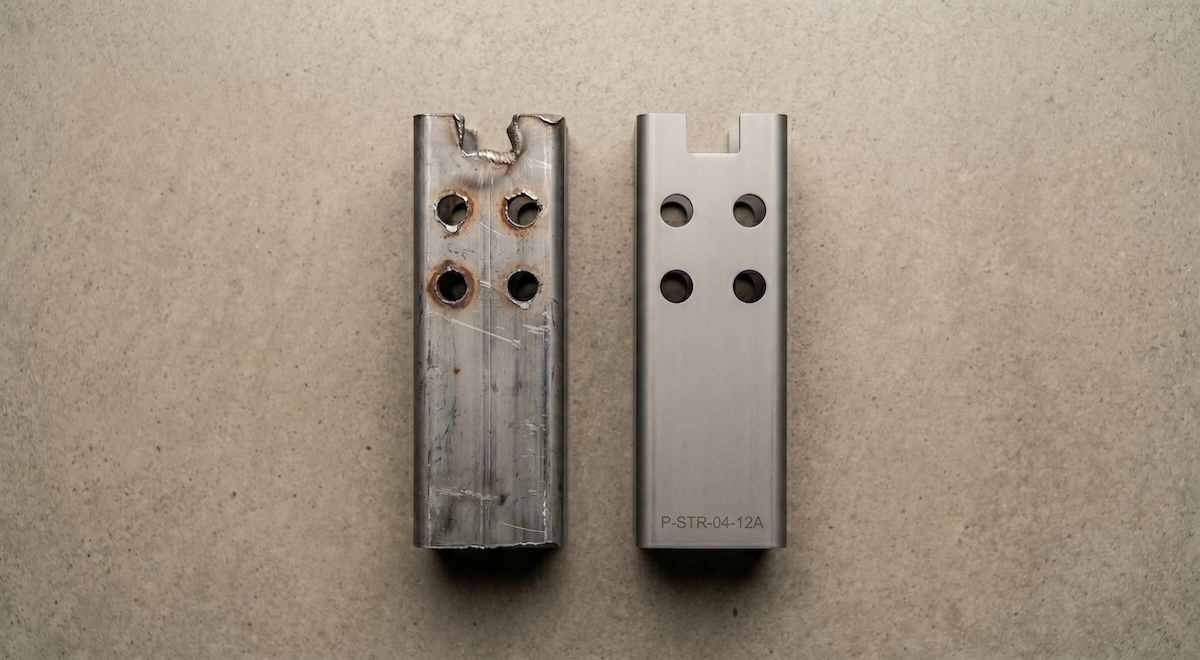
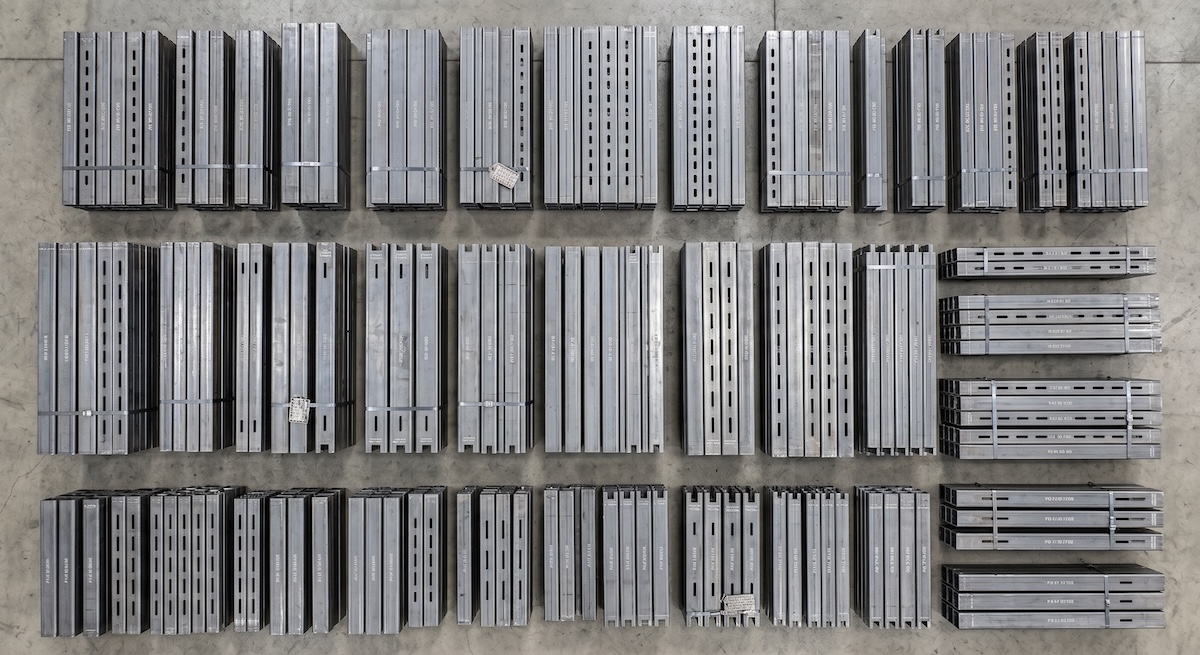
Integrated part identification. Tube laser machines etch part numbers, assembly identifiers, and orientation marks directly onto components during the cutting process. On an AI data center project with thousands of similar-looking structural steel components, permanent laser-etched identification eliminates the sorting confusion that wastes installation labor. Fabricators like Blueline Industries in Riverside, California, bundle every component by part number with etched identifiers matched to assembly drawings, a practice that allows installation crews to work systematically through complex structural steel packages without wasted search and verification time.
What AI Data Center Projects Need from Fabrication Partners
The structural steel fabrication requirements for AI-scale data centers differ from traditional commercial construction in several ways that general contractors and mechanical contractors should understand when selecting fabrication partners.
Stainless steel processing capability is essential. Traditional structural steel fabricators work primarily in carbon steel. AI data center cooling infrastructure demands extensive stainless steel tube processing. The 300-series austenitic stainless steels used in cooling applications have different cutting characteristics than carbon steel, requiring laser parameters optimized for clean edges, minimal heat-affected zones, and preservation of corrosion resistance. A fabricator without specific stainless steel tube laser experience will face a learning curve that costs schedule time.
Engineering support accelerates the design-to-fabrication handoff. AI data center projects frequently evolve during construction as equipment specifications change, cooling configurations are optimized, and rack layouts are refined. A fabrication partner with in-house engineering capability can rapidly translate design changes into updated CNC programs and modified production schedules. The ability to convert architectural or schematic drawings into production-ready shop drawings without external detailing adds weeks of value to the design-to-delivery timeline.
Machine redundancy protects delivery schedules. A fabrication partner operating a single tube laser machine is one breakdown away from missing a delivery commitment. Partners with multiple machines can maintain production during scheduled maintenance, allocate capacity to urgent orders without disrupting ongoing work, and absorb the volume surges common on fast-track data center projects. This redundancy is not a luxury. It is schedule insurance.
Geographic proximity enables responsive delivery. For data center construction projects in the western United States, fabrication partners located in the Southern California industrial corridor offer logistical advantages: proximity to major construction markets, access to regional steel supply chains, and the ability to provide emergency deliveries within a day's trucking distance. When a project schedule demands 48-hour turnaround on a design change, geographic proximity to your fabrication partner makes the difference between hitting the revised date and missing it.
The Convergence: Prefabrication, Modular Construction, and Tube Laser Processing
The data center industry's adoption of modular and prefabricated construction methods makes tube laser fabrication even more critical. Industry data shows that highly modularized data center projects achieve schedule reductions of 30 to 50% compared to conventional approaches. Power skids, cooling assemblies, electrical rooms, and white-space modules are now assembled and tested off-site before shipping to construction sites.
Modular construction demands component fabrication that is both precise and fast. A prefabricated cooling module is only as good as the precision of the tube components inside it. If branch connection holes on a cooling header are 0.020 inches off position, the module assembly team discovers the error during factory integration, adding rework time that negates the schedule advantage of prefabrication.
Tube laser fabrication feeds the modular workflow naturally. Precise components that fit the first time, labeled and bundled for the specific module they belong to, enable assembly teams to work at the speed the modular approach promises. The fabrication partner becomes a critical link in the modular supply chain, and their precision and delivery reliability directly determine whether the modular strategy achieves its schedule targets.
Blueline Industries, which has processed large-volume structural steel and stainless steel packages for data center and infrastructure projects (including stainless steel cooling components shipped by the truckload for AI data center facilities), represents the kind of fabrication capacity that the industry's modular buildout demands: multiple tube laser machines, stainless steel processing capability, engineering support, and the production discipline to deliver thousands of components on schedule.
The Scale Ahead
The structural steel fabrication demands of AI data center construction will intensify over the next several years. The data center physical infrastructure market is projected to reach $80 billion by 2030, with cooling technology representing the fastest-growing segment. Direct liquid cooling alone is expected to surpass $8 billion by 2030, and every dollar spent on liquid cooling equipment requires corresponding structural steel fabrication for piping, mounting, and support systems.
Nvidia's latest compute tray designs eliminate fans entirely, enabling fully liquid-cooled configurations that will become standard. As rack densities continue climbing, the ratio of structural steel components to computing hardware will increase, not decrease. The buildings that house AI computing are becoming more complex, more steel-intensive, and more demanding of precision fabrication with every generation of silicon.
For general contractors, mechanical contractors, and data center operators planning their next build, the fabrication supply chain is no longer a background procurement item. It is a strategic capability that determines whether a project delivers on schedule or joins the growing list of facilities delayed past their revenue target date.
Frequently Asked Questions
How does structural steel fabrication for AI data centers differ from traditional data center construction?
The primary differences are volume, material mix, and geometric complexity. AI data centers require significantly more liquid cooling infrastructure, which means more stainless steel tube components (304L and 316L) in addition to the carbon steel structural framing common in all data centers. The precision requirements are tighter because cooling piping connections must align with rack-mounted equipment across hundreds of identical installations. And the total volume of fabricated steel components per megawatt of capacity is two to three times higher than in traditional air-cooled facilities because liquid cooling, heavier equipment support structures, and denser cable management all add to the structural steel scope.
What role does stainless steel play in AI data center construction?
Stainless steel is the primary material for liquid cooling infrastructure, which is the defining mechanical system in AI-optimized data centers. The 304L and 316L grades offer corrosion resistance essential for components in continuous contact with coolant fluids, structural integrity across the temperature ranges common in cooling loops, and cleanliness standards appropriate for facilities where particulate contamination can damage sensitive computing equipment. As liquid cooling transitions from an enabling option to a foundational technology for AI data centers, the volume of stainless steel tube fabrication per project is growing substantially.
Can a single fabrication partner handle both the carbon steel structural work and the stainless steel cooling components for a data center project?
Yes, if the fabrication partner operates tube laser technology capable of processing multiple material types. Modern fiber laser tube cutting systems adjust power, speed, and assist gas parameters through the CNC program, switching between carbon steel, stainless steel, and aluminum without mechanical changeover. This capability allows a single partner to process the complete range of structural and cooling tube components, which simplifies procurement, reduces coordination overhead, and ensures consistent quality standards across the entire fabricated steel package. Not all fabricators have this capability, so confirming multi-material tube laser processing should be a qualification criterion.
How do fabrication lead times affect overall data center construction schedules?
Structural steel and cooling piping fabrication typically sits on or near the critical path for mechanical rough-in, which in turn gates electrical termination and commissioning. Research indicates that a 60 MW data center loses approximately $14.2 million for every month of delay. Conventional multi-step fabrication for a large structural steel package consumes 8 to 12 weeks; tube laser processing compresses this to 3 to 5 weeks. The 4 to 7 weeks recovered flow directly into earlier mechanical installation and commissioning, potentially accelerating the facility's revenue-generating date by one to two months.
What should data center contractors look for when evaluating structural steel fabrication partners?
Five criteria matter most for AI-scale data center projects. First, tube laser processing capability for both carbon steel and stainless steel, which determines fabrication speed and dimensional consistency. Second, machine redundancy (multiple tube laser machines) to protect delivery schedules against equipment downtime. Third, engineering support for translating design documents into production-ready shop drawings and for identifying design optimizations. Fourth, production-ready part identification with laser-etched markings and assembly-sequenced packaging, which directly reduces field installation time. And fifth, demonstrated experience with data center infrastructure projects, including the volume, material, and tolerance requirements specific to AI-scale cooling and structural systems.
Blueline Industries operates multiple tube laser systems from its Riverside, California facility, processing structural steel and stainless steel components for data center, infrastructure, and industrial clients. The company serves AI data center construction projects with precision tube fabrication for cooling infrastructure, structural framing, and cable management systems. For structural steel fabrication quotes, visit bluelineind.com or call (951) 833-5597.


.png)