Quick Answer: Tube laser cutting services use CNC-controlled fiber lasers to cut, drill, notch, slot, cope, and profile metal tubing in a single automated operation. The technology replaces the conventional multi-step workflow of sawing, drilling, milling, notching, and tapping, consolidating five or more sequential operations into one fixturing. For OEMs, this means production-ready components with ±0.003-inch repeatability across thousands of parts. For contractors, it means structural steel packages fabricated in 3 to 5 weeks instead of 8 to 12. For engineers, it means design freedom to specify complex geometries that would be impractical or uneconomical with conventional machining. This guide covers how the technology works, what it can process, where it delivers the greatest value, and how to evaluate service providers.
Tube laser cutting has moved from a specialty process to a foundational manufacturing technology in a remarkably short time. The laser pipe cutting machine market was valued at approximately $4.5 billion in 2024 and is projected to reach $7.2 billion by 2033, reflecting the breadth of industries now specifying tube laser processing for production work.
The adoption curve accelerated for a straightforward reason: the conventional alternative is not competitive at scale. A tube component with six features (two holes, one slot, one notch, one cope, one tapped hole) visits six machines in a conventional shop, with six setups, six queue periods, and six opportunities for positional error. On a tube laser, the same part is complete in one cycle without leaving the fixture. The math on throughput, consistency, and lead time is compelling enough that the technology has moved from "nice to have" to "required capability" in fabrication partner evaluation.
But not all tube laser services are equivalent, and the technology serves different stakeholders in different ways. An OEM sourcing 10,000 components per month has different evaluation criteria than a contractor bidding a Caltrans bridge project or an engineer designing a nitrogen cooling manifold for an AI data center. This guide addresses all three perspectives.
How Tube Laser Cutting Works
The process is conceptually simple, which belies the engineering sophistication of the equipment.
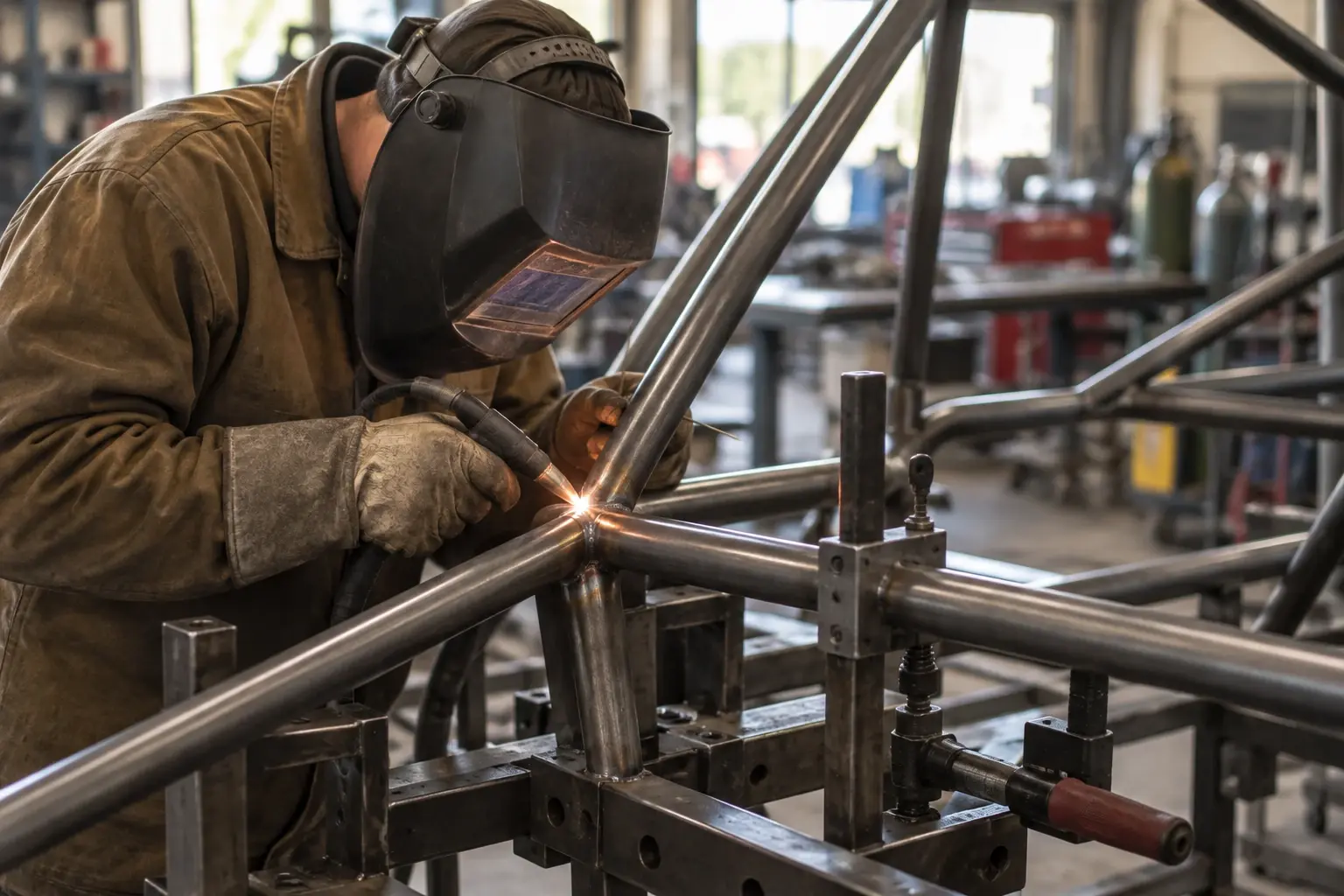
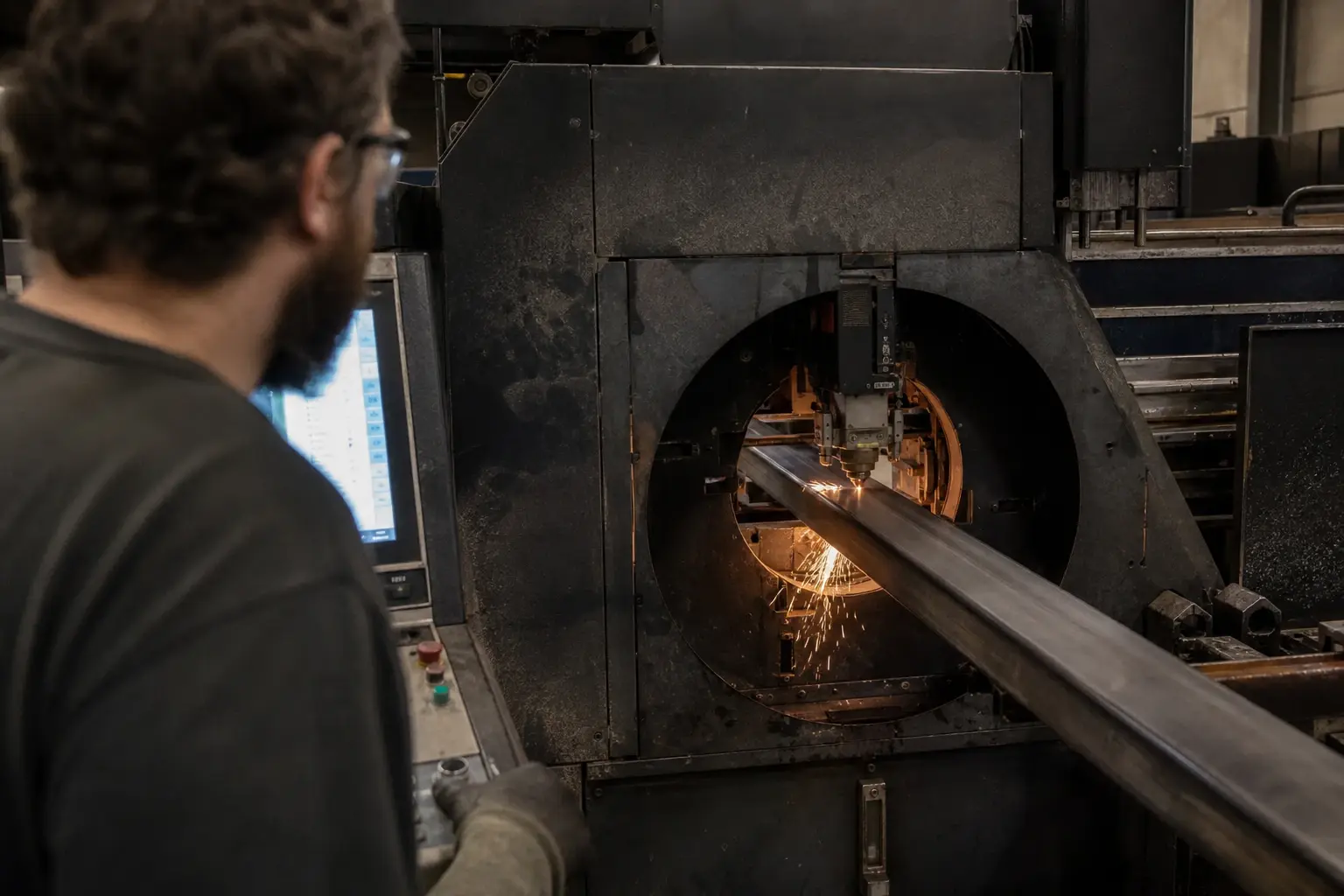
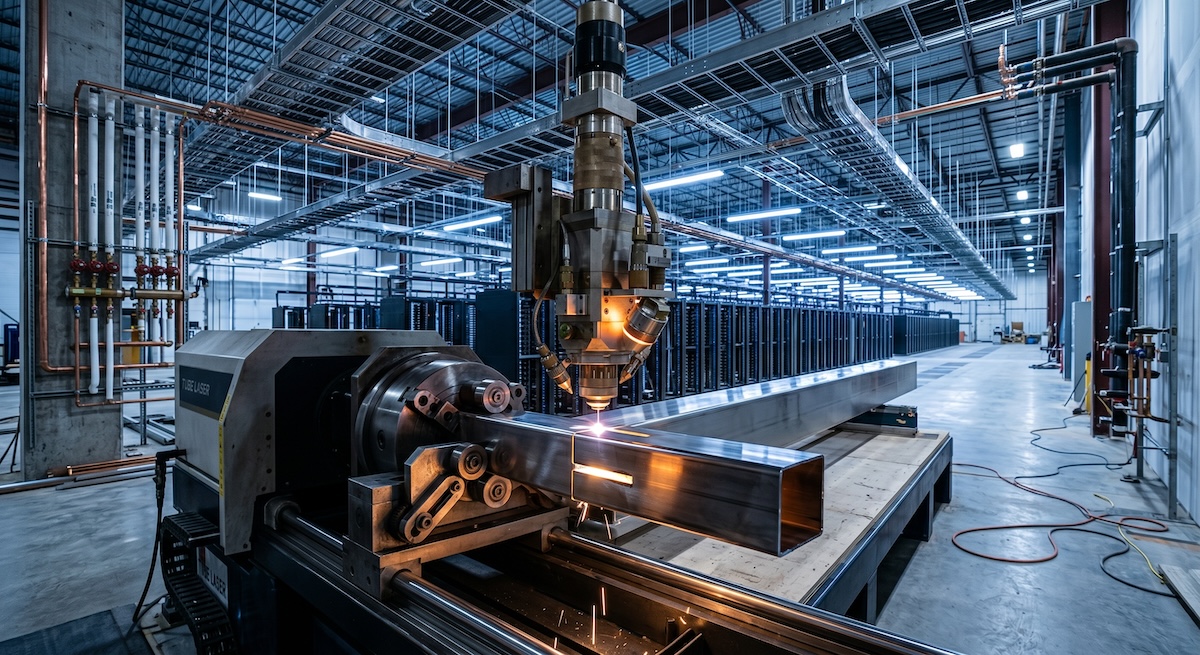
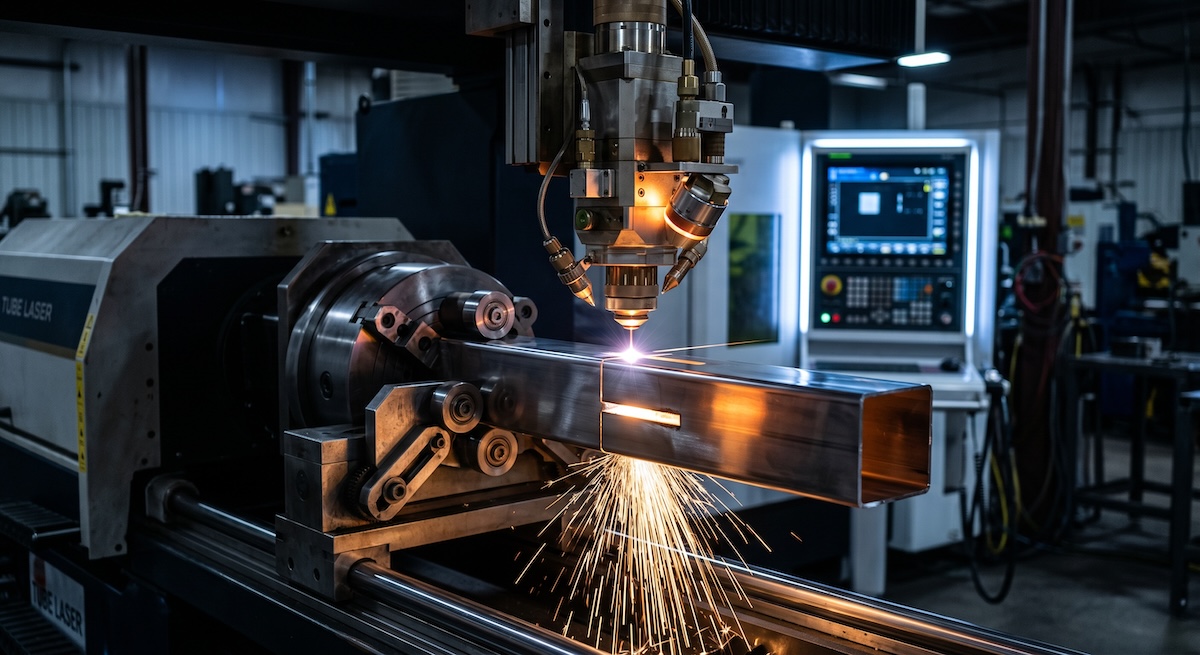
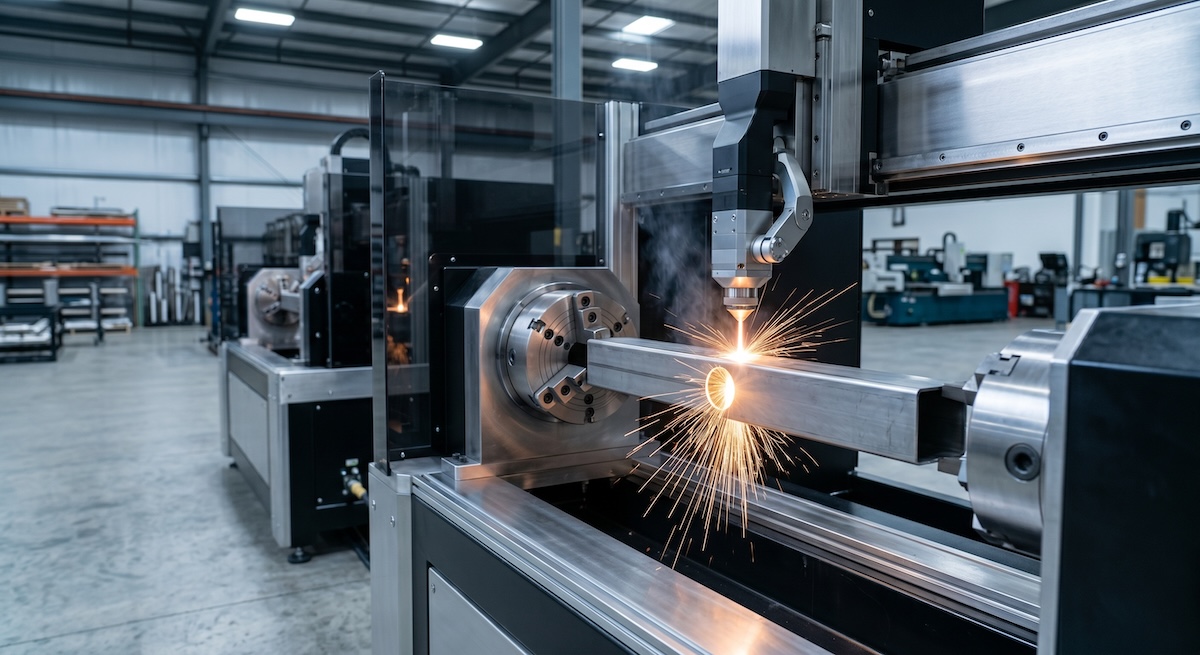
A fiber laser generates a concentrated beam, typically 3 to 6 kilowatts for structural and stainless steel tube work. The beam travels through optical fibers to a cutting head equipped with a focusing lens that narrows it to a fine spot. A CNC controller directs the cutting head through programmed paths while the tube stock rotates and translates in a multi-chuck clamping system. An assist gas (nitrogen for clean-edge stainless steel cuts, oxygen for faster carbon steel processing, or compressed air for economy applications) blows molten material from the cut zone.
The CNC program is generated directly from 3D CAD models or 2D shop drawings, eliminating the interpretation step that introduces errors in conventional fabrication. What the engineer drew is what the machine cuts, with no intermediate translation through a machinist's reading of a paper drawing.
Modern tube laser systems offer 5-axis cutting capability, meaning the laser head can tilt and rotate to produce beveled cuts, compound miters, and angled features that would require specialized fixturing on conventional equipment. This capability is what enables techniques like cut-and-fold fabrication, where three sides of a rectangular tube are laser-cut so the material folds to create a precise 90-degree joint without welding.
What Tube Laser Services Can Process
The range of materials and profiles that tube laser technology handles has expanded significantly as fiber laser power has increased and CNC control systems have improved.
Profile types. Round tube, square tube, rectangular tube, oval tube, channel (C and U), angle, T-bar, flat bar, and custom structural shapes. The multi-chuck clamping systems on modern machines adapt to different profile geometries without mechanical changeover, which means a single production run can include mixed profiles.
Materials. Carbon steel (A500, A513, 1018, 1020) for structural and general fabrication. Stainless steel (304, 304L, 316, 316L, 409, 430) for corrosion-resistant applications including food equipment, medical devices, and data center cooling infrastructure. Aluminum (6061-T6, 6063-T5) for lightweight and architectural applications. Copper and brass for specialized electrical and plumbing components. The CNC program adjusts laser power, cutting speed, and assist gas selection for each material automatically.
Size range. Most production tube laser systems handle diameters or diagonals up to 24 inches and lengths up to 40 feet, covering the full range of standard structural and mechanical tubing. Wall thicknesses from 0.035 inches (thin-wall ornamental) to 0.750 inches (heavy structural) are processable, though optimal speed and edge quality vary with thickness and material.
Feature types. Through-holes (round, slotted, shaped), blind cuts, notches, copes, saddle cuts for tube-to-tube intersections, miters (straight and compound), bevels up to 45 degrees, slots, tabs, text and symbol etching, and threaded holes (with integrated tapping arms). All features are completed in a single fixturing, which is the fundamental advantage over conventional fabrication.
The Value Proposition for OEMs
Original equipment manufacturers who incorporate fabricated tube components into their products face a specific set of challenges that tube laser services address directly.
Part-to-part consistency across production runs. OEM assembly lines depend on dimensional repeatability. When a mounting bracket's hole pattern drifts 0.015 inches between batches, it creates fit-up problems that manifest as rework on the assembly floor, not at incoming inspection. Tube laser processing maintains ±0.003-inch positional accuracy because every feature references the same datum established when the tube is loaded into the chuck system. Part number 5,000 matches part number 1.
Just-in-time delivery reliability. OEMs operating lean inventory models need fabrication partners who deliver on schedule, every cycle. Tube laser processing enables predictable throughput because cycle times are determined by the CNC program, not by the queue status of five separate machines. A tube laser service provider can calculate daily output with precision and commit to delivery dates with confidence that conventional shops cannot match.
Design optimization for manufacturing. The best tube laser service providers do not simply process the parts you design. They help you design better parts. Cut-and-fold techniques that eliminate welded joints, tab-and-slot connections that simplify assembly, and integrated alignment features that reduce fixturing on your assembly line are all design possibilities that tube laser enables. An experienced service provider's engineering team can review your designs and suggest modifications that reduce your total manufacturing cost, not just the fabrication line item.
Cost structure at scale. Tube laser services typically quote higher per-hour machine rates ($100 to $150 per cutting hour) than conventional processing. But the total cost per part is often lower because multiple operations are consolidated, setup time between part numbers drops by 70 to 90%, material scrap rates decrease from 12 to 15% to 5 to 8%, and secondary deburring is reduced or eliminated. For OEMs producing 500+ parts per month of a given part number, the cost advantage compounds with every cycle.
The Value Proposition for Contractors
General contractors and specialty contractors on construction, infrastructure, and data center projects evaluate tube laser services through the lens of schedule, field labor, and quality risk.
Schedule compression. The fabrication phase for a structural steel package compresses from 8 to 12 weeks (conventional multi-step) to 3 to 5 weeks (tube laser) because queue time between machines disappears and setup between part numbers drops from hours to minutes. On a project with liquidated damages or revenue targets tied to completion dates, recovering 4 to 6 weeks of fabrication lead time has financial value that dwarfs any difference in per-piece pricing.
Field labor reduction. Parts fabricated with ±0.003-inch accuracy fit together without field reaming, shimming, or modification. On prevailing wage jobsites where ironworker labor runs $85 to $110 per hour fully burdened, eliminating field rework on a 2,000-component steel package can save tens of thousands of dollars in installation labor. The cut-and-fold technique further reduces field costs by eliminating welded connections that require certified welders and inspection.
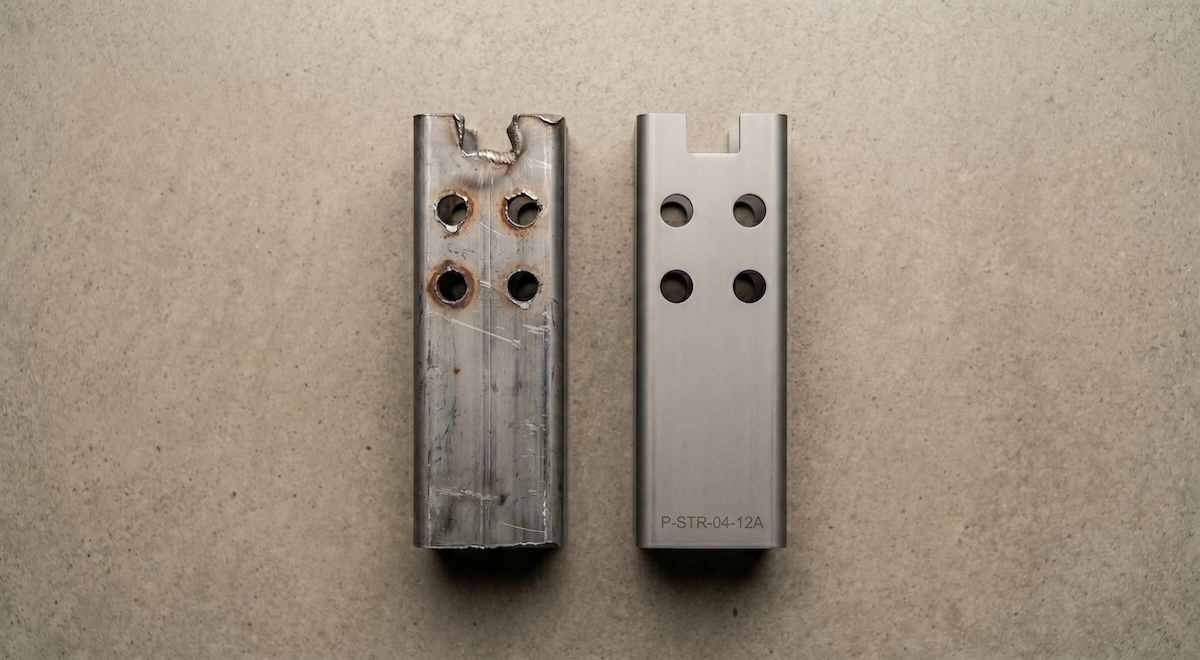
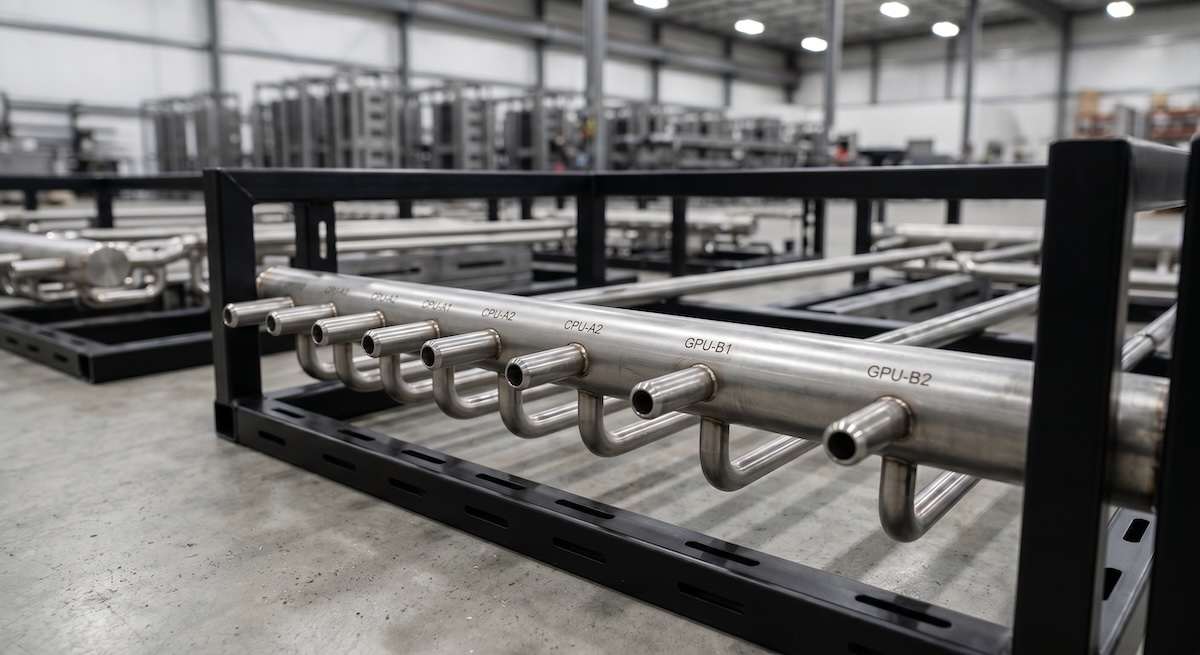
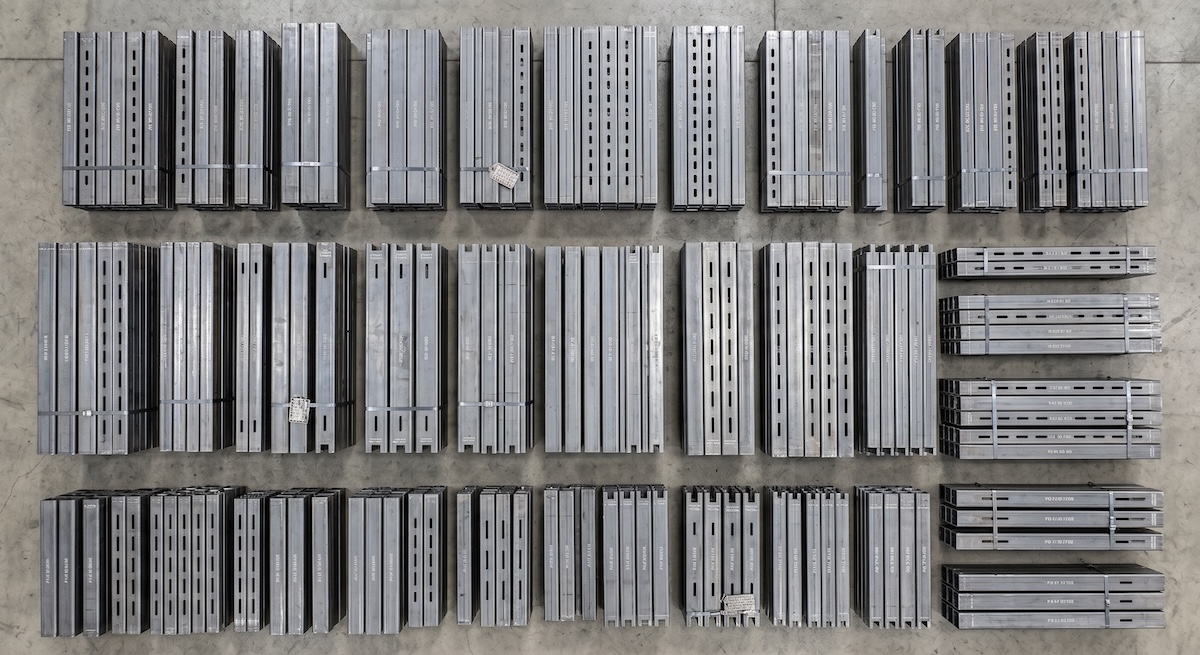
Part identification for complex projects. Tube laser machines etch part numbers, assembly references, and orientation marks directly onto each component during the cutting process. On projects with thousands of similar-looking tube components, permanent laser-etched identification eliminates sorting confusion and ensures installation crews work from clearly identified materials organized by erection sequence.
Material versatility on a single project. Construction projects often require carbon steel for structural framing, stainless steel for architectural elements or cooling infrastructure, and sometimes aluminum for lightweight overhead systems. A tube laser service provider processes the complete material range through CNC program parameters, allowing contractors to source all tube fabrication from a single partner.
The Value Proposition for Engineers
Design engineers and structural engineers specifying tube components benefit from tube laser capabilities that expand the geometric design space.
Complex geometries become practical. Tube-to-tube intersections that would require expensive custom fixtures for conventional coping can be laser-cut with programmed saddle profiles. Through-holes at compound angles that would demand 5-axis milling on conventional equipment are standard features on a tube laser. Engineers can design the geometry the application requires rather than constraining designs to what conventional fabrication can produce economically.
Material utilization improves. Tube laser nesting algorithms optimize part placement along raw tube stock, reducing waste. For engineers working within material budgets or designing for sustainability, the 5 to 8% scrap rate (versus 12 to 15% conventional) directly supports resource efficiency goals.
Weld reduction through cut-and-fold. Engineers can specify folded joints that eliminate welds, which reduces heat distortion, removes weld inspection hold points from the construction sequence, and produces connections with better dimensional accuracy than welded alternatives. For applications where fatigue resistance matters (cyclically loaded structures, vibrating equipment mounts), folded connections can offer superior performance to welded joints.
Rapid prototyping and design iteration. Because tube laser setup between part numbers takes minutes rather than hours, producing five variations of a design for testing is economically feasible. Engineers can iterate on connection details, mounting configurations, and assembly sequences without the per-setup cost penalty that conventional fabrication imposes on design changes.
How to Evaluate Tube Laser Service Providers
Not all tube laser services deliver equivalent results. The following evaluation criteria separate providers who perform at production scale from those who struggle under volume or complexity.
Machine technology and capacity. Fiber laser systems have largely replaced CO2 lasers for metal tube processing due to higher energy efficiency, lower maintenance, and superior cutting performance on reflective materials like aluminum and stainless steel. Ask about laser power (3 to 6 kW is standard for production work), maximum processing length, maximum diameter or diagonal, and whether the machine has integrated tapping capability. Critically, ask about machine count. A provider operating multiple tube laser machines offers redundancy that protects your delivery schedule against equipment downtime.
Material experience. Processing carbon steel competently does not guarantee competent stainless steel processing. The 300-series austenitic stainless steels require different laser parameters, assist gas strategies (typically nitrogen for clean edges), and handling practices to avoid contamination. If your project involves stainless steel, confirm that the service provider has specific experience and can demonstrate edge quality on sample cuts.
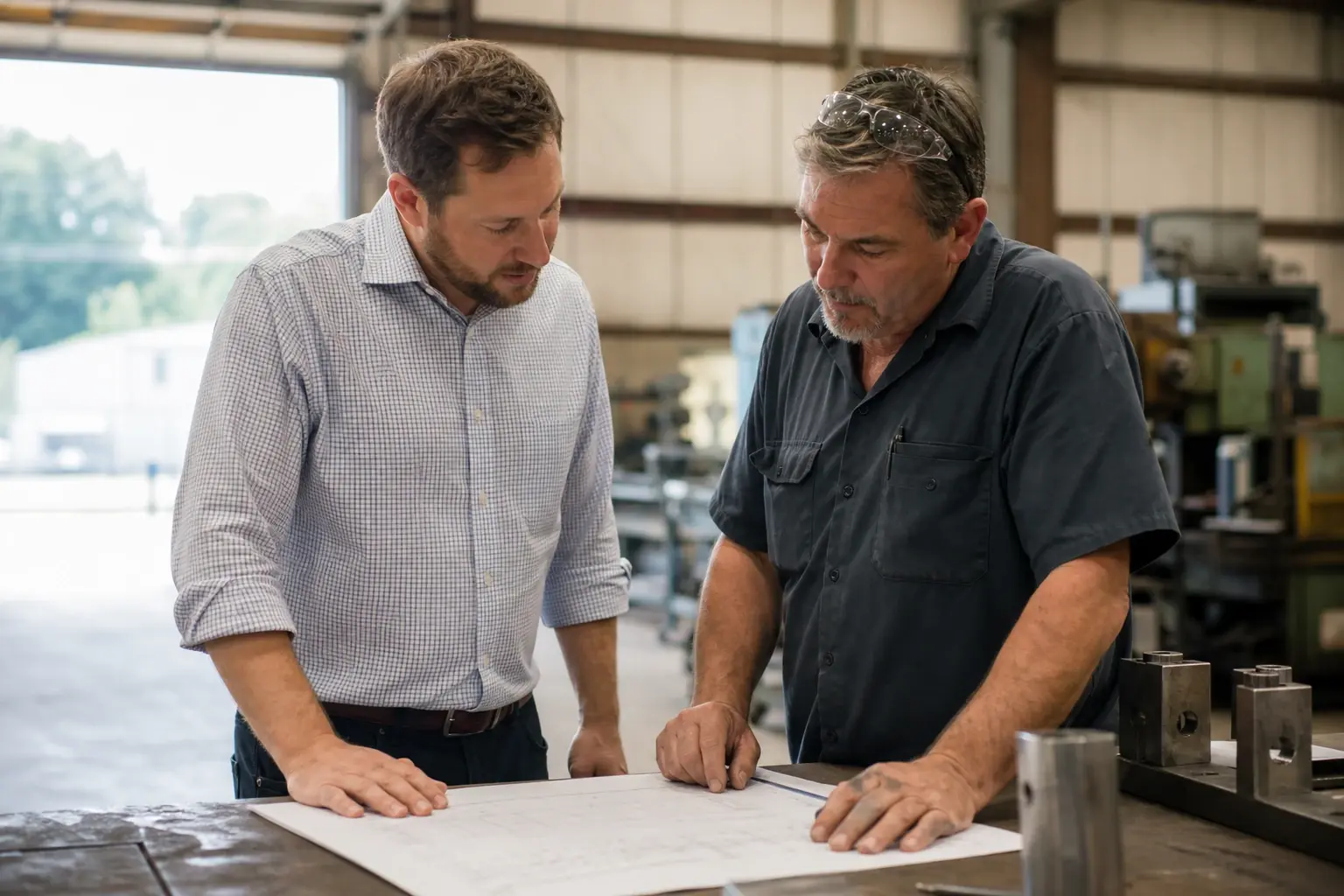
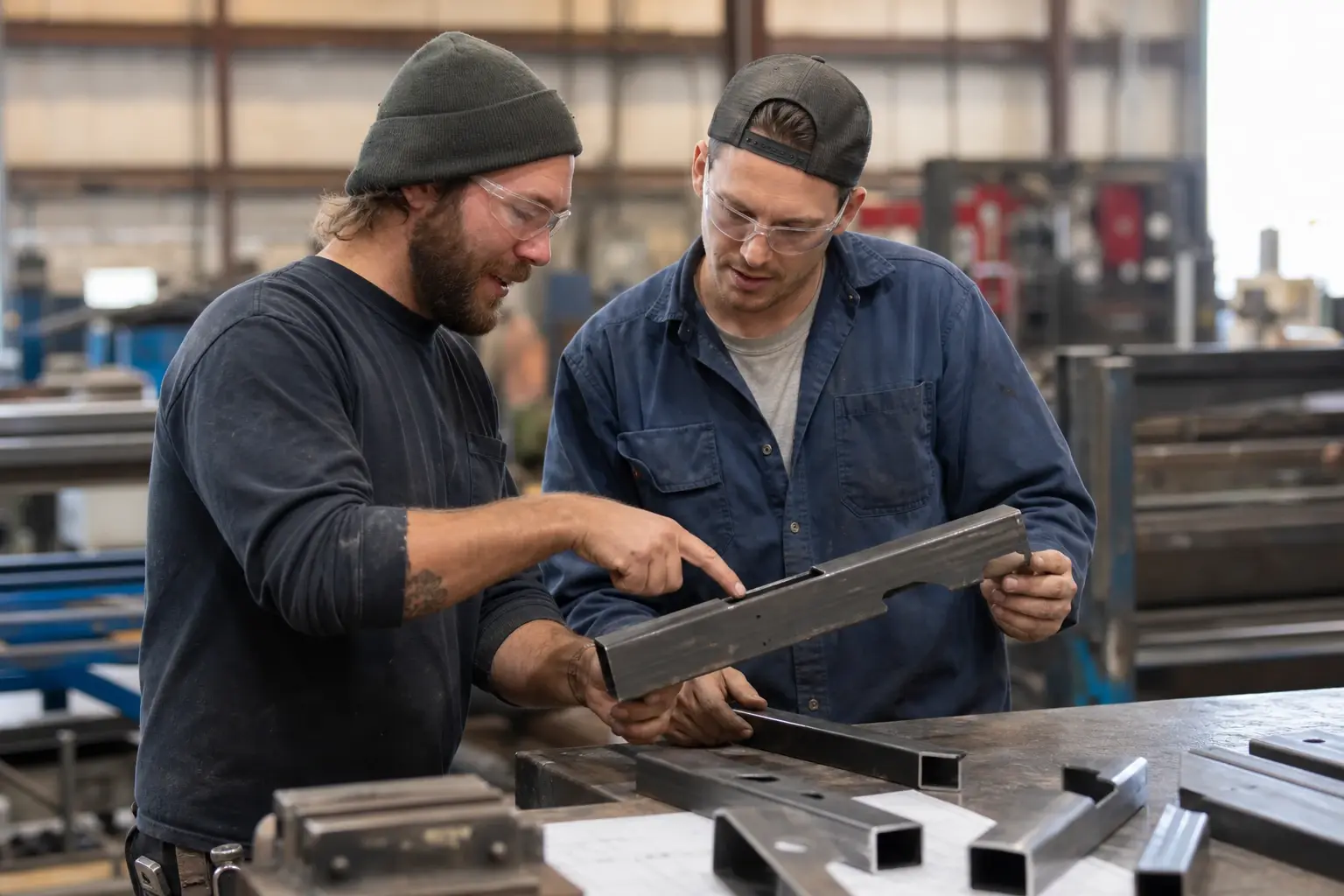
Engineering support. The most valuable service providers offer design-for-manufacturability review, shop drawing development from architectural or engineering schematics, and proactive communication about design optimizations. This capability transforms the relationship from order processing to technical partnership.
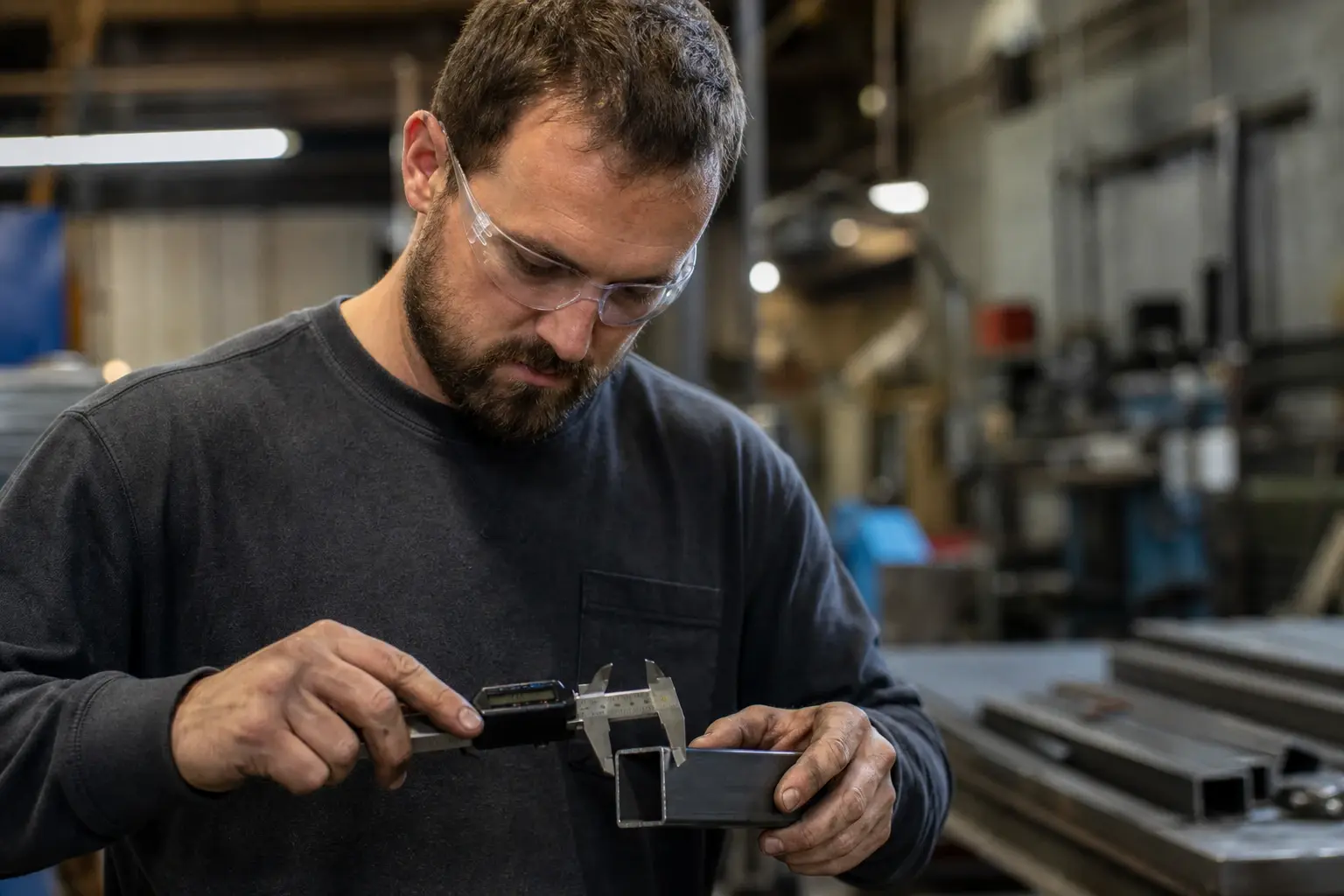
Quality systems. At minimum, look for first-article inspection protocols, in-process dimensional verification, and material traceability. For regulated industries, ask about specific certifications (ISO 9001, AS9100 for aerospace, ITAR registration for defense). The CNC process inherently produces consistent results, but the surrounding quality system determines whether deviations are caught before parts ship.
Part identification and packaging. Laser-etched part numbers and assembly identifiers are a standard capability of tube laser machines. Whether the service provider actually uses this capability, and whether they bundle and organize parts for your workflow, separates production-oriented operations from job shops. Ask for sample packaging from a current high-volume customer.
Geographic location and logistics. For just-in-time delivery programs or fast-track construction projects, proximity matters. A service provider within a day's trucking distance of your facility or jobsite can respond to design changes and urgent orders with a responsiveness that remote providers cannot match.
Blueline Industries in Chino, California exemplifies the capabilities that distinguish a production-grade tube laser service provider: multiple tube laser machines for redundancy and capacity, experience processing both carbon steel and stainless steel, in-house engineering for design support and shop drawing development, laser-etched part identification on every component, and assembly-sequenced bundling that integrates into OEM production workflows and construction installation sequences. Their location in Southern California's industrial corridor provides logistics advantages for clients across the western United States.
Common Applications by Industry
Tube laser cutting services serve a broad range of industries, each with distinct requirements and component types.
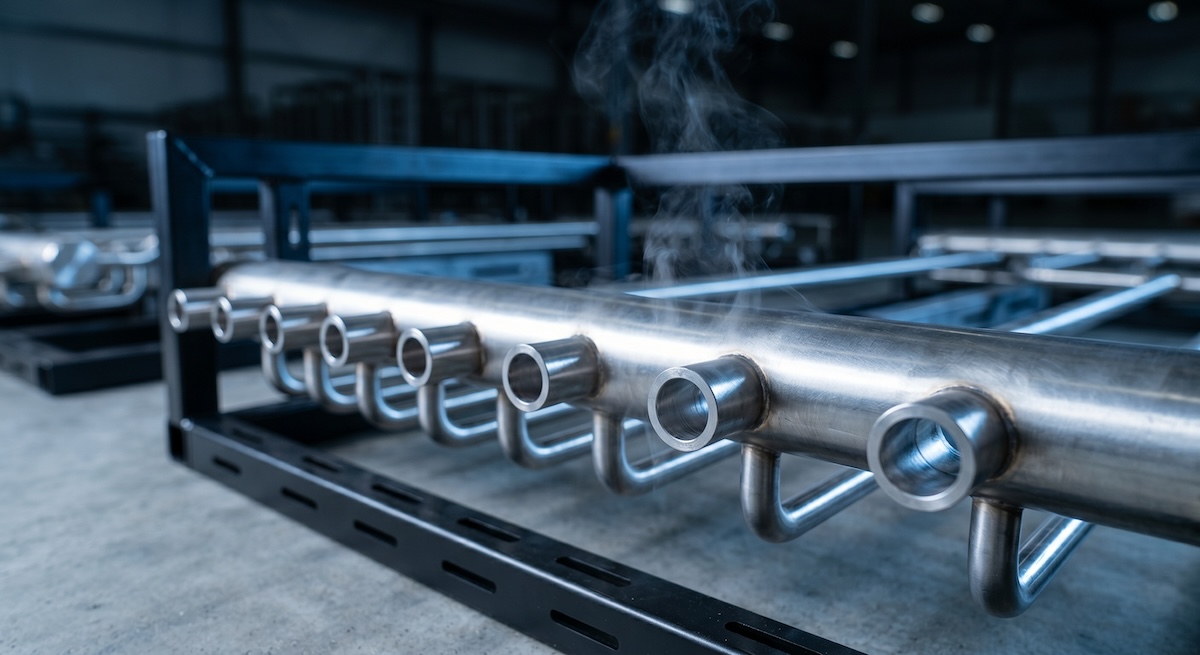
Data centers and AI infrastructure. Stainless steel cooling distribution manifolds, structural tube framing for cable management and containment systems, equipment mounting platforms, and nitrogen cooling piping networks. This sector is the fastest-growing demand driver for tube laser services, with the data center piping market projected to grow from $750 million in 2025 to over $7.4 billion by 2033.
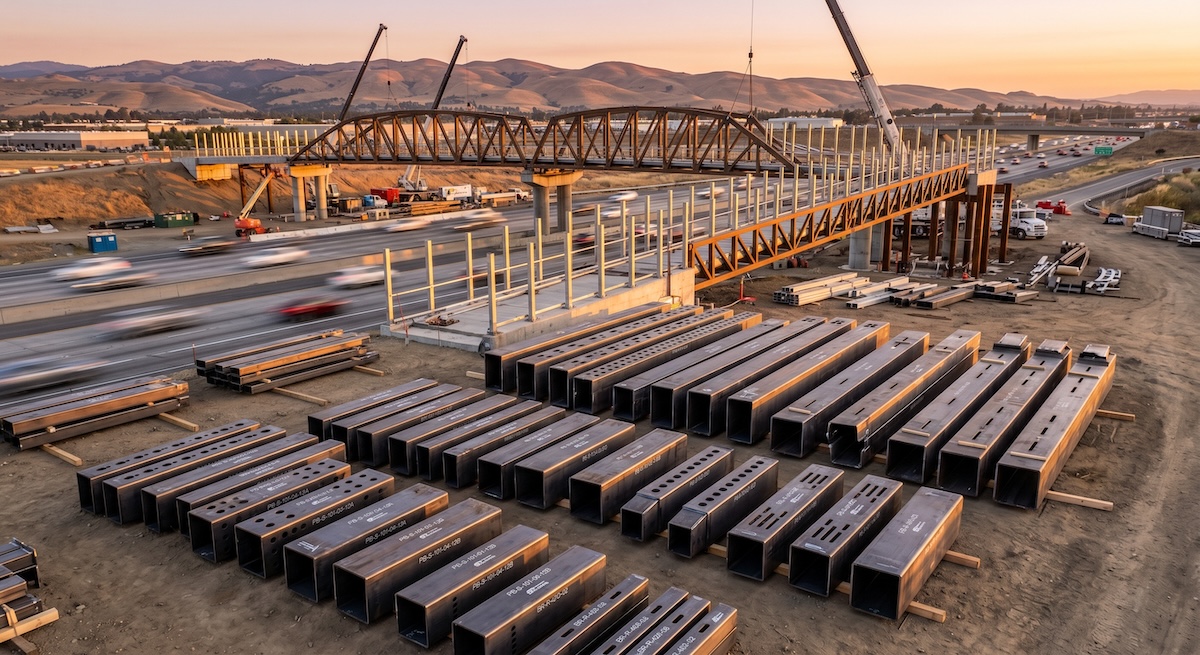
Construction and infrastructure. Bridge railing systems, pedestrian overcrossing structures, sound wall frameworks, seismic retrofit bracing, transit station canopies, and architectural metalwork. California infrastructure alone represents $17.7 billion in active Caltrans construction contracts.
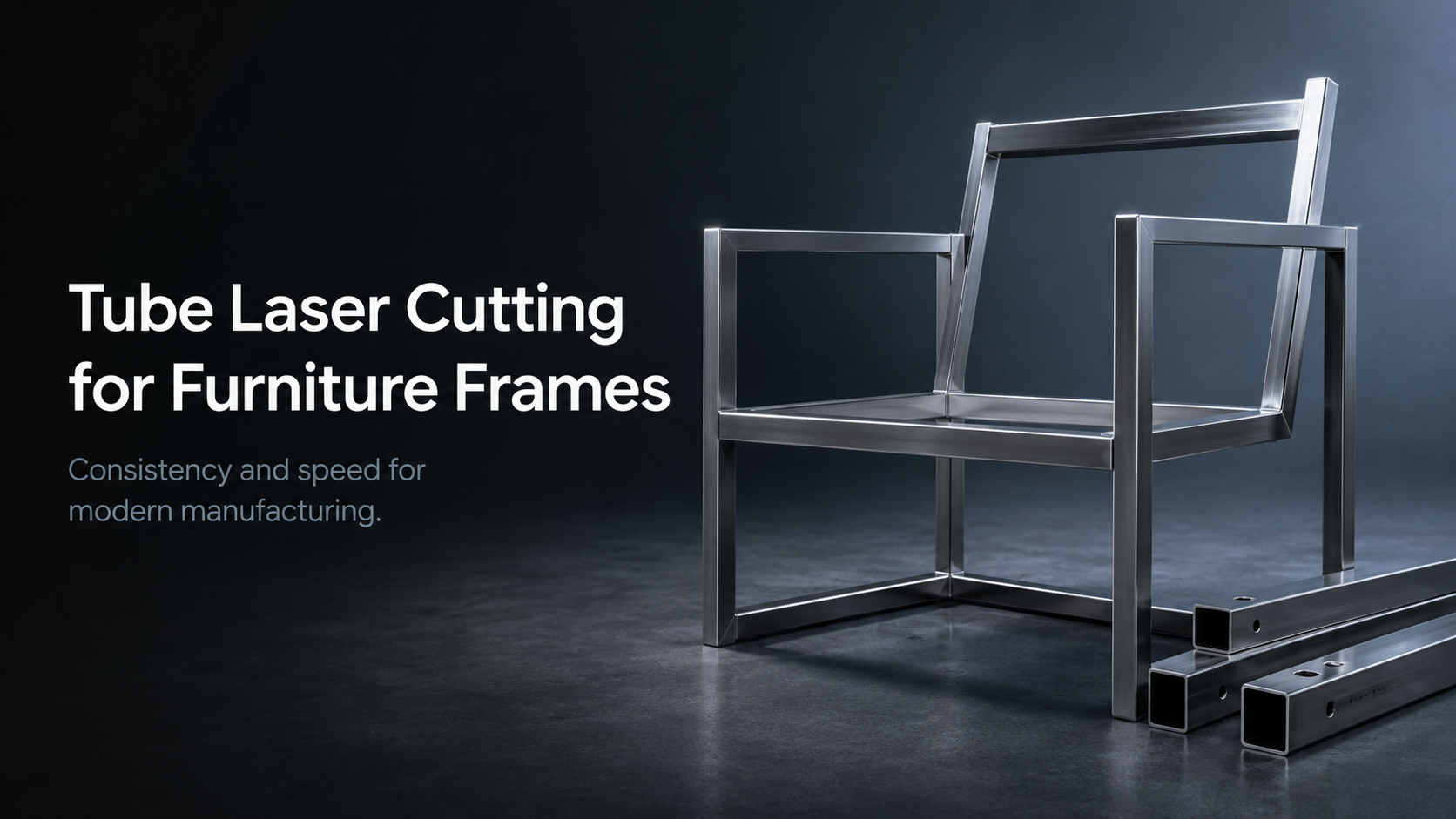
Manufacturing OEMs. Retail display racking, food processing equipment frames, grocery store security enclosures, furniture frames, exercise equipment, and industrial machine guards. OEMs in these sectors rely on tube laser services for production-scale components delivered on just-in-time schedules.
Automotive aftermarket. Roll cages, bumpers, brush guards, roof racks, and performance exhaust components. The precision and repeatability of tube laser cutting enables aftermarket manufacturers to scale from prototype to production without changing fabrication partners.
Aerospace and defense. Structural tube components for drone frames, equipment mounting systems, and ground support equipment. Tight tolerances and material traceability requirements make tube laser's CNC-controlled accuracy particularly valuable in these applications.
Furniture manufacturing. Metal chair frames, table bases, shelving systems, and retail fixture structures. The clean edges and consistent dimensions of tube laser cut components reduce finishing labor and improve assembly fit.
The Cost of Not Using Tube Laser Services
For organizations still procuring tube fabrication through conventional multi-step processes, the cost comparison is not limited to the fabrication line item. The total cost of conventional fabrication includes longer lead times that require larger inventory buffers, higher scrap rates that increase raw material spend, field rework labor caused by dimensional inconsistency, assembly floor time lost to sorting and identifying inadequately labeled components, engineering time spent on quality complaints and corrective actions, and schedule risk from multi-machine, multi-operator production dependencies.
These costs are real but often invisible because they are distributed across departments (receiving, assembly, quality, engineering, project management) rather than concentrated in the fabrication purchase order. Organizations that have switched to tube laser services consistently report that the total cost improvement exceeded their initial projections because the hidden costs of conventional fabrication were larger than they estimated.
Frequently Asked Questions
What file formats do tube laser service providers need to program parts?
Most service providers work from 3D CAD models (STEP, IGES, SolidWorks, or Inventor native formats) or 2D drawings (DXF, DWG, PDF). 3D models are preferred because they allow direct generation of the CNC cutting program without manual interpretation, which eliminates a potential error source. For projects where only architectural drawings or sketch-level designs exist, service providers with in-house engineering can develop the production models needed for programming. The key information any provider needs includes tube profile (round, square, rectangular), outer dimensions, wall thickness, material grade, feature locations and geometries, tolerances for critical dimensions, and quantity requirements.
How does tube laser cutting pricing compare to conventional fabrication?
Tube laser machine rates typically run $100 to $150 per cutting hour, which is higher than individual conventional machines (saws, drill presses, notchers). However, the comparison is misleading when applied per-piece because a single tube laser cycle replaces multiple conventional operations. A component with five features that would visit five conventional machines (each with its own hourly rate, setup time, and queue time) may cost less on a tube laser despite the higher per-hour rate. The breakeven typically occurs around 50 to 100 pieces for parts with moderate complexity. Above 500 pieces, the cost advantage ranges from 15 to 40% depending on the number of features per part. The most accurate comparison is total cost per finished, delivered part, including the secondary effects on assembly labor, quality, and schedule.
What tolerances can tube laser cutting achieve, and how do they compare to conventional methods?
Production tube laser systems routinely achieve ±0.003-inch (±0.076mm) positional accuracy on feature placement, with edge-to-edge tolerances of approximately ±0.010 inches. These tolerances are maintained consistently across production runs because the CNC process eliminates the operator-dependent variability of conventional machining. By comparison, conventional multi-step fabrication typically achieves ±0.010 to ±0.025 inches on feature placement, with the wider end of that range resulting from cumulative drift through multiple re-fixturing events. For applications where dimensional consistency across large quantities matters more than absolute tolerance on a single part (most OEM and construction applications), tube laser's repeatability advantage is more significant than the nominal tolerance specification suggests.
Can tube laser services replace welding in structural applications?
In many cases, tube laser enables fabrication techniques that reduce or eliminate welding. The cut-and-fold method, where three sides of a rectangular tube are laser-cut so the material folds into a precise 90-degree joint, produces connections without any welding. Tab-and-slot joints, where laser-cut tabs on one component insert into laser-cut slots on another, create mechanically interlocked connections that may require only tack welds rather than full structural welds. These techniques do not eliminate welding entirely from all applications; structural connections carrying significant loads still require welded or bolted joints designed per applicable codes. But they substantially reduce the total weld count on a project, which decreases dependency on scarce certified welders, eliminates weld inspection hold points, and reduces heat distortion that degrades dimensional accuracy.
How far in advance should projects be scheduled with tube laser service providers?
Lead times vary with project complexity, material availability, and the provider's current backlog. For standard carbon steel components with production drawings ready, typical lead times range from 2 to 4 weeks. Stainless steel projects may add 1 to 2 weeks for material procurement if non-standard sizes are required. Large-volume production programs (1,000+ components) benefit from blanket order arrangements where material is pre-procured and machine time is reserved on a scheduled cadence. For fast-track construction projects, engaging the fabrication partner during the design phase (before drawings are finalized) allows CNC programming to begin in parallel with material procurement, compressing the overall timeline. The current demand environment for tube laser services, particularly for data center and infrastructure work, means that preferred providers may have multi-week backlogs. Early engagement protects your schedule.
Blueline Industries provides tube laser cutting services from its Riverside, California facility, operating multiple tube laser systems for OEM production, construction and infrastructure fabrication, data center cooling infrastructure, and custom projects. The company processes carbon steel, stainless steel, aluminum, and specialty alloys with in-house engineering support, laser-etched part identification, and assembly-sequenced delivery. For tube laser cutting quotes, visit bluelineind.com or call (951) 833-5597.


.png)