Quick Summary
What is kerf in tube laser cutting? Kerf is the width of material the laser beam removes as it cuts, and it is the gap left between the two cut edges. Unless the cutting path is offset, a slot ends up wider than the line you drew.
Blueline Industries runs tube laser cutting from our facility in Chino, CA. Kerf is a small number, but it decides whether a tab drops into a slot or needs a hammer. This post explains how kerf works and what to put on your drawing.
What is kerf in tube laser cutting?
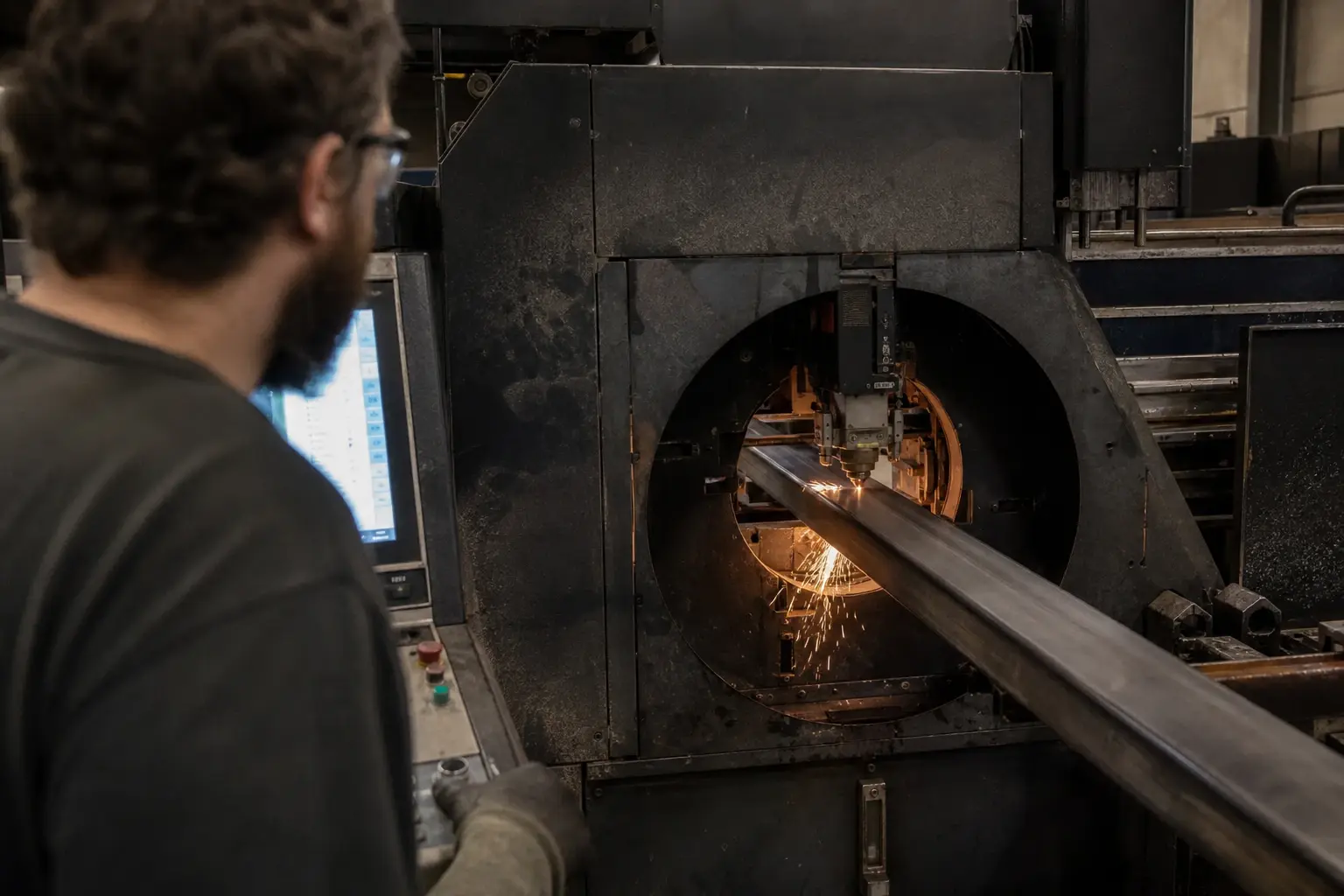
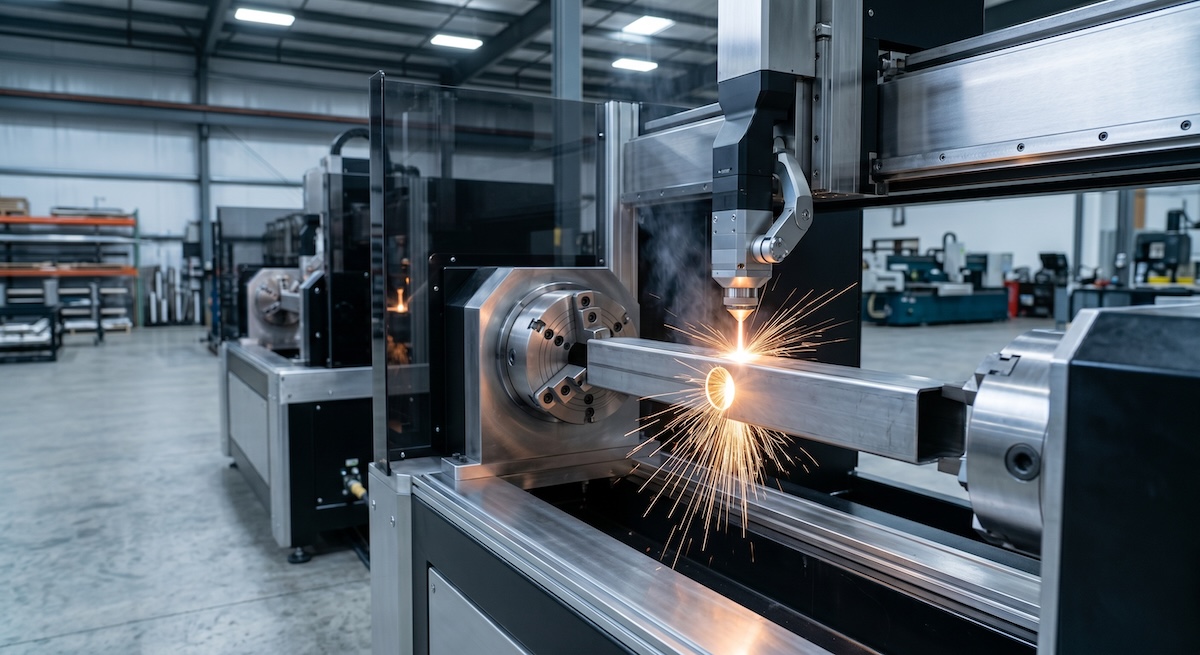
Kerf is the total width of material a laser beam removes as it cuts through a workpiece. It includes the molten and vaporized zone that assist gas blows clear. It is not the same as beam width, which is the diameter of the focused spot.
The definition comes from a laser-cutting explainer by Durma Press. The same page notes that the beam cuts wider than the nominal line by half the kerf on each side. For a slot, that means the cut opening is wider than the line you drew unless the path is offset.
How wide is a laser kerf?
It depends on the setup. The Durma Press explainer gives a typical range of 0.15 to 0.5 mm for fiber lasers. It also gives a wider general range of 0.08 mm to 1 mm across laser types. Your shop's actual kerf depends on its machine, material, and settings.
Tube adds its own variables, such as wall thickness and the curved surface. Rather than guess, ask your shop how it handles kerf on the tube size and wall you plan to order. The table lists the factors the same source says affect kerf width.
FactorWhat it coversMaterialType, thickness, reflectivity, and thermal conductivityLaser settingsPower, power density, and cutting speedFocusFocal length and focus positionAssist gasGas type and pressureMachine conditionOptics, nozzle, and beam alignment
A few tenths of a millimeter sounds tiny. On a part with a tight slot, it is the difference between a free slide and a press fit. That is why the nominal size, the fit you want, and who owns compensation belong together on the same page of your order.
The same source names nozzle wear and contamination as common causes of inconsistent kerf. That is a good reason to ask a shop how it keeps its machine in check.
How does kerf affect slot and tab fits on tube?
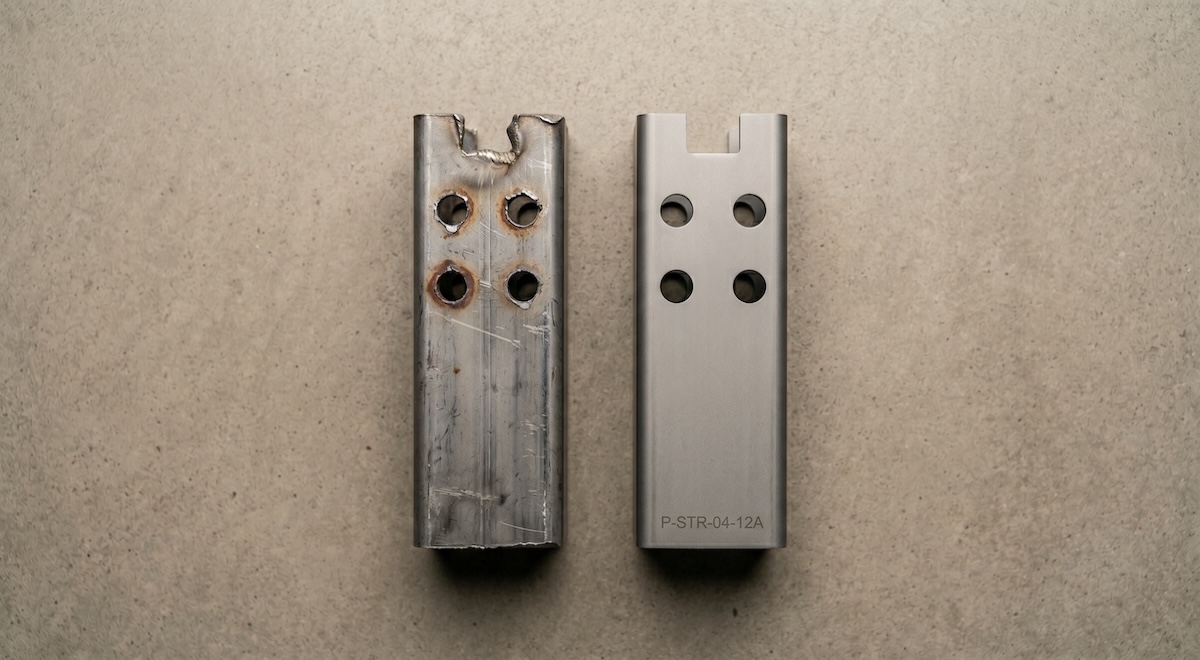
Kerf makes a slot slightly wider than drawn if no offset is applied. A tab and slot designed to the same nominal size will fit loosely. A tab drawn slightly wider than its slot will fit tight or not at all. The fit you want decides the dimensions you send.
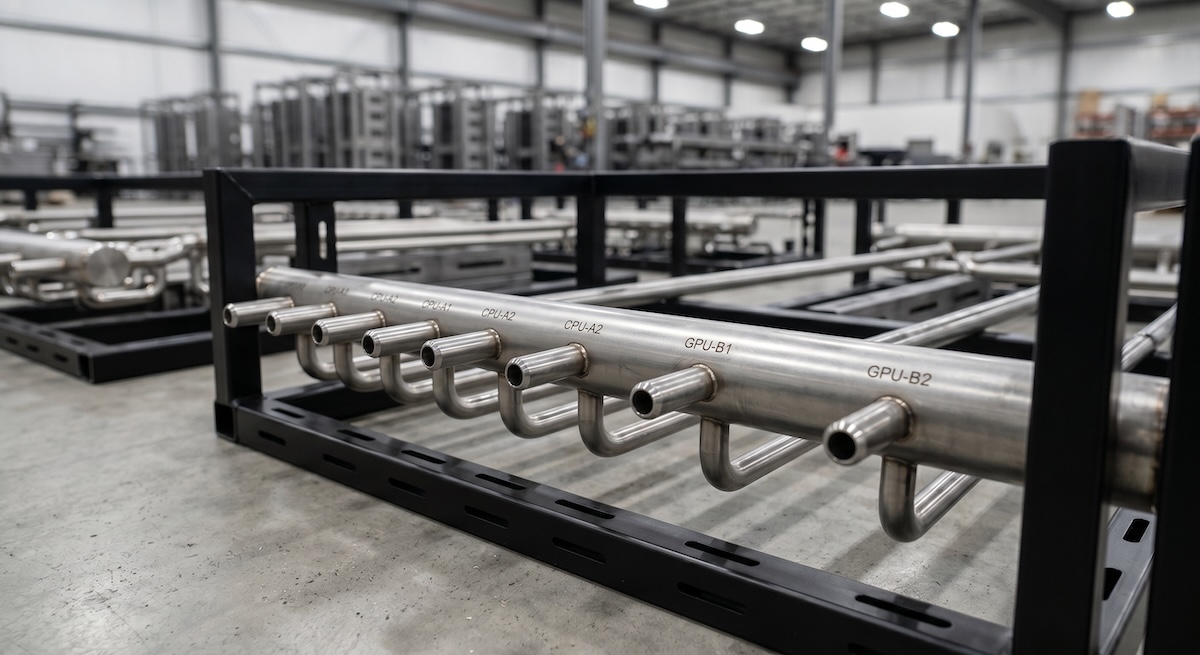
Many tube assemblies use tabs and slots so parts locate themselves before welding. Our post on laser cut tube assemblies that self-locate covers that design idea. Kerf is the detail that makes it work or not.
Small errors can also add up. The Durma Press explainer states that a 0.1 mm kerf deviation repeated across ten mating parts can produce a 1 mm cumulative offset. In a long run of joined parts, a small cut-width error does not stay small.
Who applies kerf compensation, you or the shop?
Settle this before cutting. Kerf compensation shifts the cutting path so the finished part matches the designed size. Outer profiles are offset outward, and holes and slots are offset inward. It should be applied in only one place: your CAD, the shop's CAM, or the machine control.
If you compensate in your file and the shop compensates again, features come out the wrong size. The simplest approach is to send nominal dimensions and ask the shop to confirm it handles compensation. Put that sentence in your quote request.
How do you spec fits so kerf stops being a problem?
State the fit you want, send nominal dimensions, and mark the critical features. Then ask for a check on the first piece. This gives the shop the intent behind each slot, not just the numbers, and it catches problems before a full run is cut.
Blueline states tolerances of plus or minus 0.003 inch. Confirm what applies to your tube and material when you quote. For the larger picture, read what tolerances tube laser cutting can hold.
A project where small fit errors would multiply
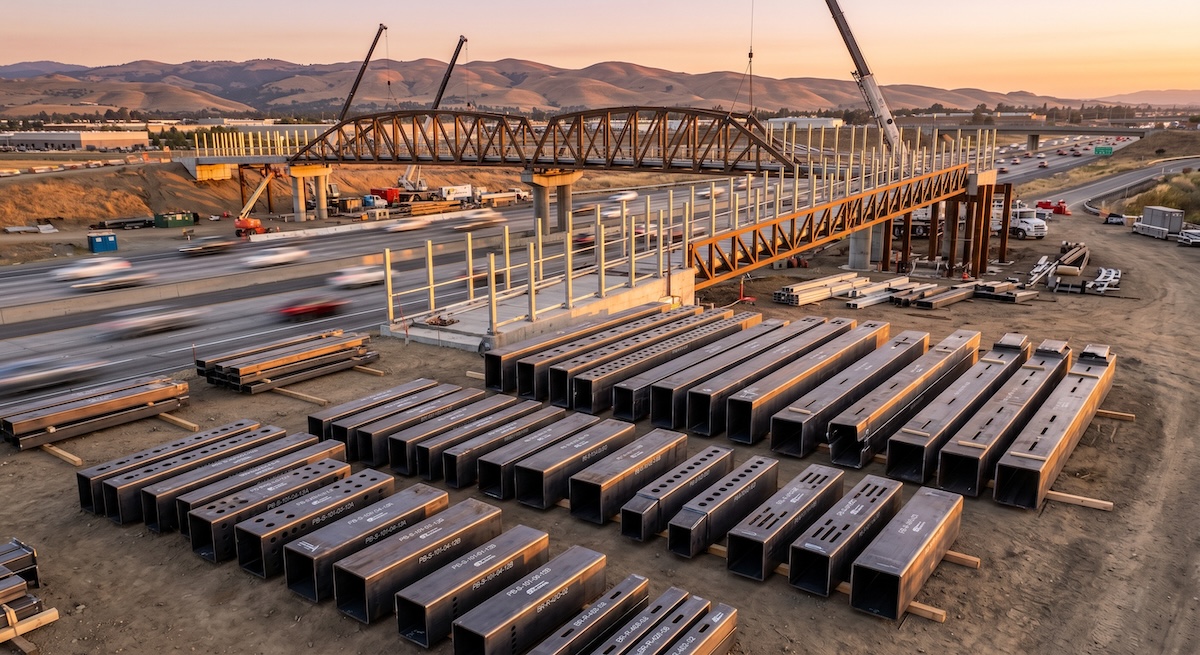
Blueline's 2025 work on the Caltrans I-5 pedestrian bridge in Irvine involved more than 500,000 pounds of steel. At that weight, small fit errors add up across many joints. That is why cut-width questions get settled on the drawing before any tube is cut.
Frequently Asked Questions
Is kerf the same as the laser beam width?
No. Beam width is the diameter of the focused spot. Kerf is the total width of material removed, which also includes the molten zone cleared by assist gas. The two can differ.
Does kerf change from job to job?
It can. Material, thickness, power, speed, gas, and nozzle condition all affect it. That is why you should ask your shop how it manages kerf for your specific tube, rather than assume a fixed number.
Should I add clearance to my slots myself?
Not before you ask. If you add clearance and the shop also compensates, the slot may come out too loose. Send nominal sizes, state the fit you want, and ask who handles compensation.
Can a test piece save a full run?
Yes. A first-piece fit check on a tab and slot catches a sizing problem before the full quantity is cut. Ask for one on any assembly that depends on a close fit.
What should I send to get a kerf question answered?
Send the drawing, the tube size and wall, and the mating part for each slot. Add one line stating the fit you want. Blueline will review it and tell you what else we need.
Does heat from the cut change the part?
Laser cutting creates a small heat-affected zone along the cut edge. Our heat affected zone primer explains what that means for your part.
Send us your drawing before you cut
If your assembly depends on tight slot and tab fits, tell us the fit you want and we will review the file with you. Send your drawing to Blueline Industries in Chino, CA. Get a Quote or call (951) 833-5597. See our precision slotting, notching, and hole cutting service for more.