Quick Summary
- Burrs and dross form when molten metal in the cut solidifies before it can be blown clear.
- Assist gas matters. Oxygen leaves an oxide scale. Nitrogen leaves a cleaner metallic edge but usually runs at higher pressure.
- Some hand work is unavoidable on certain parts, especially when you need a rounded edge or a specific finish.
- Tell your shop what happens to the part next: paint, powder coat, galvanizing, welding or bare use.
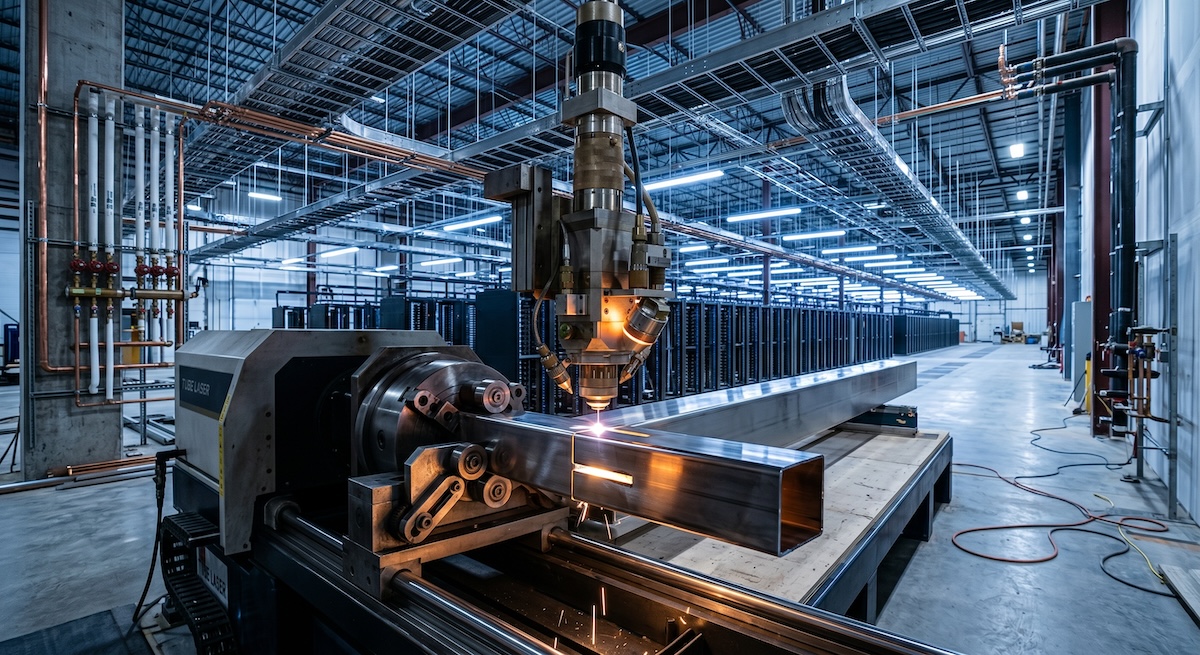
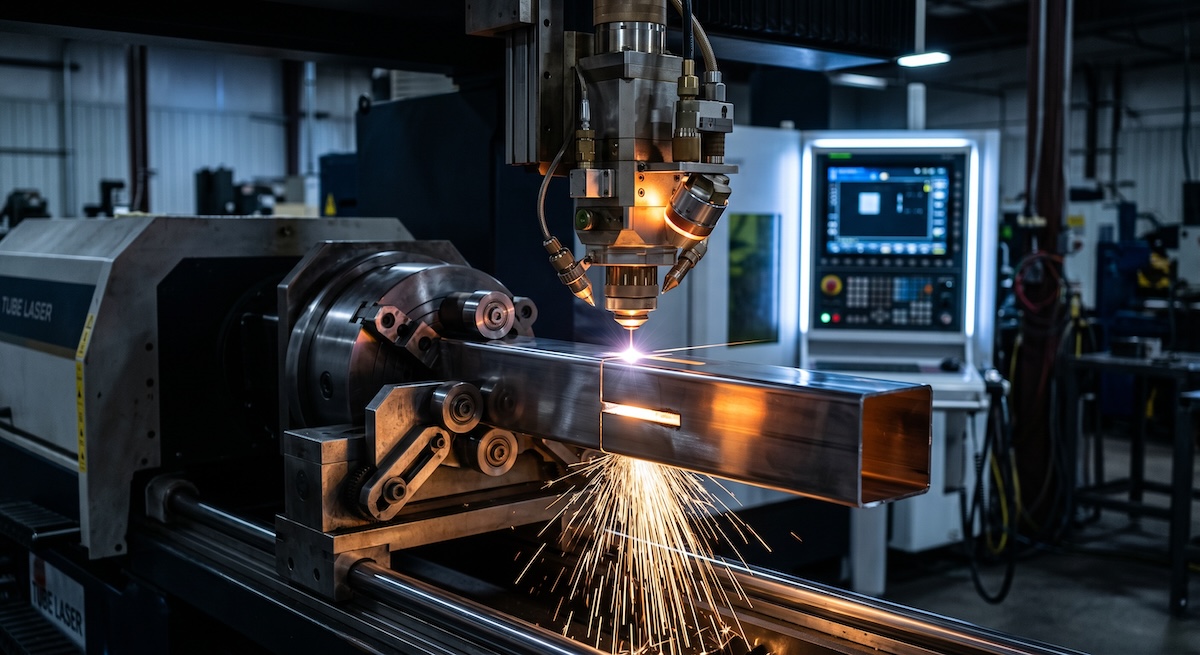
Some laser cut tube parts ship ready to use, and some need deburring. Which one you get depends on the assist gas, the cut settings and what the part does next. Blueline Industries is a tube laser cutting shop in Chino, CA. We do not promise burr-free parts on every job, so this post explains how to call out edge needs on your drawing.
Much of the published research on burrs covers sheet metal, not tube. We say so where it matters. Treat the sources below as general laser cutting behavior, and confirm tube specifics with your shop.

What causes burrs and dross on laser cut parts?
Burrs, also called dross, form when molten metal from the cut solidifies before it can be evacuated. The Fabricator states this in a 2023 article on sheet metal laser cutting. Focus position, travel speed and gas flow all change how well the molten metal clears the kerf.
The same article gives the focus rule. A focus spot too high in the material leaves spiky dross. A focus spot too low can slow cutting and leave bead-like dross. Both describe sheet, but the physics of a molten edge is the same on tube.
Speed and heat
Travel that is too slow adds heat. The Fabricator says that if travel slows too much, the laser starts to ablate or vaporize the metal. Increasing cut speed slightly reduces the heat and the resulting ablation.
Clean nozzles and clean gas
An interview with an industrial gas specialist on The Fabricator stresses a clean nozzle. It also warns that gas lines need purging, or the assist gas is contaminated and cutting suffers. These are shop-side habits you cannot see on a drawing, which is why shop practice matters when you compare quotes.
Does assist gas change whether parts need deburring?
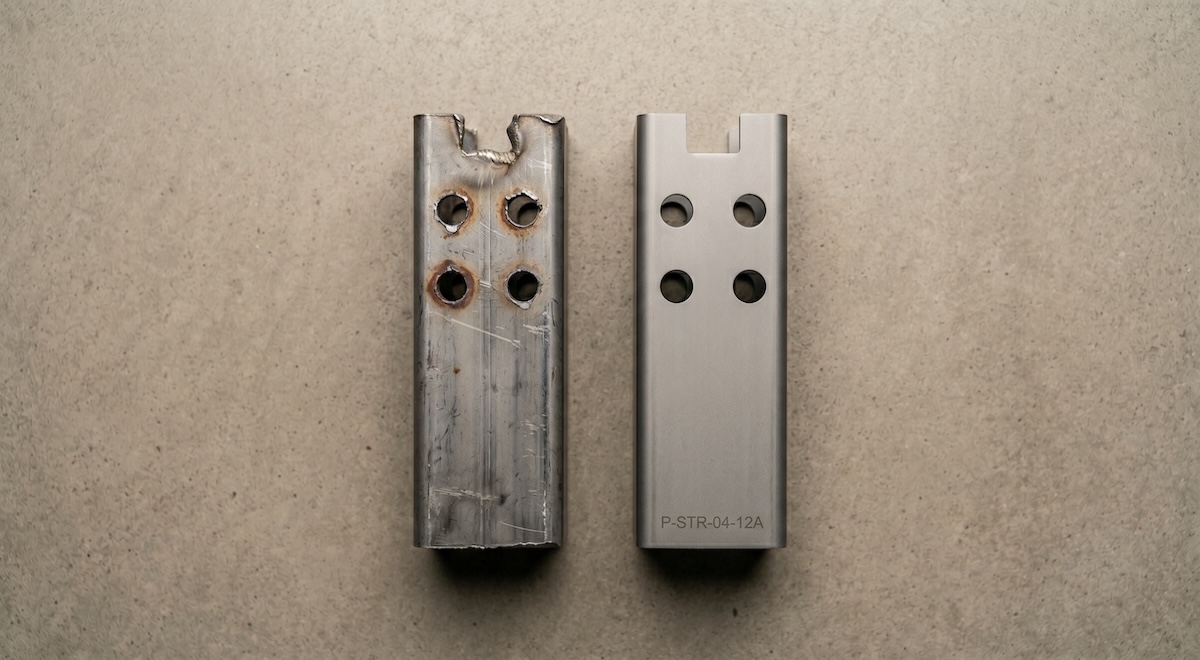
Yes. Oxygen adds heat through an exothermic reaction and leaves scaled edges. Nitrogen is inert and leaves a clean metallic edge, but it generally needs higher pressure. One vendor article says oxygen-cut parts may need rework before painting or galvanizing. Treat that as a vendor claim, and confirm it for your part.
| Assist gas | How it cuts | Edge result described in sources | Finish note |
|---|---|---|---|
| Oxygen | Reacts with hot metal and adds heat | Scaled, oxidized edge | Rework may be needed for painted or galvanized parts, per a vendor article |
| Nitrogen | Inert gas. The beam melts the metal and pressure clears it | Metallic clean edge, usually burr-free when settings are right | Thick steel may still need some rework, per the same vendor article |
The Fabricator also notes that shops move to nitrogen to avoid oxides left from oxygen cutting. Some use nitrogen with a touch of oxygen to help molten metal evacuate. For more on this choice, read our post on assist gas for tube laser cutting.
When does a laser cut tube part still need hand work?
Hand work is still needed when the part calls for something the laser cannot produce. The Fabricator says deburring is sometimes unavoidable. It also says some applications require rounded edges, which a laser cannot produce, and some parts need a certain grain finish.
A vendor article adds that fiber laser cuts can carry a process-related burr that only deburring removes, especially on thicker material. Weigh that claim against your wall thickness and finish.
Tube adds one wrinkle
On tube, the inside wall is harder to reach than the edge of a flat sheet. That is general shop knowledge, not a sourced finding. Say up front which edges matter, inside or outside, so no one guesses.
Parts that get welded or coated
Edges that will be welded rarely need a cosmetic finish, but they do need to sit clean so the joint fits. Edges that will be painted or powder coated deserve more attention, because coating thins at sharp corners and dross can show through a finish. Mark these edges on the drawing so the shop knows where to spend time.
Parts that stay hidden inside an assembly are often the best place to accept the edge as cut. Telling your shop which parts those are can save hand work across a whole run.
How do you call out edge requirements on a tube drawing?
Name the edges that matter and the finish that follows. A drawing note such as "break sharp edges" is vague. A note that says which edges, and what process comes next, lets the shop plan the cut and any hand work before quoting.
- Mark which edges are cosmetic, which are hidden and which are weld edges.
- State the next process: paint, powder coat, galvanizing, welding or none.
- Say if the part is handled by people. Sharp edges are a handling issue even when they do not affect fit.
- List any edge that needs a radius or a specific finish, since the laser alone cannot give a rounded edge.
- Note whether the edge sits inside a slot or joint where fit matters. Our post on kerf and slot fit covers that side.
How can you keep deburring time down?
Ask for the edge you need, not the cleanest edge possible. Deburring only the edges that matter is cheaper than a blanket note on every cut. Give your shop the finish plan early, so it can pick gas and settings with that plan in mind.
Blueline states that single-operation processing removes multiple machining steps. Fewer handling steps also means fewer chances to mark the part. Blueline cuts to your file through tube laser cutting services and precision tube fabrication.
Blueline worked on the AI data center cooling project in Sacramento, which used 16 truckloads of stainless steel in 2025. Repeat parts at that size are why edge notes belong on the first drawing and not the last. We make no claim here about edge finish on that project.
FAQ
Are laser cut tube parts burr-free?
Not always. Settings, gas and material decide the edge. Sources describe clean edges when settings are right and some rework in other cases. Blueline does not promise burr-free parts on every job.
Does nitrogen cutting remove the need to deburr?
It reduces oxide and often leaves a clean edge. A vendor article says thick steels cut with nitrogen may still need some rework. Ask about your wall thickness and material.
Do parts need cleanup before painting or galvanizing?
A vendor article says oxygen-cut edges can need rework before painting or galvanizing. Tell your shop the finish plan so it can choose the process.
Can a laser produce a rounded edge?
The Fabricator says some applications require rounded edges that a laser cannot produce. Mark any radius requirement on the drawing.
What should I put on the drawing about edges?
List the edges that matter, the next process and any handling concern. Short, specific notes beat a general instruction.
Tell Us the Finish Before We Cut
Edge quality is easiest to manage when the finish plan is known up front. Send your file and your finish notes together.
Get a Quote: Contact Blueline Industries or call (951) 833-5597. Our shop is in Chino, CA, and we ship to Portland, Tucson, San Francisco, San Diego, Seattle, Salt Lake City, Las Vegas, San Jose and Los Angeles.