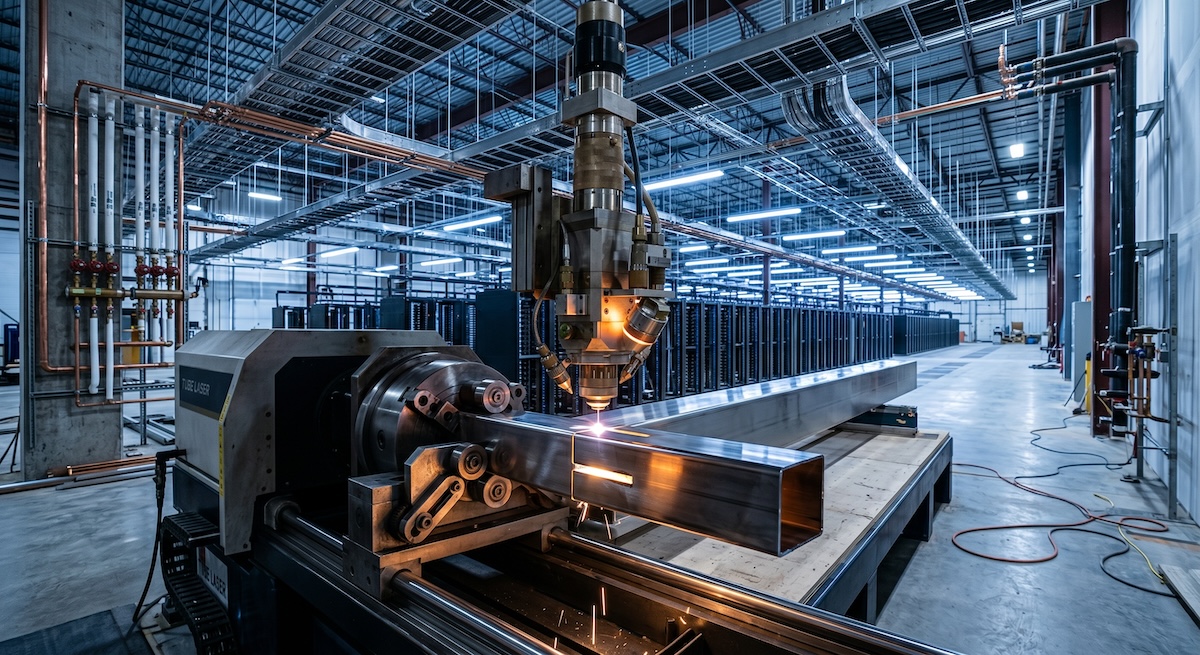
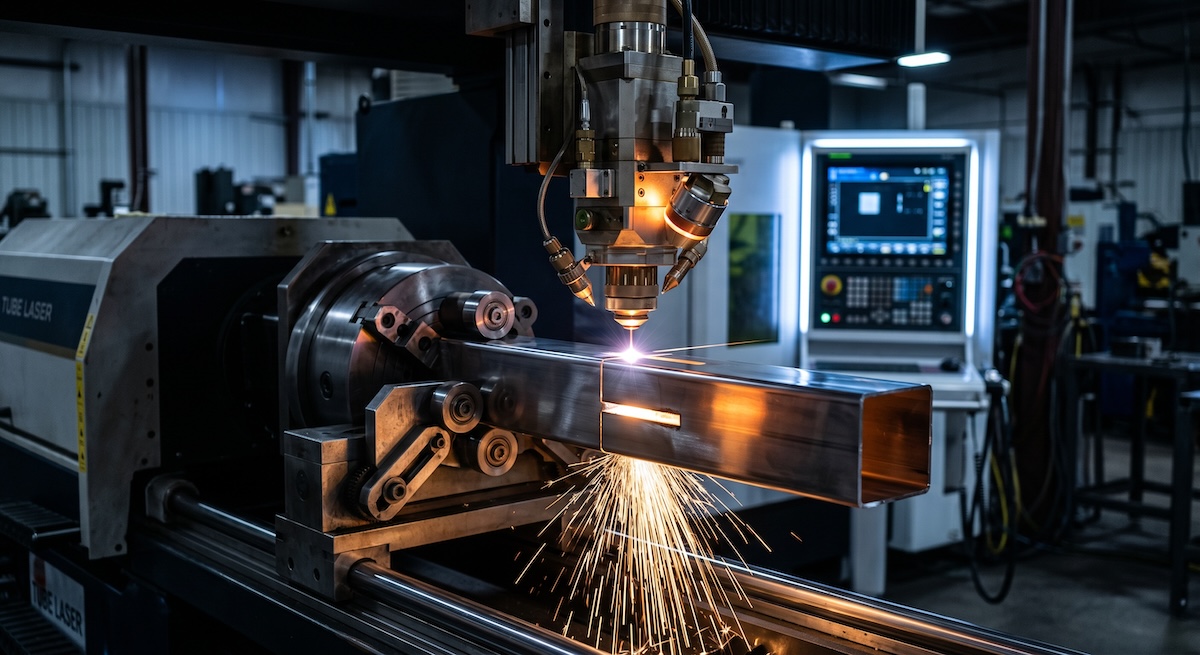
Quick Answer: The shift from manual tube fabrication to CNC tube laser cutting is being driven by math, not preference. Manual fabrication of a tube component with five features (holes, slots, notches) requires five separate machine setups, five queue periods, and five re-fixturing events, accumulating 10+ hours of non-productive time per part at scale. CNC tube laser cutting completes the same feature set in a single automated cycle with zero re-fixturing. The result: 40 to 60% shorter lead times, scrap rates dropping from 12 to 15% to 5 to 8%, labor requirements reduced by 60 to 75% per part, and dimensional accuracy improving from ±0.015 to 0.025 inches (manual) to ±0.003 inches (CNC). For production shops facing a projected manufacturing workforce shortfall of 2.1 million workers by 2030 and rising material costs, the economics of continuing with manual methods are becoming untenable.
Every production shop that processes tube steel reaches a moment of reckoning. The methods that built the business, the bandsaws, drill presses, notchers, and ironworkers that have occupied the same floor positions for years, begin costing more than they produce. Not because they stopped working, but because the market around them changed.
Customer tolerances tightened. Delivery windows compressed. The experienced operators who could hold quality through manual skill retired, and their replacements do not have the same intuition built from decades of handling tube stock. Material costs climbed, making every scrapped part more expensive. And the competitors who invested in CNC tube cutting technology started winning bids at prices that manual shops cannot match without losing margin.
This is not a theoretical transition. The global CNC machinery sector is projected to exceed $102 billion by 2026, with automated fabrication solutions driving a significant portion of that growth. Shops running automated cells report spindle utilization rates above 80%, compared to 30 to 50% for manually tended machines. And the manufacturing workforce shortage, projected to reach 2.1 million unfilled positions by 2030, means the skilled operators that manual methods depend on are becoming the scarcest and most expensive input in the production equation.
For shops evaluating the switch, understanding what CNC tube cutting actually changes in the daily workflow is more useful than abstract comparisons. Here is how the two approaches differ across every dimension that affects profitability.
The Manual Fabrication Workflow: Where Time and Money Disappear
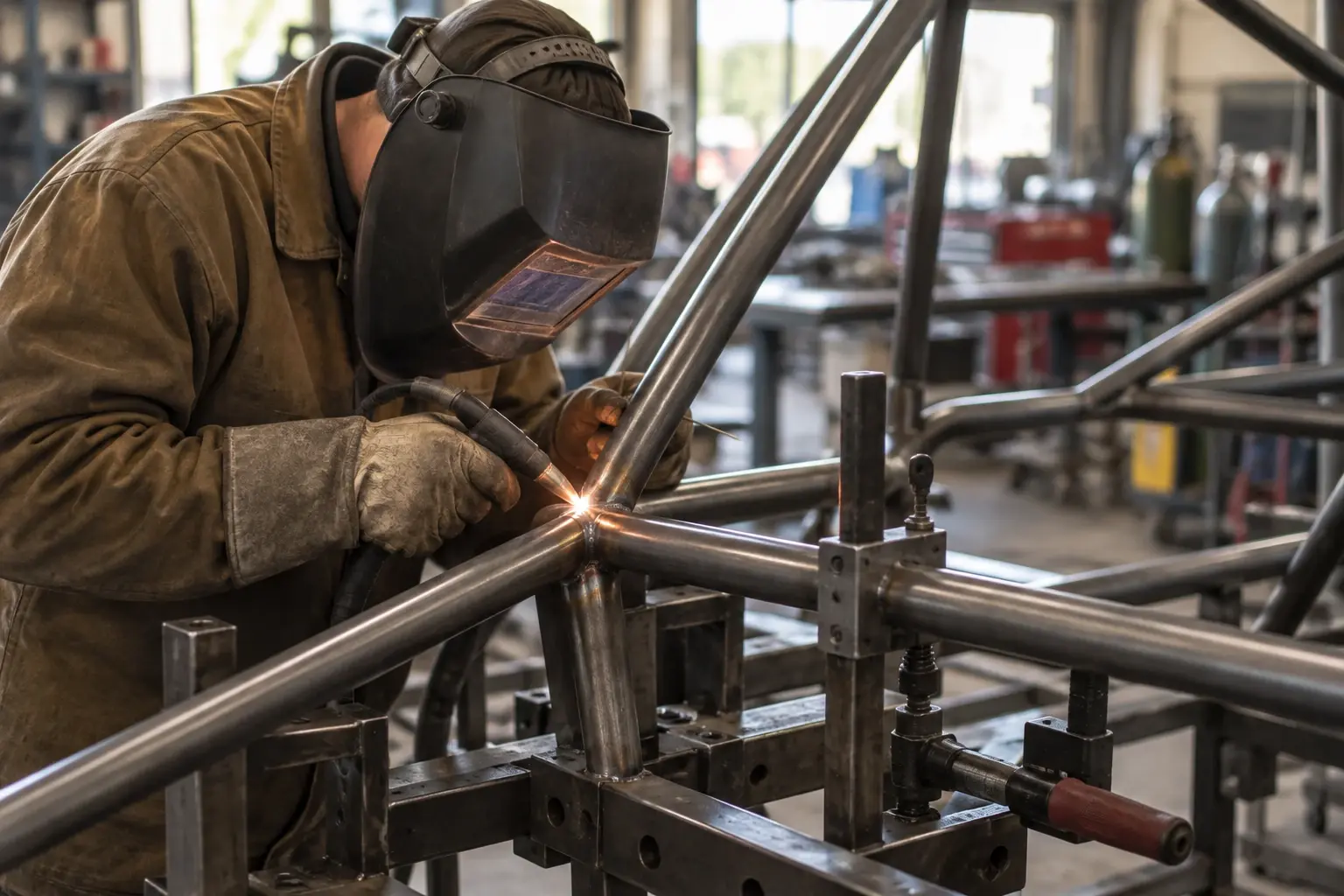
Manual tube fabrication is a sequential process built on individual skill at each station. Walk through the workflow for a representative tube component: a 48-inch length of 2x2 square tube with four mounting holes, one elongated slot, and a notch for a tube-to-tube intersection.
Step 1: Saw cutting. An operator loads the tube stock into a bandsaw, measures and marks the cut location, and cuts to length. Setup and cut time: 5 to 10 minutes depending on material and saw condition. The part then moves to a staging area.
Step 2: Layout and drilling. A second operator (or the same operator at a different station) lays out hole positions using a tape measure, square, and center punch. The part is clamped in a drill press vise, and each hole is drilled individually. Four holes at 3 to 5 minutes each, plus layout time: 15 to 25 minutes total. Between holes, the operator repositions and re-clamps the part.
Step 3: Slotting. The elongated slot requires either a milling operation or a plasma cut with a template. If milling, the part transfers to a different machine with its own setup. If plasma, the template must be positioned and clamped. Either way: 10 to 15 minutes including setup.
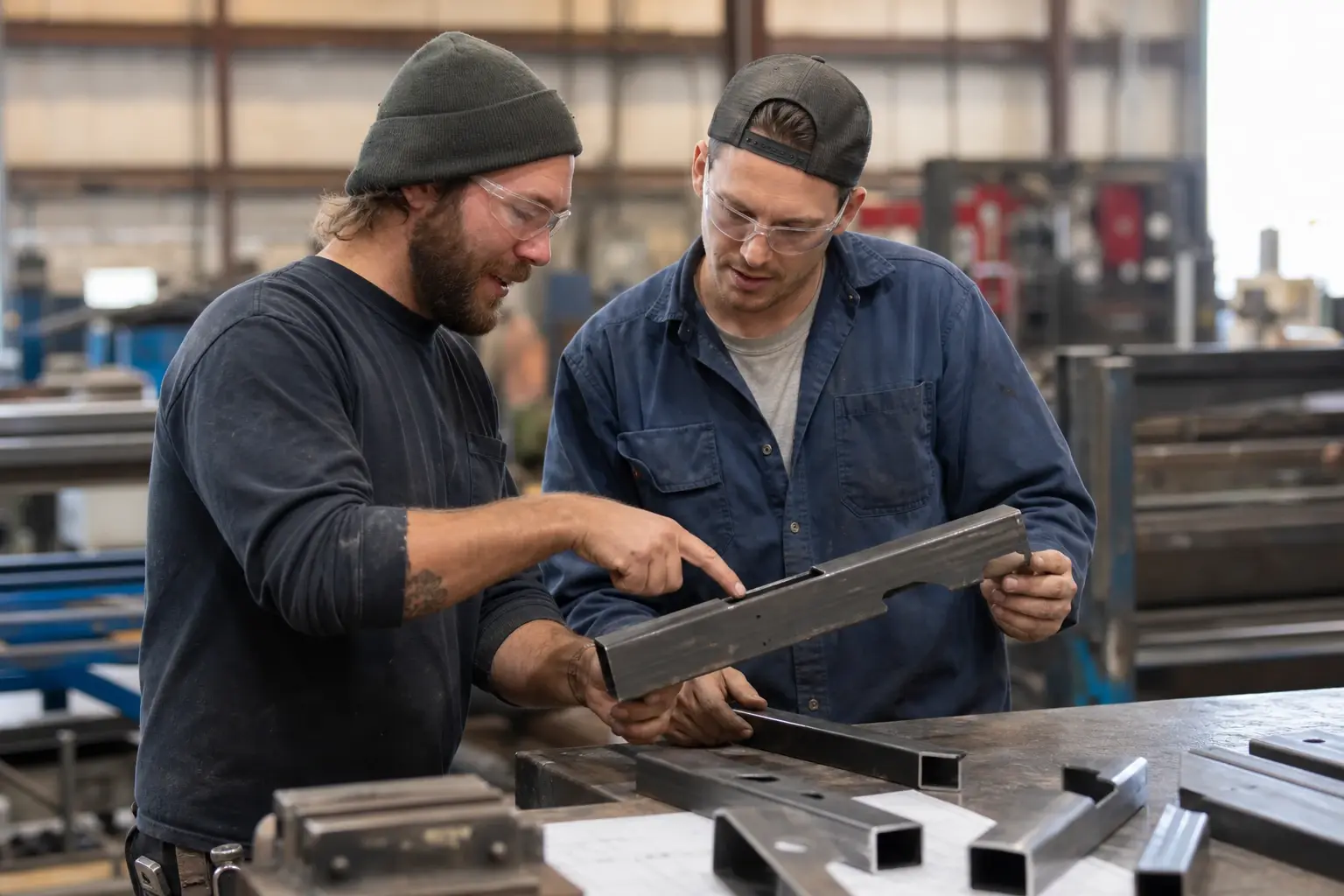
Step 4: Notching. The tube-to-tube notch requires a coping machine, hole saw, or angle grinder with a skilled hand. Setup and cutting: 5 to 10 minutes. Quality depends entirely on operator skill.
Step 5: Deburring. Every drilled hole, slot edge, and notch produces burrs that must be removed by hand grinding. Deburring adds 5 to 10 minutes per part and generates dust and inconsistent edge quality.
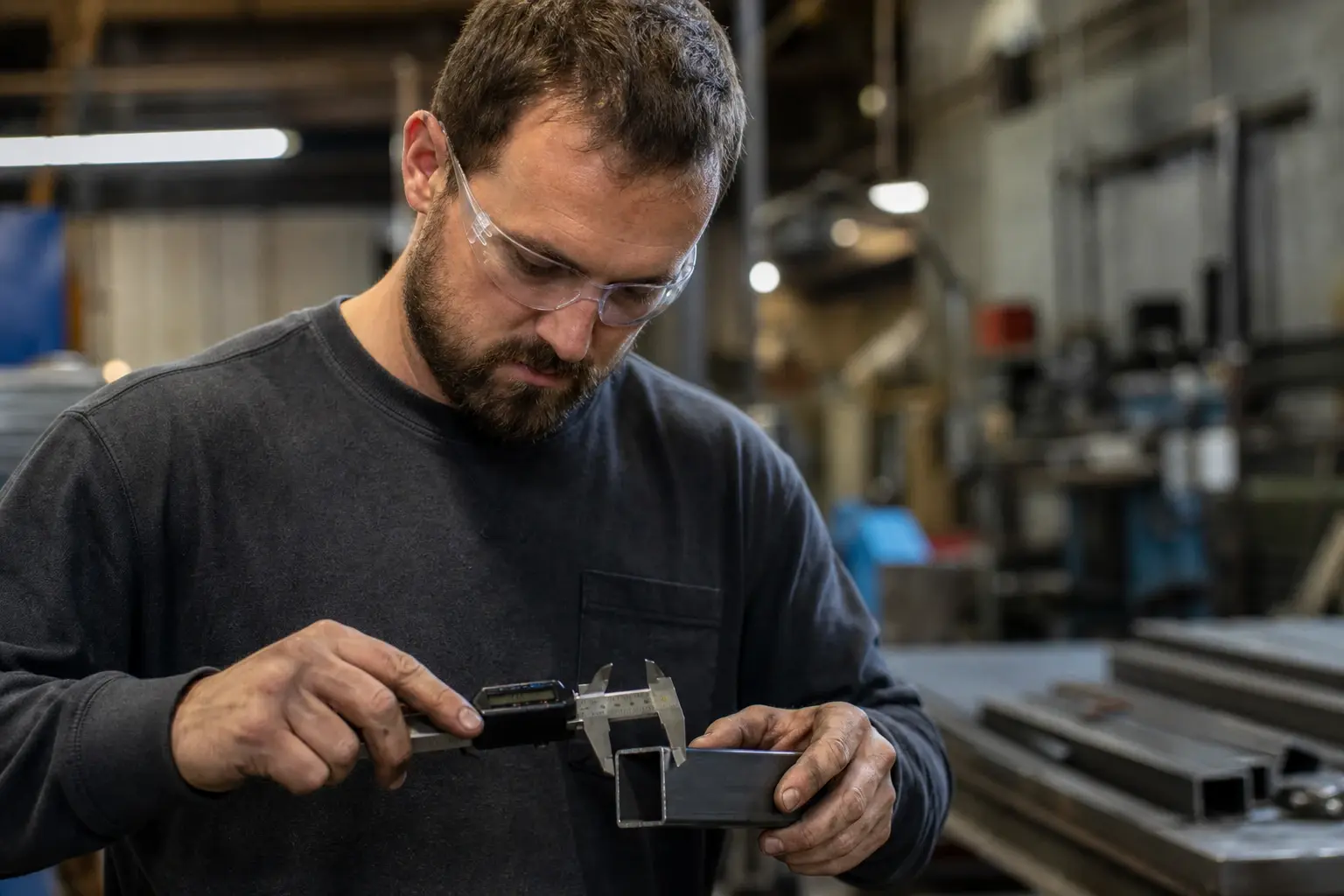
Step 6: Inspection. Each feature must be verified against the drawing. Manual measurement of four hole positions, one slot dimension, and one notch profile: 5 to 10 minutes.
Total active time per part: 45 to 80 minutes. But active time is not the bottleneck. The real schedule killer is the time between operations: queue waiting, batch sorting, operator handoffs, and the setup at each station. A part that spends 60 minutes under active processing may spend 6 to 10 hours in total elapsed shop time. Across a batch of 200 parts, those elapsed hours become weeks on the production calendar.
And at every station, quality depends on the person at the machine. A layout error of 1/16 inch on hole location is invisible to the operator making it but creates a fit-up problem on the customer's assembly floor. A notch cut freehand on a grinder matches the drawing only as well as the operator's eye and hand can replicate the geometry. These are not failures of effort. They are inherent limitations of manual processes applied at production volume.
The CNC Tube Laser Workflow: What Changes
The same 48-inch square tube component with four holes, one slot, and one notch enters a CNC tube laser as raw tube stock and exits as a finished part in a single cycle.
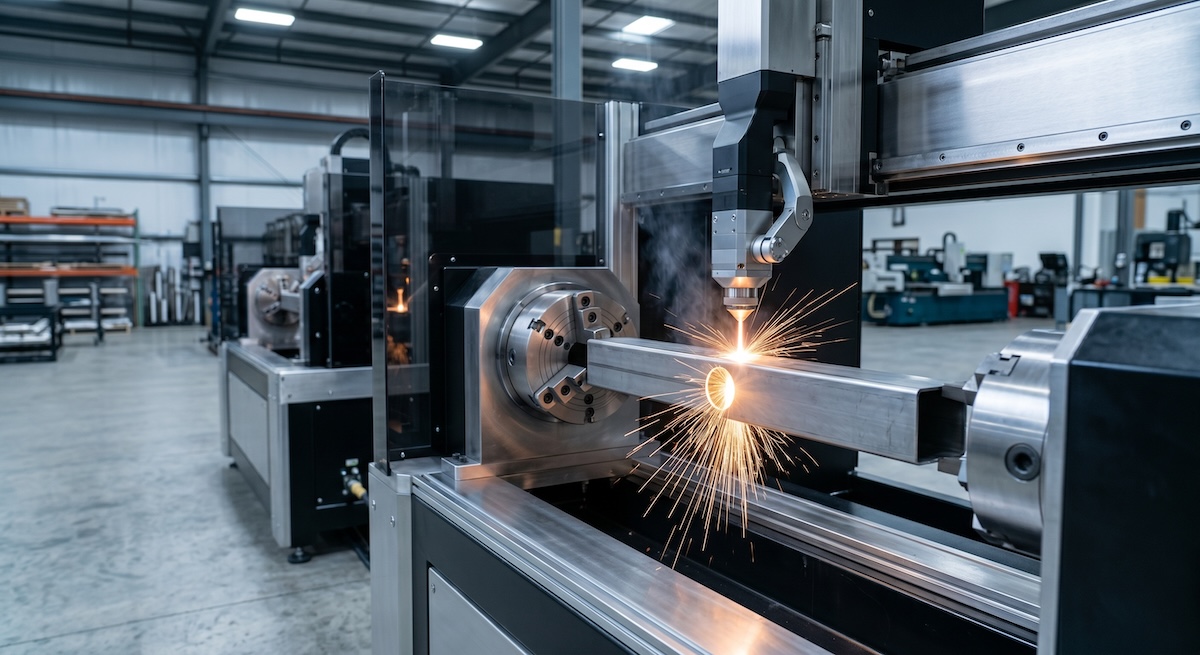
The tube loads into a multi-chuck clamping system. The chucks grip the tube at multiple points, maintaining rigidity throughout the cutting sequence. The CNC program, generated directly from a 3D CAD model or shop drawing, contains the complete feature sequence: cut to length, drill four holes, cut one slot, execute one notch profile.
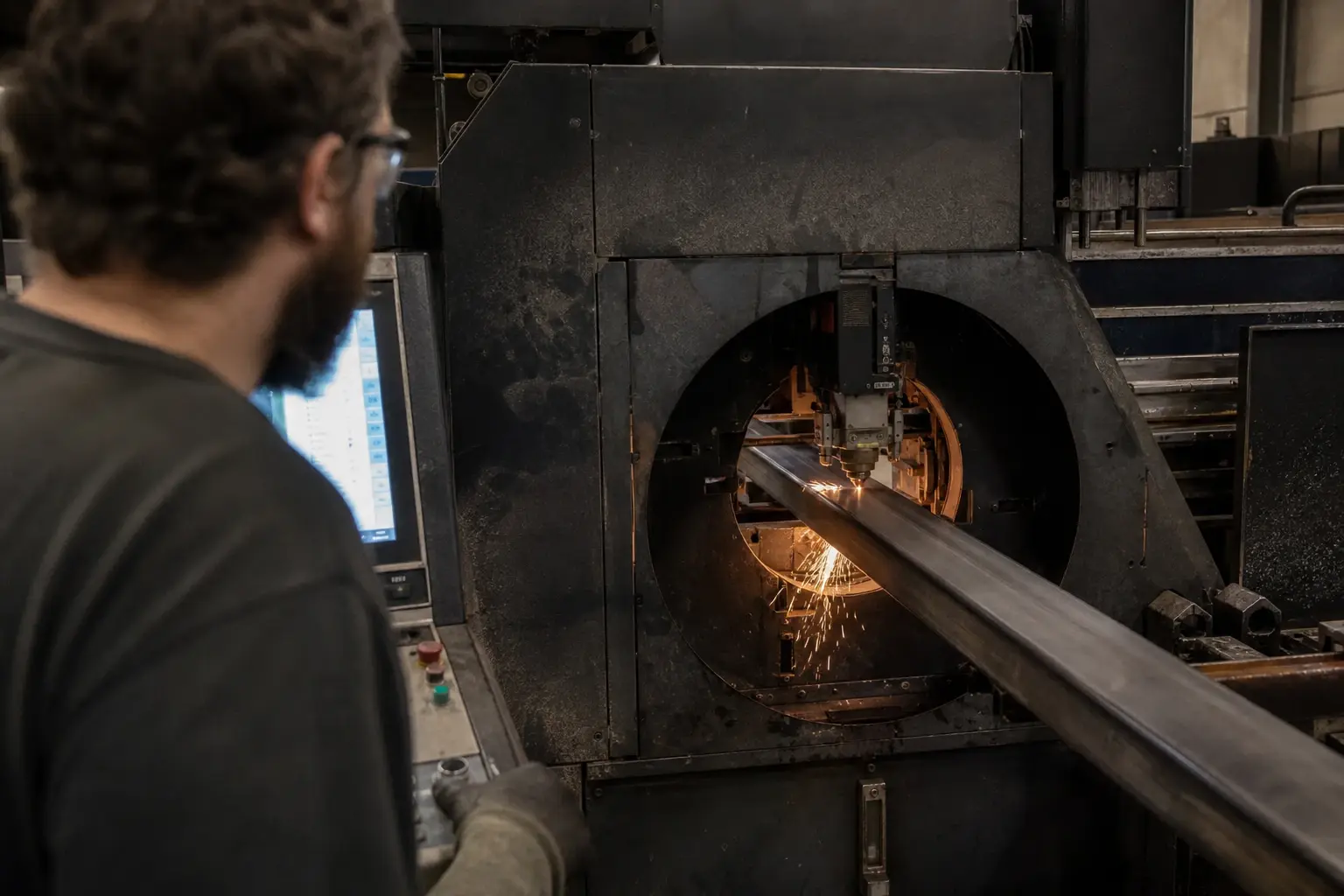
The fiber laser executes all features in one fixturing. The tube rotates and translates as the laser head follows programmed paths. The 3-to-6-kilowatt fiber laser cuts through the material with an assist gas that blows away molten metal. Every feature is referenced from the same datum established when the tube entered the machine. There is no re-clamping, no re-measuring, no operator interpretation of a drawing.
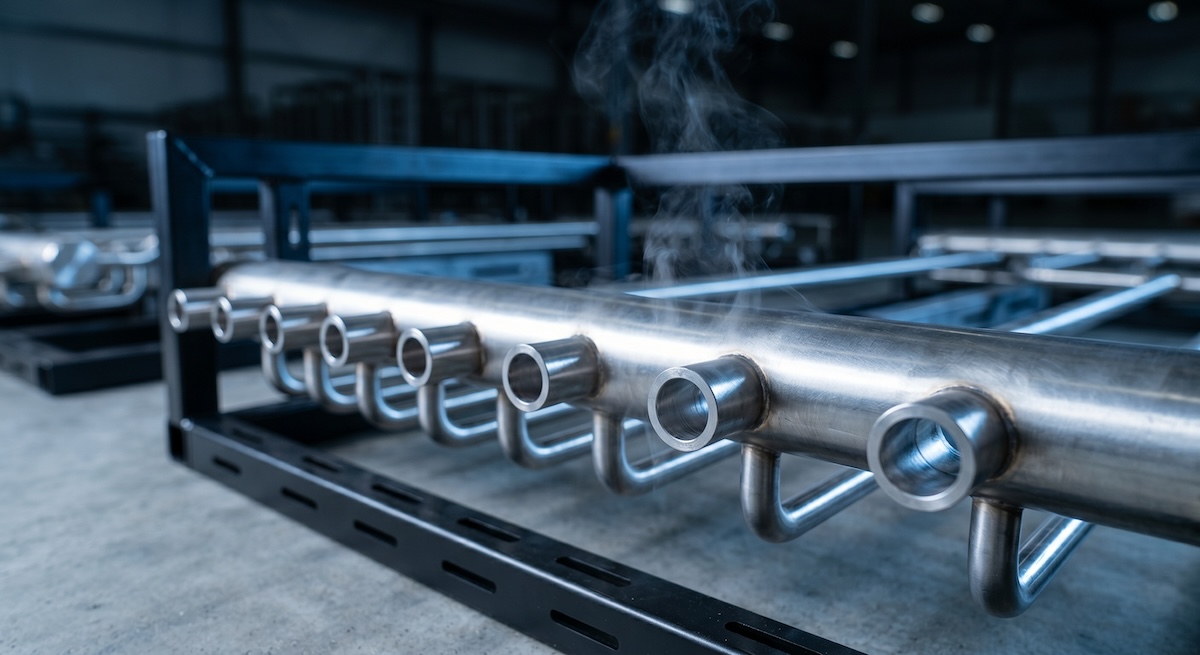
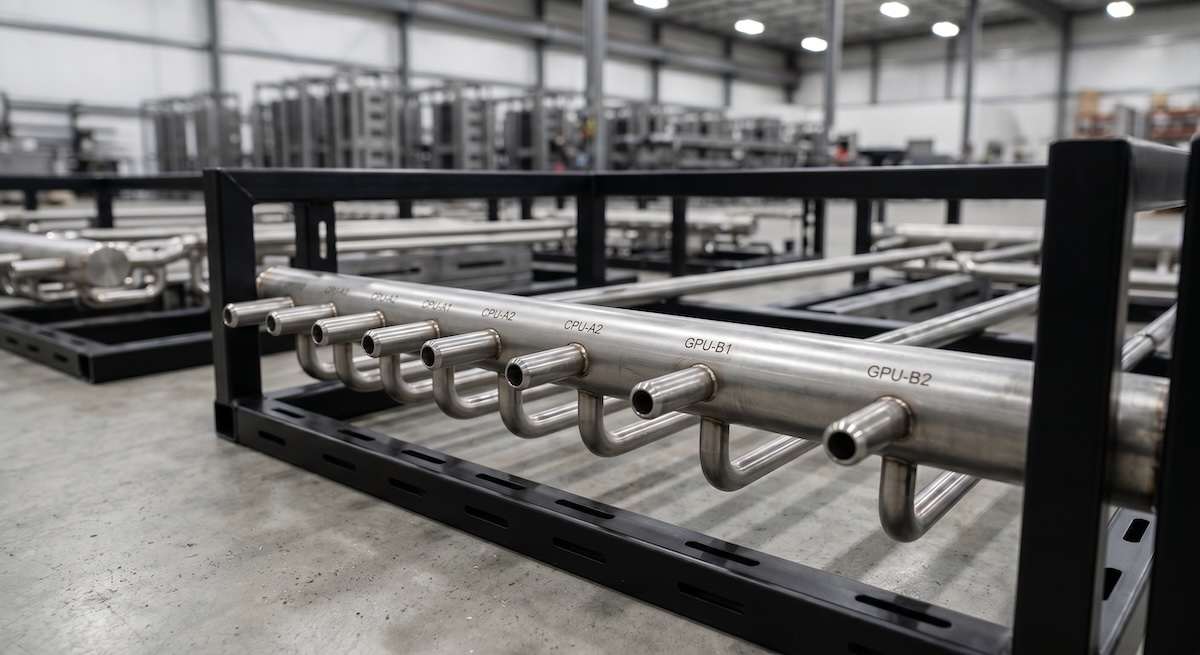
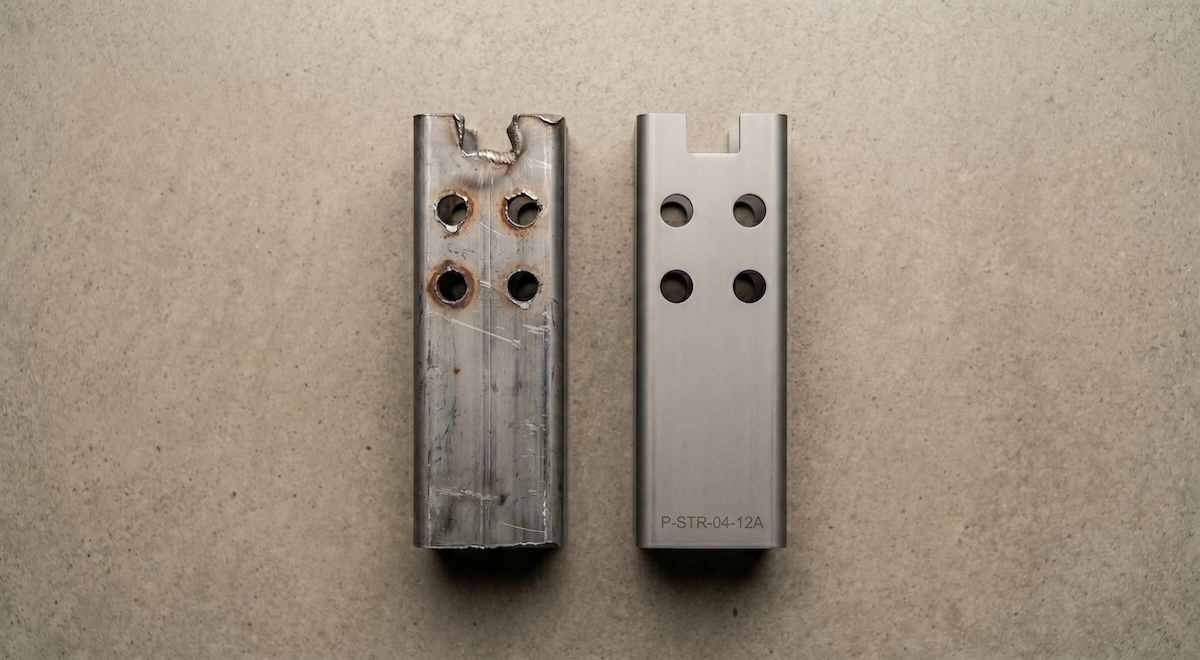
The part exits complete. Edges are clean with minimal or no burr depending on material and assist gas selection. Part numbers and assembly identifiers are laser-etched directly onto the surface during the cutting cycle. The finished part goes to packaging, not to a deburring station.
Total cycle time per part: 3 to 8 minutes depending on feature count and material. And critically, the time between parts is measured in seconds (the machine loads the next section of tube stock automatically) rather than hours (queue time between manual stations).
Head-to-Head: Where the Numbers Separate
The operational differences between manual and CNC tube cutting become most visible when measured across the dimensions that drive production shop economics.
Throughput
A manual workflow producing the sample component at 60 minutes per part generates roughly 8 parts per operator per shift (accounting for breaks, setup transitions, and inevitable interruptions). A tube laser producing the same component at 5 minutes per cycle generates roughly 80 parts per shift with one operator managing the machine. The tenfold throughput difference means that a single tube laser replaces the output of an entire manual processing line for typical production work.
Dimensional Accuracy
Manual fabrication achieves ±0.015 to 0.025 inches on feature placement under good conditions, with the wider end of that range representing the cumulative drift from multiple re-fixturing events and operator-dependent layout. CNC tube laser cutting achieves ±0.003 inches consistently because all features reference a single datum with no re-fixturing. The fivefold to eightfold accuracy improvement means parts fit on assembly without modification, reducing or eliminating the downstream quality costs that manual fabrication generates.
Scrap and Material Waste
Manual fabrication generates scrap through measurement errors (parts cut to wrong length or with misplaced features), excessive kerf width from bandsaw cuts, and the material wasted in setup test cuts. Industry data shows scrap rates of 12 to 15% for conventional multi-step tube fabrication. CNC tube laser cutting reduces scrap to 5 to 8% through precise computer-controlled cutting paths, optimized nesting along the tube length, and elimination of setup test pieces (the CNC program runs correctly the first time, every time). On a production run consuming 10,000 pounds of tube stock per month, reducing scrap from 13% to 6% saves 700 pounds of material per month. At current steel prices, that is real money.
Labor Cost per Part
Manual fabrication requires skilled operators at each station. A component visiting five stations consumes labor time proportional to the total processing time across all stations. CNC tube cutting requires one operator managing the machine, with the labor cost allocated only to the single-cycle time. The labor content per part typically drops 60 to 75% when switching from manual to CNC processing.
This matters especially in the current labor market. Skilled fabrication operators command $25 to $40 per hour depending on region and experience. When a shop struggles to fill positions (53% of U.S. manufacturers report welding and fabrication labor shortages), every operator hour must produce maximum output. A tube laser makes each operator hour dramatically more productive.
Setup and Changeover
Switching from one part number to another in a manual shop means adjusting stops on the saw, changing fixture positions on the drill press, modifying templates on the notcher, and verifying first-article dimensions at each station. Total changeover: 30 to 90 minutes depending on complexity difference between parts.
Switching part numbers on a tube laser means loading a new CNC program. Total changeover: 2 to 5 minutes. For production shops running mixed orders with multiple part numbers per shift, this 70 to 90% reduction in changeover time translates directly into more parts per shift and greater scheduling flexibility.
Quality Consistency Across Shifts
Manual fabrication quality varies with operator skill, fatigue, and attention. The first part of a Monday morning shift may differ measurably from the last part of a Friday afternoon shift, simply because human performance is variable. Night shift output may differ from day shift output if operator experience levels differ.
CNC tube laser quality is governed by the machine and the program, not the operator. Part number 1 at 6:00 AM matches part number 500 at midnight. This consistency is what allows production shops to commit to tolerance specifications with confidence, accept blanket orders with scheduled releases, and reduce incoming inspection labor at the customer's facility.
The Five Triggers That Push Shops to Switch
Production shops rarely switch fabrication methods on principle. They switch when specific business conditions make the manual approach unsustainable. These are the most common triggers.
Losing bids to CNC-equipped competitors. When a competitor can quote the same part at 20 to 30% less with faster delivery, the pricing pressure forces evaluation of the production method. CNC tube cutting's lower per-part cost at volume (despite higher hourly machine rates) enables pricing that manual shops cannot match without operating at a loss.
Key operator departures. When the senior fabricator who has been running the notching station for 15 years retires, the quality and throughput of that station drops immediately. Replacing an experienced manual operator takes months of training. Replacing a CNC operator takes weeks, because the machine (not the person) controls quality.
Customer tolerance requirements tightening. OEMs and construction project managers are increasingly specifying ±0.005-inch tolerances on tube components that previously carried ±0.030-inch callouts. Manual fabrication struggles to hold the tighter specifications consistently at volume, leading to rejected parts, rework, and strained customer relationships.
Volume increases outpacing floor capacity. When a shop wins a large contract or an existing customer increases order frequency, the manual workflow may not be able to scale without adding machines, operators, and floor space at each station. A tube laser handles the volume increase within existing floor space because one machine replaces an entire processing line.
Material cost increases raising the cost of scrap. When tube steel prices rise (as they have with tariff uncertainty and supply chain volatility), every scrapped part costs more. The 6 to 9 percentage-point reduction in scrap rate between manual and CNC fabrication represents greater absolute savings when material prices are high.
What Shops Should Know Before Making the Switch
For production shops evaluating the transition from manual to CNC tube cutting, several practical considerations shape the decision.
Outsourcing before investing. Not every shop needs to purchase a tube laser to access the technology. Outsourcing tube cutting to a CNC-equipped service provider like Blueline Industries in Chino, California allows shops to validate the cost and quality advantages on real production work before committing capital. This approach is particularly sensible for shops whose volume does not yet justify a dedicated machine but whose customers are demanding CNC-level quality and pricing.
The learning curve is shorter than expected. CNC tube laser operation requires different skills than manual fabrication, not necessarily more advanced skills. Operators learn to load material, manage CNC programs, and monitor cut quality. The machine handles the precision. Shops that transition typically find that their best manual operators adapt to CNC operation readily because they already understand materials, tooling, and quality requirements.
Design optimization unlocks the full value. Tube laser technology enables fabrication techniques (cut-and-fold joints, tab-and-slot connections, integrated alignment features) that are impossible with manual methods. Shops that simply replicate their existing manual designs on a tube laser capture the speed and accuracy benefits but miss the design optimization opportunity. Engaging with the technology's engineering capabilities, either in-house or through a fabrication service partner, reveals cost reductions in the customer's assembly process that create additional competitive advantage.
The manual shop does not disappear overnight. Most production shops run a hybrid operation for a period, using CNC tube cutting for production-volume work and maintaining manual capability for one-off repairs, modifications, and specialty work that does not justify CNC programming. The transition is gradual, with CNC processing absorbing an increasing percentage of shop volume as customers experience the quality and timeline improvements.
The Fabrication Partner Alternative
For shops that recognize the need for CNC tube cutting capabilities but are not ready to invest in equipment, partnering with an established tube laser service provider offers an immediate path to competitive parity.
The right fabrication partner operates multiple tube laser machines (providing redundancy and capacity), processes both carbon steel and stainless steel, offers engineering support for design optimization, delivers parts with laser-etched identification and assembly-sequenced packaging, and maintains the production discipline to deliver on schedule at volume.
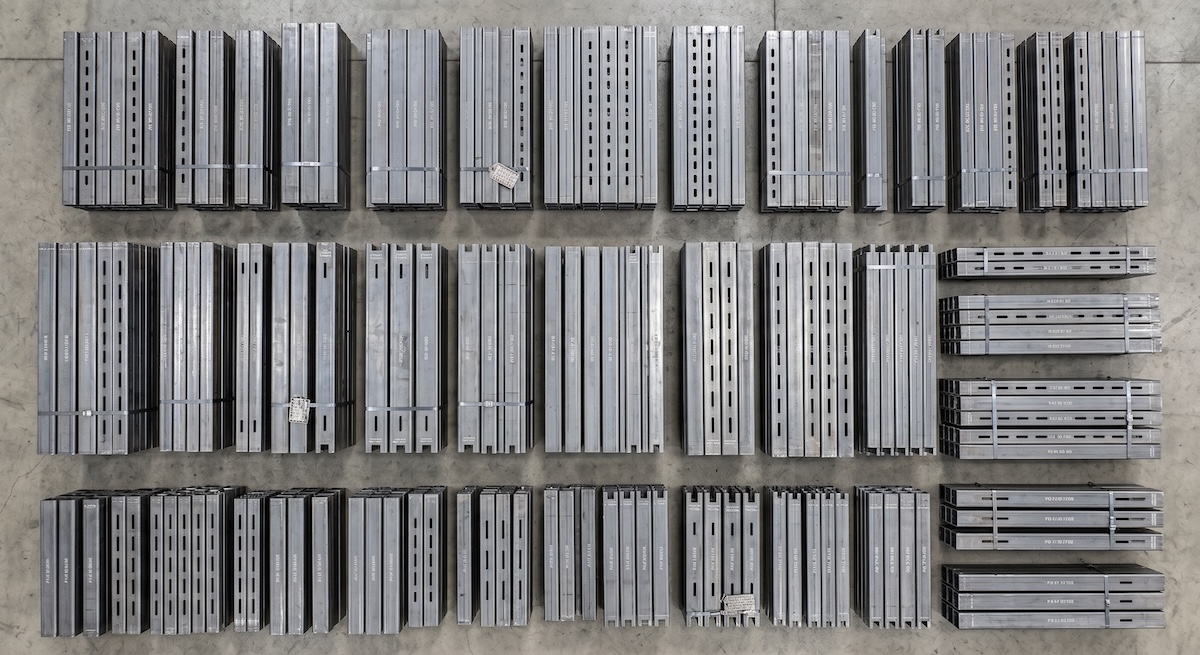
Blueline Industries operates this model from its Chino California facility, serving production shops, OEMs, and contractors who need CNC tube cutting quality without the capital investment of purchasing equipment. Parts arrive bundled by part number with etched identifiers, ready for the customer's assembly process. The fabrication partner absorbs the technology investment, the operator training, and the machine maintenance, while the production shop accesses the quality and speed advantages that its customers require.
This is not a permanent arrangement for every shop. Some will eventually invest in their own equipment as volumes justify it. But as an immediate response to competitive pressure, customer requirements, or operator shortages, the outsourcing model provides CNC capability without CNC capital expenditure.
Frequently Asked Questions
At what production volume does CNC tube cutting become more cost-effective than manual fabrication?
The breakeven depends on part complexity more than raw volume. For simple tube components with only a length cut, manual sawing remains cost-effective at almost any volume. But as features are added, the equation shifts rapidly. A part with three or more features (holes, slots, notches) typically reaches CNC cost advantage around 50 to 100 pieces because the tube laser eliminates the setup, queue, and changeover time that makes multi-step manual fabrication expensive. At 500+ pieces per part number, the cost advantage ranges from 15 to 40% in favor of CNC processing, with the wider savings realized on parts with more complex geometry. The comparison should include total cost (fabrication plus downstream assembly and quality effects), not just the per-piece fabrication price.
Can CNC tube cutting handle the same range of materials as manual fabrication?
CNC tube laser cutting handles a broader range of materials with greater consistency than manual methods. Carbon steel, stainless steel (all common grades including 304, 316L, 409), aluminum, copper, and brass are all processable. The CNC program adjusts laser power, cutting speed, and assist gas parameters for each material without mechanical changeover, meaning a single production run can include multiple material types. Manual fabrication can technically process the same materials, but the skill required varies significantly (stainless steel is notably more difficult to drill and notch manually than carbon steel), and quality consistency across materials is harder to maintain.
How does the switch to CNC affect the existing workforce in a manual shop?
The transition changes the skill profile rather than eliminating positions. Manual operators with strong fabrication knowledge often become effective CNC operators because they understand materials, quality requirements, and the practical realities of tube processing. The CNC machine handles the precision execution that previously depended on manual skill, while the operator manages material flow, program selection, and quality monitoring. Shops typically find that one CNC operator produces the output of three to four manual operators, which means the transition can address labor shortages rather than create workforce displacement. The operators who remain work in cleaner, safer conditions (less grinding, less manual handling, less noise) with opportunities to develop programming and technical skills.
What is the typical lead time difference between manual and CNC tube fabrication for a production order?
For a representative production order of 500 to 1,000 components across 10 to 20 part numbers, manual fabrication typically requires 6 to 10 weeks from material receipt to delivery. The same order processed on a CNC tube laser typically ships in 2 to 4 weeks. The difference comes primarily from eliminating queue time between manual stations (the largest time savings), reducing setup time between part numbers from 30 to 90 minutes to 2 to 5 minutes, and removing inspection hold points between operations because dimensional accuracy is inherent to the CNC process. For rush orders or fast-track projects, the timeline advantage is even more pronounced because CNC processing can increase daily output by running extended shifts without the fatigue-related quality degradation that affects manual operations.
Should a production shop buy a tube laser or outsource to a CNC fabrication service provider?
The answer depends on volume, capital availability, and strategic intent. Purchasing a tube laser makes sense when your volume justifies dedicated machine time (typically 30+ hours per week of cutting), you have the floor space and power infrastructure, and you want tube laser capability as a core competency. Outsourcing makes sense when your volume is growing but has not yet reached the threshold for dedicated equipment, you need CNC quality now to meet customer requirements, you want to validate the business case before committing capital, or you prefer to allocate capital to other growth investments. Many shops start by outsourcing to a fabrication partner like Blueline Industries, validate the quality and cost advantages on real production work, and then decide whether to invest in equipment based on demonstrated volume and margin improvement.
Blueline Industries provides CNC tube laser cutting services from its Riverside, California facility, operating multiple tube laser systems for production shops, OEMs, contractors, and engineers. The company processes carbon steel, stainless steel, aluminum, and specialty alloys with in-house engineering support, laser-etched part identification, and assembly-sequenced delivery. For tube laser cutting quotes, visit bluelineind.com or call (951) 833-5597.


.png)