Quick Summary
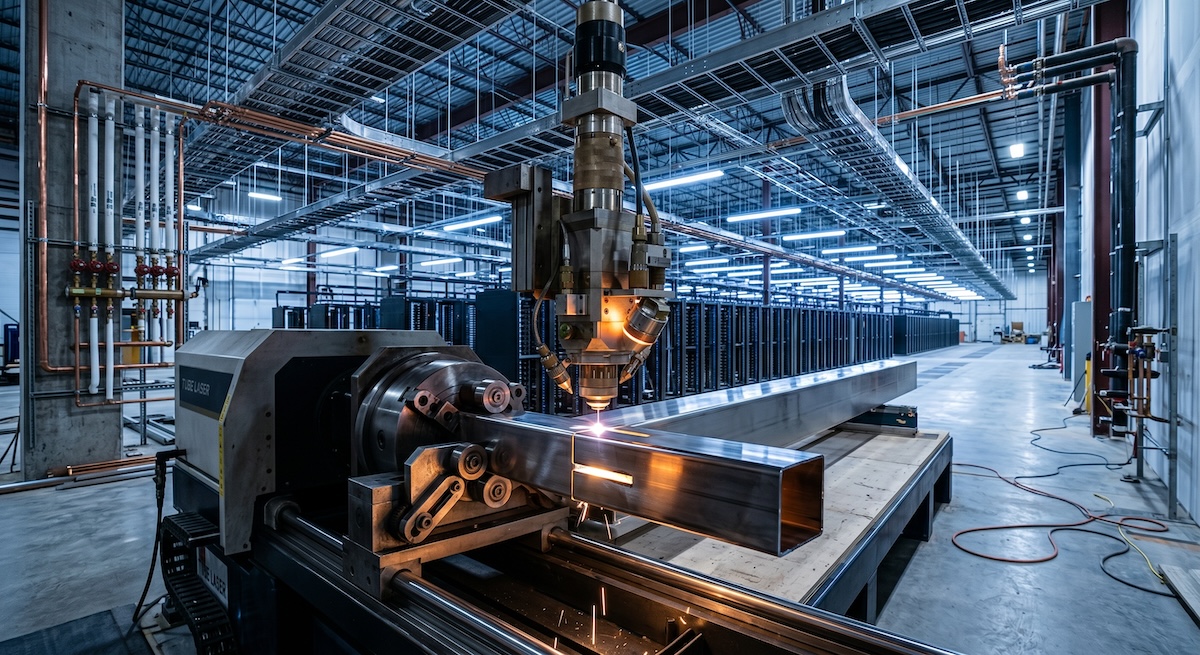
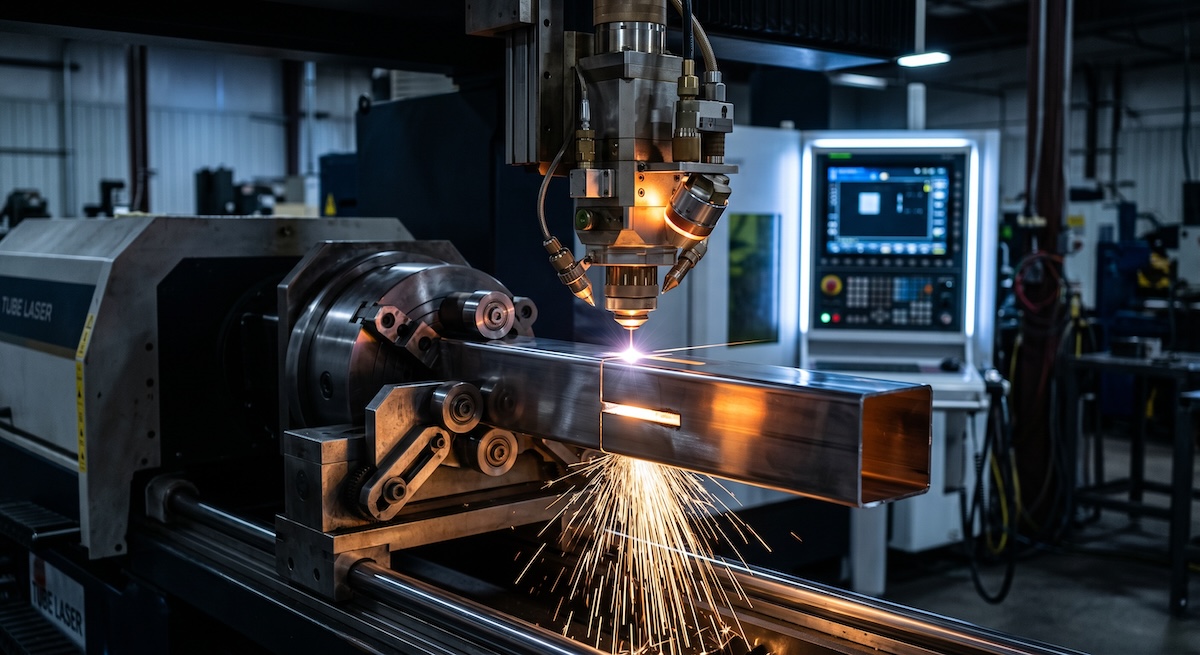
Thin wall tube laser cutting is a handling problem as much as a cutting problem. The laser is precise, but a thin wall can collapse in the chuck, sag between supports, or move when the cut releases stress. Blueline Industries runs tube laser cutting from its only facility in Chino, CA, and the advice below is how we would prep a thin-wall job before it hits the machine.
This post is for engineers and buyers building lightweight frames, chassis parts, aerospace brackets, and furniture structures. It covers what goes wrong, why, and what to put on the print and the RFQ.
What counts as thin wall tube?
Thin wall tube is tube whose wall is small compared with its width or diameter, so the profile deforms under modest force. There is no single industry cutoff in the sources we opened. One laser tube cutter maker uses walls under 2 mm on square tube as its example of thin stock, so treat that as a rough marker, not a rule.
The better test is the part itself. If a hand squeeze, a tight clamp, or a long unsupported span could change the shape, plan for thin-wall handling. Ask the shop where its comfort zone sits for your profile and material.
How does clamping damage thin wall tube?
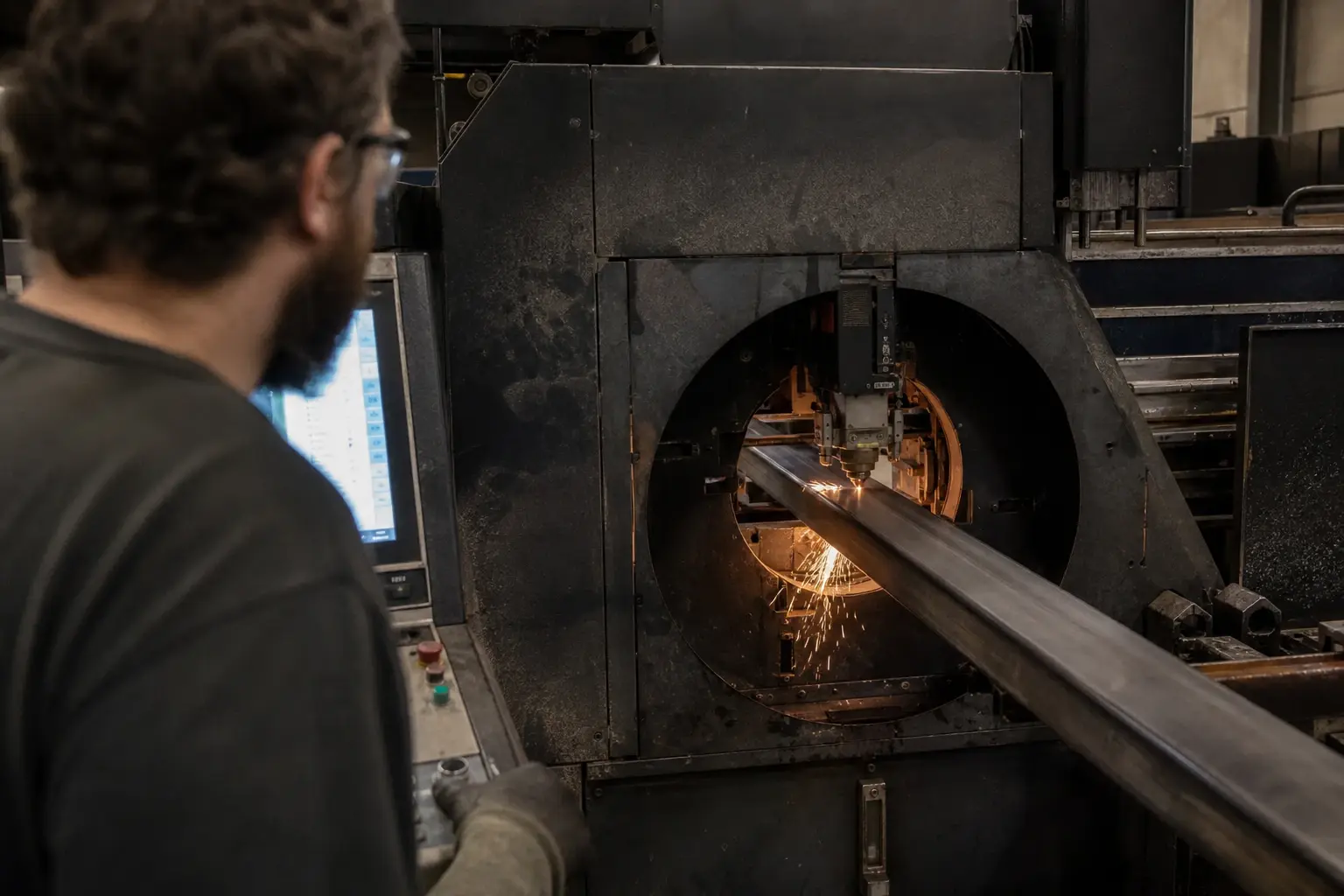
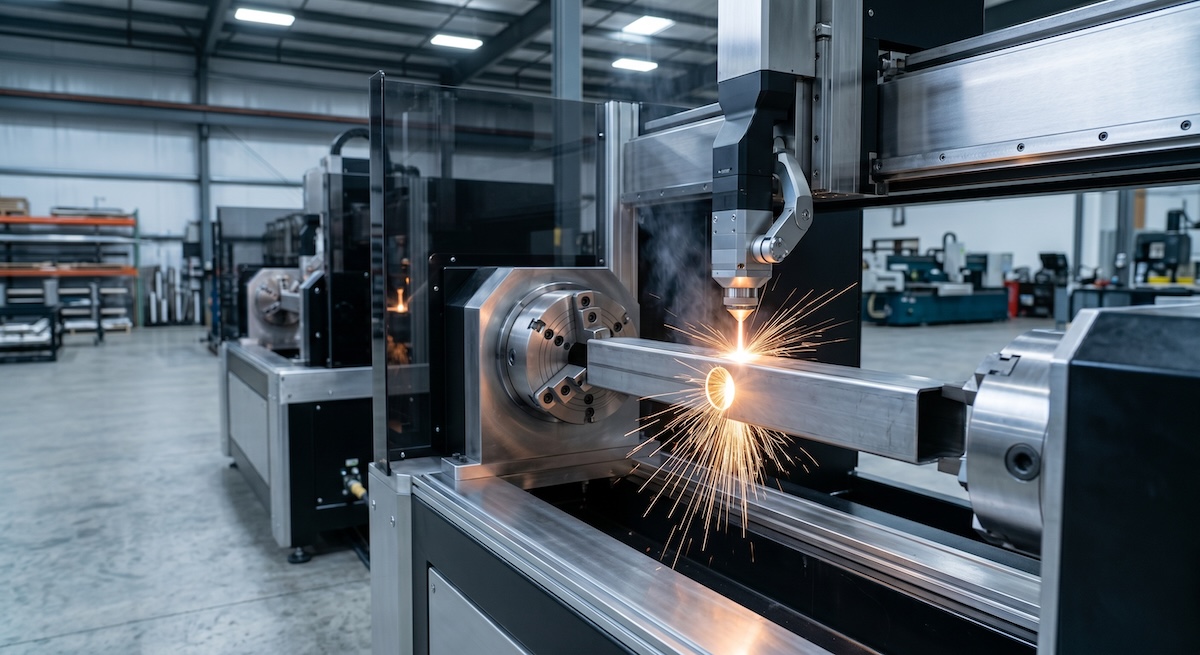
A tube laser holds the tube in a rotating chuck. If the chuck grips too tightly, thin walls can collapse. If it grips too loosely, cut accuracy drops. Grip force, jaw shape, and contact points decide which way a job goes.
One laser tube cutter maker lists three root causes of deformation on square tube:
Their fixes are lower clamp pressure on thin stock, V-shaped jaws that grip at the corners, and chucks that adjust grip force as they work. For finished stainless, they also suggest nylon or soft jaws so the surface does not get scratched or crushed. Source: LX Laser, linked at the end of this post.
Why does tube support matter during the cut?
Support keeps the tube straight while the laser works along its length. Without it, gravity pulls long thin-wall tube into a sag, and the cut lands where the tube is, not where the file says it should be. A machine with active support under the tube helps prevent that sag.
Raw tube adds its own variation. A tube laser article from BLM Group puts it bluntly: "There is no such thing as a perfect tube. They have bows." A bowed tube makes cutting harder. The same article says the weld seam on welded tube is a different composition and cuts differently from the rest of the wall, and seams should not interfere with pins or holes.
What this means for you: tell the shop whether your tube is seamless or welded, and mark any hole or slot that cannot land on the seam.
How should you design thin-wall parts for the laser?
Design thin-wall parts so the tube keeps its stiffness until the last cut. Fewer features near the ends, clear datum faces, and tolerances only where the fit needs them all give the shop room to hold the tube firmly without crushing it.
Print choiceWhy it helps on thin wallWhat to tell the shopName the critical featuresShop can sequence cuts so stiffness stays highWhich holes, slots and ends control fit-upCall out wall, material and profileSets clamp pressure, jaw choice and support planWall thickness, seamless or welded, square, round or rectangularKeep loose tolerances looseTight callouts everywhere force slower, more careful setupsOnly tighten what the assembly truly needsMind weld seam positionSeams cut differently from the rest of the wallFeatures that must avoid the seamRequest a prototype firstProves grip, support and fit before a full runQuantity, finish and how parts assemble
For more on how heat shapes the cut edge, read our plain primer on the heat affected zone in tube laser cutting. For material questions, see stainless vs carbon steel tube for fabrication.
Where does a prototype pay off?
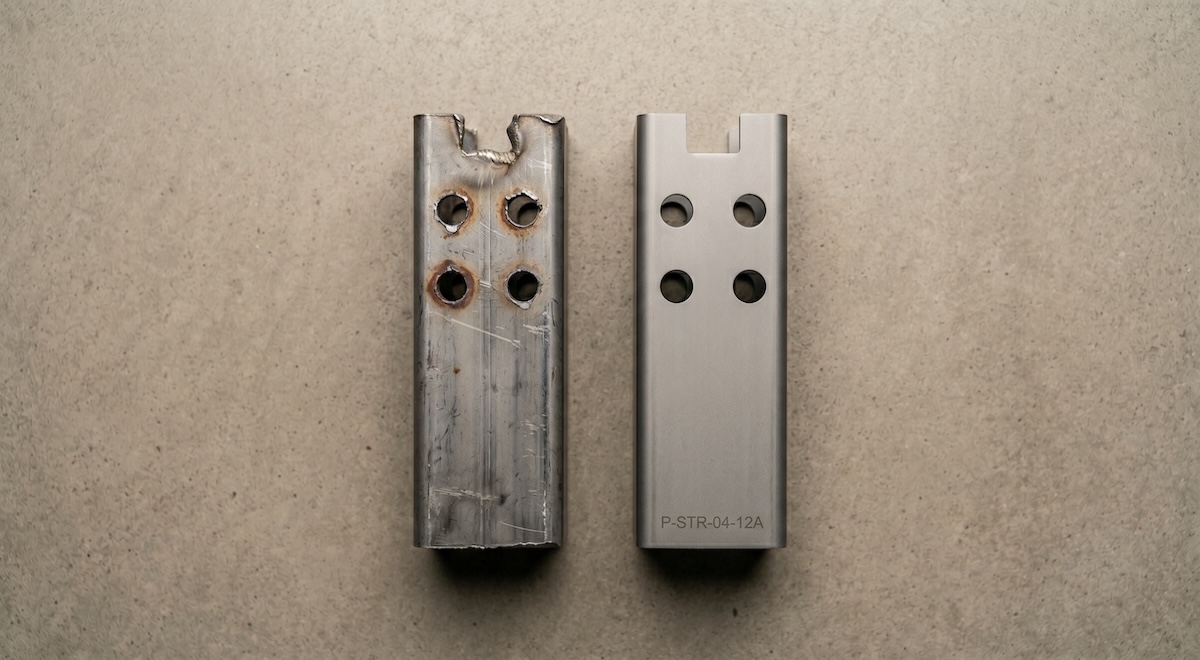
A prototype pays off whenever the wall is thin, the part is critical, or the design is new. One short run shows how the tube holds in the chuck, whether it sags, and whether the joints fit. Fixing that on one part is cheap. Finding it in a full run is not.
Blueline offers custom tube prototyping and short-run fabrication for this reason. Repeatability matters as work scales. Blueline's 2025 AI data center cooling project in Sacramento took 16 truckloads of stainless steel. Parts that repeat from the first piece to the last are what make that kind of job work.
What should you send with a thin-wall RFQ?
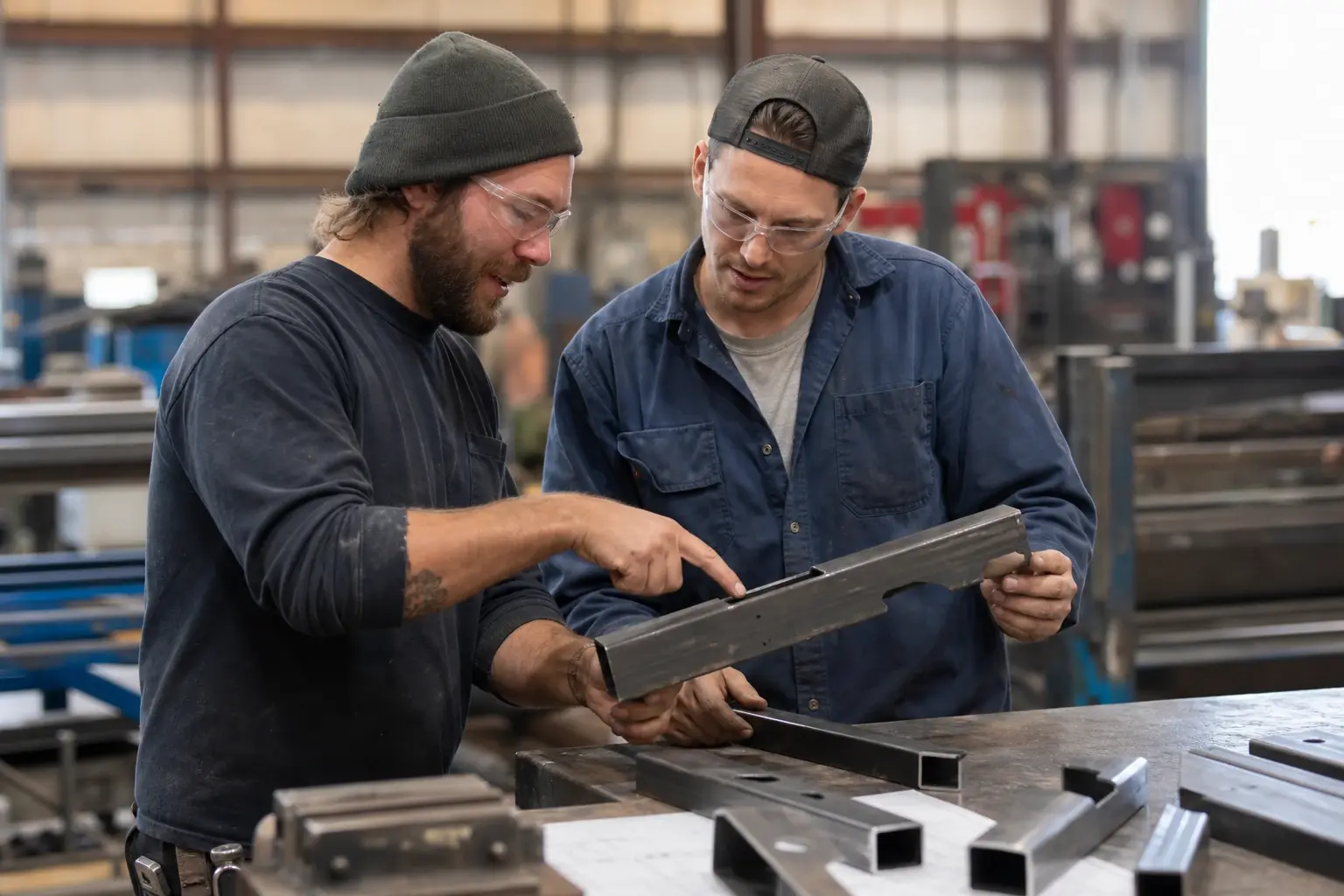
Send the drawing, the 3D model, the material and wall thickness, the quantity, and the notes on critical features. Add the end use if you can. A frame that carries load and a trim part that does not call for different care, and the shop can only plan for what it knows.
Blueline also offers precision slotting, notching and hole cutting in the same tube operation.
FAQ
Can a tube laser cut thin wall tube without crushing it?
Yes, when the shop sets grip force, jaw type and support for the wall. Grip too tight and thin walls collapse. Grip too loose and accuracy drops. Tell the shop the wall thickness up front so it can plan the setup.
Does laser power matter for thin wall tube?
Less than most buyers expect. BLM Group states that tube laser machines usually need a maximum of 5 kW, because a more powerful laser would blow through the far wall of the tube. Setup and handling matter more than raw power on thin stock.
Why does weld seam position matter?
Weld seams are a different composition and cut differently from the rest of the tube. If a hole or slot lands on the seam, it can change the cut. Flag those features so the shop can position the seam away from them.
Should I order a prototype before a production run?
For a thin wall or a new design, yes. A short run shows how the tube behaves in the chuck and whether parts assemble before you commit to volume.
What does Blueline need to quote thin-wall tube work?
Profile, wall thickness, material, quantity, seam restrictions, and drawings or models with critical features marked. Send them through the contact page or call (951) 833-5597.
Next step
If your next frame or chassis part uses thin wall tube, send the print early. Blueline will tell you what it sees before cutting starts. Get a Quote or call (951) 833-5597.
Sources: LX Laser, square tube laser cutting clamping deformation solution. Robert Adelman, BLM Group USA, What you need to know about laser tube cutting, The Fabricator.