Quick Summary
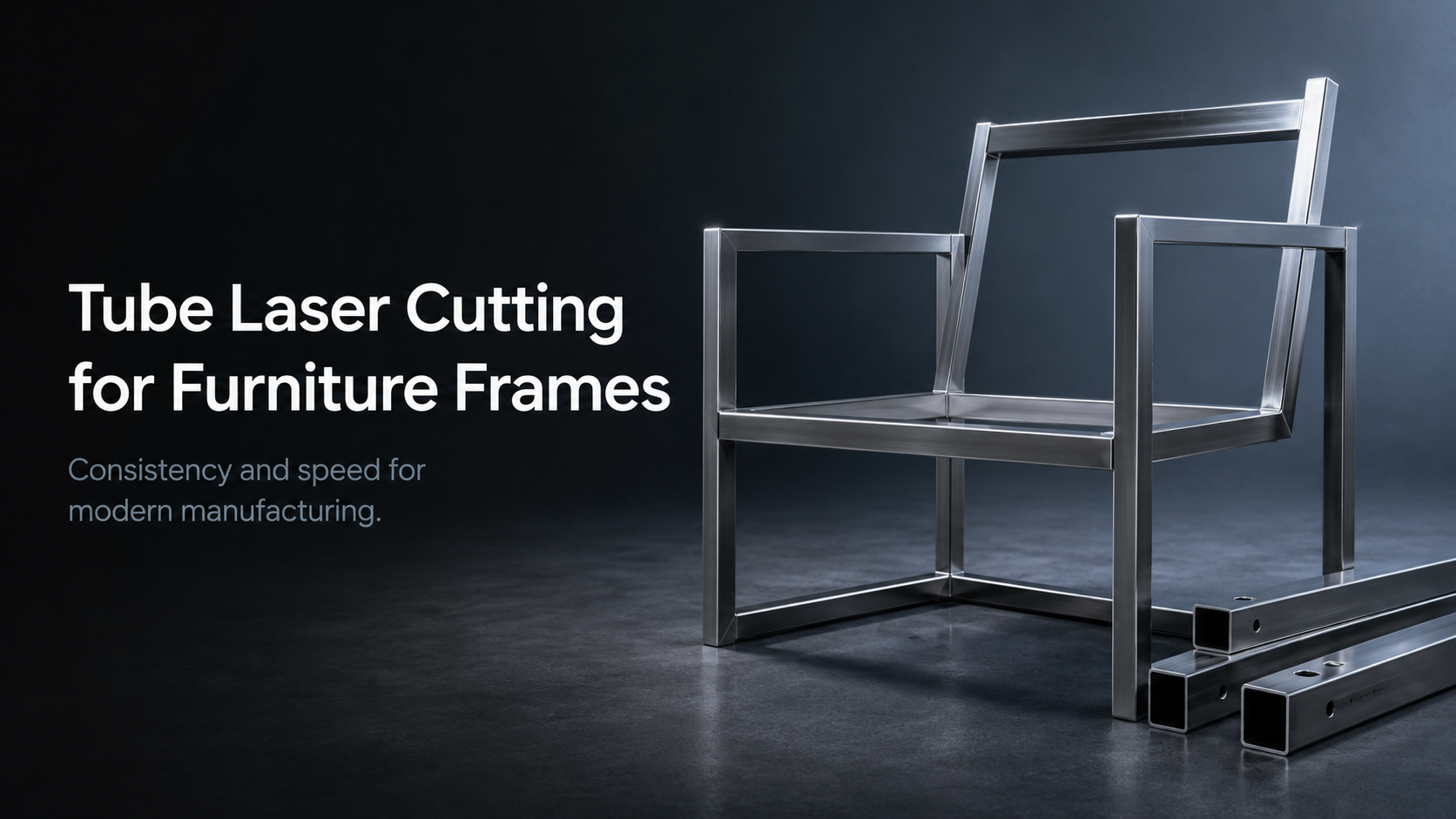
Furniture tube laser cutting lets a frame shop cut length, joints, holes, and notches in a single pass, so every leg, rail, and brace comes out the same. Blueline Industries is a tube laser cutting and precision metal fabrication shop in Chino, CA, and its customers use that single-pass workflow to build frames that go together without shimming or hand fitting.
Our earlier guide, Custom Metal Furniture Frames: A Manufacturer's Guide to Tube Laser Cutting, covers why makers are moving off saw, drill, and notch steps. This post goes one level deeper. It looks at the joint features that make a frame repeat, and how to draw them.
What does furniture tube laser cutting change about frame building?
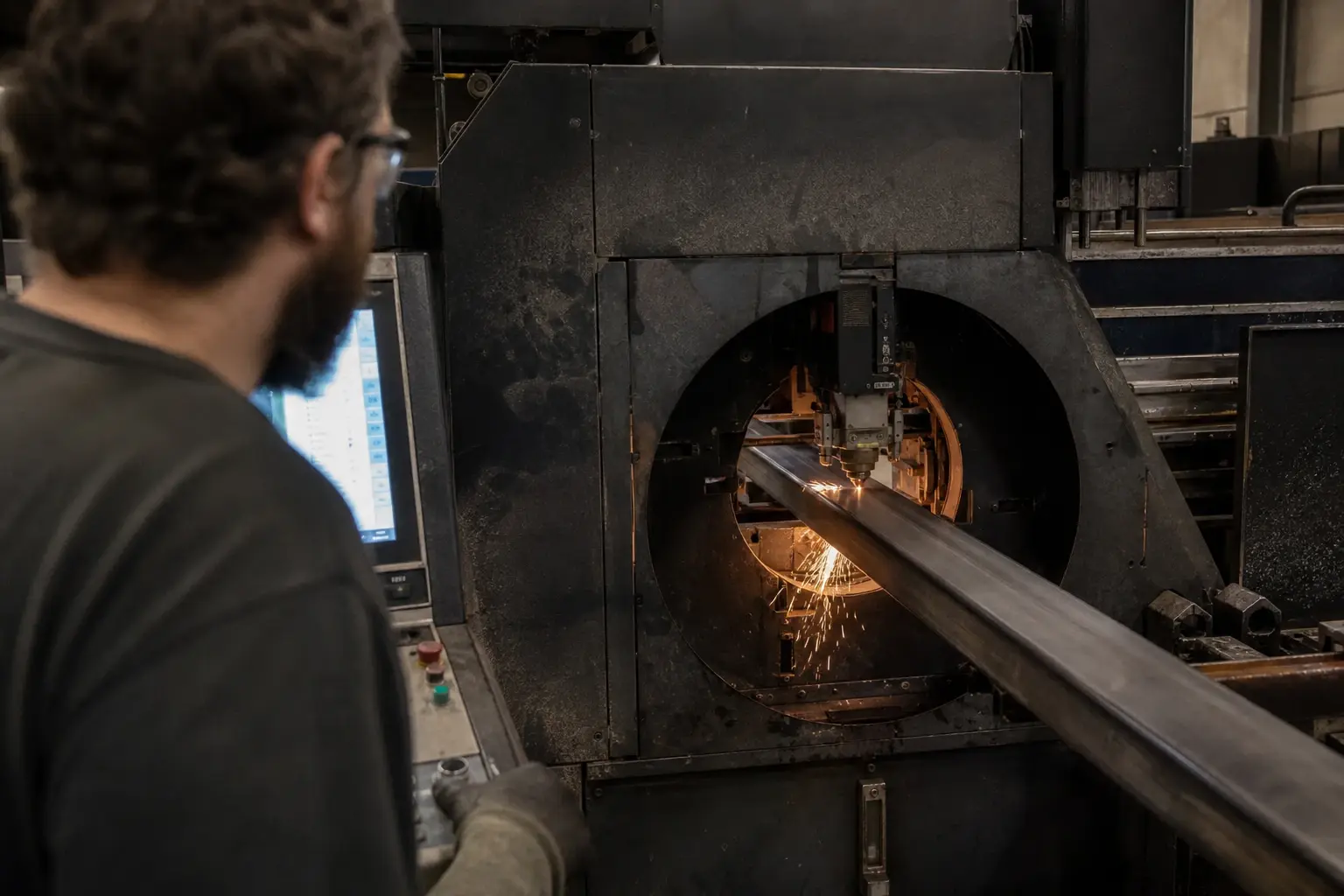
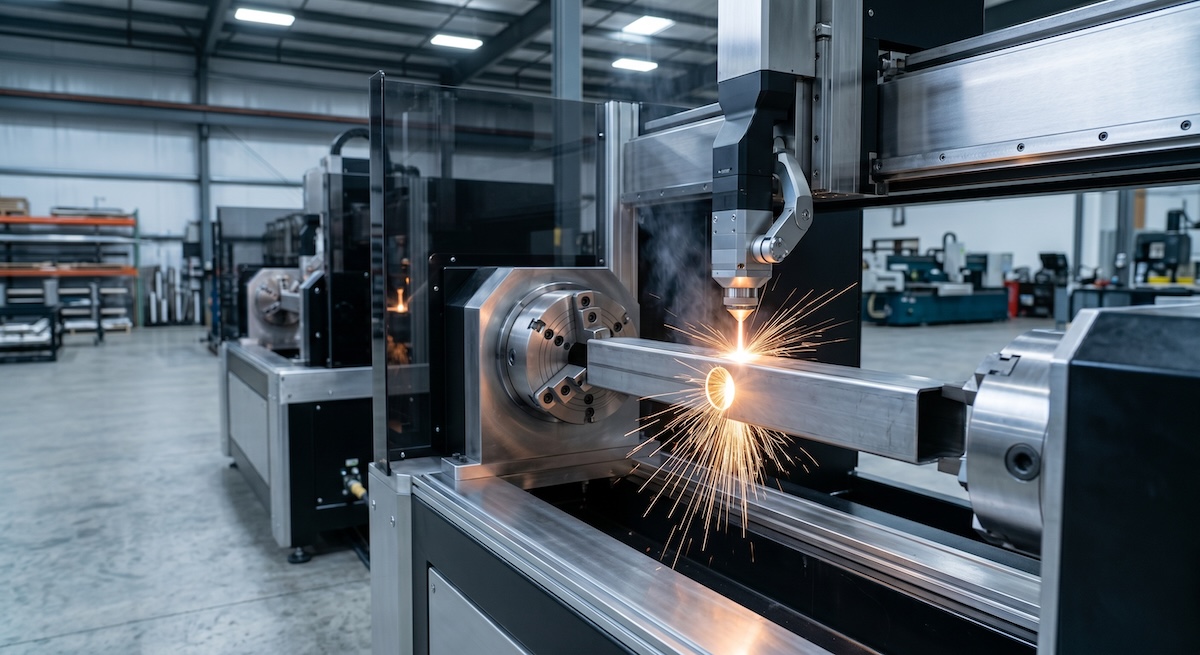
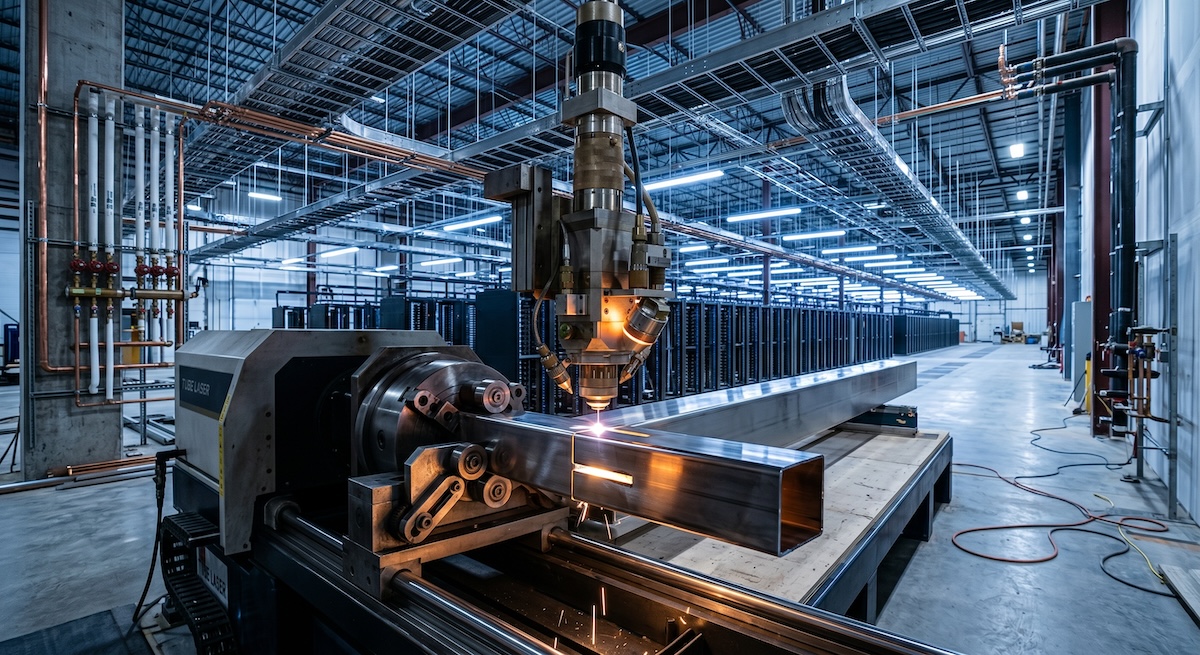
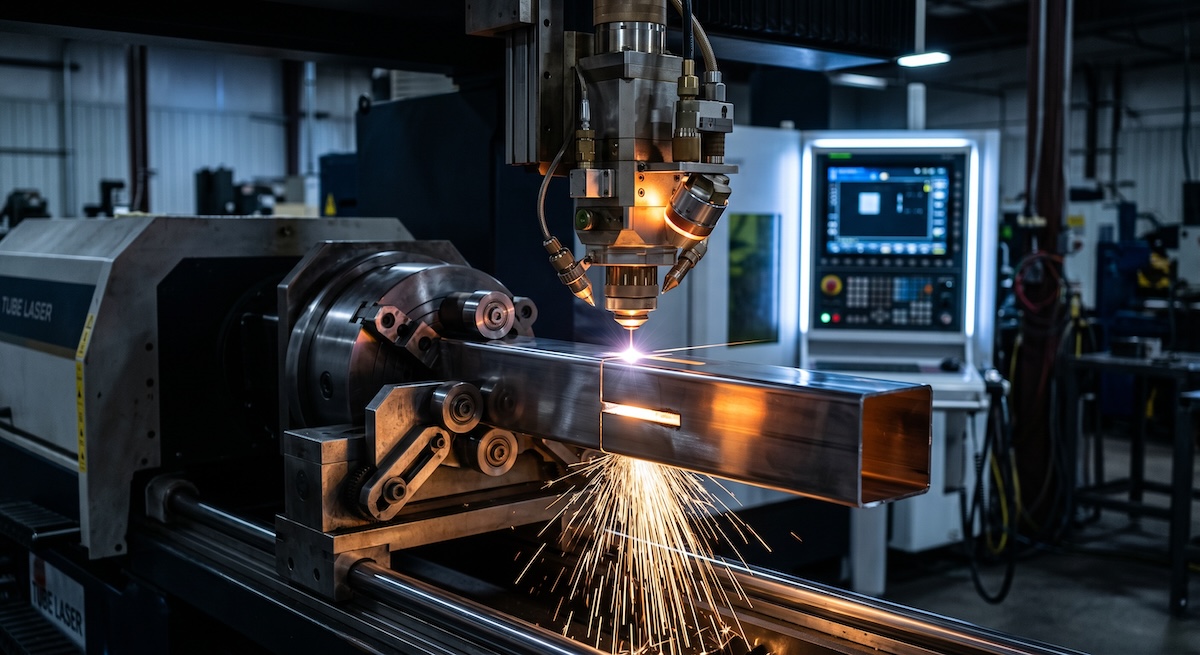
It moves the fit-up work from the welding table to the cutting file. A tube laser cuts the length, the miter, the slots, and the holes in one machine cycle, so the features stay in the same position relative to each other on every part. Welders assemble instead of measure.
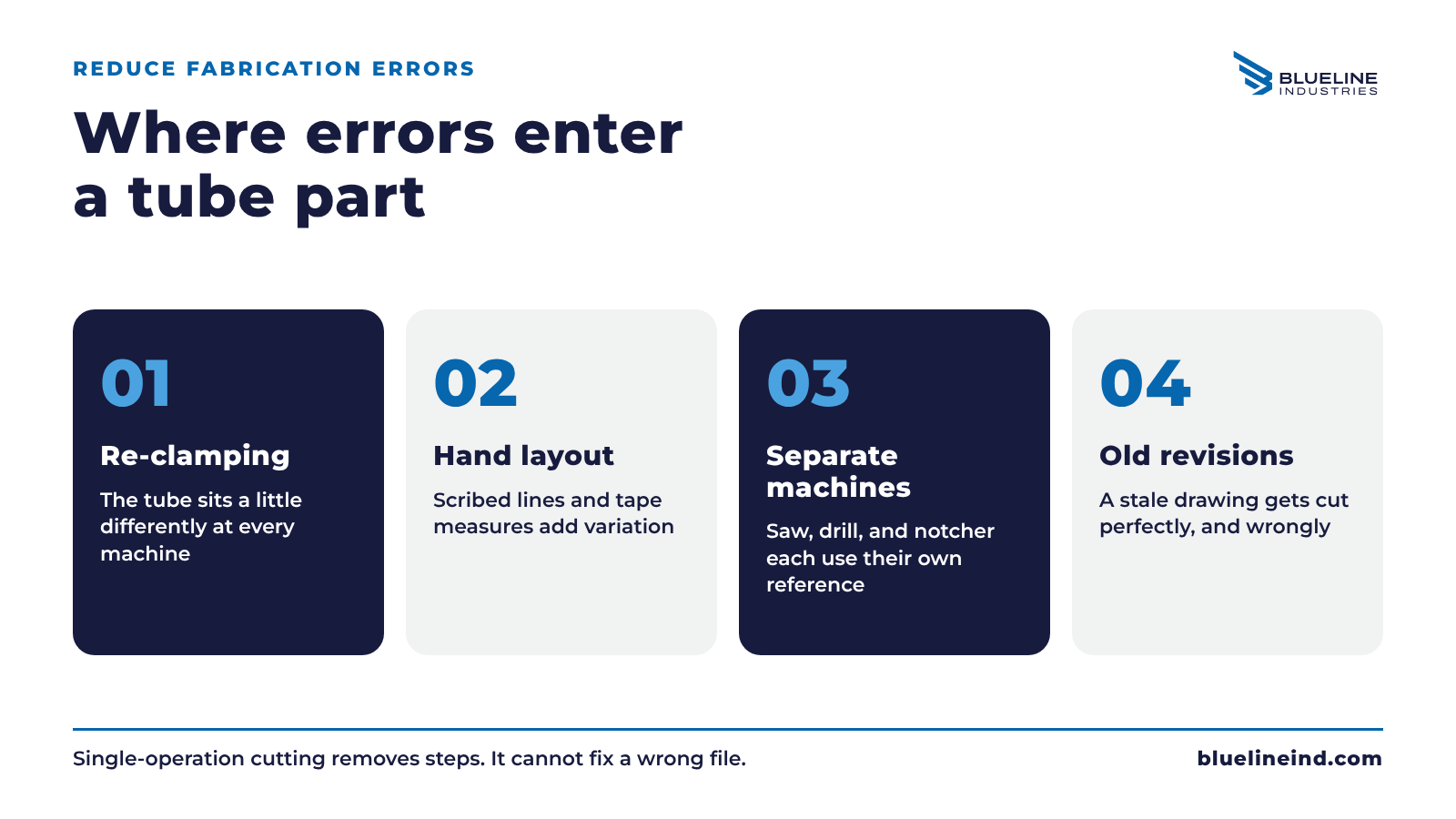
That matters for furniture because frames are built from many short tube pieces that all have to meet at clean joints. When each piece is sawn, drilled, and notched on separate machines, small differences add up at every corner. A single cycle removes most of those hand-offs.
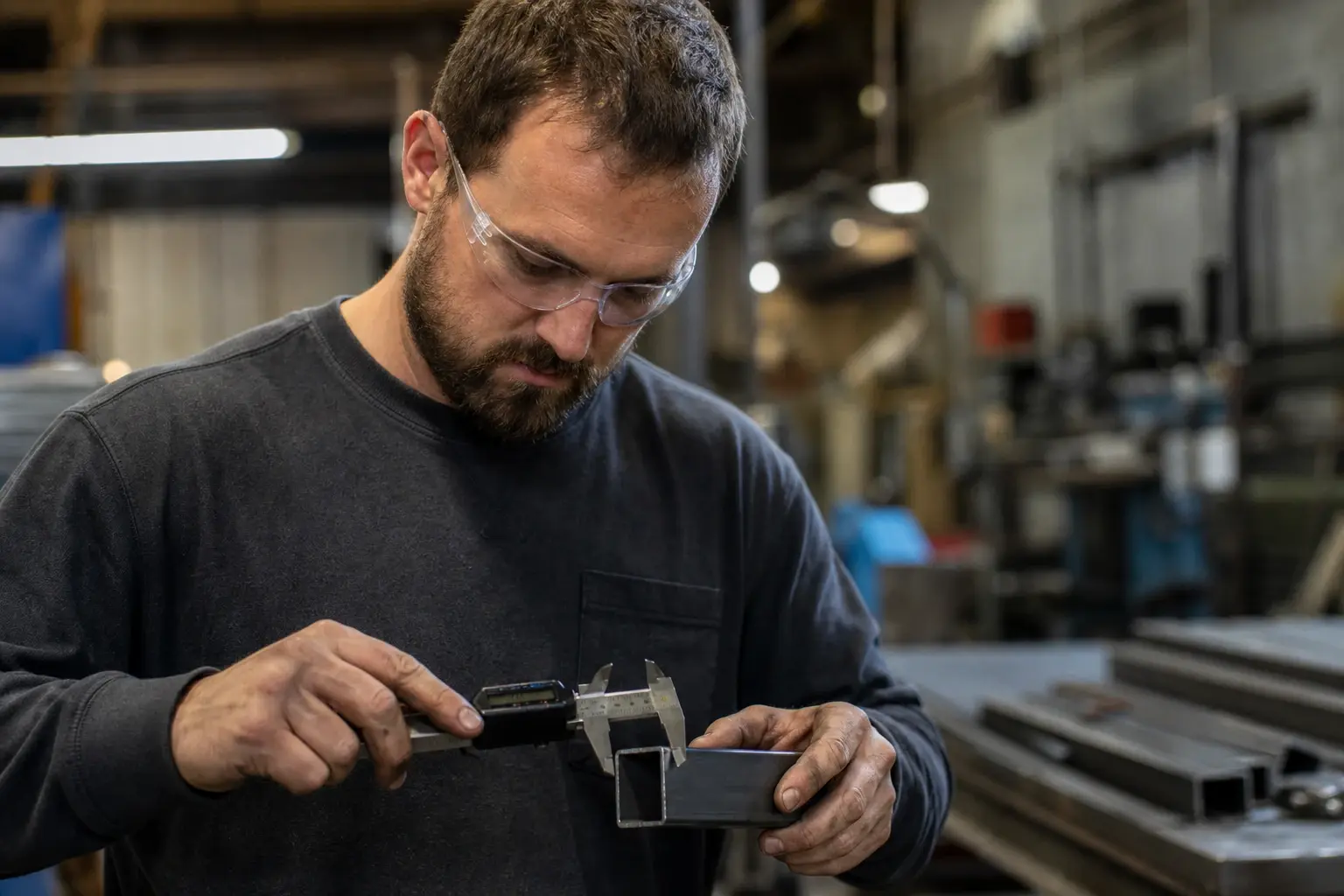
Blueline works mainly with square and rectangular steel tube, plus stainless, and runs it through tube laser cutting services built for repeat parts. Blueline states it holds tolerances of plus or minus 0.003 inch. Your drawing should still call out which features are critical.
Which joint features make a metal furniture frame repeat?
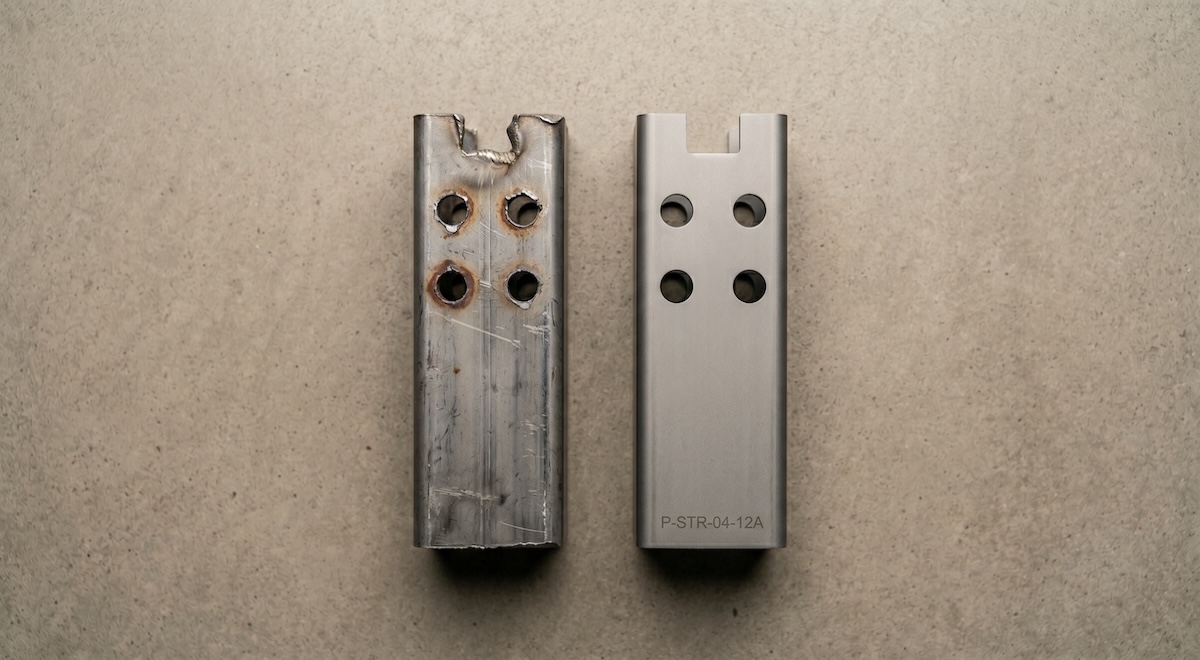
Four features do most of the work: tab-and-slot joints, alignment holes, mitered or coped ends, and relief cuts at bends or crossings. Each one tells the assembler where a part goes. Because the laser cuts them in the same cycle as the length, they sit where the file says they sit.
FeatureWhat it doesWhere it helps on a furniture frameTab-and-slotLocks one tube into another before weldingStretchers between legs, cross braces, shelf supportsAlignment holesGives a pin or fastener a fixed locationHardware mounting, leveler feet, panel attachmentMiters and copesCloses the joint where two tubes meet at an angle or crossCorners, tapered legs, round tube junctionsRelief cutsMakes room for a bend or a weldFolded corners and tight inside radii
Trade press has described the same idea. A Fabricating & Metalworking article on tube profile design says frames can be designed to be self-fixturing, and that slot-and-tab features can lock a frame in place. It also says welders can work without holding or aligning any part of the assembly.
Why self-locating parts matter for repeat orders
A self-locating joint depends on the part, not on the person. A new welder, a second shift, or a reorder six months later all start from the same geometry. That is the quiet advantage for furniture makers who run the same frame in batches.
How do you design a furniture frame for a tube laser?
Start with the joint, then size the tube around it. Decide where each tube meets another, draw the slot or miter at that point, and add the holes the hardware needs. Then check that every critical feature references the same end or face of the tube.
A short design checklist helps:
For more on file prep, see our post on how to prepare CAD files for tube laser cutting.
Where does tube laser cutting help welding and finishing?
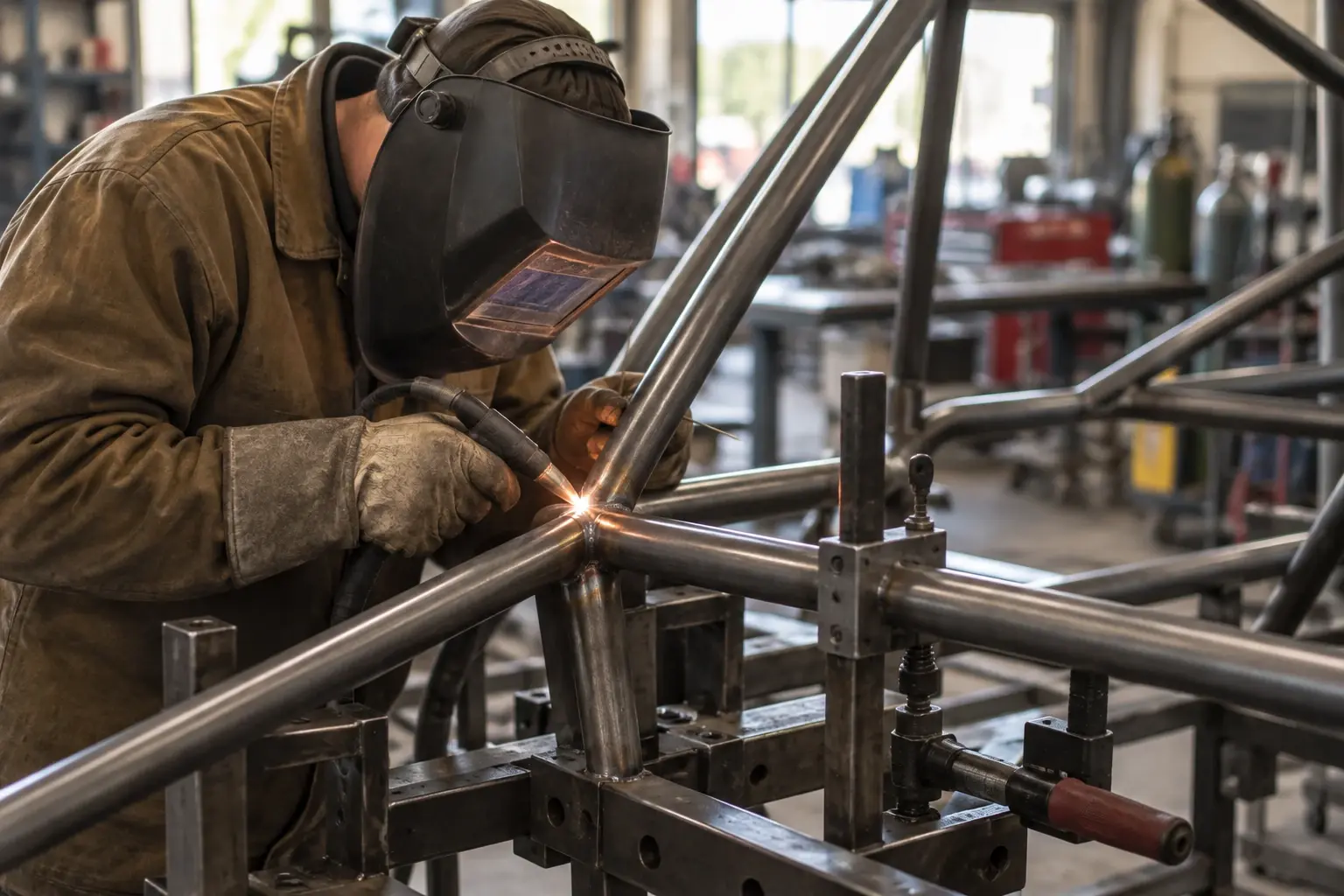
Parts that locate themselves need less fixturing and less rework before finishing. Fit-up gaps stay consistent, so welds are more uniform from frame to frame. Clean, accurate joints also give paint, powder coat, or plating a more even surface to cover.
Edge quality still depends on material and wall thickness, so ask for a sample cut if the joint will show. Exposed joints on furniture are judged by eye, and it is better to confirm the look before a full run.
Blueline also supports bending through its press brake work, and a fabricated frame can combine cut and formed parts. If a design needs both, talk to the shop about the order of operations early. Our precision slotting, notching, and hole cutting page explains the cutting side in more detail.
What should you send for a furniture tube quote?
Send a CAD file, the tube size and wall, the material, the quantity, and the finish you plan to apply. Add a note on which features are critical and where parts mate. With that, a shop can quote the job and flag any joint that will not cut as drawn.
If you are still proving a design, custom tube prototyping and short-run fabrication lets you test a joint before you commit to a larger run.
Proof at scale
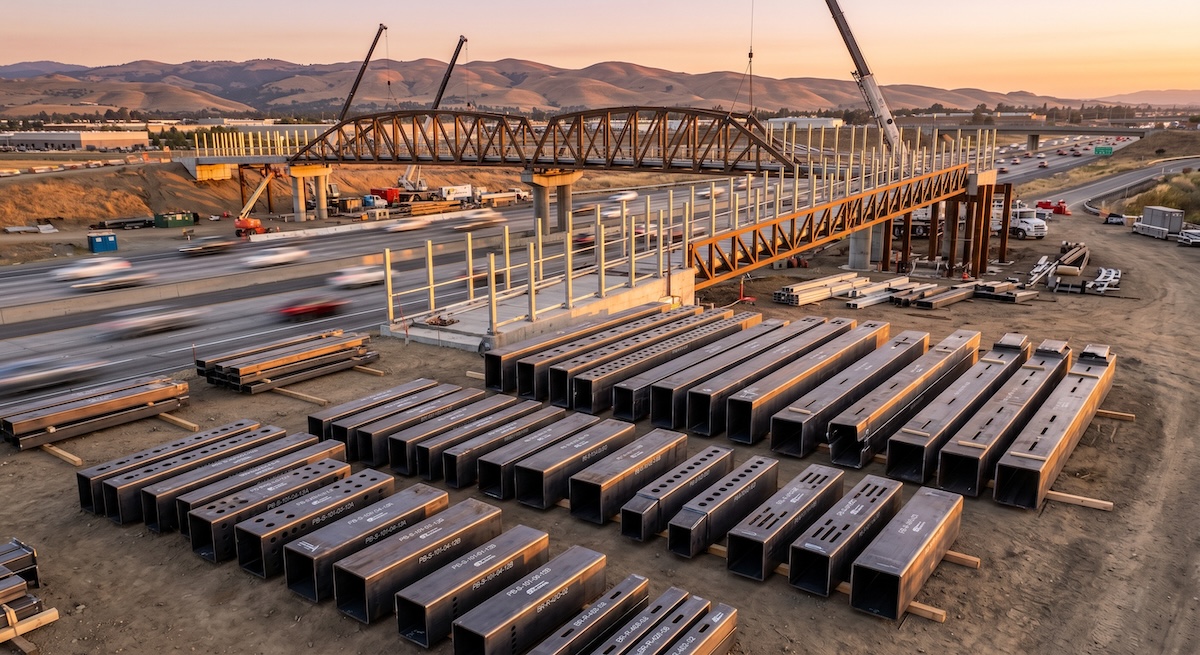
Blueline processed more than 1 million pounds of steel for the Coachella Sahara Stage in 2025. That is a very different product from a chair or a table base, but it shows the same shop and the same single-operation workflow running at large volume. For frame makers, that means a prototype and a production run can use the same process.
Frequently Asked Questions
Can a tube laser cut stainless steel tube for furniture?
Yes. Blueline processes stainless steel tube as well as carbon steel. Stainless finishes and weld appearance matter more on visible furniture, so mention the finish when you request a quote.
Do tab-and-slot joints replace welding?
No. They locate the parts so the weld goes where it should. Tabs hold the frame in position while it is welded, which cuts the need for fixtures and hand layout.
What tube shapes work best for furniture frames?
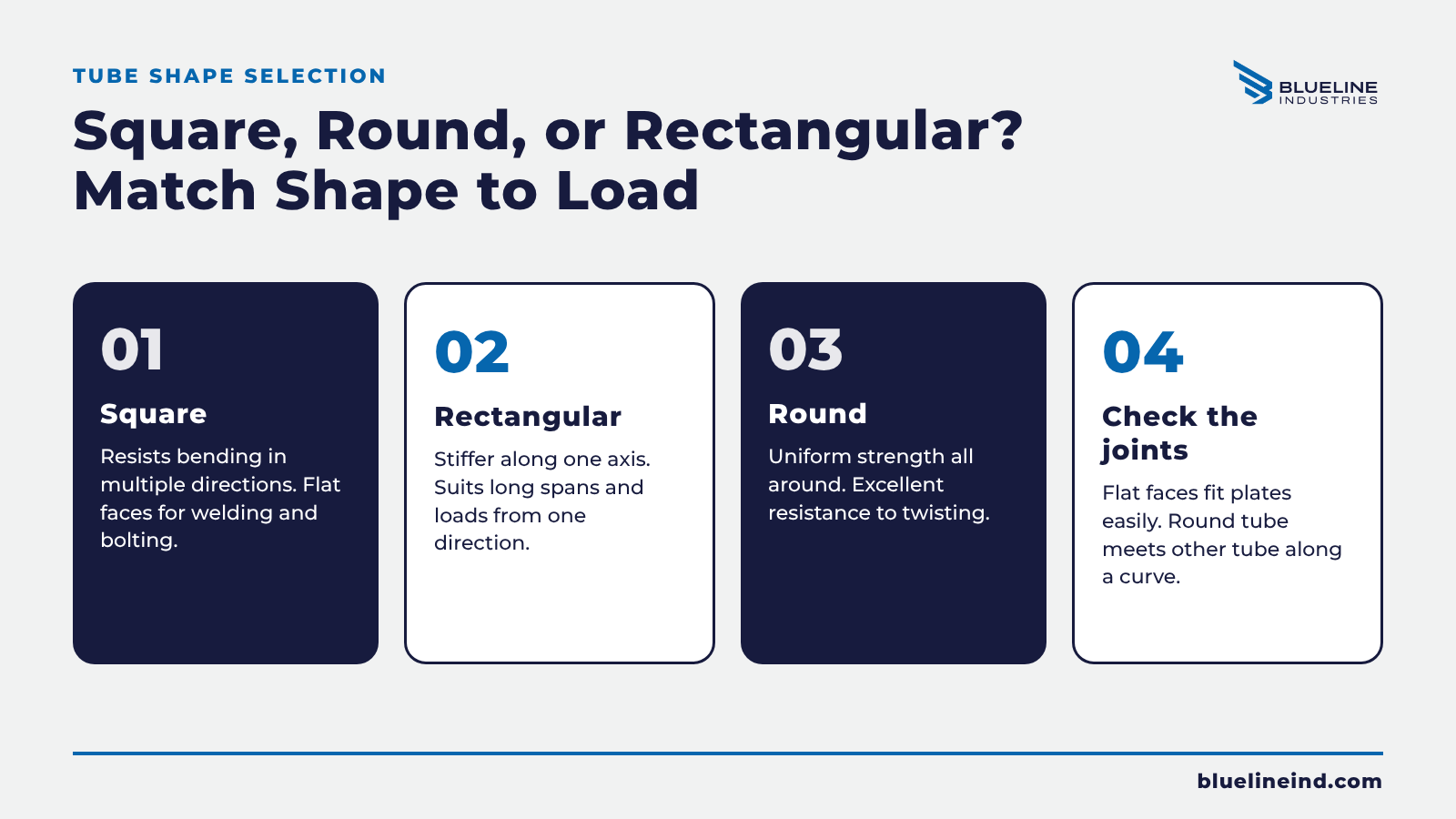
Square and rectangular tube are common because flat faces make clean joints and easy hardware mounting. Round tube works too, but the ends need coped cuts to meet cleanly.
How do I keep every frame identical across reorders?
Keep one controlled CAD file per part and send the same file each time. Because the features are cut in one cycle, the geometry repeats whenever the file does.
Does Blueline have a shop near me?
Blueline operates from one facility in Chino, CA, and ships to customers across the West. Buyers in Los Angeles, San Diego, Las Vegas, and other cities send files and receive parts by freight.
Get your furniture frame quote
If you are building metal furniture frames and want joints that repeat, send Blueline your drawings. Get a Quote or call (951) 833-5597. Made in America, built on integrity.