Quick Answer: While power availability and electrical equipment dominate headlines as the primary data center construction constraint, a less visible bottleneck quietly delays projects by weeks: the multi-step fabrication of precision metal components for cooling systems, structural frameworks, and cable management. With the U.S. construction industry short roughly 439,000 workers and a 60 MW data center losing an estimated $14.2 million for every month of delay, the industry is turning to single-process tube laser fabrication to compress what used to require four to six sequential metalworking operations into one automated CNC cycle. The result is fabrication timelines cut by 50% or more, with better dimensional accuracy and less dependency on increasingly scarce skilled tradespeople.
The numbers defining data center construction in 2026 are staggering. Global data center capital expenditures surged 57% year over year in 2025 to surpass $700 billion, according to Dell'Oro Group, and the figure is on track to exceed $1 trillion. The four largest hyperscalers alone have committed hundreds of billions in combined spending. Amazon plans to double its capital expenditure to $200 billion. Google has signaled investments that could surpass $185 billion.
Yet the physical infrastructure is not keeping pace with the capital. According to CBRE research, capacity under construction actually declined nearly 6% year over year during the second half of 2025, even as vacancy rates hit a historic low of 1.4%. Sightline Climate data shows that of the roughly 16 gigawatts of capacity planned for 2026, only about 5 gigawatts is currently under construction. In 2025, 26% of 110 projects expected to come online were delayed, with timelines spilling into 2026.
The industry knows about the power bottleneck. Transformer lead times, grid connection delays stretching to five years in top markets, and the scramble for switchgear have been widely covered. But there is another constraint embedded deeper in the construction sequence, one that touches every data center project regardless of power strategy, and it starts in the metal fabrication shop.
The Bottleneck Nobody Talks About
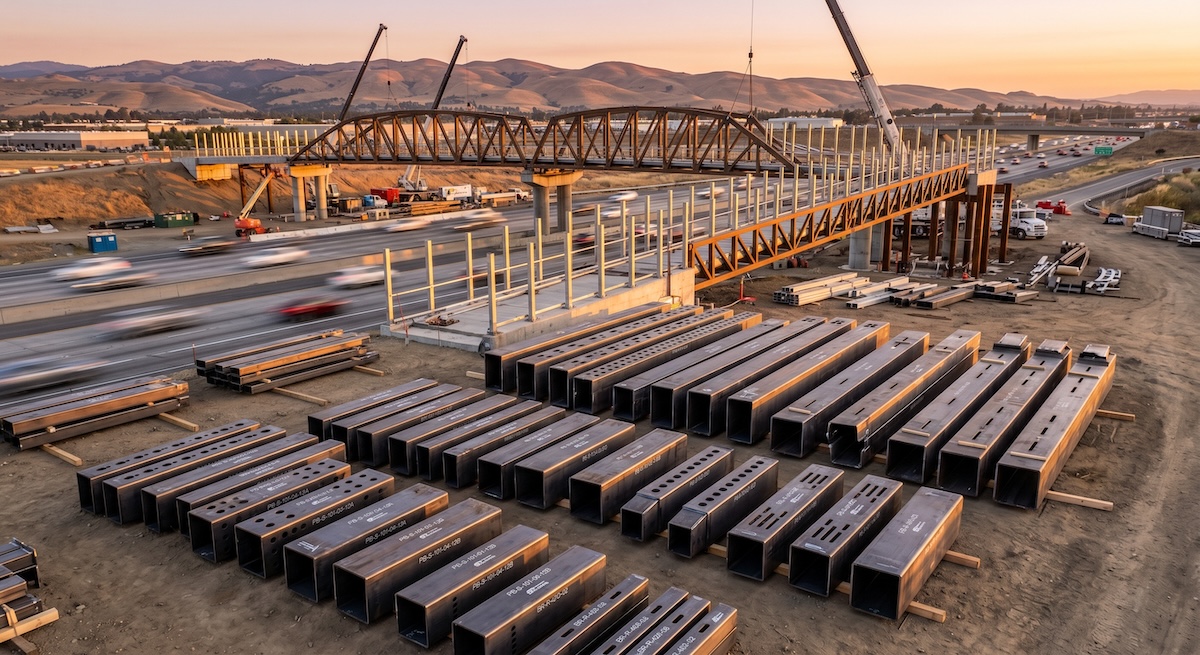
Every data center, whether it is a 5 MW edge deployment or a 500 MW hyperscale campus, depends on thousands of precision metal components that have nothing to do with servers or networking equipment. Cooling distribution manifolds. Structural tube frames for overhead cable trays. Hot-aisle and cold-aisle containment systems. Seismic bracing. Equipment mounting brackets. Nitrogen and refrigerant piping for liquid cooling systems that are becoming standard in AI-focused facilities.
These components share three characteristics that make them bottleneck candidates.
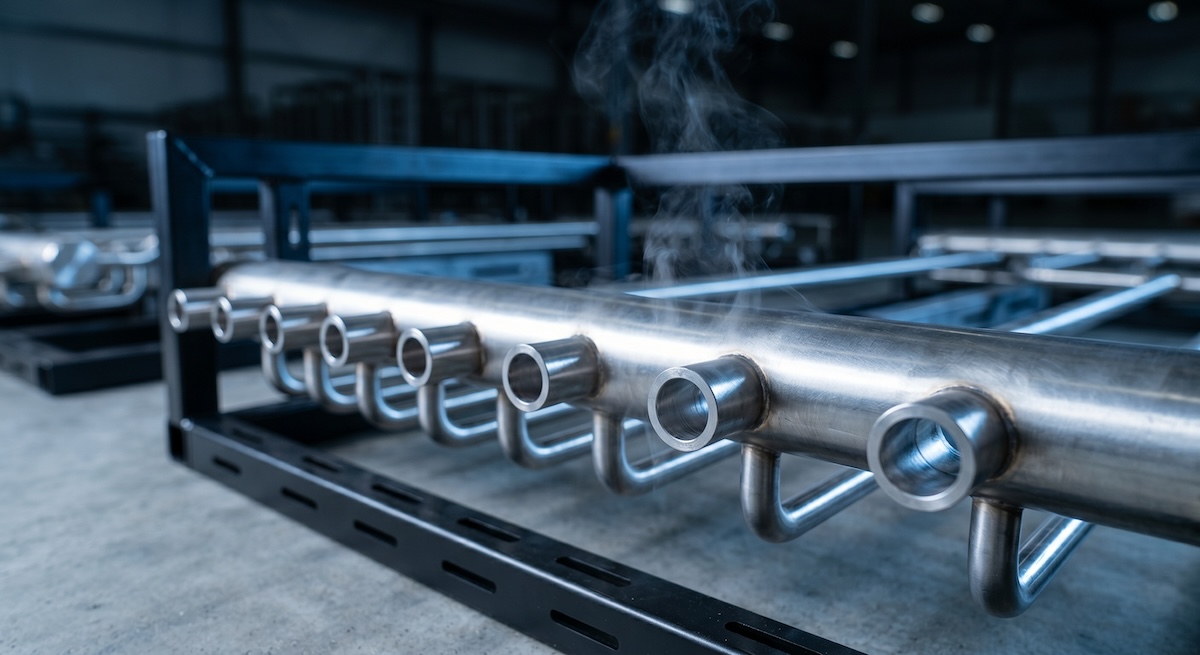
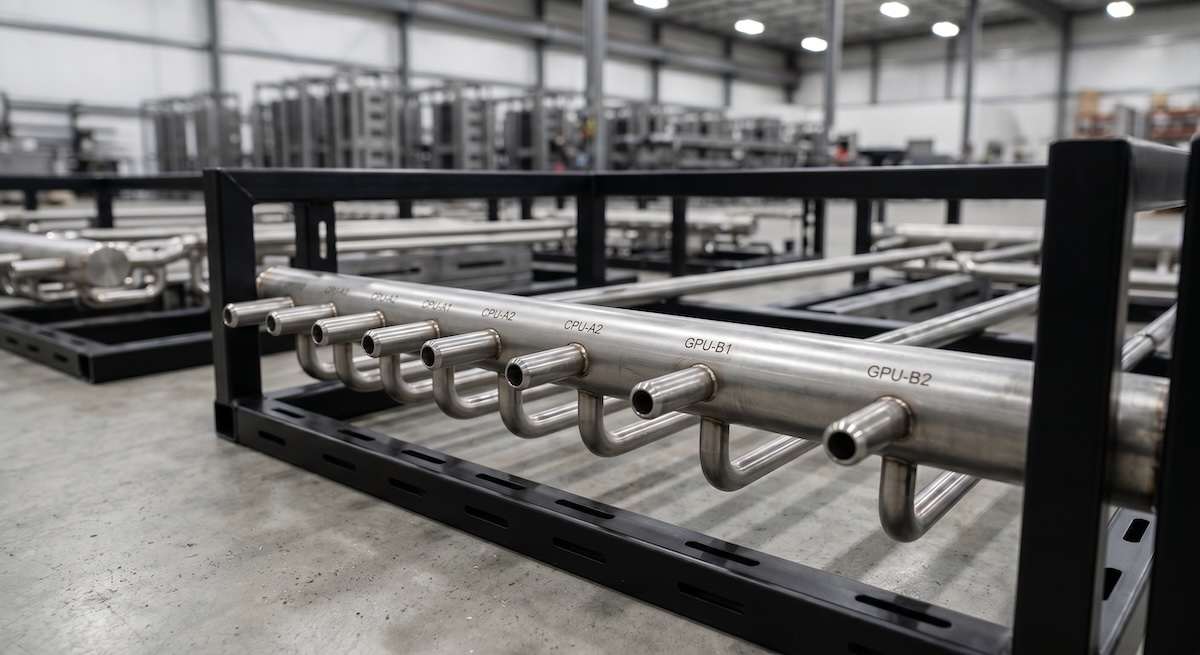
They require geometric complexity. A cooling manifold header is not a tube cut to length. It needs precisely located branch holes, mounting slots, sensor ports, alignment features, and connection points, often dozens of features per individual part.
They involve stainless steel and specialty alloys. Data center cooling infrastructure increasingly specifies 304L and 316L stainless steel for corrosion resistance in coolant-contact applications. These materials are harder to machine than carbon steel, slower to drill, and more punishing on tooling.
And they arrive late in the supply chain, meaning any fabrication delay cascades directly into mechanical rough-in, which delays electrical work, which pushes commissioning, which postpones revenue.
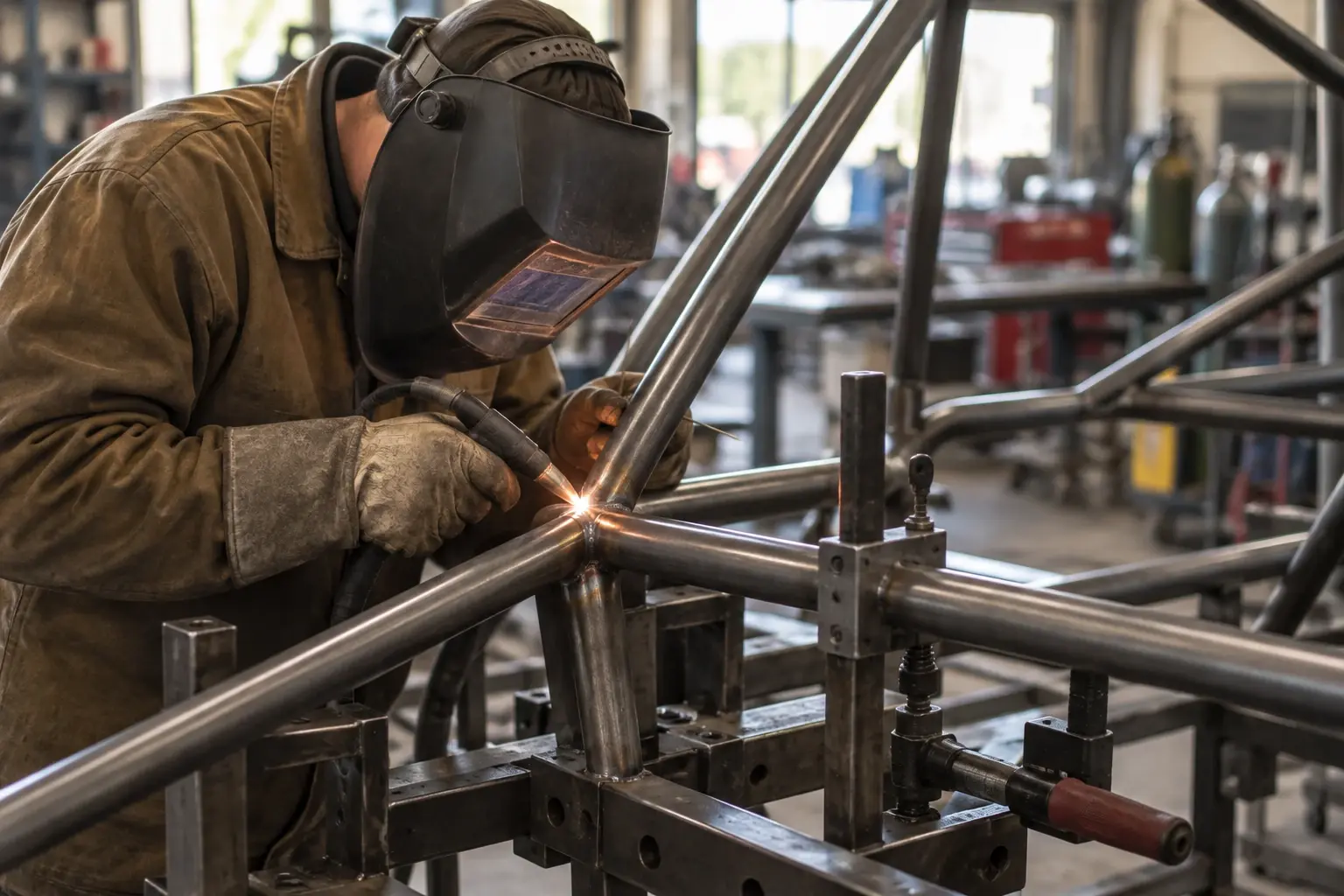
The conventional path for producing these components looks like this: saw cut raw tube stock to length, transfer to a drill press, transfer to a milling station for slots, transfer to a notching station for tube-to-tube joints, transfer to a tapping station for threaded holes, deburr everything, inspect between each operation. Each transfer means a new fixture setup, a new queue, a new opportunity for positional error. Multiply that across a project with 1,500 to 5,000 unique components, and the fabrication phase alone consumes 8 to 12 weeks of calendar time.
When the industry was building at a more measured pace, this timeline was manageable. It is not manageable when a 60 MW facility loses roughly $14.2 million for every month it sits unfinished, a figure that includes $10.8 million in lost lease revenue at current market rates plus carrying costs on committed capital.
Why Traditional Fabrication Cannot Keep Up
The math behind the bottleneck is straightforward but relentless.
Consider the queue time problem. In a conventional metal fabrication shop, a tube component requiring five operations (cut, drill, slot, notch, tap) might spend 15 minutes under active machining at each station. But between stations, it waits. Waits for the previous batch to clear. Waits for an operator to set up the next fixture. Waits for quality inspection. Each operation might add 2 to 4 hours of non-productive time. Five operations across a project with 80 distinct part numbers and batch quantities of 50 to 200 pieces each, and those idle hours accumulate into weeks of schedule.
Then there is the tolerance problem. Every time a part is unclamped from one fixture and reclamped in another, positional accuracy degrades. The first hole might be placed within 0.005 inches of its intended location. By the time the part has been through four re-fixturings, cumulative drift can push features 0.015 to 0.025 inches off position. That sounds trivial until you try to assemble 200 manifold headers in the field and discover that branch connections do not align with rack-mounted heat exchangers. The result is shimming, reaming, and field modification, all performed by the same scarce skilled labor the project cannot afford to waste.
And that labor scarcity is the third compounding factor. As of late 2025, the U.S. construction industry faces a shortage of approximately 439,000 workers, with the gap particularly acute in skilled positions like welders, machinists, and pipe fitters. The National Association of Manufacturers projects a potential shortfall of 1.9 million manufacturing workers by 2033. Data center construction is competing directly with semiconductor fabs, energy infrastructure, and advanced industrial projects for the same limited pool of tradespeople. More than 80% of construction firms report struggling to fill both hourly craft and salaried positions, according to an Associated General Contractors survey.
In traditional fabrication, each machining operation requires an experienced operator. When that operator is absent, sick, or poached by a competitor offering a 25 to 30% pay premium (common in data center construction roles), throughput drops immediately. The machines sit idle. The project schedule slips. And the $14.2 million monthly clock keeps ticking.
The Technology That Compresses the Timeline
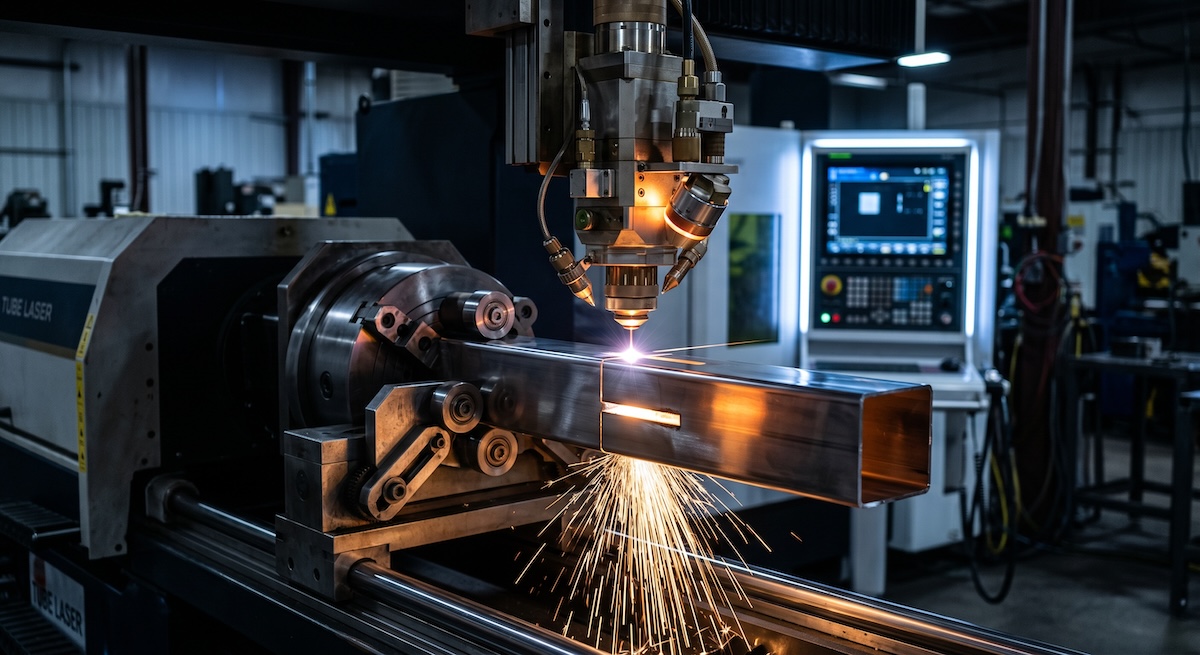
Tube laser fabrication solves the hidden bottleneck by collapsing multi-step metalworking into a single automated sequence.
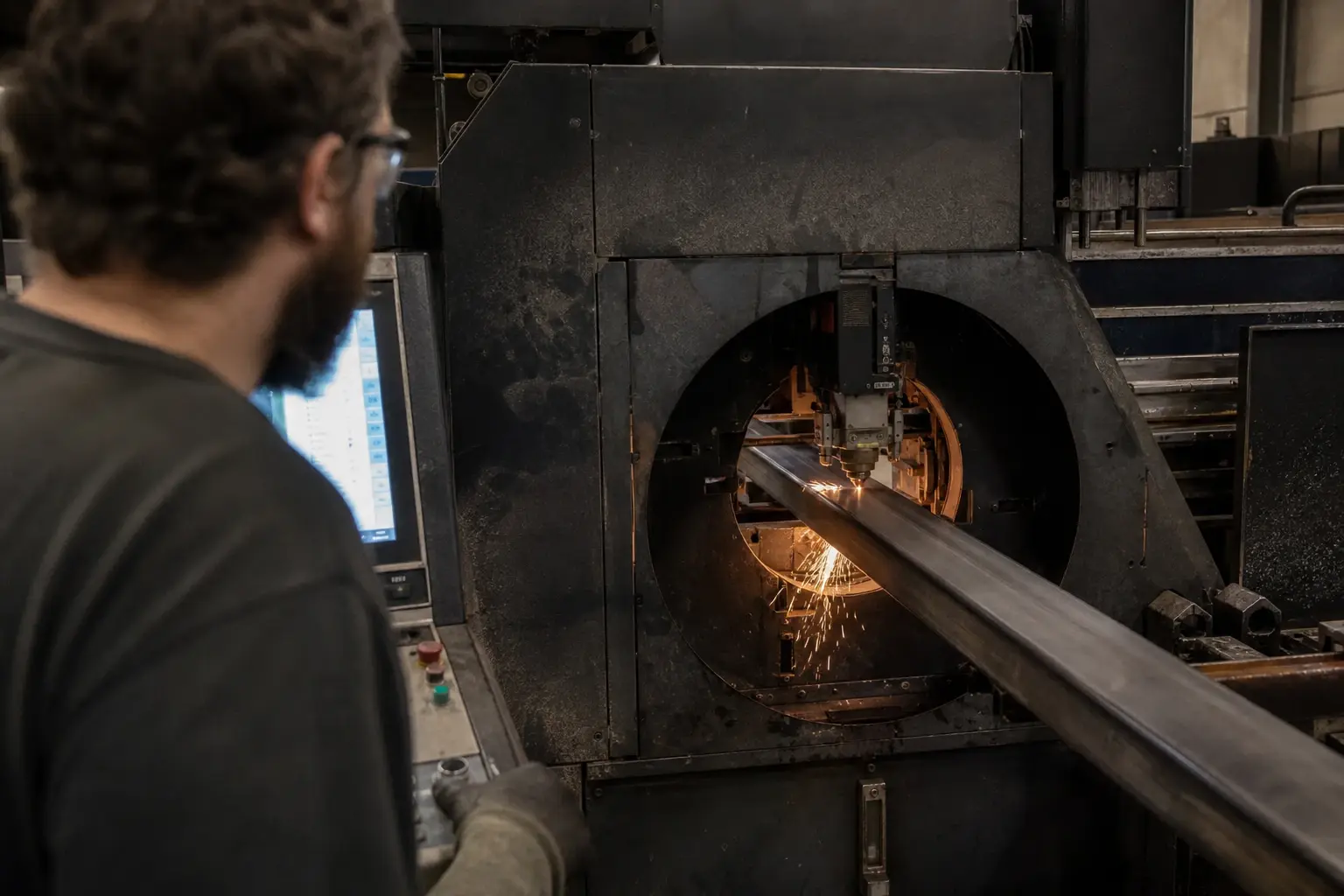
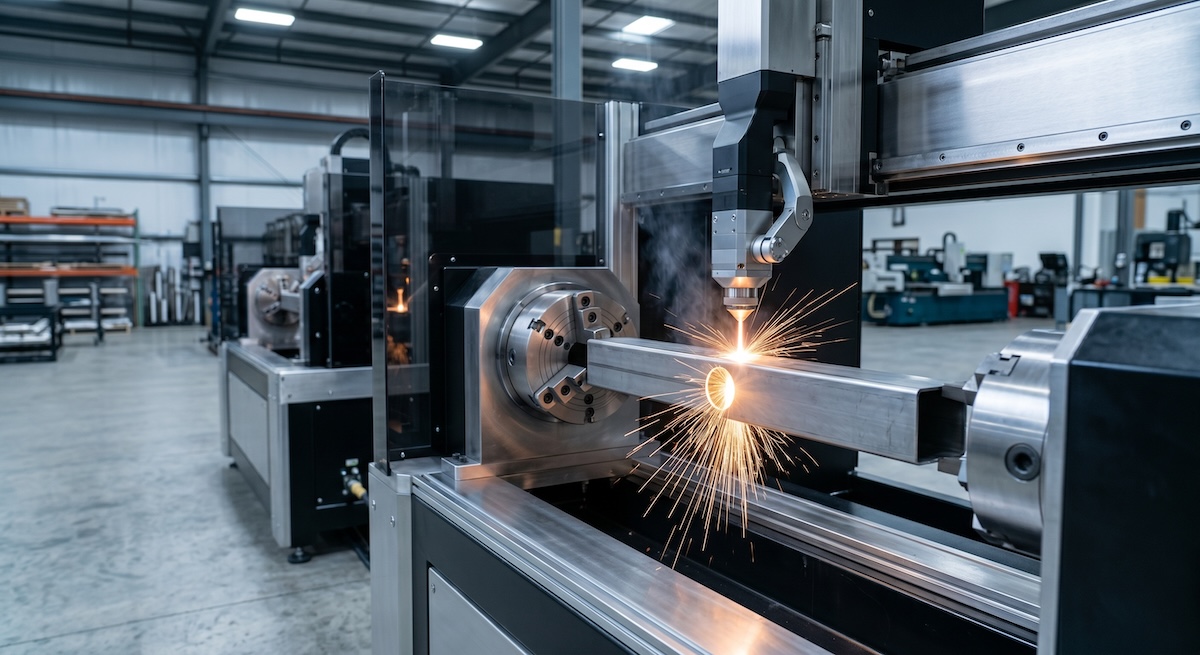
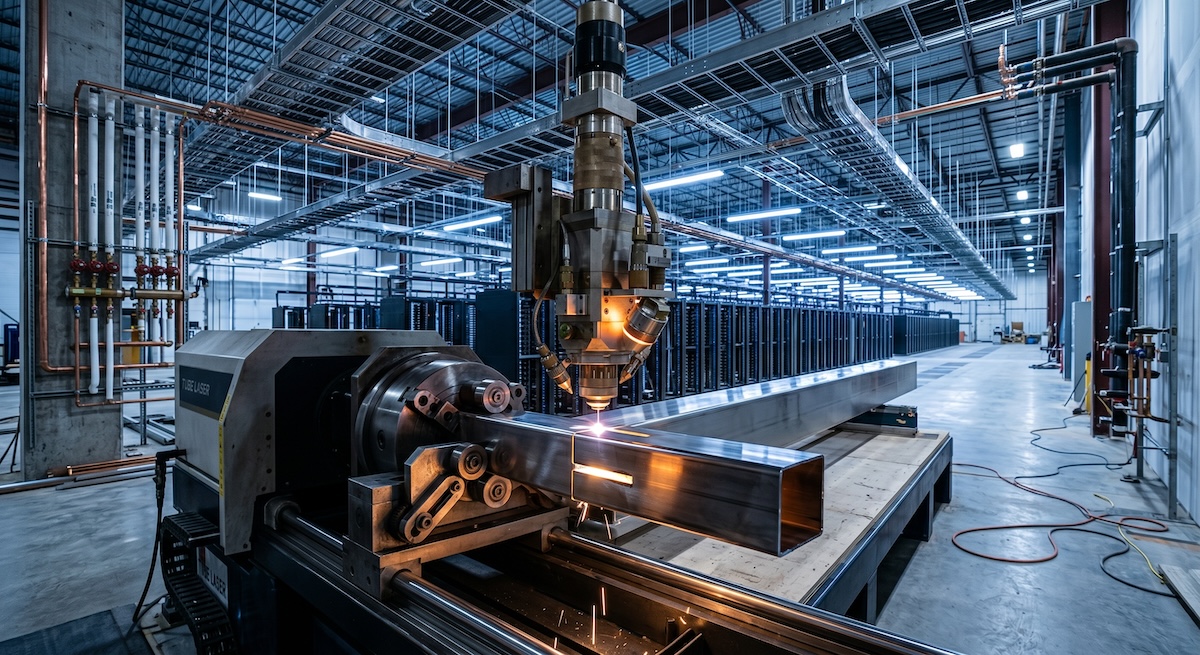
The technology is conceptually simple. A fiber laser, typically 3 to 6 kilowatts for stainless steel tube work, is guided by CNC programming to cut, drill, notch, slot, and profile tubular material while the workpiece remains in a single fixture. The tube stock loads into a multi-chuck clamping system. The CNC program, generated directly from 3D CAD models, controls the laser head through the complete feature sequence. The tube rotates and translates as needed. A part that would visit five conventional machines is finished in one cycle.
The practical implications for data center construction timelines are significant.
Queue time drops to near zero. There are no transfers between stations, no batch sorting, no queue waiting. Parts move from raw material to finished component in a continuous flow.
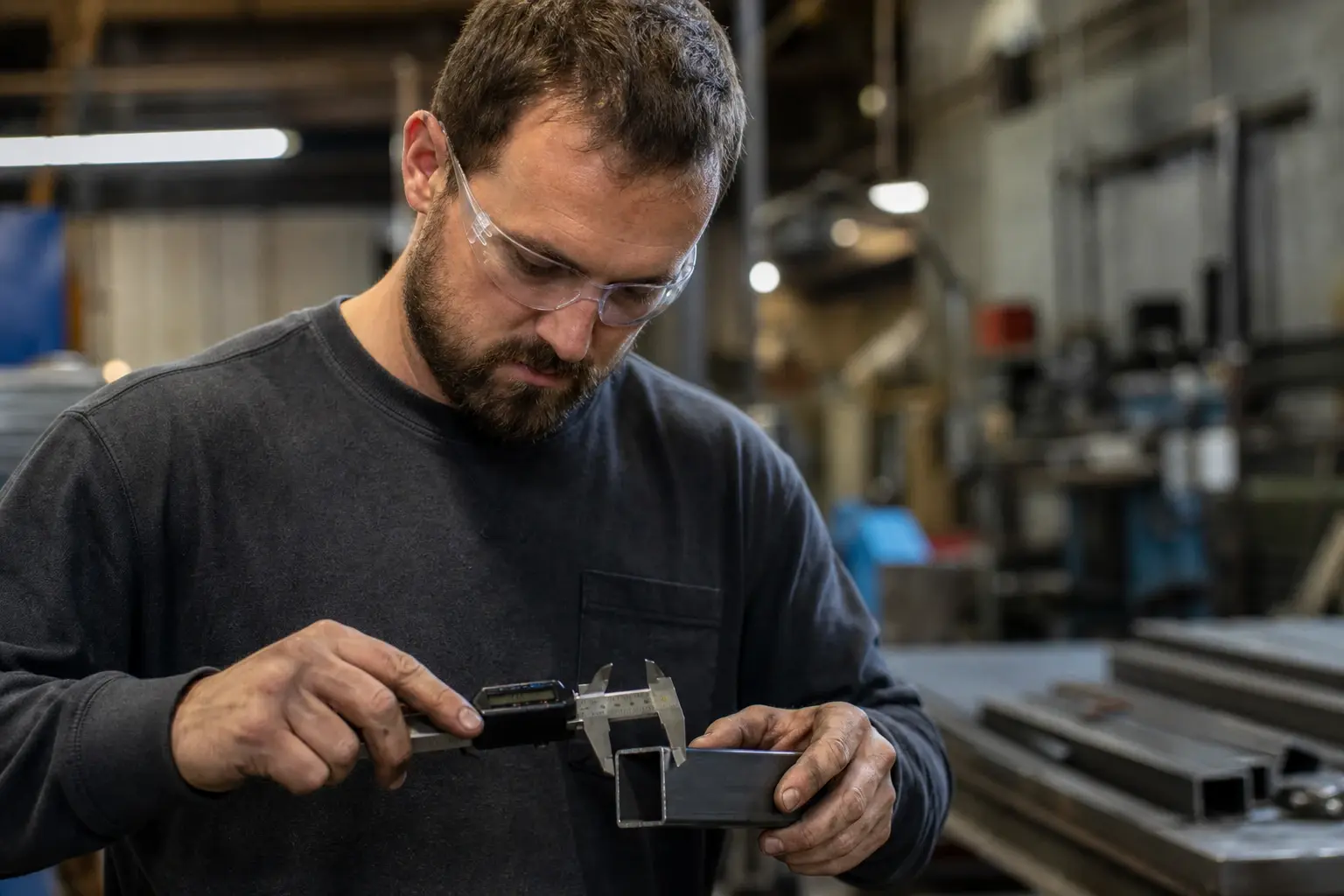
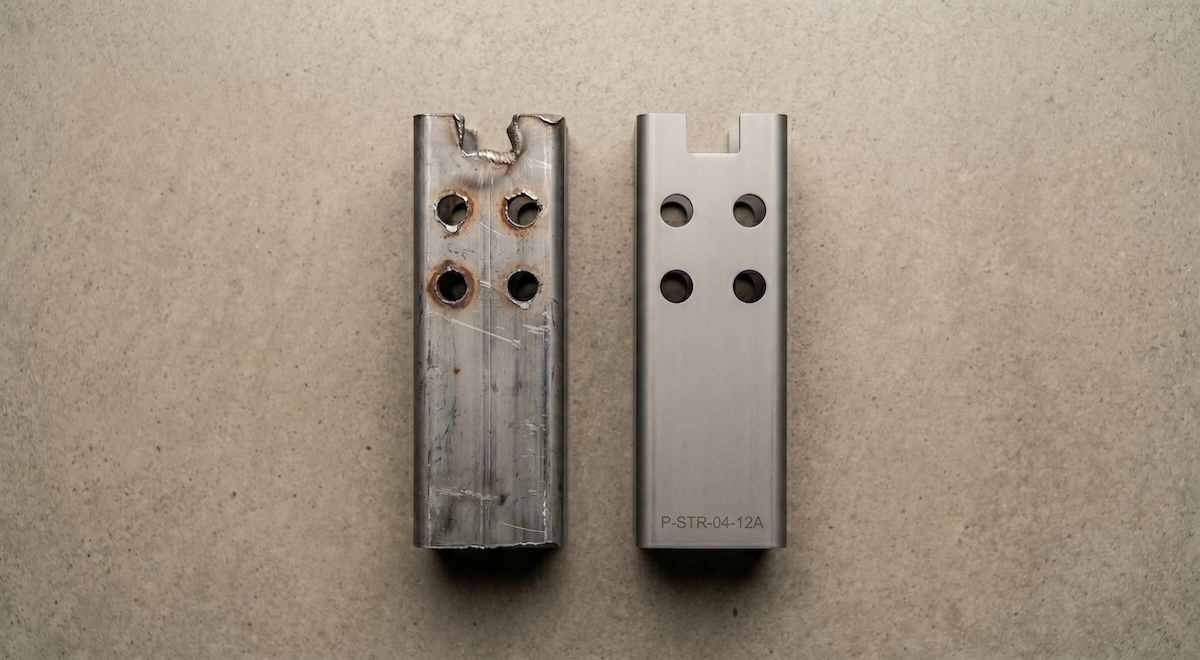
Tolerance improves dramatically. Because the tube never leaves the machine between operations, every feature references the same datum. Positional accuracy of ±0.003 inches is achievable and repeatable, whether you are cutting part number 1 or part number 3,000. For data center applications where cooling manifold connections must align precisely with rack-mounted equipment, this consistency eliminates the field rework that plagues conventionally fabricated projects.
Labor requirements shift. One tube laser operator can maintain output that would previously require three or four conventional machinists. The skill profile changes from manual drilling and fitting to CNC programming and machine operation, which aligns with the direction the workforce is already moving. This does not eliminate skilled workers. It makes each worker dramatically more productive.
Setup time between different part numbers drops by 70 to 90%. In conventional fabrication, changing from one part to another means swapping fixtures, adjusting stops, and verifying first-article dimensions. On a tube laser, it means loading a new CNC program, which takes minutes rather than hours. For data center projects with dozens of distinct part numbers, this flexibility translates directly into compressed schedules.
What the Numbers Look Like in Practice
A representative data center cooling infrastructure project might involve 1,200 stainless steel tube components across 65 distinct part numbers. Here is how the timelines compare.
Under conventional multi-step fabrication, material procurement takes 2 to 3 weeks. Saw cutting and first-operation processing takes 2 to 3 weeks with queue time. Secondary operations (drilling, slotting, notching, tapping) add another 2 to 3 weeks as parts route between machines. Quality inspection holds between operations add 3 to 5 days. Packaging, part identification, and shipping preparation add another week. Total: 8 to 12 weeks from material receipt to delivery.
Under single-process tube laser fabrication, material procurement still takes 2 to 3 weeks (a supply chain constraint that fabrication technology cannot change). But CNC programming begins while material is in transit, using CAD models directly. Once material arrives, the entire secondary operations timeline compresses. The 2 to 3 weeks of drilling, slotting, and notching become 1 to 2 weeks of continuous laser processing. Quality inspection simplifies because dimensional accuracy is inherent to the CNC process. Each part leaves the machine with etched part numbers and assembly identifiers, eliminating manual labeling. Total: 3 to 5 weeks from material receipt to delivery.
The 4 to 7 weeks recovered do not disappear into a vacuum. They flow directly into earlier mechanical installation, which enables earlier electrical termination, which enables earlier commissioning, which means earlier revenue. At $14.2 million per month of delay for a 60 MW facility, even a 4-week schedule recovery represents substantial financial value.
Prefabrication and the Broader Industry Shift
The adoption of tube laser fabrication for data center components is part of a larger transformation in how the industry thinks about construction timelines. Modular and prefabricated delivery methods have become the dominant execution model for new data center projects. Industry data shows that highly modularized projects achieve schedule reductions of 30 to 50 percent compared to conventional approaches, compressing delivery timelines that once ranged from 24 to 36 months into 16 to 20 months.
Power skids, cooling assemblies, electrical rooms, and white-space modules are now assembled and tested off-site before shipping to construction sites. The global modular data center market is projected to climb from roughly $29.9 billion in 2024 to nearly $80 billion by the end of the decade.
But modular strategies are only as fast as their slowest input. A prefabricated cooling module that arrives on schedule means nothing if the precision tube components inside it were delayed by conventional fabrication bottlenecks. This is why the fabrication step matters: it is upstream of the modular assembly process, and any delay there propagates forward through the entire prefabrication workflow.
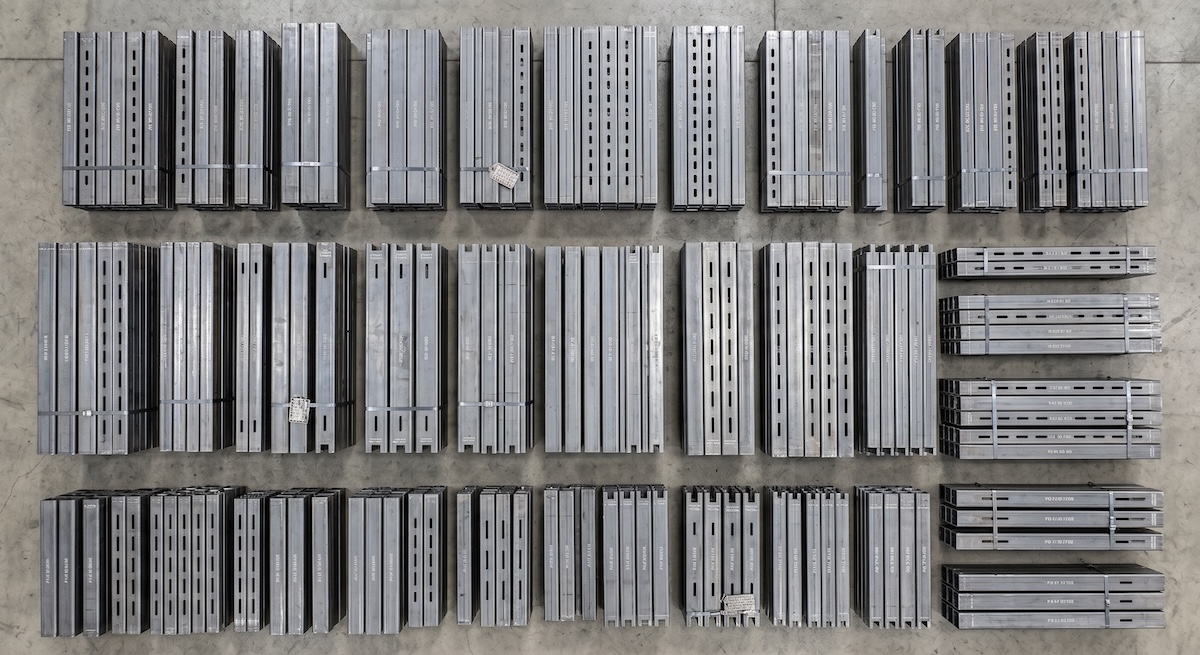
Fabrication partners like Blueline Industries in Riverside, California, which operates multiple tube laser machines capable of processing stainless steel and specialty alloys, represent the kind of capacity the industry needs. Their approach of processing components in a single operation, then bundling and labeling every part with etched identifiers matched to assembly drawings, feeds directly into the modular construction workflow that data center builders are adopting. When 16 truckloads of stainless steel can move through tube laser processing and ship to a project site with every component identified and organized by assembly sequence, the installation crew spends its time installing rather than sorting, measuring, and modifying.
Why the Bottleneck Will Get Worse Before It Gets Better
Several trends suggest that the fabrication bottleneck will intensify over the next 12 to 24 months.
AI workloads are driving rack power densities from the 5 to 8 kilowatts per rack that was standard five years ago to 15 to 50 kilowatts per rack in new facilities. Higher density means more cooling infrastructure per square foot, which means more precision stainless steel components per project.
Liquid cooling adoption is accelerating. Unlike traditional air cooling, liquid cooling systems require extensive networks of precision-fabricated piping, manifolds, and distribution components. Every liquid-cooled rack row needs supply and return headers with precisely located connection points. The volume of fabricated stainless steel components per megawatt of data center capacity is growing, not shrinking.
The labor shortage is structural, not cyclical. The 439,000-worker construction gap reflects demographic trends (aging workforce, insufficient trade school enrollment) that will not reverse quickly. Bain & Company research identifies four proven strategies for compressing construction timelines: site portfolio development, modular design, cross-functional optimization, and supplier collaboration. All four benefit from fabrication partners who can deliver precision components faster with fewer labor hours.
And the stakes keep rising. With data center construction spending expected to surpass $52 billion in 2026 and more than 60 major projects valued at over $50 billion combined expected to break ground in the next six months, the competition for fabrication capacity is intensifying alongside the competition for electrical equipment and skilled labor.
What Data Center Construction Managers Should Do About It
Understanding that fabrication is a hidden bottleneck is the first step. Acting on that understanding requires changes to how projects are planned and procured.
Engage fabrication partners during design, not after. The earlier a tube laser fabricator sees the CAD models, the sooner they can identify design optimizations. Converting welded assemblies into cut-and-fold single-piece components, for example, eliminates welding labor and its associated quality inspection while producing a dimensionally superior part. These optimizations are only possible when the fabricator is involved before drawings are finalized.
Specify single-process fabrication in procurement documents. When issuing RFQs for precision tube components, ask specifically about fabrication methodology. A quote from a shop running conventional multi-step processes will look similar on a per-piece basis but will carry substantially more schedule risk than a quote from a tube laser operation. Ask about machine capacity, backup plans for equipment downtime, and part identification practices.
Treat fabrication lead time as a critical path item. In too many data center construction schedules, metal fabrication is buried inside a general "procurement" line item with an assumed duration. Break it out. Track it. Manage it with the same intensity applied to transformer delivery and power distribution equipment.
Build relationships with fabricators who understand data center requirements. Not every metal shop can handle the geometric complexity, material specifications, and volume requirements of data center cooling infrastructure. Fabricators with experience processing stainless steel tube components for cooling systems, structural frameworks, and containment assemblies bring application knowledge that reduces errors and accelerates delivery.
Frequently Asked Questions
Why is metal fabrication considered a hidden bottleneck in data center construction?
Most industry attention focuses on power availability, electrical equipment lead times, and permitting as the primary causes of data center construction delays. Metal fabrication for cooling infrastructure, structural framing, and containment systems receives less attention because it sits deeper in the supply chain. However, the conventional multi-step fabrication process (sawing, drilling, milling, notching, tapping) involves cumulative queue times and labor dependencies that can add 4 to 8 weeks to project schedules. When a project involves thousands of unique stainless steel components, each requiring multiple machining operations performed by scarce skilled tradespeople, the fabrication phase becomes a genuine schedule constraint.
How much does a data center construction delay actually cost?
Research by STL Partners and Foresight estimates that a 60 MW AI data center loses roughly $14.2 million for every month of delay, including approximately $10.8 million in lost lease revenue at current market rates plus additional carrying costs. The financial impact extends beyond direct losses: a six-month delay can cut project returns nearly in half, potentially pushing a development below its investment threshold. This makes any process improvement that recovers even a few weeks of schedule extremely valuable relative to its cost.
What is single-process tube laser fabrication and how does it reduce data center construction timelines?
Single-process tube laser fabrication uses a CNC-controlled fiber laser to cut, drill, notch, slot, and profile tubular material in one continuous operation while the workpiece remains in a single fixture. This eliminates the queue times, setup changes, and re-fixturing inherent in conventional multi-step fabrication. For a typical data center cooling infrastructure project, this compression reduces the fabrication phase from 8 to 12 weeks down to 3 to 5 weeks. The technology also improves dimensional accuracy (±0.003 inches versus ±0.015 to 0.025 inches typical of multi-step processes) and reduces dependency on skilled manual machinists, which matters in a construction market short nearly half a million workers.
Can tube laser fabrication handle the stainless steel grades used in data center cooling systems?
Yes. Modern fiber laser tube cutting systems are well suited to the 300-series austenitic stainless steels (304L and 316L) that dominate data center cooling infrastructure. Fiber lasers at 3 to 6 kilowatts process these materials with a narrow kerf and minimal heat-affected zone, preserving the corrosion resistance of the parent material in the cut zone. This is important for components that will carry coolant fluids for 15 to 20 years. The same machines handle the range of wall thicknesses common in data center applications, from thin-wall distribution piping (0.065 inches) to heavier structural members (0.250 inches), adjusting power, speed, and assist gas parameters automatically through the CNC program.
How should construction project managers evaluate fabrication partners for data center work?
Look beyond unit pricing. Key evaluation criteria include fabrication methodology (single-process tube laser versus conventional multi-step), dimensional accuracy guarantees and verification methods, part identification practices (etched part numbers versus adhesive labels that degrade), packaging and delivery organization (bundled by assembly sequence versus manufacturing batch), engineering support for drawing review and design optimization, machine capacity and redundancy (a fabricator with multiple tube laser machines can maintain throughput during maintenance), and specific experience with data center infrastructure components. References should come from data center projects specifically, not general metal fabrication work. The total value of a fabrication partner includes schedule reliability and field installation efficiency, not just the line-item cost per component.
Blueline Industries operates advanced tube laser systems from its Riverside, California facility, processing stainless steel and specialty alloys for data center, infrastructure, and industrial clients. For fabrication quotes on data center cooling and structural components, visit bluelineind.com or call (951) 833-5597.


.png)