Quick Summary
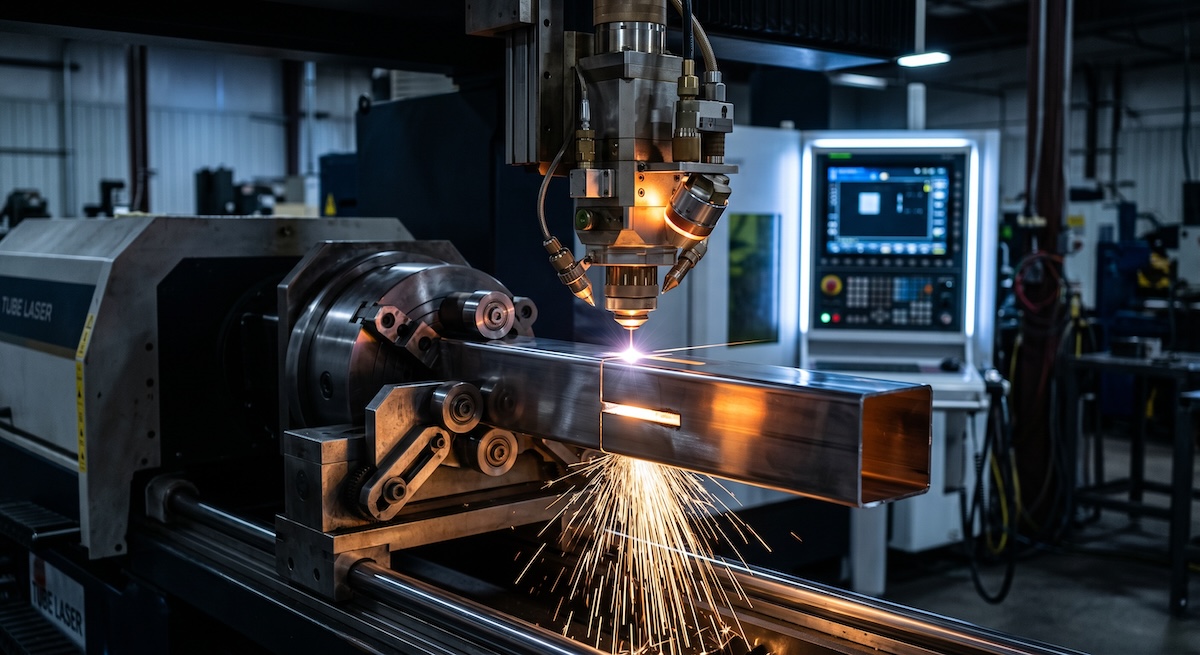
You reduce fabrication errors by cutting every feature of a tube in one operation, so the part is not moved, re-clamped, or re-measured between steps. Blueline Industries, a tube laser cutting and precision metal fabrication shop in Chino, CA, builds its process around that idea. This post shows where errors enter a tube part and how to design them out.
It is written for manufacturing engineers and buyers who want fewer rejected parts and fewer field fixes. It also covers what single-operation cutting cannot do, because no process fixes every problem.
What causes errors in tube fabrication?
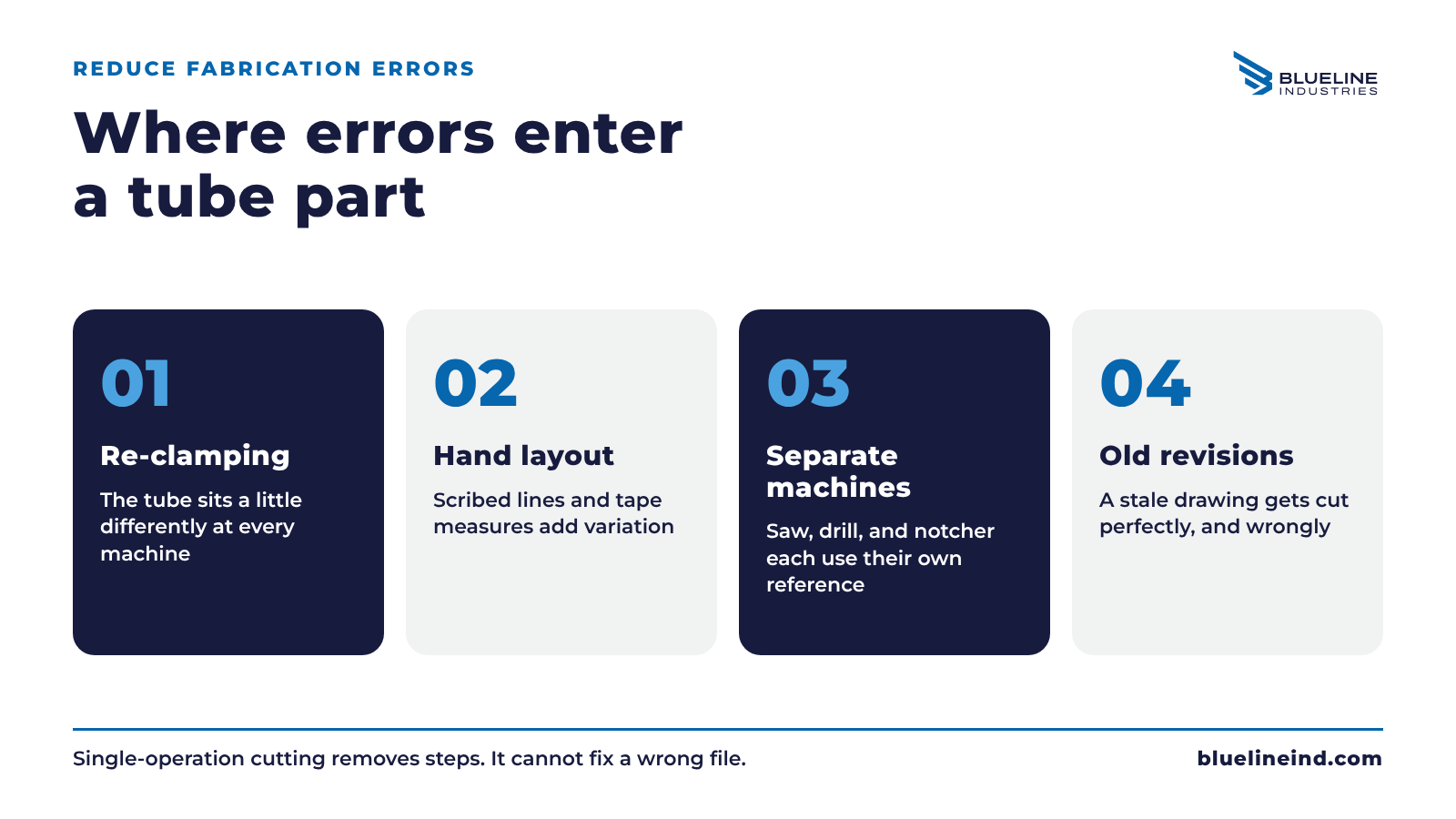
Errors come from handling and re-referencing. Each time a tube is moved to a new machine, clamped again, or marked by hand, its position shifts a little. Small shifts add up across steps, and the finished part ends up outside tolerance.
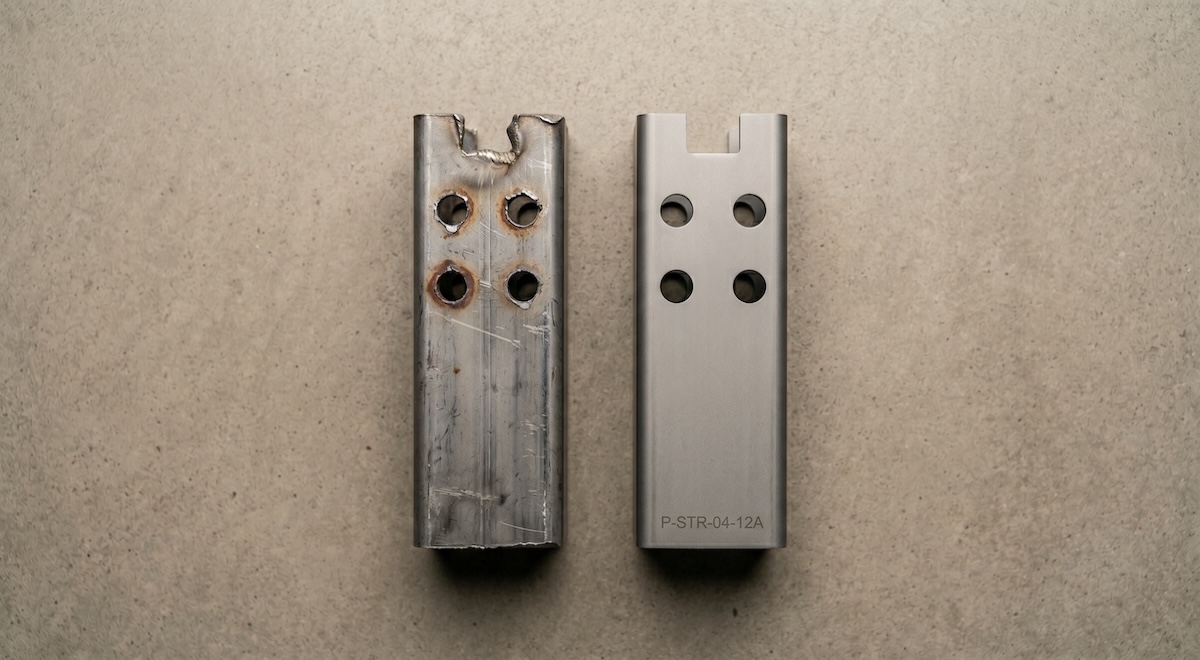
A fabricator's write-up on assembly errors says that machining all features in one setup avoids the accumulation of small errors that occurs with sequential operations. It also says manual cutting and drilling cause inconsistencies that lead to assembly errors and rework. A separate article on tolerance stack-up makes a related point: a design can work on paper and still fail once assembled.
The usual suspects on a tube part
How does single-operation cutting reduce fabrication errors?
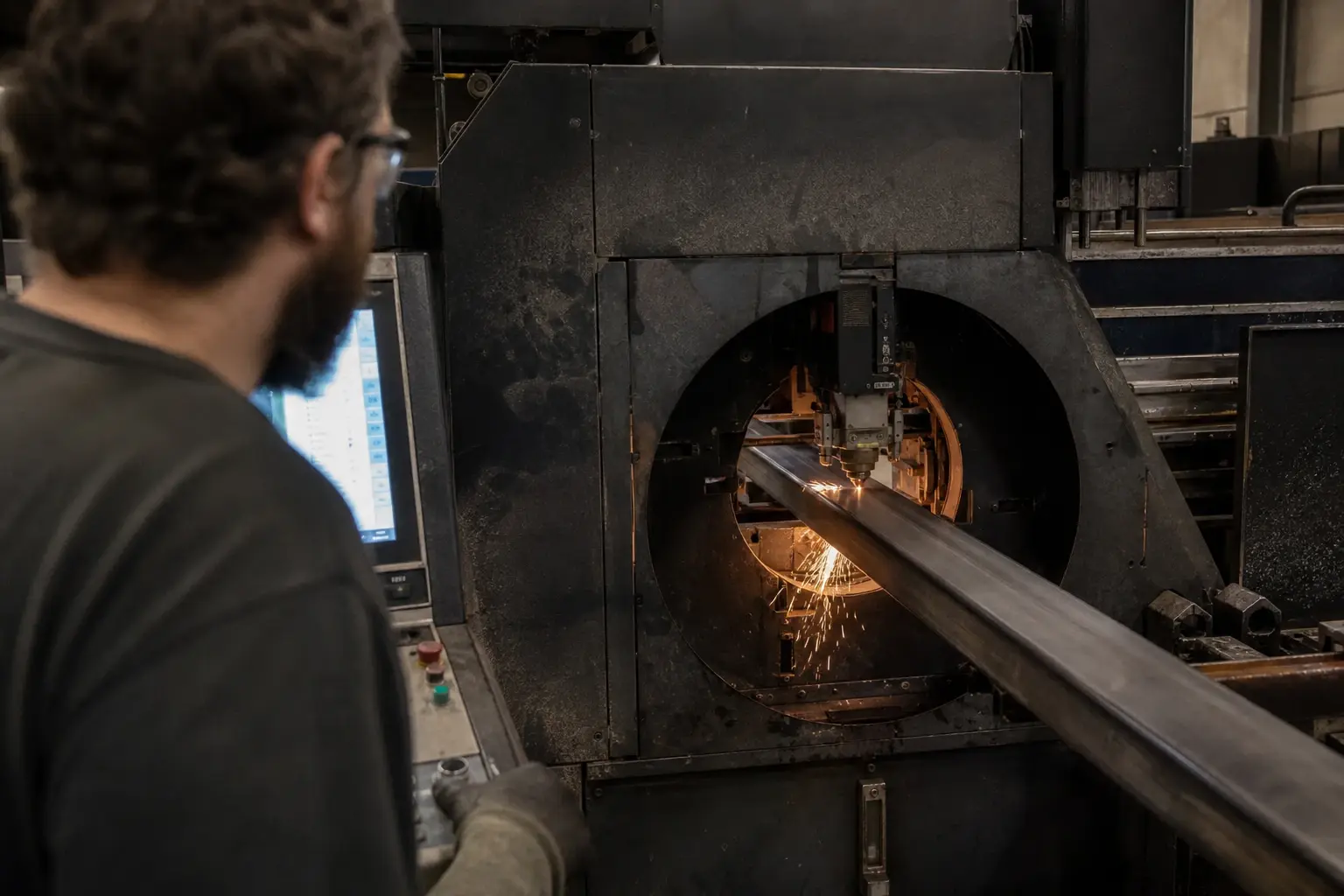
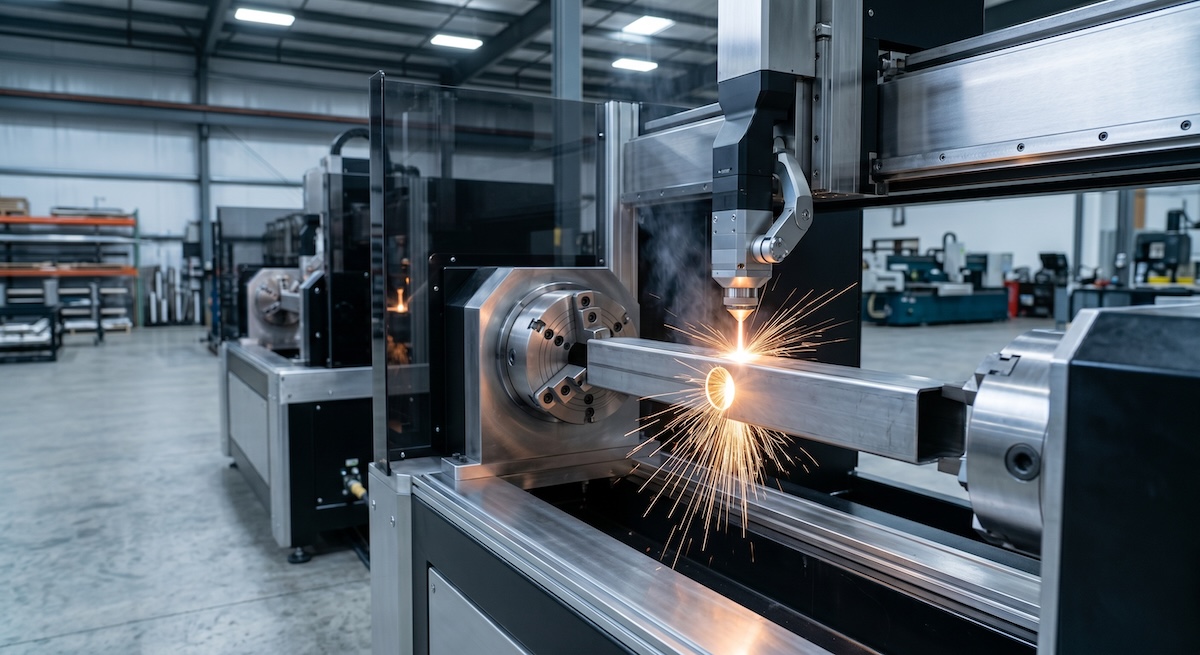
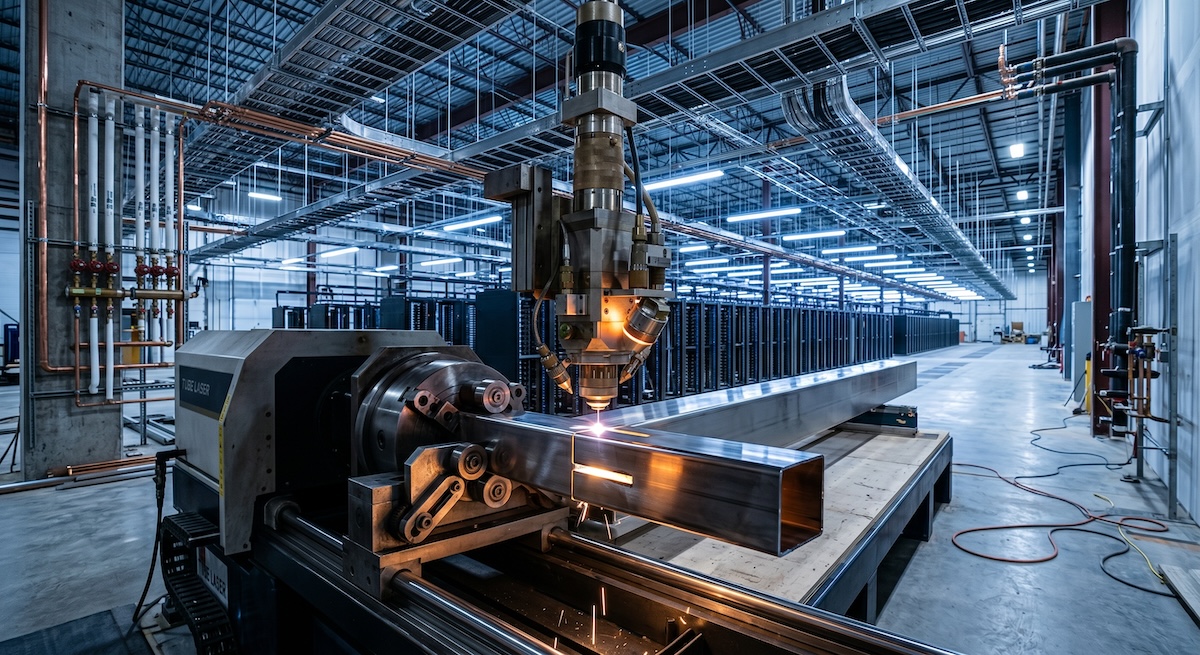
It keeps every feature tied to the same reference. Length cuts, miters, slots, holes, and notches are cut in one cycle from one program, so their positions relative to each other do not depend on how the tube was handled. Fewer steps also means fewer places to make a mistake.
The same fabricator notes that holes and openings are cut in the same cycle as length cuts, and that pre-cut features can make a part hard to assemble wrongly. Blueline states that its single-operation processing reduces error rates by up to 70%. Treat that as the shop's own figure, and ask how it applies to your part.
Source of errorMulti-step pathSingle-operation pathPart positionRe-clamped at every machineHeld once for the whole cycleFeature locationMeasured or marked per stepSet by the program, not by handRevision controlSeveral people, several filesOne file drives the cutHandling damageMore moves, more chances for dingsFewer moves between raw tube and finished part
Our post on tube laser vs saw and drill walks through the step counts. This post focuses on where the errors come from and what to do about them.
What errors does single-operation cutting not fix?
It does not fix a wrong drawing, wrong material, or a bad tolerance call. If the CAD file places a hole in the wrong spot, the laser will cut it there every time. It also does not remove errors that come later, such as weld distortion or bending variation.
Be honest about these limits when you set expectations:
Treating tolerances as ranges, not targets, helps here. The stack-up article above suggests tightening tolerances only where they matter and asking for a design-for-manufacturing review when unsure.
How do you design errors out before the tube hits the machine?
Fix the file first. Most errors that reach the floor were in the drawing. A short review before release catches the ones a laser would otherwise cut perfectly.
For a fuller walk-through of file prep, read our CAD preparation checklist. Blueline states that it holds tolerances of plus or minus 0.003 inch, so a drawing that calls out only the features that need that level of control gets the best use of the process.
What should you ask a fabrication partner about errors?
Ask how many times a part is handled, how features are referenced, and how revisions are controlled. Then ask what happens when a part is out of tolerance. A shop that can answer these plainly has a process built around error control.
Our guide to choosing a tube fabrication partner has more questions. You can also read why customers work with Blueline on the Why Blueline page.
A project where fit-up mattered
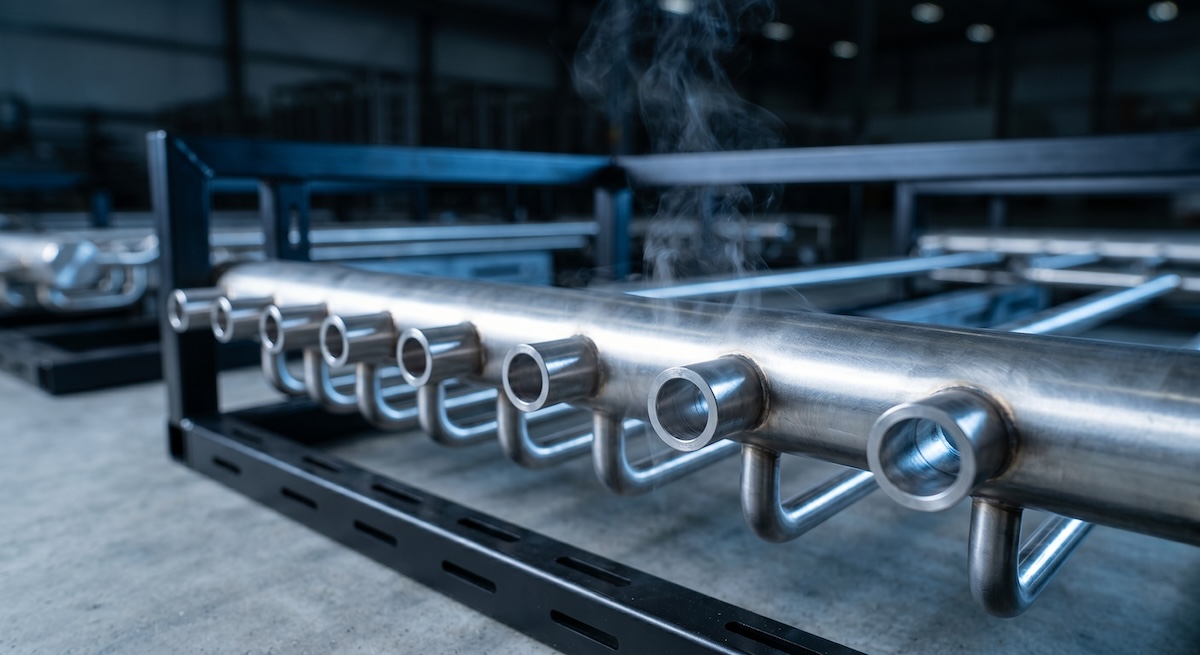
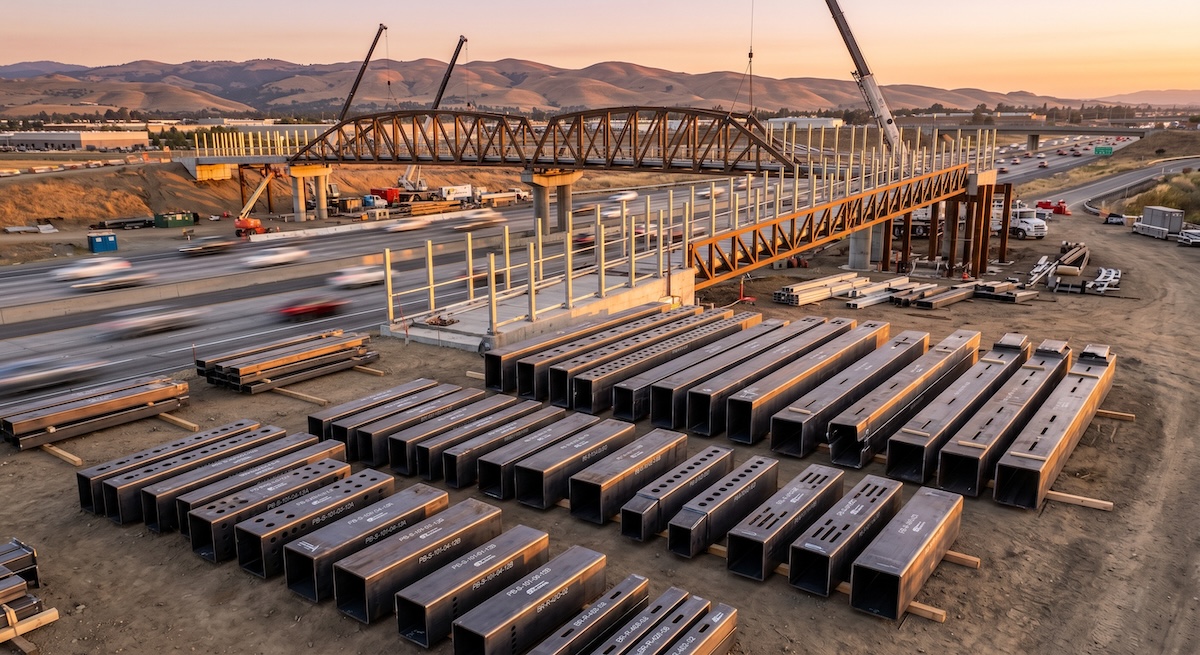
Blueline processed more than 500,000 pounds of steel for the Caltrans I-5 pedestrian bridge in Irvine in 2025. On work at that size, parts have to arrive ready to assemble, because any error multiplies across hundreds of pieces. It is a good picture of why error control upstream pays off downstream.
Frequently Asked Questions
What is single-operation cutting?
It means cutting all of a tube's features, including length, miters, slots, holes, and notches, in one machine cycle. The part is not moved between machines for each feature.
Does single-operation cutting remove the need for inspection?
No. It lowers the number of places an error can enter, but you should still inspect critical dimensions. A first-article check on a new part is a good habit.
Where do most tube fabrication errors start?
Most start with handling and layout: re-clamping, hand marking, and separate machines that each use their own reference. A wrong or out-of-date drawing is the other big source.
How do I prevent revision mistakes?
Send one controlled file, mark the revision on the drawing, and retire old versions. When one file drives the cut, there is less room for a stale revision to slip through.
Can Blueline help review my drawing before cutting?
You can send your files with your quote request and ask about any feature that worries you. Blueline serves customers from its Chino, CA facility and ships to buyers across the West.
Cut errors out of your next tube job
If rework or field fixes are costing you time, send Blueline the part you struggle with most. Get a Quote or call (951) 833-5597. Made in America, built on integrity.