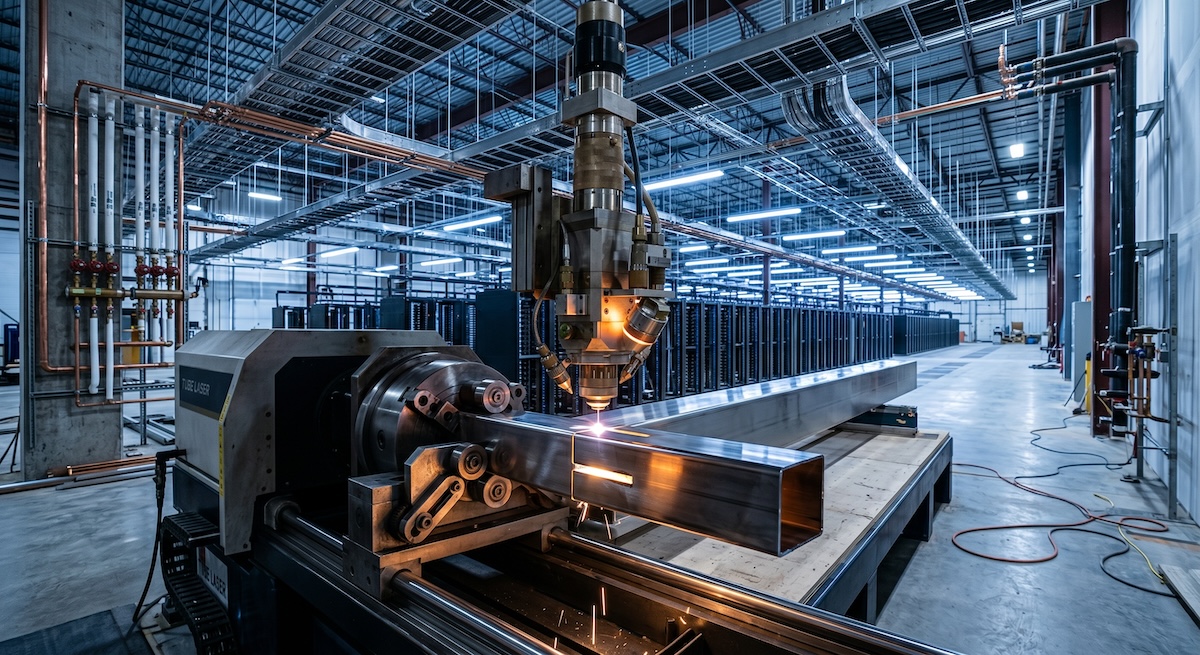
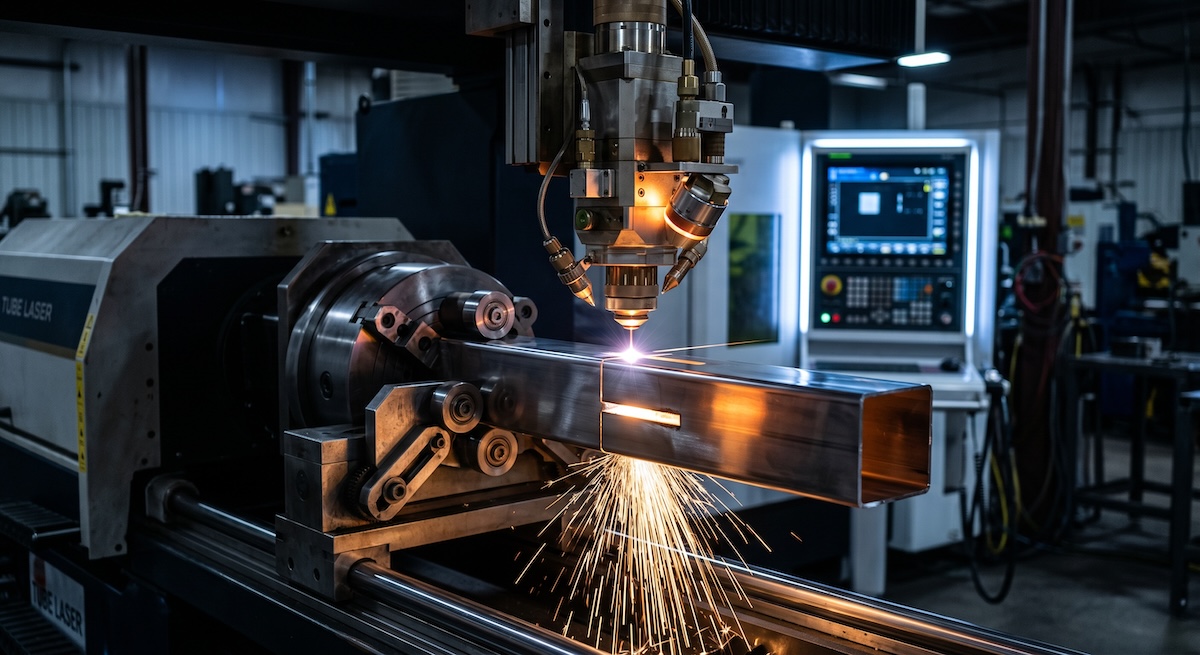
Quick Answer: California's infrastructure construction pipeline is massive: $17.9 billion committed to the State Highway Operation and Protection Program over four years, 902 active Caltrans construction contracts valued at $17.7 billion, over 1,500 bridges requiring attention, and a $7 billion transmission upgrade plan to support growing electricity demand. For general contractors bidding on these projects, the structural steel fabrication method you choose directly affects your schedule, field labor costs, and rework exposure. Tube laser processing consolidates the traditional multi-step workflow of sawing, drilling, notching, coping, and slotting into a single CNC-controlled operation, compressing fabrication lead times by 40 to 60% while delivering dimensional accuracy that reduces field modifications on seismically demanding California jobsites.
California does not build small. The state's infrastructure investment cycle is generating a volume of structural steel work that most fabrication shops in the western United States have never seen compressed into such tight timelines. Caltrans alone is managing over 900 active construction contracts. The California Transportation Commission recently approved $17.9 billion for the 2026 SHOPP program covering highway safety, bridge repair, and pedestrian access improvements. Another $2.7 billion flows through the 2026 State Transportation Improvement Program for projects ranging from bridge replacements to transit extensions. And the California ISO has recommended 38 transmission upgrades with an estimated cost of $7 billion over the next decade to accommodate a projected 15-gigawatt increase in electricity demand by 2035.
Behind every one of these projects is a structural steel scope. Walking bridges, pedestrian overcrossings, freeway sound walls, transit station canopies, utility support structures, seismic retrofit bracing, railing systems, equipment platforms, and the endless miles of channel framing that hold together California's transportation network. These are not glamorous line items on a project budget, but they sit squarely on the critical path. When structural steel fabrication runs late, everything downstream shifts: erection crews idle, concrete pours get rescheduled, and liquidated damages start accumulating.
This is why the fabrication method matters as much as the fabrication partner. And it is why an increasing number of California GCs are specifying tube laser processing for infrastructure structural steel work.
The Structural Steel Challenge on California Infrastructure Projects
California infrastructure projects carry fabrication requirements that are distinct from the rest of the country in several important ways.
Seismic design governs everything. The Caltrans Seismic Design Criteria and the Seismic Design Specifications for Steel Bridges impose tolerance and connection requirements that are among the most stringent in North American infrastructure construction. Bolted connections must align precisely. Slotted holes for seismic movement must fall within tight dimensional windows. Coped beam connections, gusset plate attachments, and cross-frame details all demand fabrication accuracy that conventional methods struggle to maintain across high-volume production runs.
Material diversity is increasing. California infrastructure projects increasingly specify structural hollow sections (HSS), rectangular and square tubes, channels, and angles alongside traditional wide-flange shapes. Walking bridges, pedestrian overcrossings, and architectural rail systems rely heavily on tubular steel profiles that require cuts, notches, holes, and features along their full length. These are precisely the geometries where tube laser technology outperforms conventional fabrication.
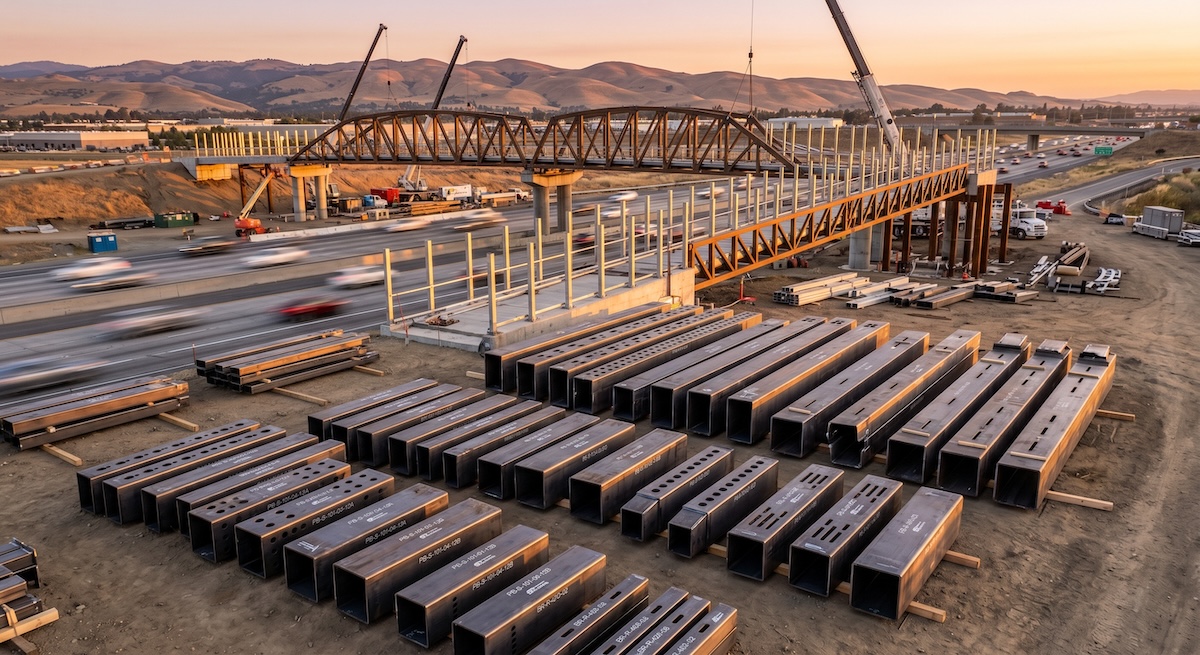
Project volumes are large. When Caltrans or a regional transportation authority lets a bridge or overcrossing contract, the structural steel package often involves hundreds to thousands of individual tube and angle components, each with unique geometry. A walking bridge railing system alone can require top rails, bottom rails, pickets, and mounting brackets across hundreds of linear feet, all needing precisely located holes and notches to assemble without field modification. A recent Caltrans pedestrian bridge project over the I-5 freeway required over 500,000 pounds of processed structural steel, a volume that would overwhelm a shop relying on conventional fabrication methods within the schedule constraints of a typical Caltrans contract.
And the labor market compounds every challenge. California construction labor costs are among the highest in the nation. Prevailing wage requirements on public infrastructure projects amplify the financial impact of any field rework caused by fabrication inaccuracy. An ironworker crew spending two hours reaming holes that do not align represents a cost exposure that extends far beyond the fabricator's invoice.
How General Contractors Traditionally Procure Structural Steel Fabrication
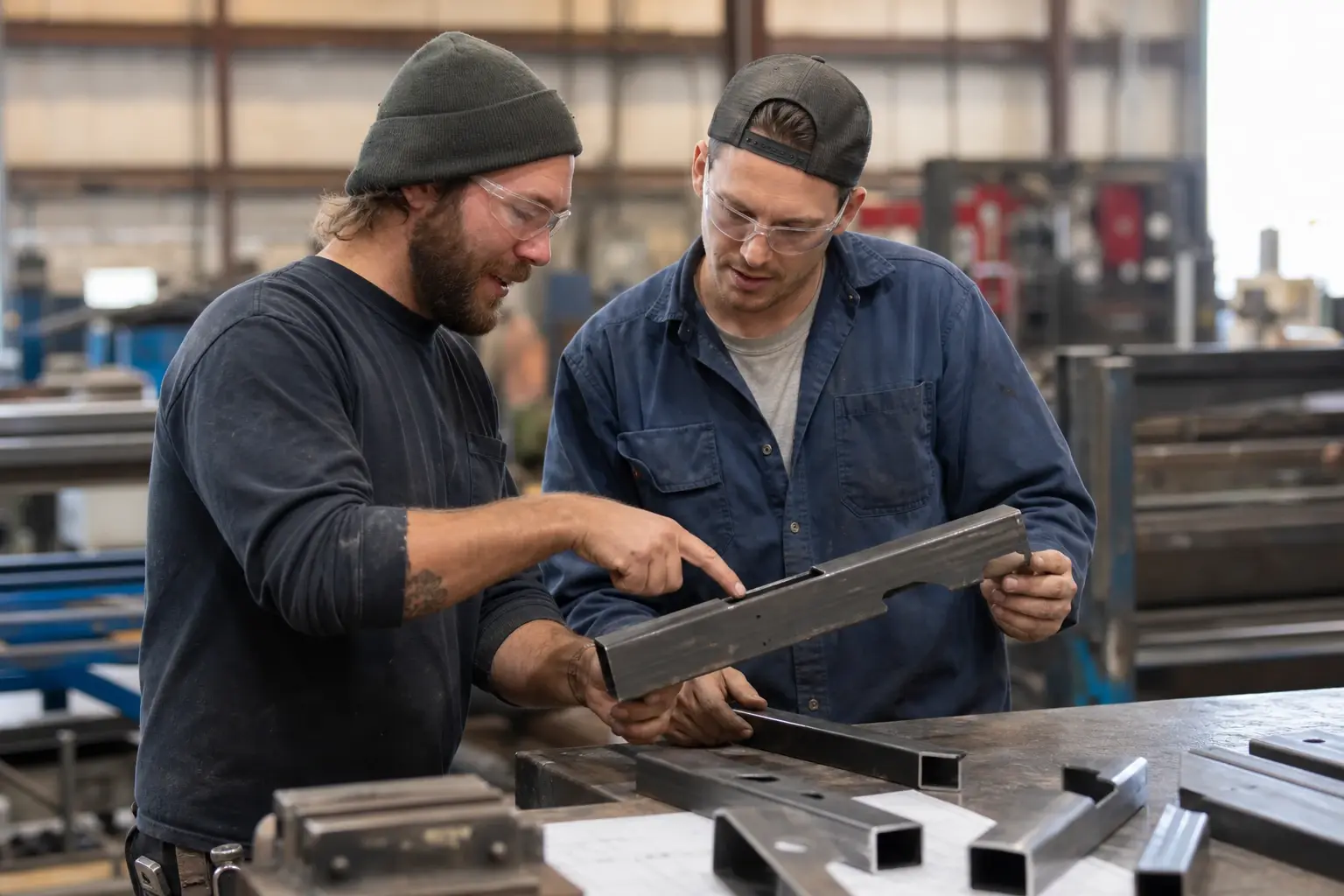
The conventional approach follows a predictable pattern. The GC awards the structural steel package to a fabrication shop, usually based on a combination of price, capacity, and prior relationship. The fabricator receives shop drawings (either provided by the GC's engineer or developed by the fabricator's detailing team), procures material, and begins processing.
In a conventional shop, processing structural tube and angle steel for infrastructure applications involves a sequence of discrete operations. Raw tube stock is saw cut to length. The pieces move to a drill press or magnetic drill station where holes are located and drilled. Slots for adjustable connections require a separate milling or plasma operation. Notches for tube-to-tube intersections are either plasma cut or performed on a coping machine. Miter cuts for angular joints require saw repositioning or specialized cutting fixtures. And tapping for threaded connections adds yet another station.
Each of these operations requires its own setup, fixtures, operator, and quality verification. Between operations, parts queue for machine availability. The fabrication shop is managing a routing problem as much as a machining problem, and the routing complexity is what kills schedules.
For a GC managing a Caltrans contract with a fixed completion date and liquidated damages clause, this multi-step fabrication workflow introduces schedule risk that is difficult to mitigate through procurement management alone. You can negotiate lead times, establish milestone payments tied to production benchmarks, and visit the shop weekly, but the fundamental throughput constraint remains: parts must visit multiple machines, operated by multiple people, in sequence.
What Tube Laser Processing Changes for Infrastructure Work
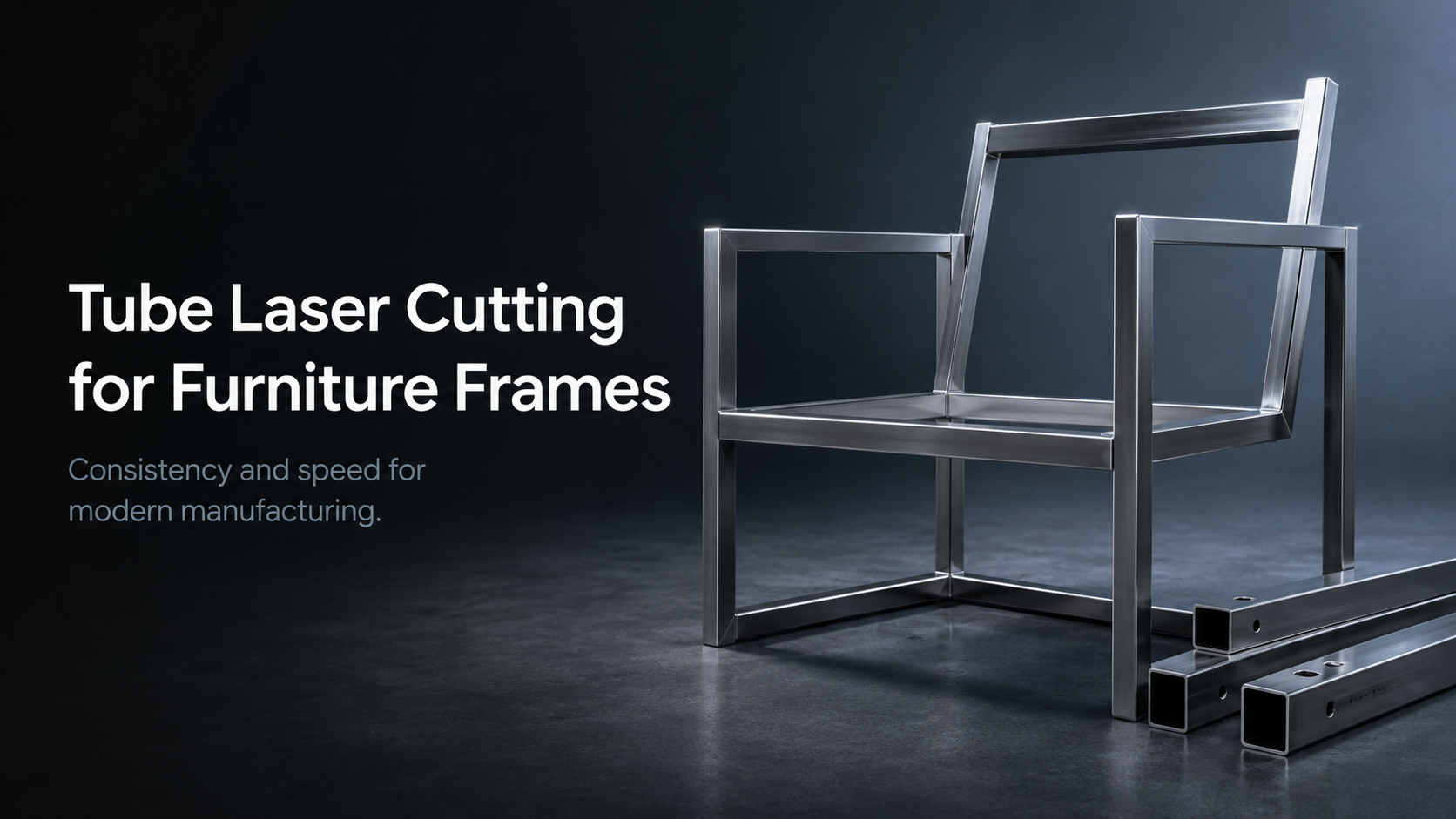
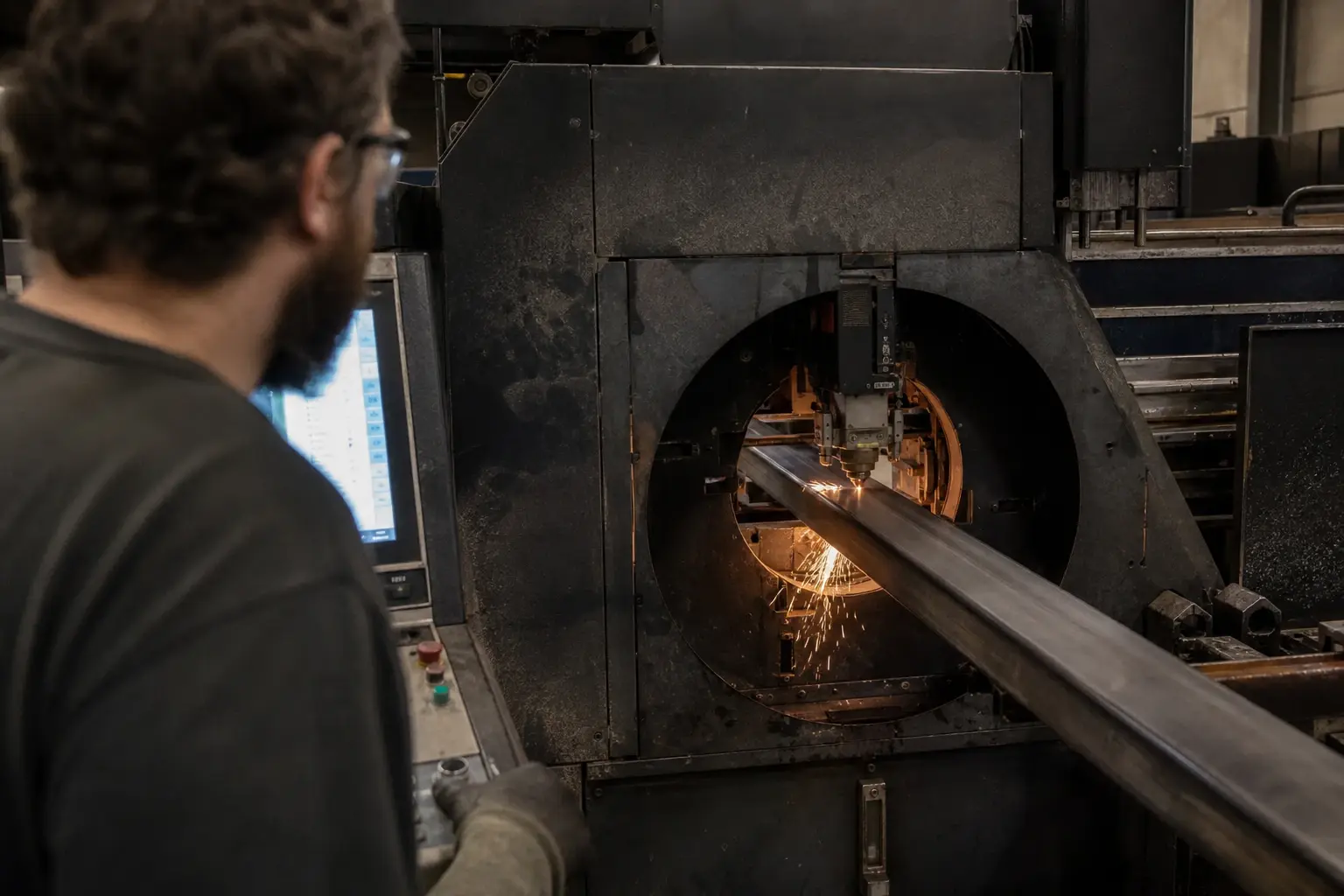
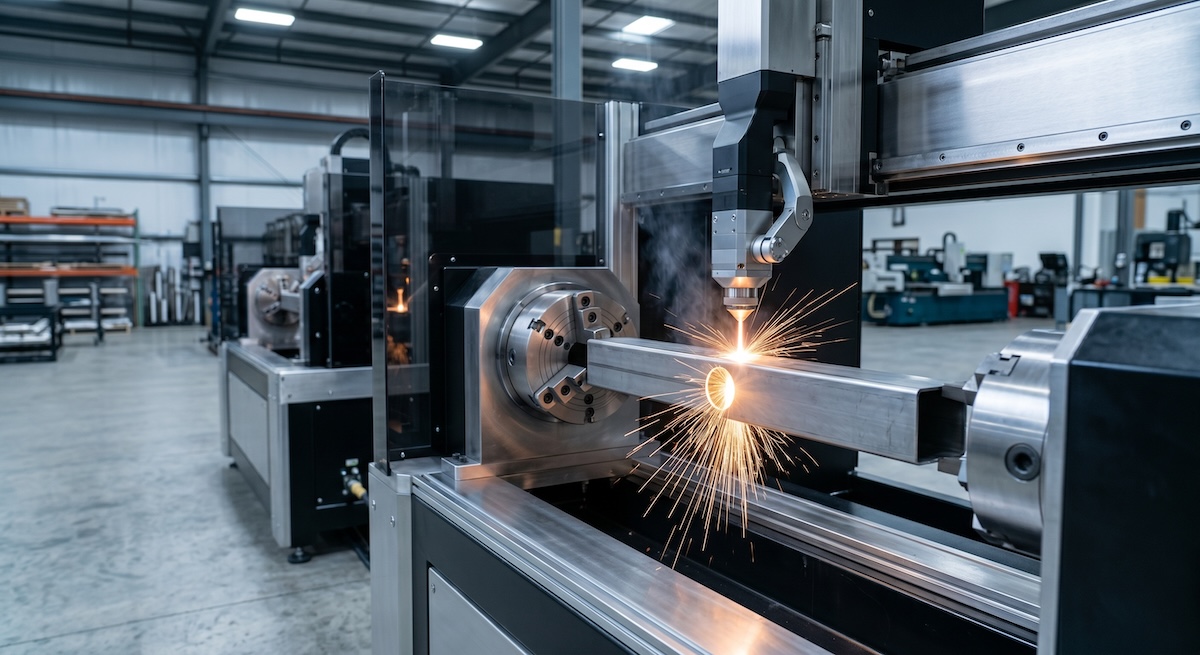
Tube laser processing replaces the sequential multi-machine workflow with a single automated operation. A CNC-controlled fiber laser cuts, drills, notches, slots, copes, and profiles structural tube and angle material while the workpiece remains in one fixture. The implications for California infrastructure projects are practical and specific.
Schedule compression is real and measurable. The multi-step conventional process for a bridge railing package with 60 distinct part numbers and batch sizes of 20 to 100 pieces might consume 6 to 8 weeks of shop time. The same package processed on a tube laser compresses to 2 to 4 weeks because queue time between stations disappears and setup between part numbers drops from hours to minutes. For a GC managing a Caltrans contract with a 180-day construction window, recovering 4 weeks of fabrication lead time is the difference between comfortable scheduling and constant schedule pressure.
Dimensional accuracy improves field productivity. Because the tube never leaves the machine between operations, every feature references the same datum. Positional accuracy of ±0.003 inches is achievable and repeatable. For a walking bridge railing system where top rail holes must align with bottom rail holes across 400 feet of structure, this consistency means the ironworker crew installs pickets without reaming, shimming, or field-drilling. On a prevailing wage jobsite in Southern California where an ironworker costs $85 to $110 per hour fully burdened, eliminating field modifications on a 2,000-piece railing package can save tens of thousands of dollars in installation labor.
The cut-and-fold technique reduces welding dependency. Tube laser systems can cut three sides of a rectangular or square tube so the material folds to create a precise 90-degree joint without welding. This is transformative for infrastructure applications where welded connections require inspection (often by a Certified Welding Inspector at $75 to $100 per hour on California public works projects), add heat distortion that degrades dimensional accuracy, and create schedule dependencies on scarce certified welders. On projects where non-destructive testing of field welds is specified, eliminating welded connections through cut-and-fold fabrication removes inspection hold points from the construction sequence entirely.
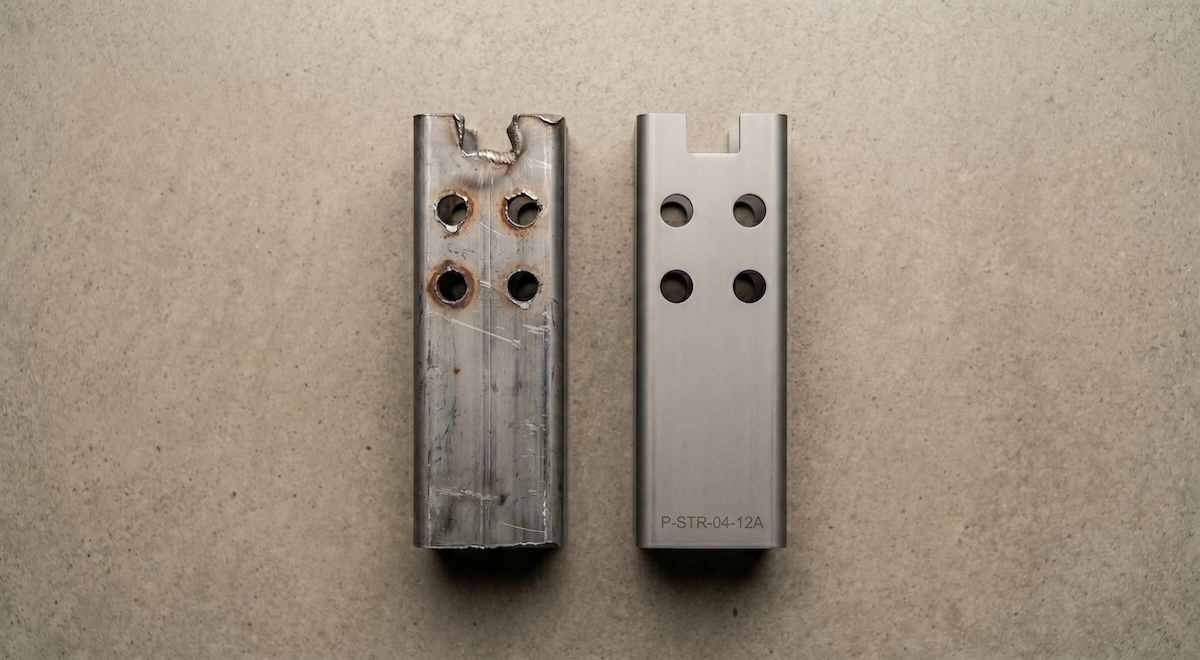
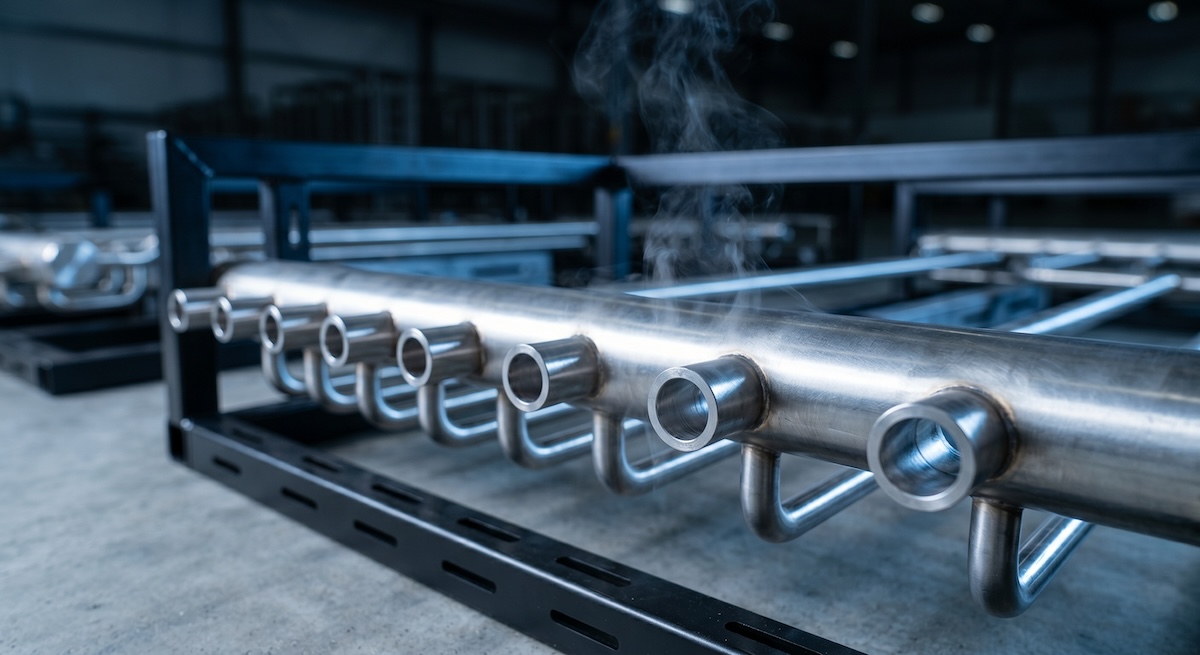
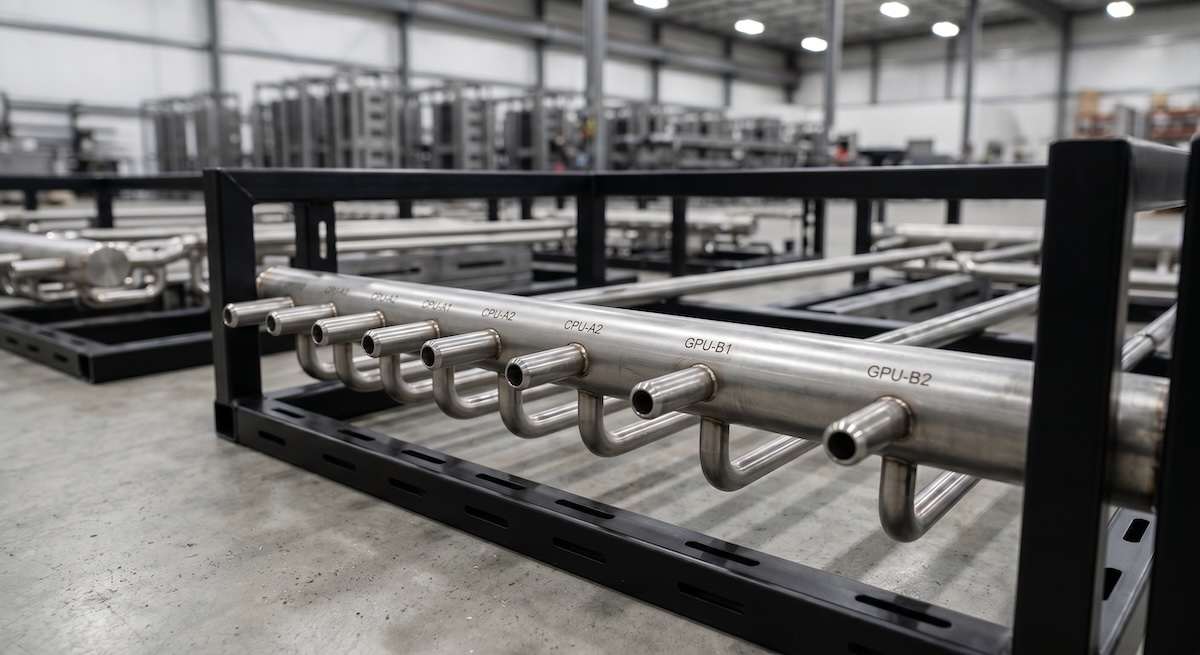
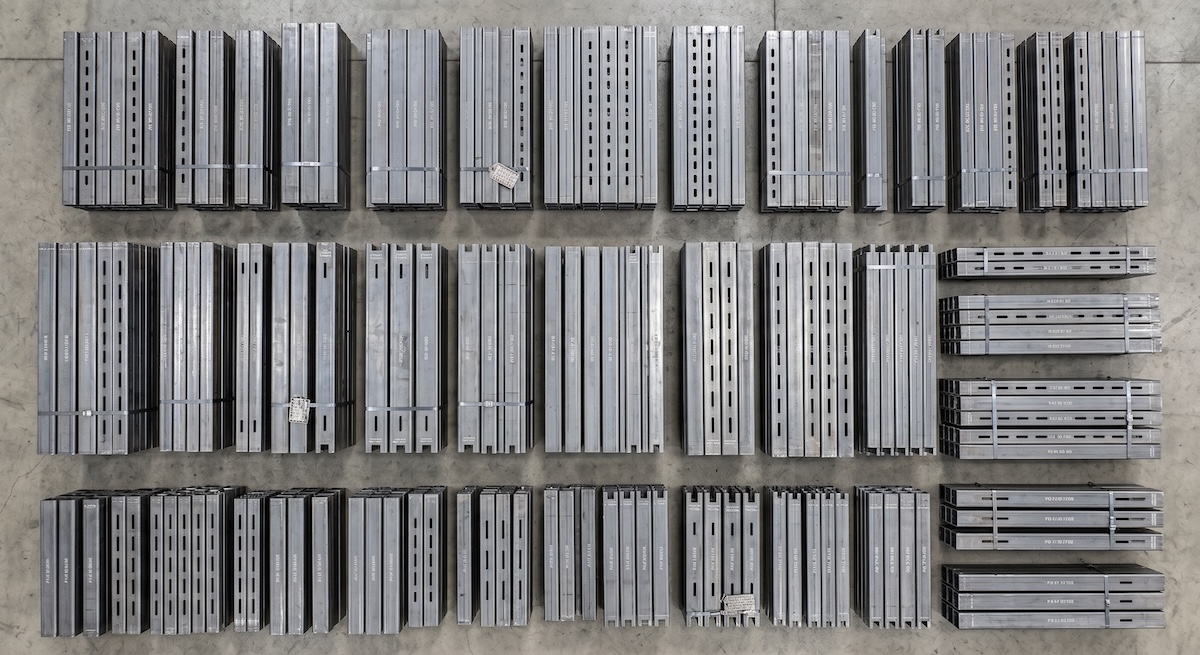
Part identification is built into the process. Tube laser machines can etch part numbers, assembly references, and orientation marks directly onto each component during the cutting operation. On a large infrastructure project where thousands of similar-looking tube components arrive on site in bundles, laser-etched identification eliminates the sorting confusion that wastes field labor time. Parts arrive bundled by assembly sequence with permanent identification that survives handling, weather, and the general abuse of a construction site.
California-Specific Applications Where Tube Laser Excels
Several categories of California infrastructure work are particularly well suited to tube laser fabrication, and GCs bidding these project types should understand the capabilities.
Pedestrian bridges and overcrossings. These structures are highly visible, architecturally detailed, and geometrically complex. Railing systems, structural frames, and decorative elements involve extensive tube work with precisely located features. Seismic requirements mandate connection details that perform under lateral loading, which means tight tolerances on slotted holes, precise cope cuts, and consistent alignment across long spans. Tube laser fabrication handles the full range of features in a single operation, and the dimensional consistency across hundreds of identical components ensures that field erection proceeds without modification.
Freeway sound walls and barrier systems. Sound wall structures involve repetitive structural tube frameworks with mounting provisions, drainage features, and panel attachment points. The volume of identical or near-identical components makes tube laser processing especially efficient because CNC program changeover between part numbers is measured in minutes rather than the hours required for conventional fixture changes.
Transit infrastructure. Light rail stations, bus rapid transit facilities, and commuter rail platforms require canopy structures, windscreen frames, seating supports, and wayfinding sign structures. These are public-facing elements where fabrication quality is visible and aesthetic standards are high. Clean laser-cut edges on stainless steel or weathering steel tubes produce a finished appearance that reduces or eliminates grinding and finishing operations.
Seismic retrofit bracing. California's ongoing seismic retrofit program for bridges and structures generates demand for precisely fabricated bracing members, connection brackets, and restrainer assemblies. These components must match existing structure geometry exactly, often requiring custom fabrication for each location. Tube laser's ability to produce small quantities with minimal setup cost makes it cost-effective for the custom and short-run work that seismic retrofit projects demand.
Utility and transmission infrastructure. The California ISO's $7 billion transmission upgrade program and the broader push for grid modernization require structural steel supports, equipment platforms, and cable management systems. Distribution pole bases, transformer pad frames, and substation structural elements all involve tube and structural steel processing that benefits from automated single-process fabrication.
What GCs Should Ask Fabrication Partners
General contractors evaluating structural steel fabrication partners for California infrastructure work should move beyond the standard qualification questions and probe the specific capabilities that affect project outcomes.
Ask about processing methodology. "Do you use tube laser, or conventional multi-step fabrication?" This single question immediately distinguishes shops that can deliver compressed timelines from those locked into sequential workflows. A shop running two or more tube laser machines, like Blueline Industries in Riverside, has not only the technology but the redundancy to maintain delivery schedules when one machine requires maintenance.
Ask about machine capability relative to your project. Tube laser machines vary in capacity. Key specifications include maximum tube diameter (24 inches covers most infrastructure applications), maximum processing length (up to 40 feet handles standard structural lengths), and material thickness range. Confirm the fabricator can handle the full range of profiles on your project: square tube, rectangular tube, round pipe, channel, angle, and structural sections.
Ask about engineering support. California infrastructure projects frequently require the fabricator to develop shop drawings from architectural or engineering schematics. A fabricator with in-house engineering capability can identify opportunities to optimize designs for tube laser processing, for instance, converting multi-piece welded assemblies into single-piece cut-and-fold components that reduce both shop time and field welding.
Ask about part identification and packaging practices. On a project with 3,000 structural steel tube components, the difference between parts arriving with laser-etched identification bundled by erection sequence versus parts arriving with sticker labels sorted by manufacturing batch translates into real field labor hours. Specify your requirements in the subcontract.
Ask about Caltrans and public works experience. Fabricators experienced with Caltrans specifications understand the documentation requirements, material certification expectations, and quality assurance protocols that California public infrastructure work demands. This experience avoids the learning curve that costs schedule time on a fabricator's first Caltrans project.
Ask about capacity and current backlog. The volume of California infrastructure work currently under contract means that fabrication capacity is tightening. A shop with two idle tube laser machines today may have a six-week backlog tomorrow. Establish relationships before you need them, and consider awarding fabrication packages early in the project development process rather than waiting until construction is imminent.
The Cost Equation: Looking Beyond Per-Piece Pricing
GCs are trained to compare fabrication bids on a per-pound or per-piece basis. This approach systematically undervalues tube laser fabrication because the cost advantages show up in places the fabrication bid does not capture.
The tube laser bid may show a higher per-piece price because the machine's hourly rate ($100 to $150 per cutting hour) exceeds the hourly rate of a conventional saw or drill press. But the total project cost equation includes field labor for installation, which drops when parts fit without modification. It includes field welding inspection costs, which drop when cut-and-fold techniques reduce welded connections. It includes schedule-related costs (general conditions, equipment rental, supervision) that decrease when the fabrication phase compresses by 4 to 6 weeks. And it includes rework and RFI costs, which decrease when dimensional accuracy is inherent to the fabrication process rather than dependent on operator skill at each station.
For a GC building a cost model for a Caltrans pedestrian overcrossing bid, the right question is not "what does tube laser fabrication cost per piece?" but rather "what does this project cost to complete on schedule with minimal field rework?" The answer almost always favors the fabrication method that produces the most accurate parts in the least calendar time.
The Labor Reality Driving Adoption
California's construction labor market reinforces the shift toward tube laser fabrication from both the fabrication shop side and the field installation side.
On the shop floor, the skilled machinist and welder shortage is acute. California's cost of living makes it particularly difficult for fabrication shops to attract and retain the experienced operators needed to run conventional multi-step workflows. A tube laser operation changes the labor equation: one CNC operator produces the output of three or four conventional machinists, and the skill set (CNC programming, machine operation, quality verification) aligns with the technical training that younger workers are more likely to pursue.
In the field, the ironworker labor pool is equally constrained. Prevailing wage projects in Southern California compete for the same limited pool of certified ironworkers. Any fabrication approach that makes each ironworker more productive, by delivering components that fit without modification, by eliminating field welding through cut-and-fold techniques, by providing laser-etched part identification that eliminates sorting time, stretches the available labor further across the project.
The math is straightforward. If tube laser fabrication reduces field installation hours by 15 to 20% on a structural steel package through better fit-up and less rework, and that field labor is costed at prevailing wage rates of $85 to $110 per hour, the installation savings on a 5,000-hour structural steel erection package range from $65,000 to $110,000. That is a cost reduction that dwarfs any difference in per-piece fabrication pricing.
Frequently Asked Questions
What types of structural steel profiles can tube laser machines process for infrastructure projects?
Modern tube laser systems handle the full range of structural profiles common in California infrastructure work. This includes square and rectangular HSS (hollow structural sections), round pipe, standard channels, angles, T-bars, and flat bar. Machines with multi-chuck clamping systems maintain rigidity across profile types, and 5-axis cutting heads handle complex bevel cuts, compound miters, and angled features. For California infrastructure applications, square and rectangular tubing accounts for the majority of processed volume, particularly for railing systems, structural frames, and bracing members. Most tube laser systems process profiles up to 24 inches in diameter or diagonal, and handle lengths up to 40 feet, covering the standard structural steel lengths that infrastructure projects require.
How does tube laser fabrication address California's seismic design requirements?
Seismic design requires precise dimensional control at connection points where structural members transfer lateral loads. Tube laser fabrication delivers ±0.003 inch positional accuracy on all features (holes, slots, notches, copes), which means bolted connections align without field reaming, slotted holes for seismic movement fall within specification, and members fit together at the tolerances the structural engineer intended. The consistency of CNC-controlled processing also means that every piece in a batch of 200 identical bracing members will have identical feature locations, eliminating the component-to-component variation that causes problems during repetitive assembly operations. For seismic retrofit work where new members must interface with existing structure geometry, tube laser's ability to produce custom one-off components with the same accuracy and speed as production runs is particularly valuable.
Is tube laser fabrication cost-effective for the volume of work on typical Caltrans contracts?
Yes, across a surprisingly broad range of project sizes. The economics favor tube laser processing whenever components require multiple features (holes, slots, notches, copes) because the per-feature cost on a tube laser is lower than the per-feature cost of conventional sequential operations. A Caltrans pedestrian bridge with 1,000 to 3,000 structural tube components is a clear fit. But even smaller packages of 100 to 300 components benefit because CNC setup between part numbers takes minutes (versus hours for conventional fixture changes) and quality is inherent to the process rather than requiring inspection between each operation. The breakeven relative to conventional fabrication typically occurs around 50 components for projects with moderate geometric complexity.
What documentation capabilities do tube laser fabricators provide for California public works projects?
Tube laser fabrication generates CNC process data that supports the documentation requirements of California public works contracts. This includes dimensional verification inherent to the CNC program (the machine cut what the program specified), material traceability through the production sequence, and laser-etched part identification that creates a permanent record on each component. Experienced fabricators supplement this with material test reports (MTRs) for all steel used, first-article inspection reports for each part number, packing lists matched to shop drawing revision numbers, and delivery documentation organized by erection sequence. For Caltrans contracts specifically, fabricators familiar with the Division of Engineering Services standards understand the submittal, inspection, and acceptance procedures that govern structural steel on state projects.
How early in the project development process should a GC engage a tube laser fabrication partner?
Earlier than most GCs currently do. The optimal engagement point is during the bid preparation phase, not after contract award. A tube laser fabricator can review the structural steel scope during estimating and provide input on design modifications that reduce fabrication complexity and cost, potential schedule compression relative to conventional fabrication assumptions, realistic lead time commitments based on current machine capacity and backlog, and value engineering opportunities such as converting welded assemblies to cut-and-fold components. Engaging during design development is even better for design-build projects. Fabricators like Blueline Industries, which offers in-house engineering and design support alongside tube laser processing, can collaborate on connection details, member configurations, and assembly sequences that optimize both fabrication efficiency and field installation productivity.
Blueline Industries operates multiple tube laser systems from its Riverside, California facility, serving infrastructure, construction, and industrial clients throughout Southern California and statewide. The company processes structural steel tubes, angles, channels, and profiles for projects ranging from Caltrans pedestrian bridges to commercial construction and data center infrastructure. For structural steel fabrication quotes, visit bluelineind.com or call (951) 833-5597.


.png)