
When Louie Biegler, CEO of Blueline Industries, a custom fabricator in Chino, Calif., spoke at the Fabricators and Manufacturers Association Annual Meeting earlier this year, he received some spontaneous applause. He spoke of heart-to-heart conversations with his frontline employees, about taking responsibility, and about moving forward.
Today, the four-year-old shop has 42 employees and a collection of tube lasers, flat lasers, press brakes, and welding cells. Those facts, though, hardly scratch the surface of Blueline's story, the crux of which reveals just how human the metal fabrication business is. Technological marvels—the latest tube lasers, press brakes, and more—remain critical tools. But no matter how automated machines become, humans still manage them. As Biegler's story shows, human connection and trust help fuel and sustain critical aspects of any employee: specifically, a willingness to accept responsibility, learn, and grow.
Accept Responsibility
"I'm so blessed to work in a community of people who feel misunderstood, because I felt misunderstood. I dropped out of high school. I had no future. But when I joined my first sheet metal shop, I saw that very few people around me had gone to college. Everything was passed down, and not through formal apprenticeships. You earn the respect of someone with experience, and they open up. When I landed in the sheet metal industry, for the first time in my life, I felt like I belonged."
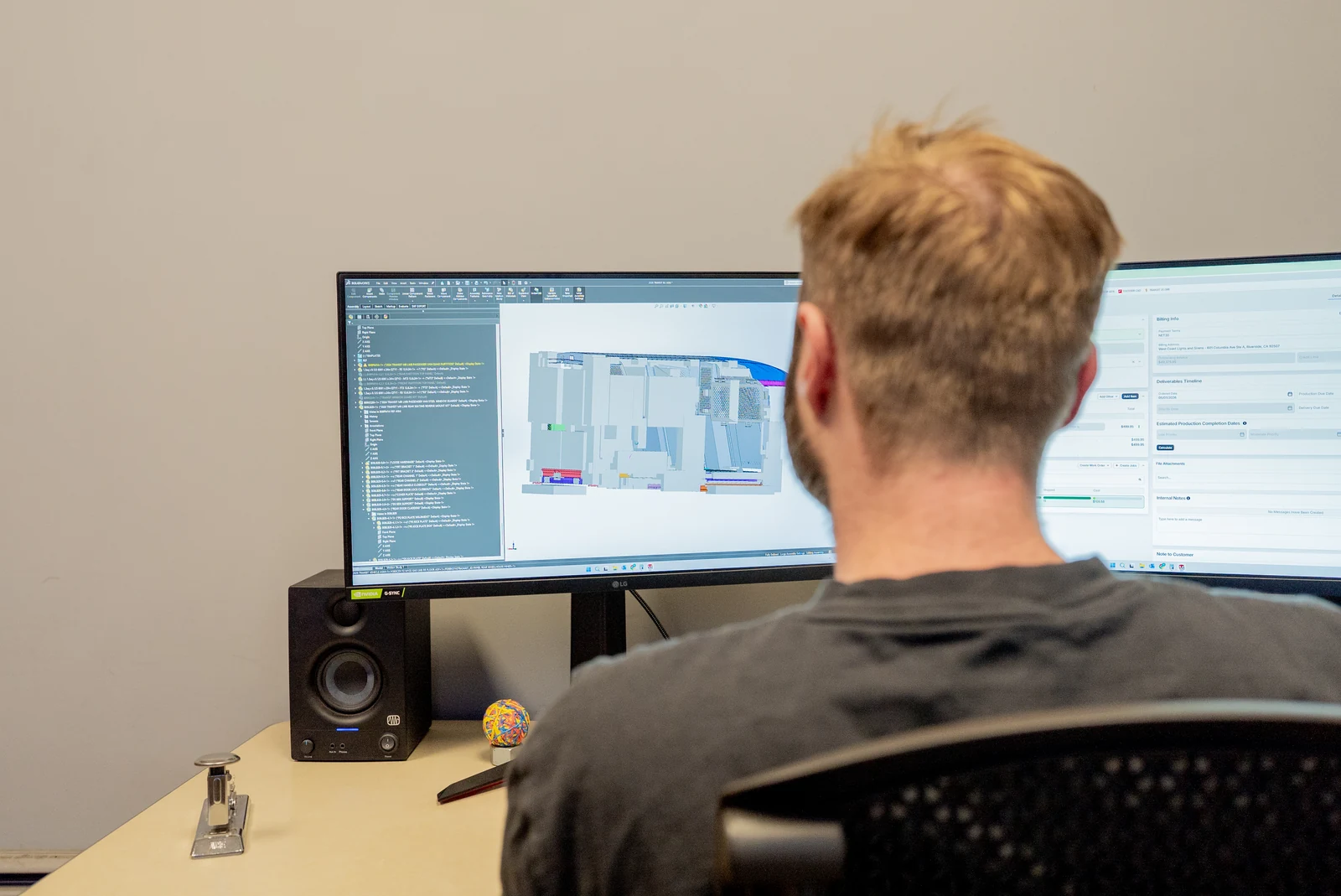
FMA conferences along with FABTECH tend to focus on the industry's immense growth and potential. But as most who've worked in sheet metal know, Biegler included, the business has a darker side. For decades, metal fabrication's leaders have opined about the skilled labor shortage, but the truth of the matter goes far deeper.
"When I started in sheet metal, I looked around at the guys operating machines next to me; not many were married. Lots of guys drank and had other problems. I've always been a self-healer. As I looked around, I asked myself, 'How do I avoid ending up like this? How do I last my sheet metal career and remain married? How do I not become a raging alcoholic? How do I make an impact and do this differently?'"
To be sure, the industry has plenty of progressive metal fabrication companies—indeed, this magazine has covered their technology investment, improvement, and management strategies for years. But at other organizations, where employees speak off the record and on background, talk of dysfunction remains, both among frontline workers and company leaders.
Biegler refrained from revealing specifics about past employers. And certainly, he's had plenty of mentors who helped him get to where he is today. But he's also seen plenty of dysfunction at all levels—business leaders who were unengaged, talented sheet metal workers who struggled to keep their lives together.
"I get it. I was in the foster system. I was a ward of the state. I faced a lot of tough personal challenges growing up. So, when guys come in here and they tell me about their personal situation, I explain to them, well, you need to understand that you're the solution. You accept responsibility."
He clarified that "accepting responsibility" applies to current actions. Someone who's had a difficult life might or might not be "responsible" for past events. The past is past: The question is, what are you going to do moving forward?
Blueline's plant is several blocks away from the California Institution for Men, one of the largest prisons in the state. Many former inmates walk into Blueline carrying a duffle bag and a generic resume prepared with help from the prison-release program.
"Some don't know what they're going to do. Sometimes, no one picked them up from prison, so they don't have a close family. Before anything, I have a heart-to-heart with them. I tell them, 'Just be straight with me. What did you do?'"
Biegler said that he won't hire people who've committed certain crimes, but for many, he's willing to give them another chance at life. "I talk to them about accepting responsibility for their actions. And I'm not talking about what they did in the past, what they did or what was done to them. I'm talking about their plan for moving forward. 'Are you ready to be held accountable for your actions, for everything you do on a daily basis?' Then I ask for examples of how they're looking to change their life. They accept that they're the problem, but they're also the solution."
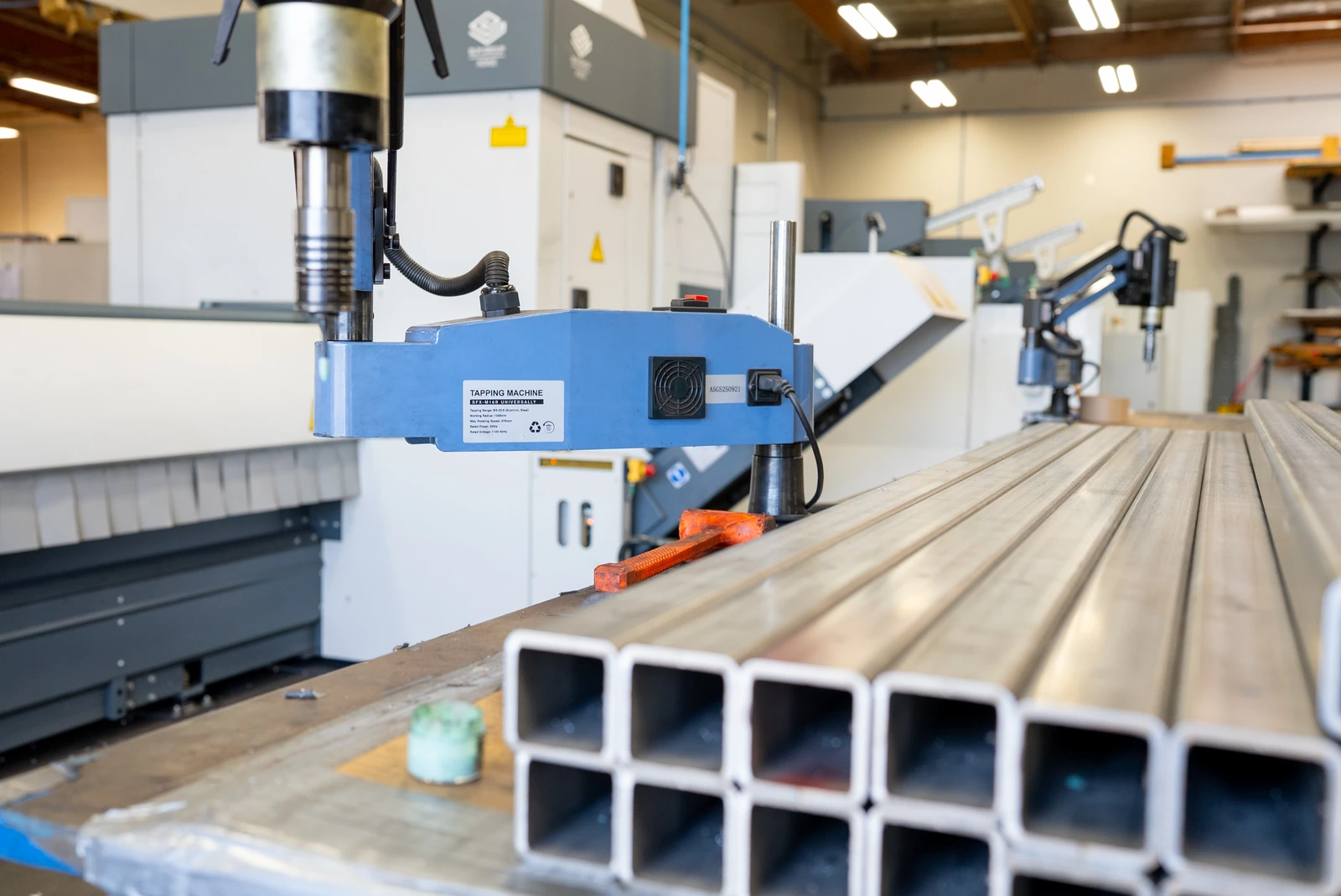
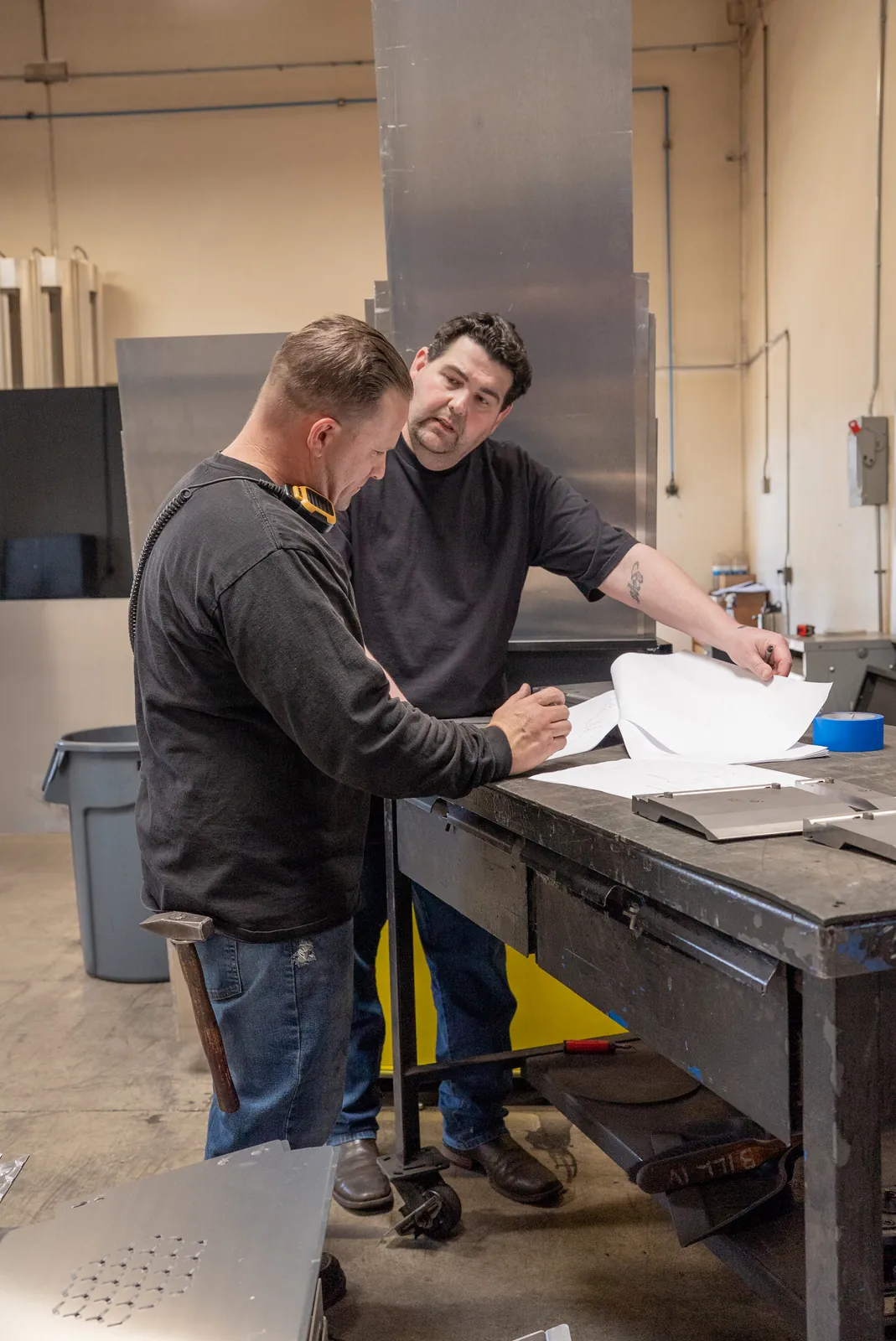
Through organizations like Project Hope CA, Blueline has hired the formerly incarcerated and young people who've been through the foster care system. They can have similarly rough backgrounds, and Biegler can certainly relate. "Many have been forced to survive, and many understand their emotions on a different level."
If hired, Blueline starts them as entry-level helpers. These, along with other entry-level positions, are the "foundation of our company," Biegler said. "What makes that foundation? You need to be here to get products out the door." This requires technical foundation, job knowledge, continual training, and documented procedures, all of which Blueline promotes extensively (more on this later).
"But you also need to see the fire in someone. That's the emotional part, and that's probably 75% [of that foundation]. If someone has heart and drive and determination to do better in their lives, then that gives you something to build on. Everything else can be trained."
Compassion and Learning
Biegler is not one to sugarcoat the operational dysfunction he's witnessed in the sheet metal industry. He recalled one instance at a previous company where he stepped up to meet a seemingly impossible delivery date. "The team was like the island of misfit toys. They had no direction. They were running amok. They were hiding behind their machines, on their cell phones."
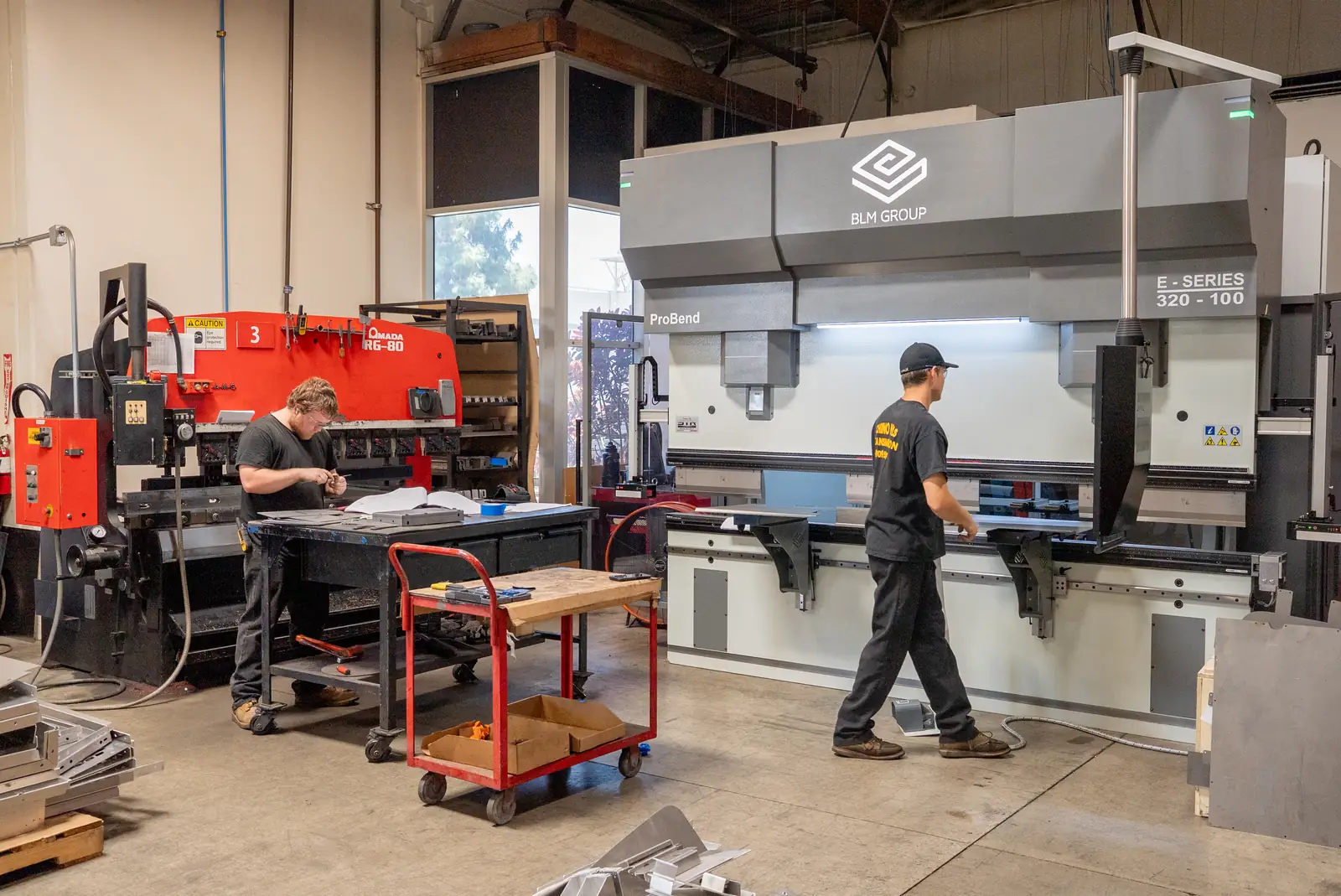
Biegler was hired on as supervisor, but under one condition: He did not want them to know he was a supervisor, at least at first. "I came in and basically worked with them to earn their respect. I started on the saw on the first day, cutting parts. I wanted to really understand the problems and why they were upside down on the job."
Eventually, once he discovered the root problems, he stepped forward. He saw the lack of connection with the shop floor, the lack of any standard working metrics, the lack of training. There was no guidance, no realistic schedule, just firefighting.
"I didn't point fingers and then march back to my air-conditioned office. I was down on the shop floor, working alongside everyone, training people, and earning their respect. Then, I grabbed a bunch of Post-it notes and did a process map, detailing everything that needed to happen to get that project out the door. I put due dates on each note. If the Post-it wasn't pulled off the wall by a certain date, we knew we were in trouble."
That previous experience influenced how he decided to launch Blueline four years ago. Broken processes contribute to the industry's labor and operational challenges, a vicious cycle that amplifies the problem over time as burnout ensues and personal lives suffer.
As Biegler described, the turnaround at his previous employer worked, and overall revenue grew tremendously, but it wasn't easy. He and others worked all hours, lived out of hotel rooms close to the plant and even in cars parked in the factory parking lot. They rarely saw their families. Firefighting stopped the company from metaphorically burning down, but firefighting shouldn't be the norm.
"I wanted to launch a company where the money stays at the foundation. I don't need a house in the hills. I don't need a Rolls-Royce. What success is for me is when my frontline employees are successful, when they can raise their children properly and offer them guidance. I wanted to break the cycle. I never wanted to work with sheet metal guys who are divorced alcoholics. How do we break that cycle?"
His dream was to give workers flexibility. If someone had a personal issue to deal with—an emergency with an ailing parent, a kid who unexpectedly needed picked up from school—Biegler wanted to be able to accommodate.
One building block for all of this is the company's "hiring for heart" strategy, employing those with personal drive to better their lives. This ensures that "people don't take advantage of our flexibility," Biegler said, adding that some early hires did just that. "I mean, you tell me you're late because your mom needed to be dropped off at the airport this morning. Did she just buy her ticket this morning?"
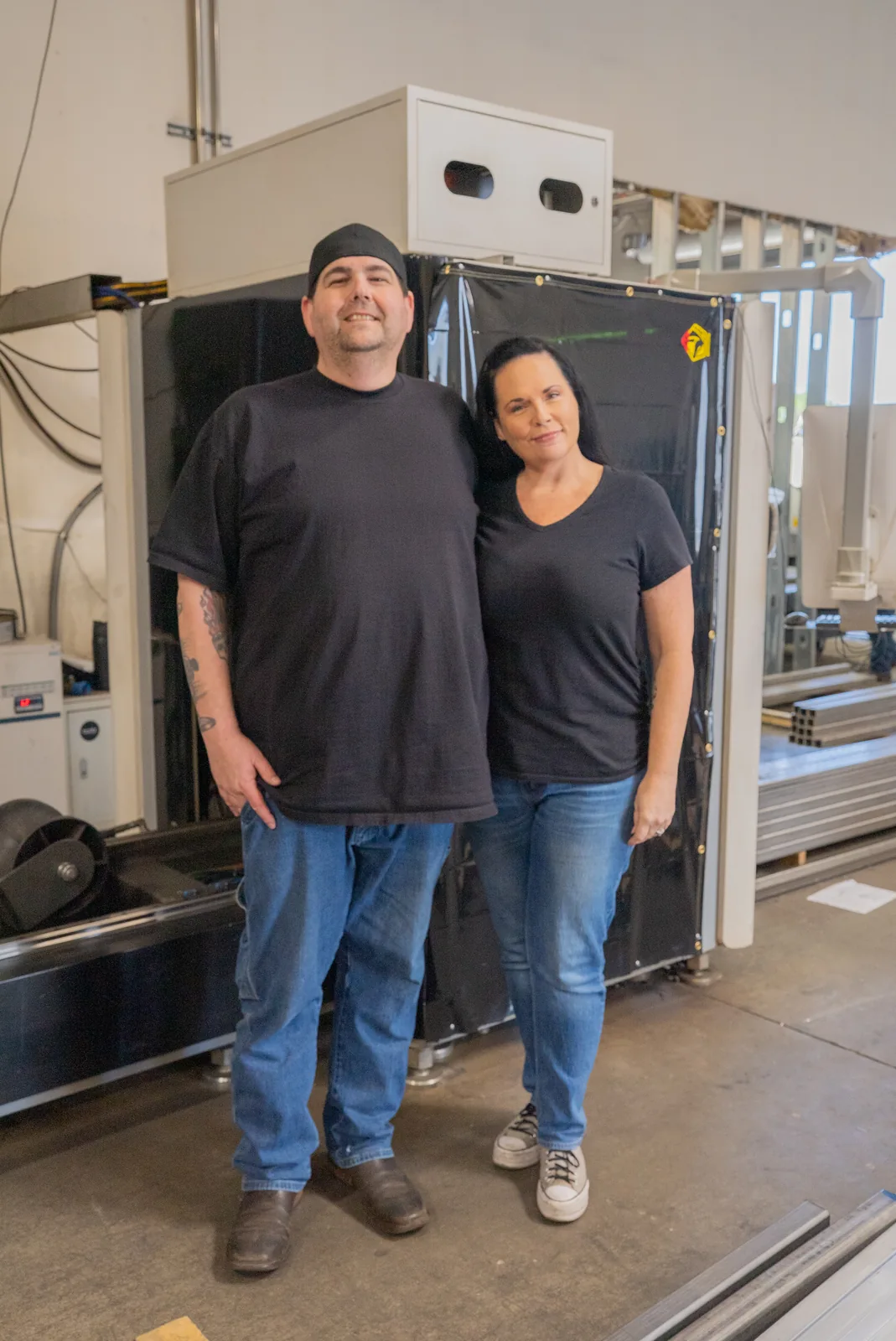
A second building block has been a healthy dose of training and cross-training. Biegler held up two books: one covering elementary-level math and another covering, of all things, advanced technical information about laser cutting and laser photonics.
The basic training came after some honest assessments of mathematical aptitude. Many managers in this industry—even at FMA events—have opined about the lack of basic skills, like using a digital caliper or reading a tape measure to 1/32 in.
"You don't need to know algebra and trigonometry anymore, because the machines and software do the calculations for you, but you do need to know elementary math, and some of these guys don't know it. But that's OK. We can teach it."
The laser photonics book came from Amado Andujo at AMADO-One Source Solutions (www.amado-oss.com), a California-based training firm that dives deep into the theory behind cutting and bending sheet metal.
"Amado is a legend," Biegler said. "I've been working with him for about 22 years. We contacted him for training, and we shut down the entire facility and trained every one of our employees on laser theory. So now, our employees can understand what they're doing and why, when they, say, go from -6 versus a +6 focus with the laser beam."
Offering both the basics and advanced theory sets the foundation for a healthy shop culture. There's no shame in not knowing the basics of addition, subtraction, even basic counting. But that also doesn't mean you can't reach farther, absorb something new, and truly benefit from technical theory and professional development. The past is past. You're responsible and accountable for the here and now.
Another building block harkens back to that Post-it note process map Biegler developed years ago. The company now employs Fulcrum software to help manage its workflow and Trello to streamline communication among co-workers and between shifts.
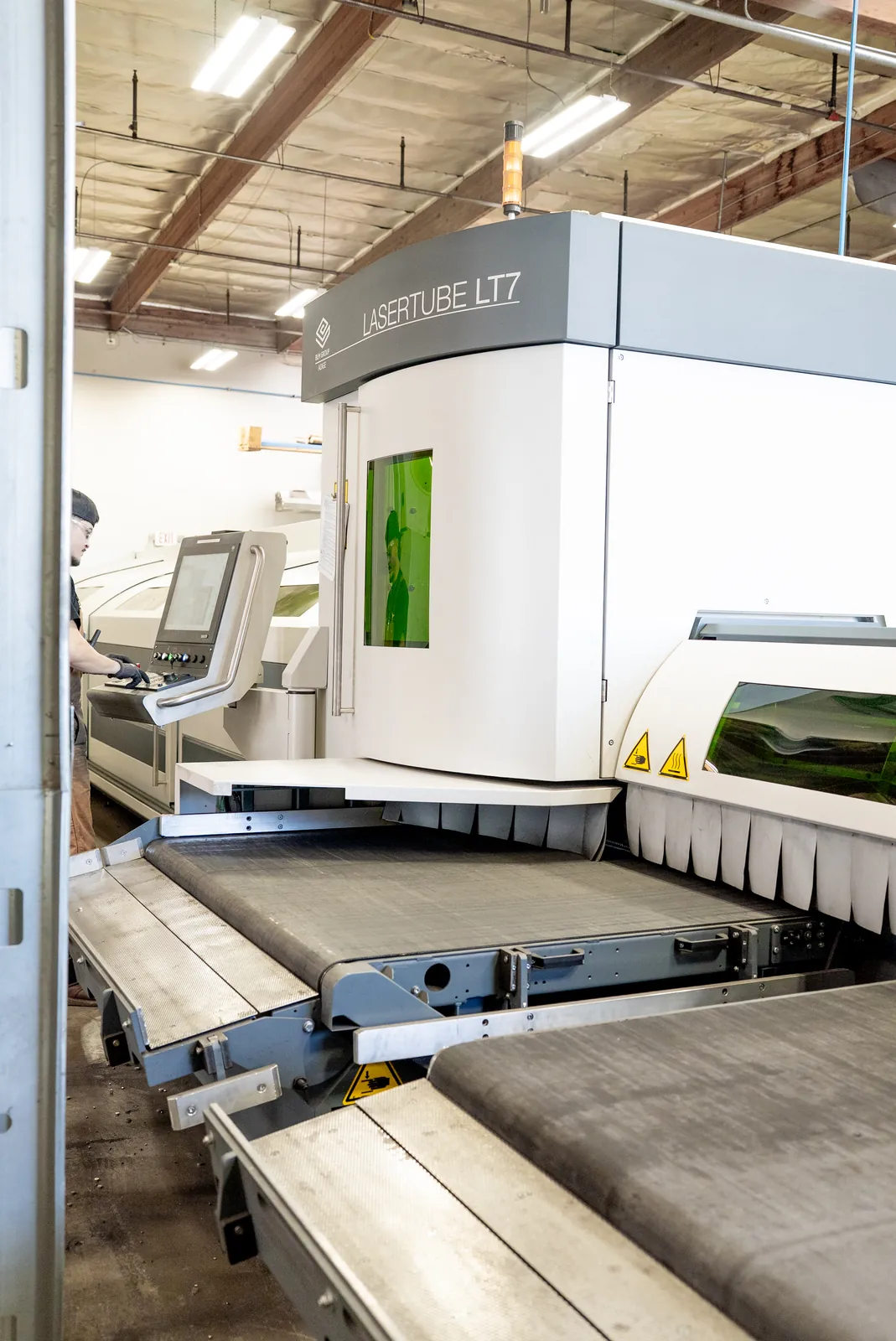
Finally, there was safety. Biegler pointed to the BLM laser loading tube. "That loading mechanism really sold me on the machine. That's safe for my employees, and it's safer for the material. BLM worked with us throughout the process. They were just incredibly knowledgeable about laser tube cutting. For us, that knowledge means a lot."
All this fosters a culture of teaching and learning. "If you're not teaching, you're leaving," Biegler said. "If you're not showing people the skills that you know, that's a big problem.
"Our motto is, 'You're training your replacement so you can move up. You might not advance today or tomorrow, but when there's an opening, you can move up, because somebody else knows how to do your job.'"
Plan For Growth
Biegler held up a seatbelt buckle and chuckled. The product, dubbed SeatBelt Lock, has special features designed for emergency services, including police, ambulances, and fire rescue. "After four years, we're finally making them!"
The product's roots go back to the custom fabricator's origins. Before Biegler stepped into the story, Blueline Industries was a small, home-based business that sold these seatbelt locks through its website, seatbeltlock.com. The company, which outsourced the fabrication, was run by an older couple who wanted to retire. Biegler bought the product line, purchased some used fabrication equipment, and launched a fab shop out of his garage under the Blueline Industries brand.
With demand growing for reliable precision sheet metal parts, job shop work has dominated the shop floor over the past four years. Growth was so dramatic, in fact, revenue just about doubled every year. This year, with increased available capacity, Blueline finally brought belt-buckle production in-house.
The company also is planning to launch new products in the public safety sector. Such make-to-stock products would help manage the lulls in make-to-order work. This gives the potential to scale and perhaps grow into a larger facility several years down the line.
For now, you'll often see Blueline's principal engineer walk to the shop floor to talk about some design-for-manufacturability options, made possible by the company's BLM tube laser, versus potentially cutting it on a BLM flat laser and forming it on a brake. He might talk with the foreman about potential setups for welding.
Co-workers undergo what the company calls "the fast five," where engineers, managers, machine operators, and welders all gather around a set of drawings to discuss options.
Where are the failure points here? Would a tab-and-slot design work? Any distortion issues? Adjustments are made, Blueline communicates with the customer, and the project moves forward—all in a matter of hours, not days.
Sure, good procedures help make this happen, and topnotch technology is essential, along with strong vendor support. Prolonged equipment breakdowns are never good for business. But as Biegler explained, a dedicated team—one that works well together, looks out for each other, and helps shepherd work through the entire shop—is the critical ingredient. "Hiring for heart" makes that team a reality. FAB
Senior Editor Tim Heston can be reached at theston@fmamfg.org.
Blueline Industries, www.bluelineind.comBLM Group, www.blmgroup.com


.png)















