Quick Summary

Laser cut tube assemblies for OEMs work best when each tube tells the next one where to sit. Slots in one tube take tabs from another, so the frame aligns itself before anyone picks up a welder.
Blueline Industries, a tube laser cutting shop in Chino, CA, cuts these features straight into the tube. This post explains how self-locating joints work, what to put in the drawing, and what to send with your quote request.
We write from the shop floor view. We do not quote prices or lead times here, because those depend on your part, your material, and your quantity.
What makes a tube assembly self-locating?
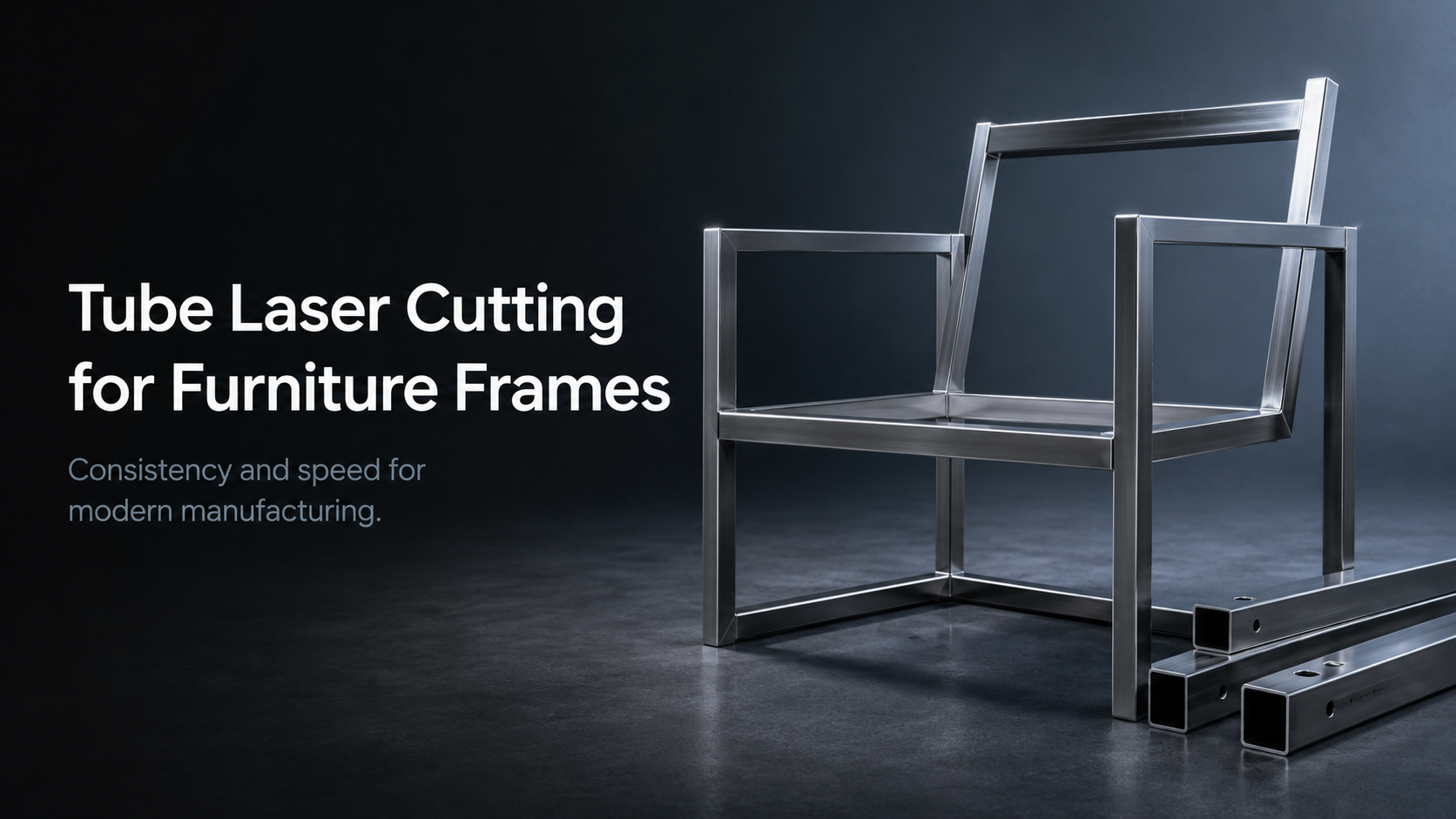
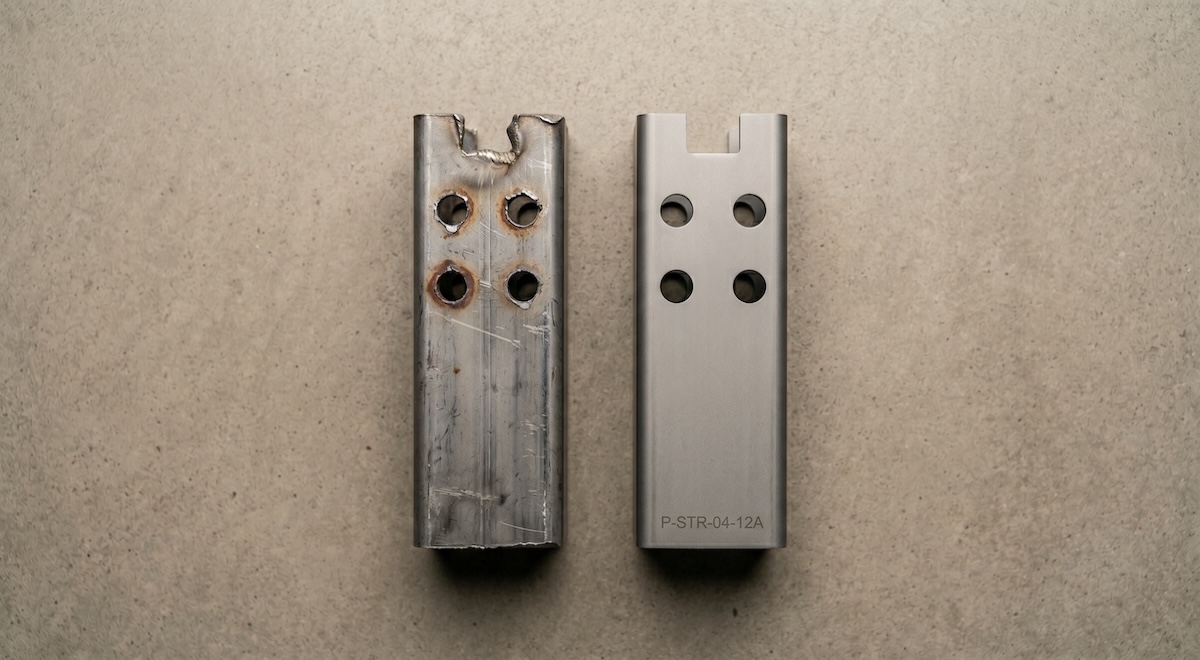
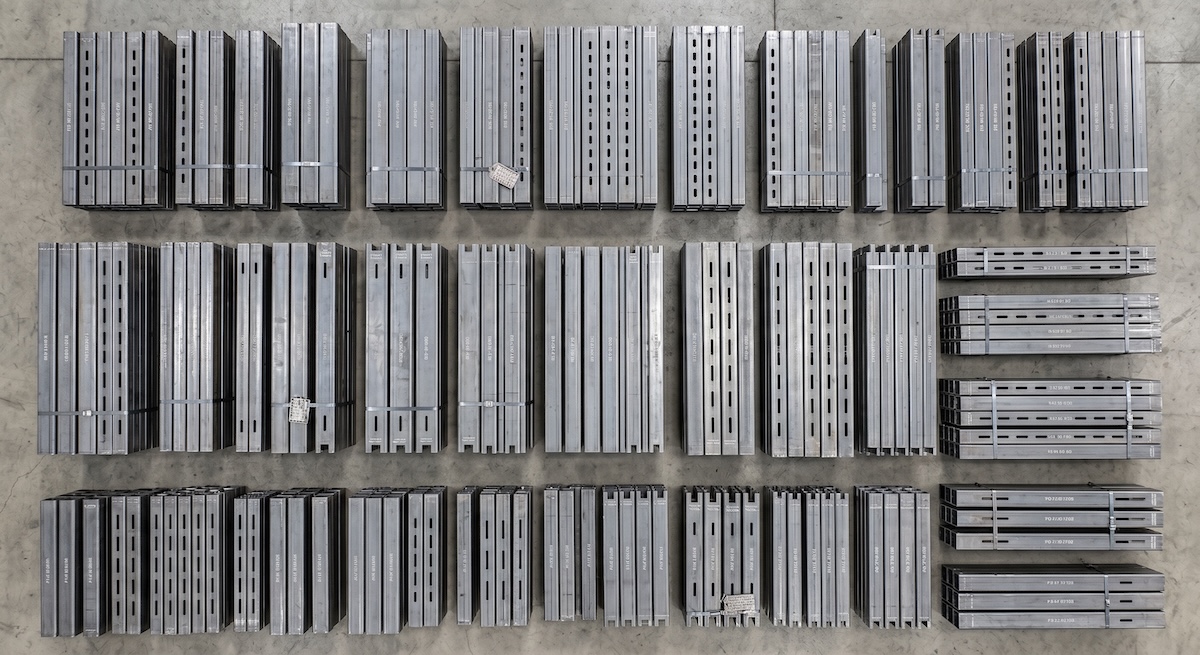
A self-locating tube assembly uses cut features, such as tabs and mating slots, so parts can only fit together in the correct position. The joint guides the assembler. That means less measuring, less clamping, and fewer chances to weld a part in the wrong spot.
A tab is a projection cut on the end or side of one tube. A slot is the opening cut in a second tube that receives it. Together they work like a lock and key, but for steel.
The trade press describes the same idea. The Fabricator's Tube and Pipe Journal says you can reduce or eliminate fixturing costs by laser cutting parts with self-fixturing hook-and-slot designs. The same article adds that this can speed up manufacturing and eliminate assembly errors.
Why does a tube laser suit this kind of design?
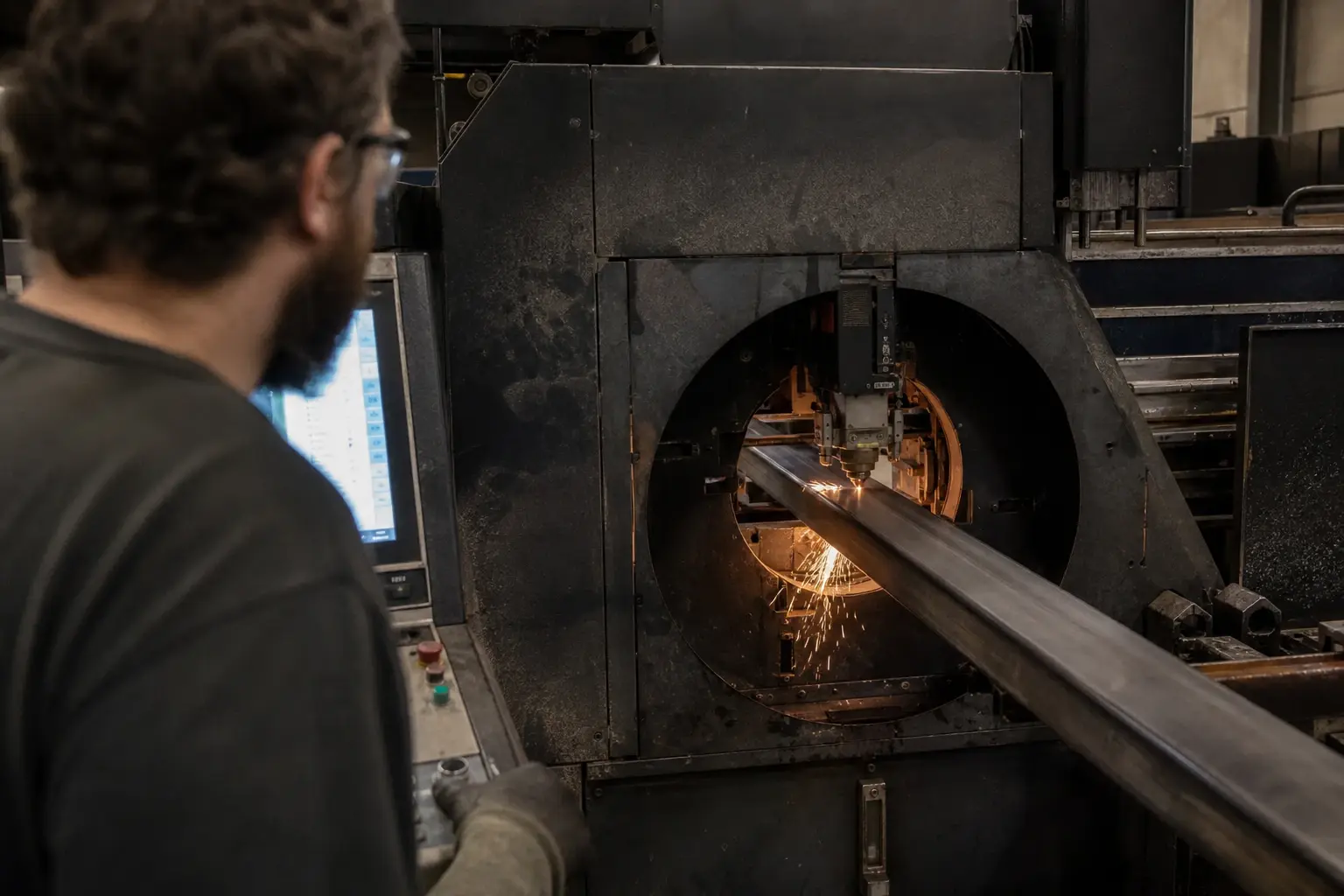
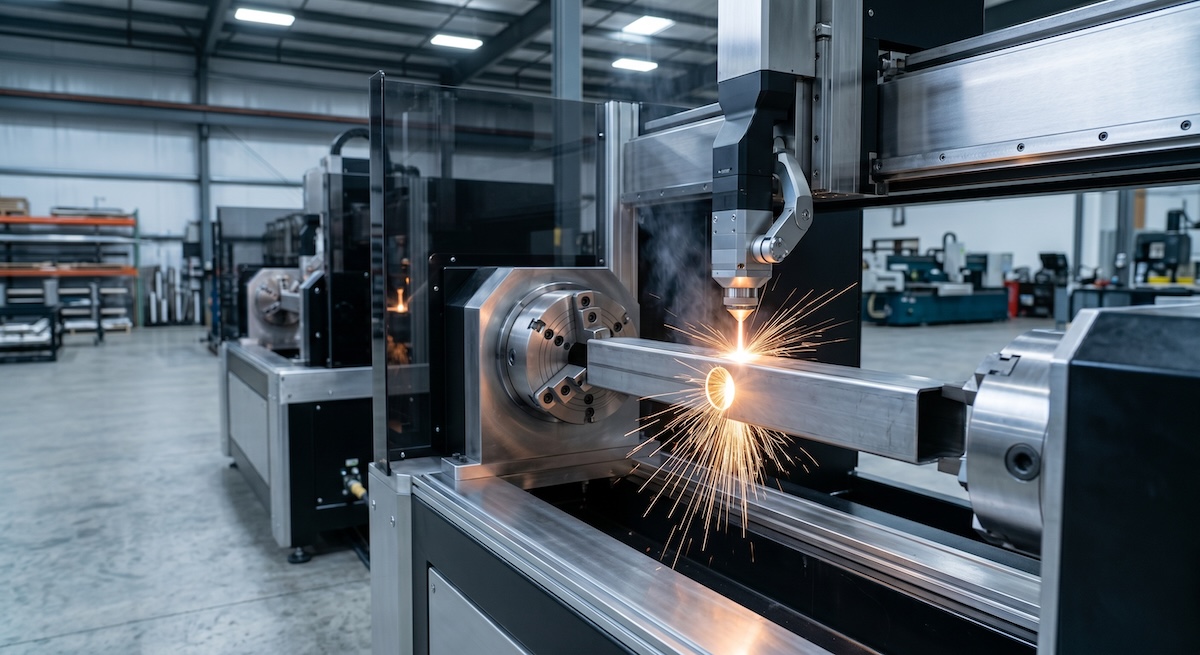
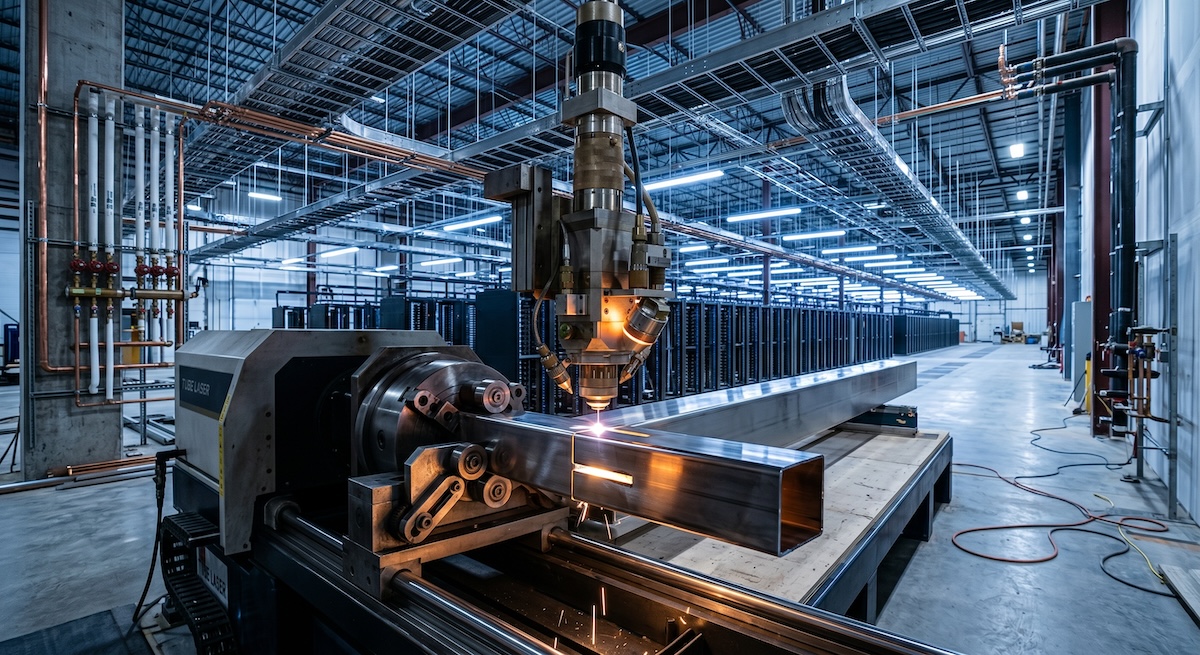
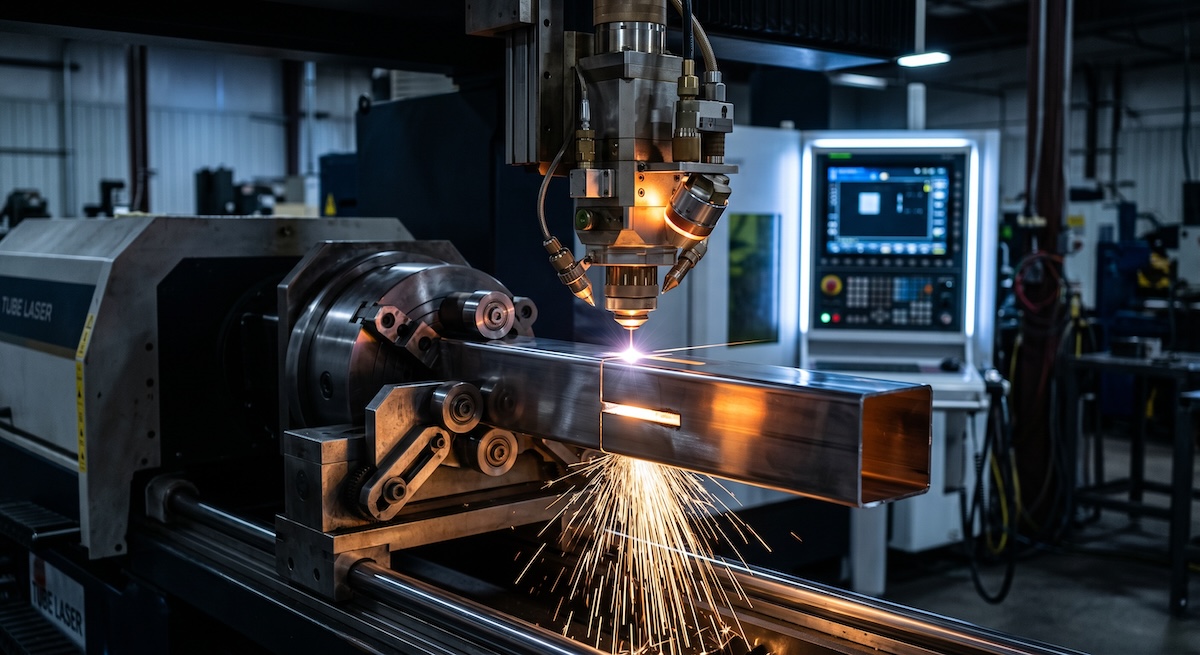
A tube laser cuts slots, holes, notches, and tabs into the tube in one setup, so every feature is positioned from the same reference. Features that must line up on two parts are cut by the same CNC program, which keeps the joint consistent.
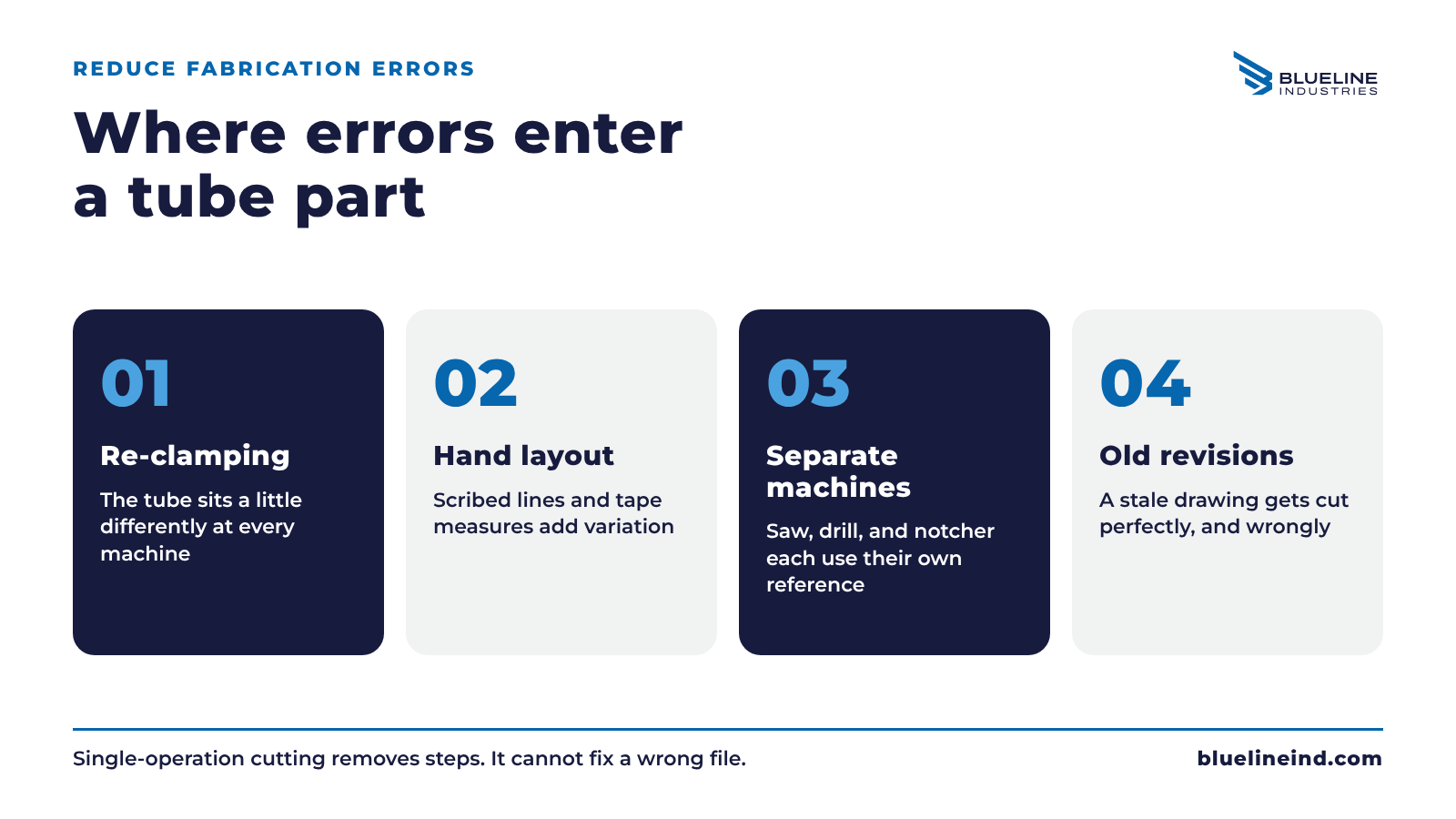
Compare that with the older route. A saw cuts the length, a drill press makes the holes, and a person marks and files the notches. Each handoff adds variation. We covered that step count in our post on tube laser vs saw and drill.
Blueline states that its single-operation processing reduces error rates by up to 70%. That figure is Blueline's own claim for its process. Your results will depend on the part.
What Blueline runs
Blueline states that it runs LT7 tube lasers rated at 4kW, handling square and round tube up to 6 inches, with fully automatic operation. Blueline also states that it processes tube up to 13 inches in diameter with 5-axis beveling capability. Press brakes on site are ProBend all-electric machines, which matters when an assembly needs bent parts too.
For OEM programs, the tube laser cutting for manufacturing OEMs page lists the profiles and materials Blueline handles.
Which design details matter most?
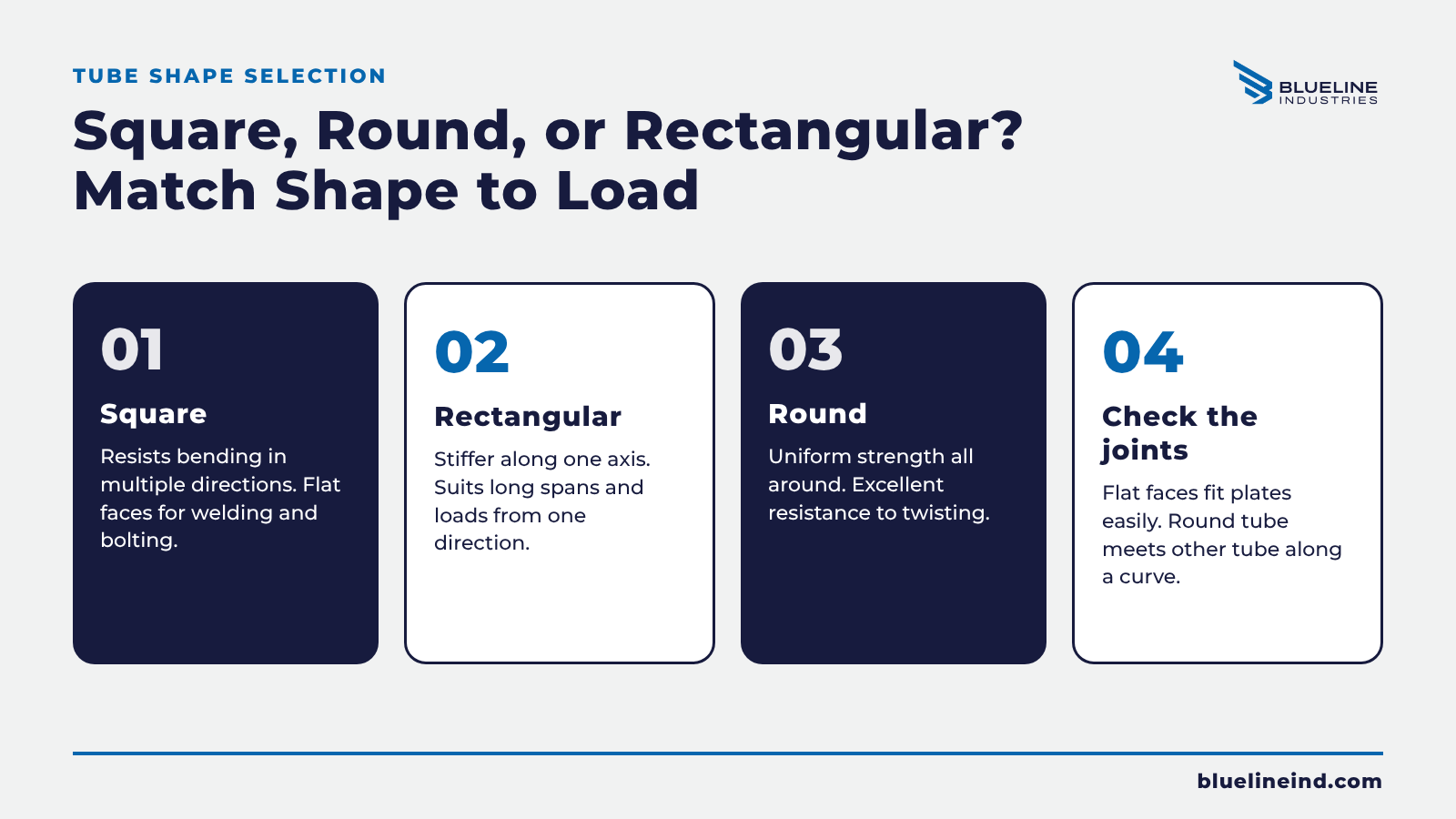
Five details decide whether a tab-and-slot joint works: tab width, slot clearance, wall thickness, corner shape, and which part carries the tab. Each one should be stated on the drawing. If a detail is missing, the shop has to guess, and a guess is how fit problems start.
Design detailWhat it controlsWhat to confirm on the drawingTab widthHow firmly the part seatsWidth, with a stated fit targetSlot clearanceWhether the tab slides in or bindsClearance allowed per sideWall thicknessHow deep the tab can reachTube wall and material gradeCorner shapeStress points and weld accessRadius or sharp corner, and whyWhich part carries the tabAssembly order and strengthWhich tube is the locating part
Plan the weld, not just the fit
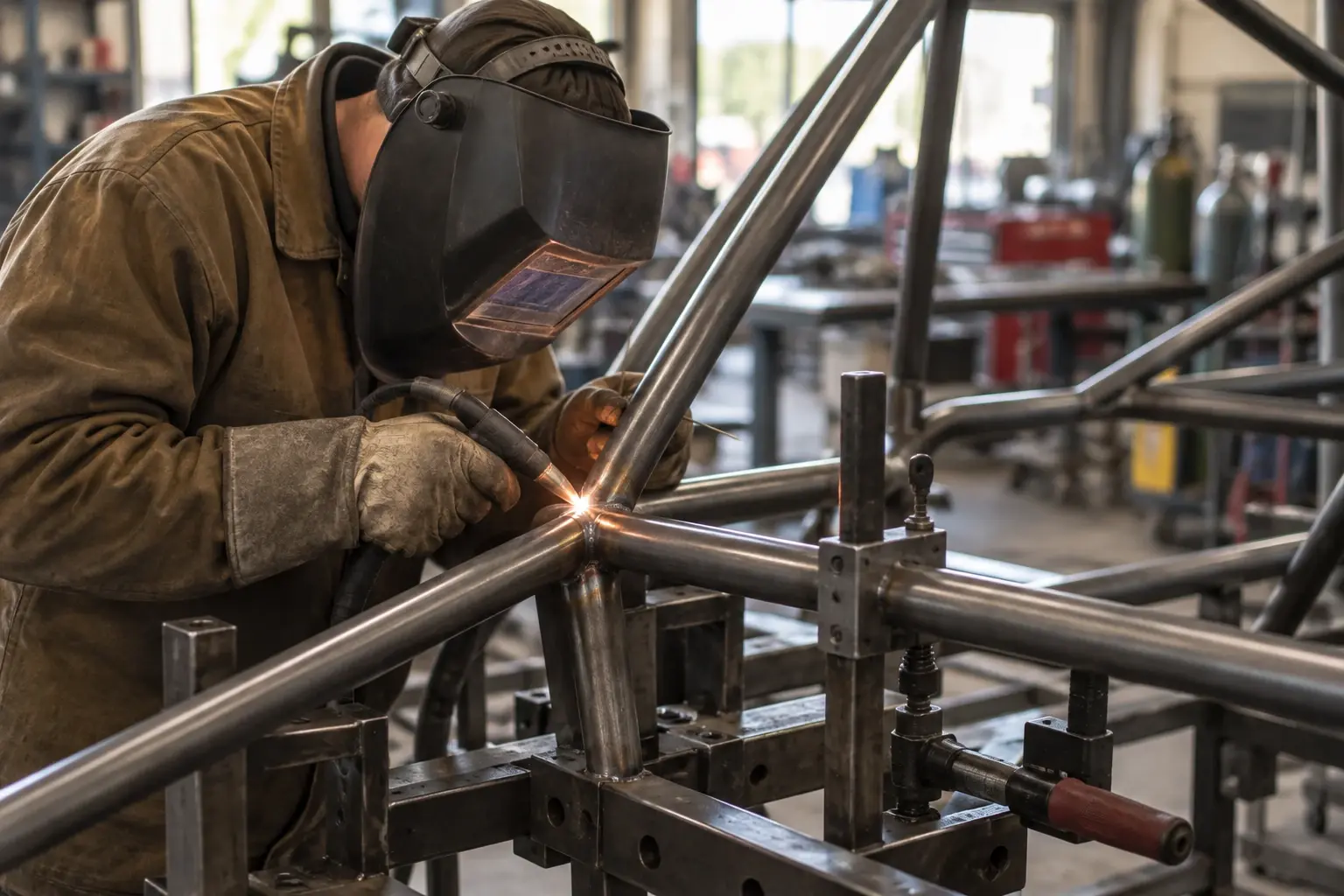
A joint that locates well still has to weld well. Leave weld access on the side the welder works from. Decide early whether the tab will be welded flush or left proud.
Think about tolerance stack-up
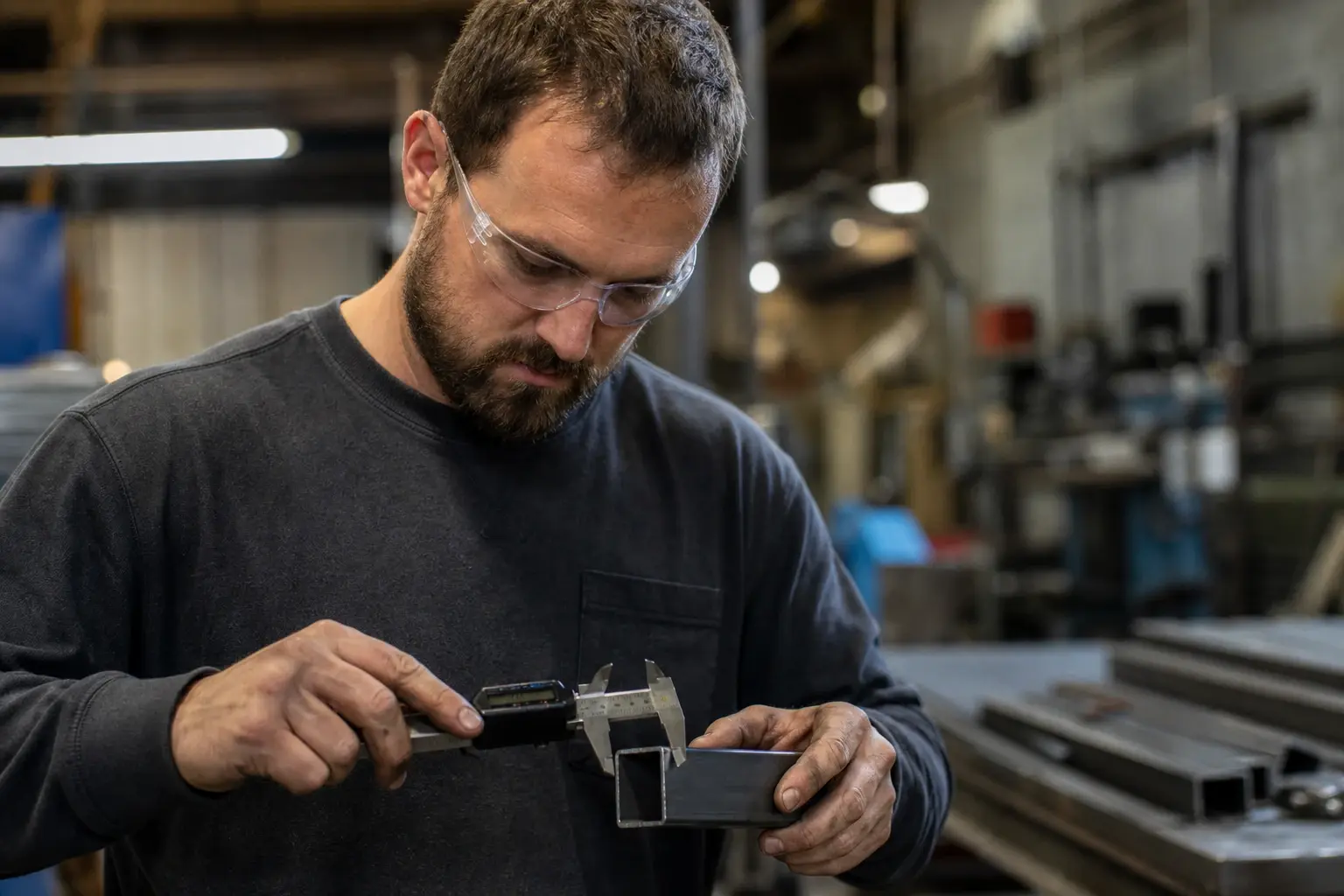
Each mating pair adds a small amount of variation. On a long assembly with many joints, those add up. Blueline states that it holds tolerances of plus or minus 0.003 inch. Confirm with the shop that this applies to the features on your part before you rely on it.
How does a tab-and-slot design reduce fixturing?
Parts that locate themselves need fewer jigs, because the cut geometry does the job of the fixture. The welder tacks the frame together from the part itself rather than from a table full of clamps and stops. That is why OEMs look at this design early.
It is not a cure for every part. Heavy structures may still need a fixture for distortion control during welding. Short, repeat frames and brackets are the usual best fit. A design review before production shows which group your part is in.
Blueline lists design review for manufacturability among its OEM services, such as converting welded joints to cut-and-fold designs.
What should you send with your quote request?
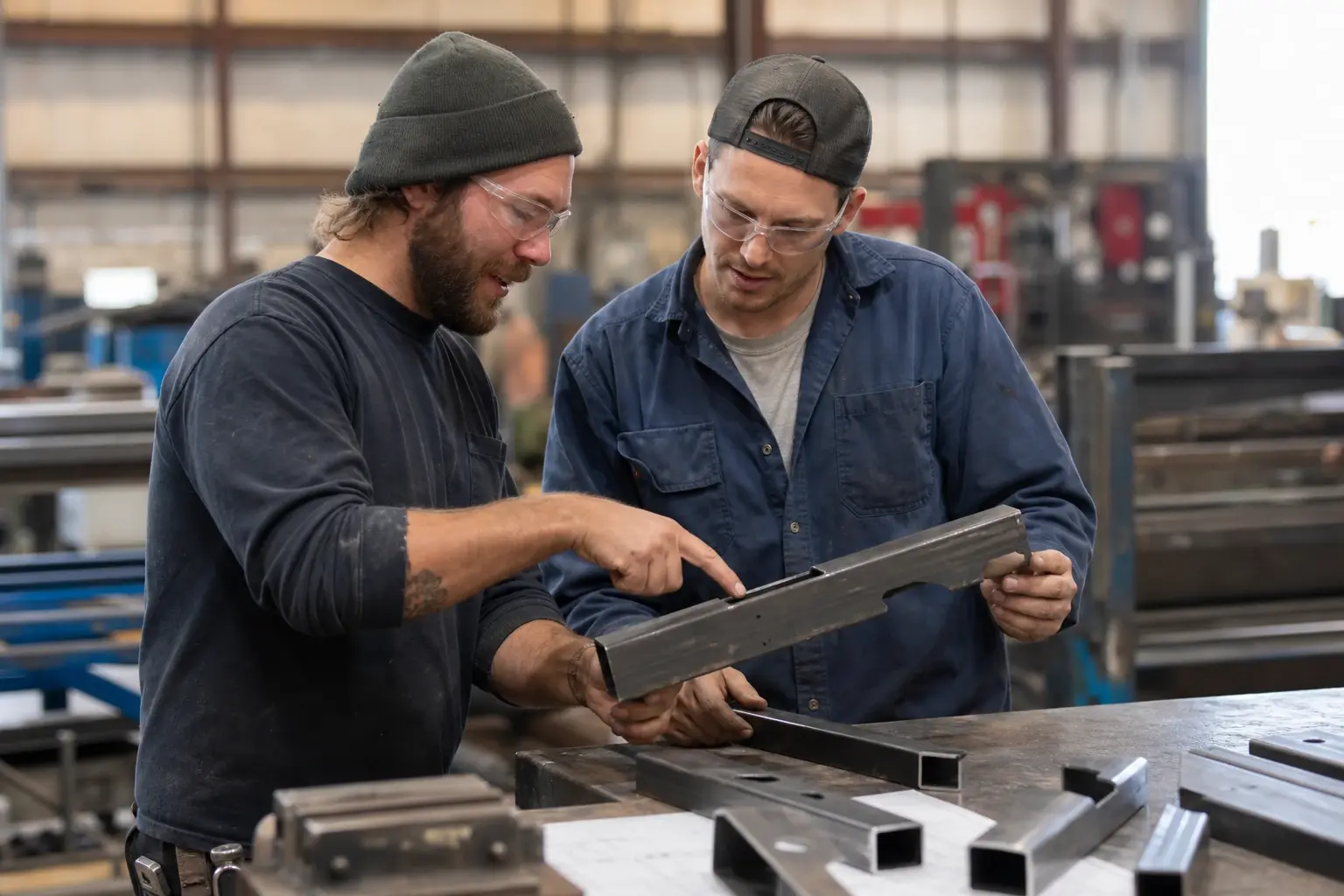
Send a model or drawing, the tube size and wall, the material, and the quantity. Blueline accepts DXF, STEP, and SolidWorks files, and its engineers can convert architectural drawings. Flag any joint that must locate on its own so the shop knows which fits matter most.
Our CAD file checklist for tube laser cutting goes through the file side in more detail.
Where do prototypes fit?
Build a prototype first when the joint is new. A short run shows whether the clearance and tab width work before you commit to production. Blueline states that it runs prototype-to-production jobs from the same CNC program, so the proven file carries forward.
Our slotting, notching, and hole cutting service and the custom tube prototyping and short-run fabrication page cover this path.
A scale example from a verified Blueline project
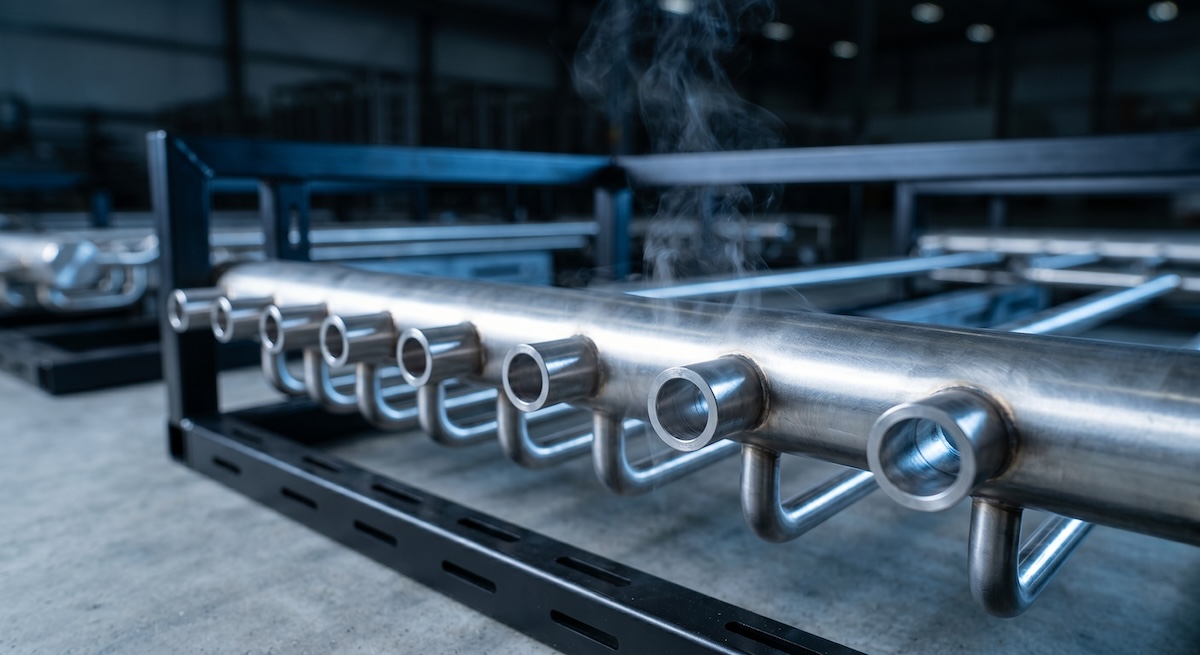
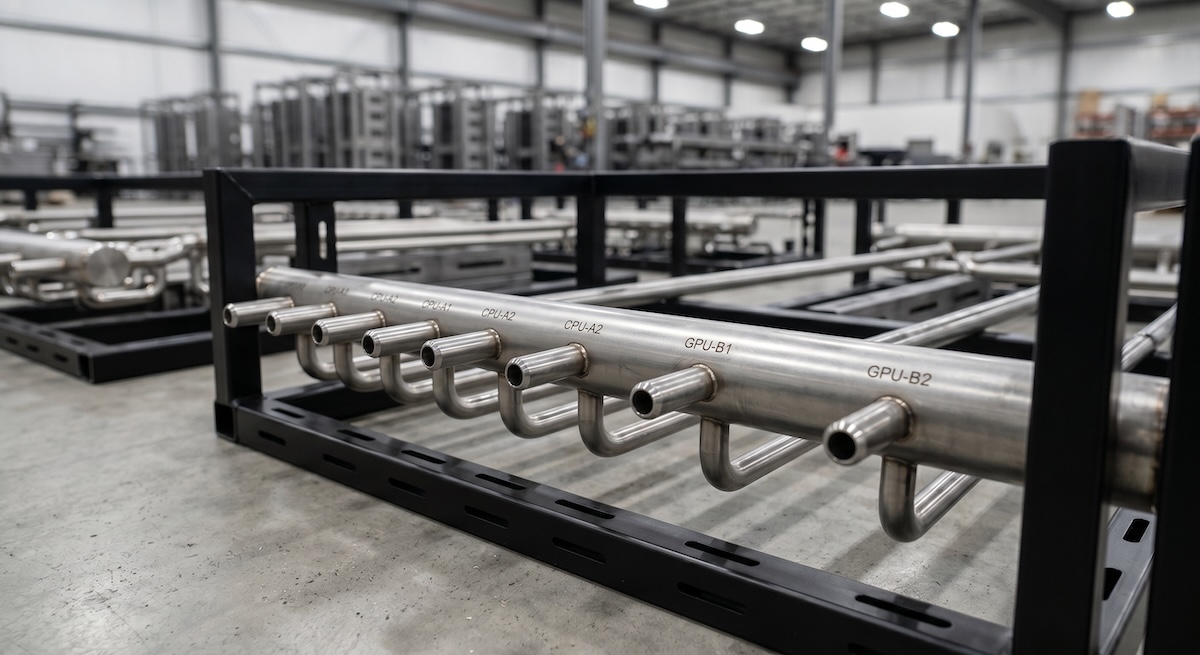
In 2025, Blueline processed 16 truckloads of stainless steel for an AI data center cooling project in Sacramento. At that volume, a fit problem repeats on every part. The lesson for any OEM program is the same: lock the joint design before the run, not after it.
Frequently asked questions
What is a tab-and-slot joint in tube fabrication?
A tab-and-slot joint pairs a projection on one tube with a matching opening in another. The two parts fit together in one position. This reduces the need for measuring and clamping during assembly.
Do laser cut tube assemblies need welding?
Usually yes. Tabs and slots locate the parts, but most structural joints are still welded. The cut features make the welding step faster and more repeatable.
What file formats does Blueline accept?
Blueline states that it accepts DXF, STEP, and SolidWorks files. Its engineers can also convert architectural drawings.
Can Blueline help change a welded design to a self-locating one?
Blueline lists design review for manufacturability among its OEM services. Send your drawing and ask for a review before you order a run.
What materials can Blueline cut?
Blueline states that it works with carbon steel, stainless steel, aluminum, and specialty alloys. Confirm your exact grade when you request a quote.
Next step
Send your assembly drawing and tell us which joints need to locate on their own. We will tell you what the tube laser can cut. Get a Quote or call (951) 833-5597.
Source: The Fabricator, Tube and Pipe Journal, "Designing for Laser Cutting": thefabricator.com.