Quick Summary
Square tube corner radius is the rounded bend where two walls meet, and it changes where a laser cut can sit cleanly. For steel and stainless tube, treat the outside radius as roughly twice the wall thickness unless your tube spec says otherwise. Blueline Industries runs tube laser cutting in Chino, CA, and corner radius is one of the first things worth checking before you send a file.
This post covers what the radius is, typical values from published sources, how it changes fit-up, and how to model it so parts match the drawing.

What is the corner radius on square tube?
Corner radius is the curve on the outside and inside corners of square or rectangular hollow tube. Tube is formed from flat strip, so the corners are rounded, not sharp. The radius is usually set as a multiple of wall thickness, written as t.
That means a thicker wall has a larger radius. Two tubes with the same outside size but different walls will not have the same corner geometry.
How big is the radius on steel tube?
Published figures vary by standard and process. 247TailorSteel lists an outside radius of 2x wall thickness and an inside radius of 1x wall thickness for steel and stainless, noting that 2 is an average of the radii in the standards. Smartbuild Engineering lists 1.5t outside and 1.0t inside for hot formed hollow sections, citing BS EN 10210-2.
SourceOutside radiusInside radiusNotes247TailorSteel (steel, stainless)2x wall thickness1x wall thicknessAverage of standard valuesSmartbuild Engineering (hot formed)1.5t1.0tCites BS EN 10210-2YTDR International (supplier article)About 1.5t to 3tNot statedExample: 5 mm wall gives about 7.5 to 15 mm
The spread is the point. Your tube's real radius depends on its standard and mill. Check the spec for your material instead of assuming one number.
How does the radius change a laser cut part?
The radius shortens the flat area of each wall. Flat width equals the outside dimension minus two outside radii. That is the room you have for slots, tabs, and holes before a feature runs into the curve.
Here is an illustration using the 2x rule. A 100 mm square tube with a 5 mm wall has an outside radius of about 10 mm. The flat on each wall is about 80 mm, not 100 mm. Treat that as a worked example, not a spec for your tube.
Fit-up and joints
The YTDR article says the radius affects slot fit and connector size, and that an incorrect radius can cause gaps and welding problems. In practice, a mating tube or tab drawn for a sharp corner may not seat against a rounded one.
Features near the corner
247TailorSteel's tube guidelines say machining near the wall thickness or radius should stay at least 0.1 mm clear of it. Those are one shop's rules, but they show why edge-of-flat features deserve a second look. Our post on miter and cope cuts in structural tube shows how joint type affects which corners matter.
How should you model the radius in CAD?
Model the tube with its real corner radius, then place features against the true flats. Do not draw a sharp-cornered box and hope the cut program corrects it. A faithful model catches interference before the file leaves your desk.
Our guide on preparing CAD files for tube laser cutting covers the rest of the file checklist.
How do you check the radius on the tube you actually have?
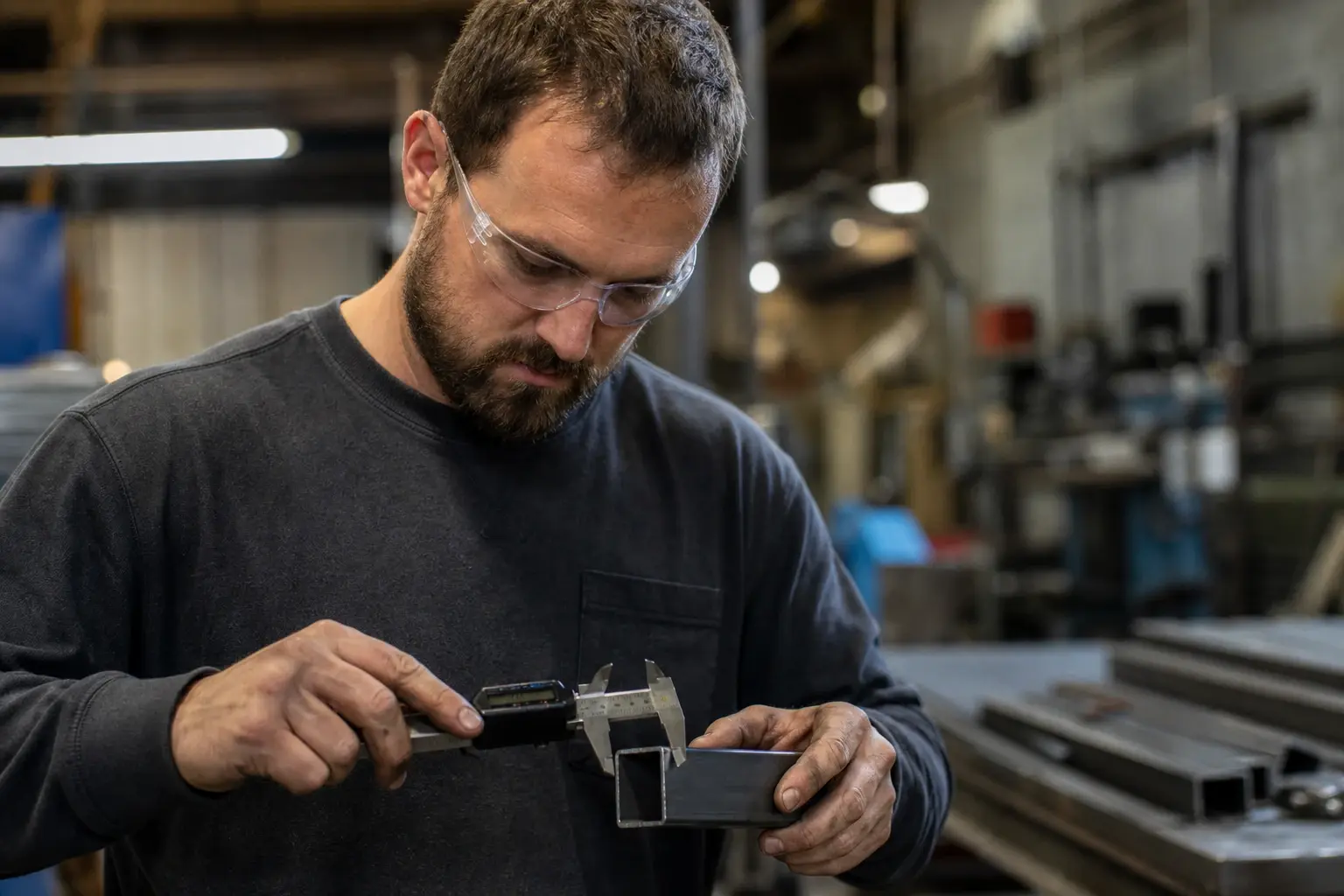
Measure a sample corner with a radius gauge, or ask your tube supplier for the radius in their product data. Do this before you lock the CAD model. A measured value beats a catalog assumption, because tube from different mills can differ.
Check a few pieces from the lot if the job is a repeat order. If the radius changes between lots, your fit-up can change with it. Tell the shop what you measured so the quote reflects the real tube.
Square and rectangular tube are not the same problem
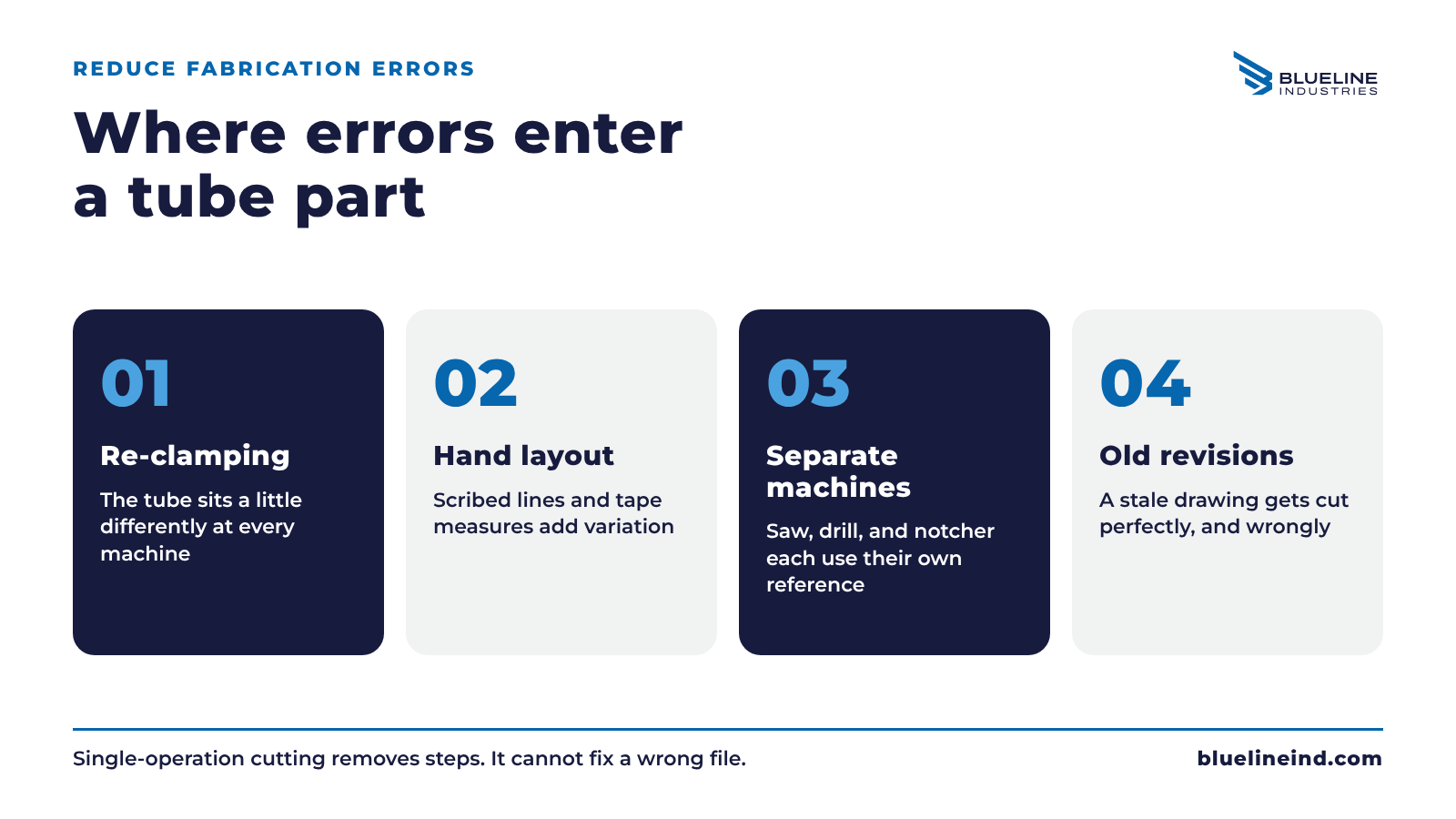
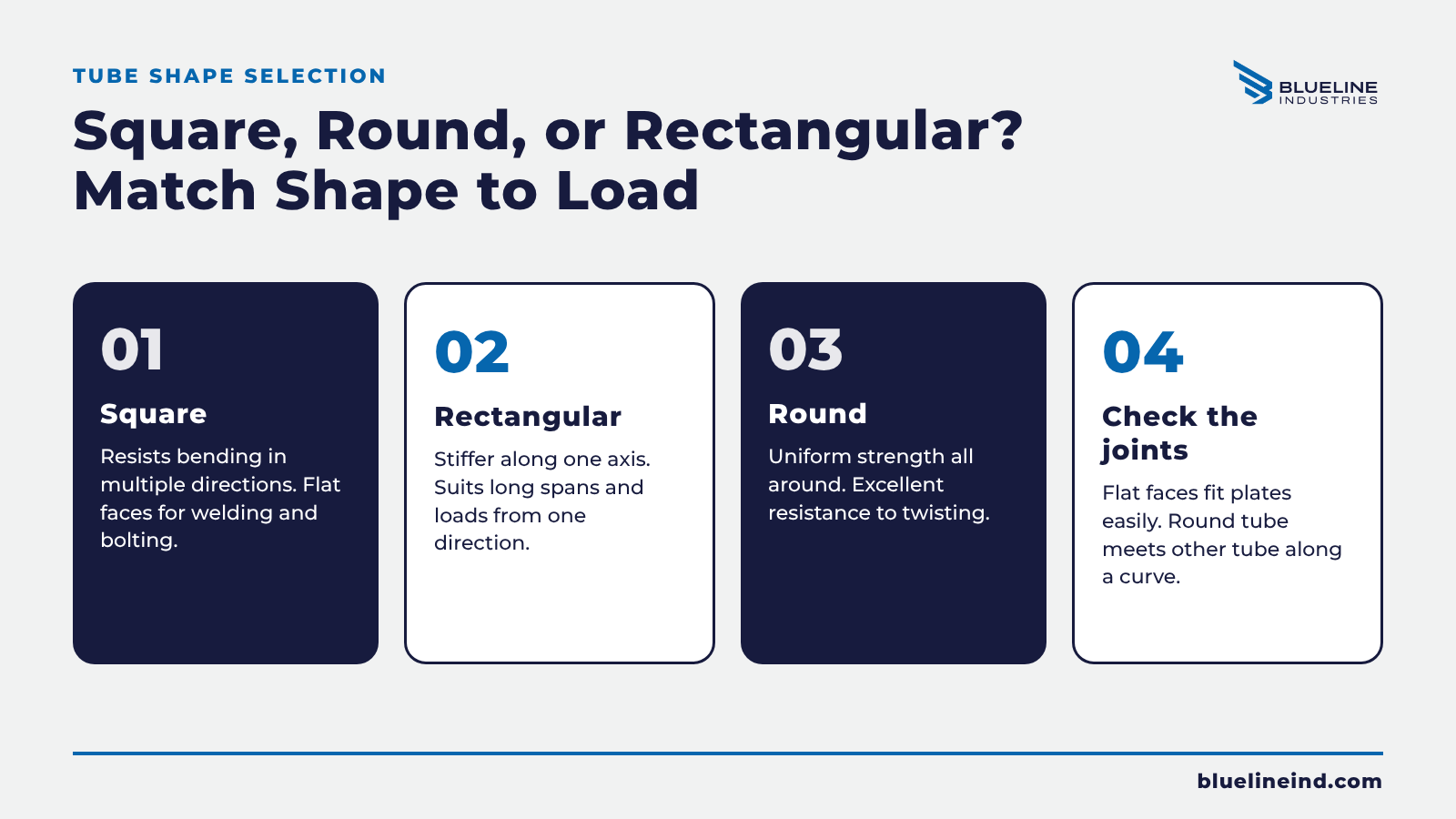
Rectangular tube has a long wall and a short wall, and both lose width to the radius. The short wall loses a larger share of its flat. A slot that fits comfortably on the long face may not fit on the short face of the same tube.
When a part has features on more than one face, check the flat width of each face separately. That one habit catches most corner conflicts before they reach the machine.
What does this mean for sizing and tolerance?
Corner radius affects how a tube nests into a mating part, so it belongs in your tolerance discussion. Blueline states its tolerances are plus or minus 0.003 inch. That figure describes the cutting process, and it cannot make a rounded corner fit a sharp-cornered drawing. Fit still depends on the tube and your model.
Blueline states its LT7 tube lasers handle up to 6 inch square and round tube. Within that range, ask about corner geometry for your specific size and wall.
A scale example
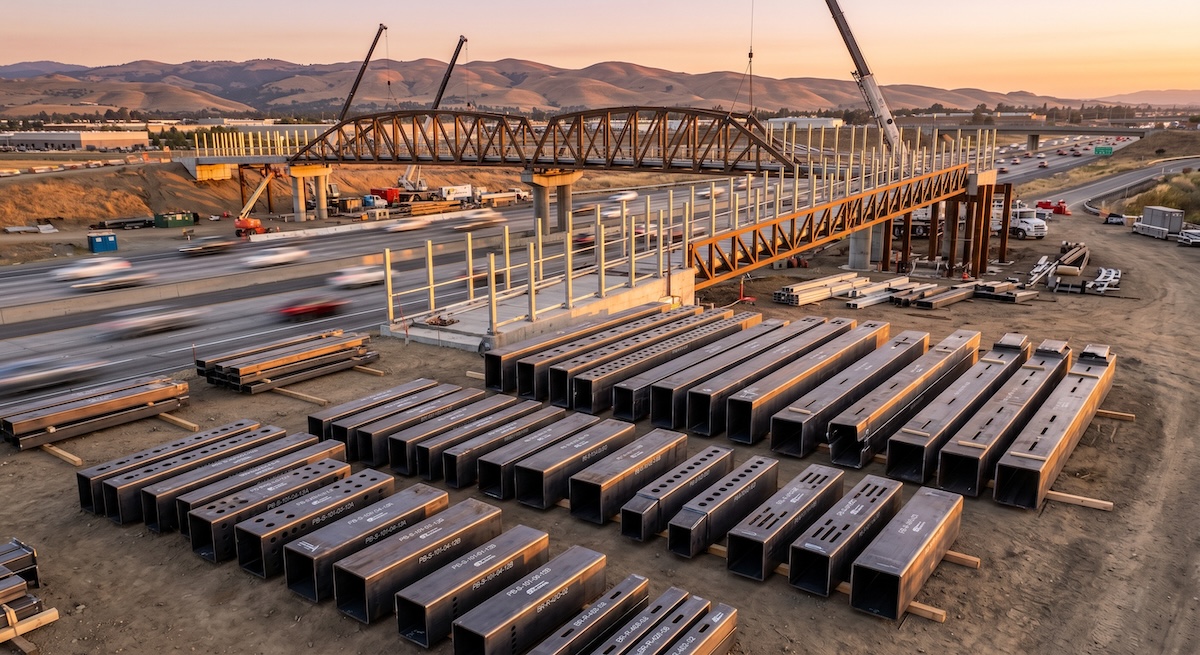
Blueline processed more than 500,000 lbs of steel for the Caltrans I-5 pedestrian bridge in Irvine in 2025. On large steel projects, small geometry checks like corner radius are cheaper to settle in the drawing than on the shop floor.
Frequently asked questions
Is square tube corner radius the same for all tube?
No. It varies with the standard, the forming process, and the wall thickness. Published values range from about 1.5t to 3t depending on the source and standard.
What is a typical outside radius for steel square tube?
One tube cutter lists 2x wall thickness for steel and stainless, noting it is an average of standard values. A hot formed standard cited by Smartbuild lists 1.5t. Confirm against your own spec.
Does corner radius affect slot and tab fit?
Yes. A rounded corner narrows the flat wall. Features and mating parts drawn for a sharp corner may not seat properly.
Should I model the radius in CAD?
Yes. Model the real corner so interference shows up before cutting.
Where do I send tube drawings for a quote?
Use the Blueline contact page or call (951) 833-5597. Include tube size, wall thickness, material, and the standard if you know it.
Send your tube spec with the file
Corner radius is a small number with a large effect on fit. State the tube standard, model the real corner, and keep features on the flat.
See Blueline's steel tube laser cutting and precision slotting, notching, and hole cutting, then Get a Quote or call (951) 833-5597.