Quick Summary
- Welded steel tube has a seam where the strip was joined, and that seam can behave differently from the rest of the wall.
- For laser cutting, keep holes, slots, and notches off the seam whenever the design allows.
- For parts that will be bent, the common rule is to put the seam near the neutral axis, not on the outside of the bend.
- Put the seam call-out on the drawing. Do not leave it to chance.
Tube weld seam orientation is the angular position of the weld line on a welded tube relative to your cuts and bends. The short answer: keep cuts away from the seam, and keep the seam off the outside of any bend. Blueline Industries runs tube laser cutting from its shop in Chino, CA, and this is a spec detail that engineers often leave off the drawing.
This post explains what the seam is, where it should sit for cutting and for bending, how machines find it, and how to call it out so your parts come back the way you drew them.

What is a weld seam in tube, and why does it matter?
A weld seam is the line where the edges of formed steel strip were joined to make a tube. The seam area has been thermally altered, so BLM Group notes it can have a different mechanical resistance than the rest of the tube. That difference is why its position matters to your part.
Welded tube is common. Machine Design reports that welded tubing is more readily available and sometimes more economical than tube made without a weld. So most fabricators deal with seams every day.
Bodor, a tube laser maker, describes the inner seam as often showing deformities, hardness variations, or raised edges. Those are the features that can disturb a clean cut.
Where should the seam go on a laser-cut tube part?
Keep the seam away from cut features. Machine Design puts it plainly: when laser cutting tube, you want to stay away from the weld seam whenever possible. Holes, slots, and notches that cross the seam are the first place to look.
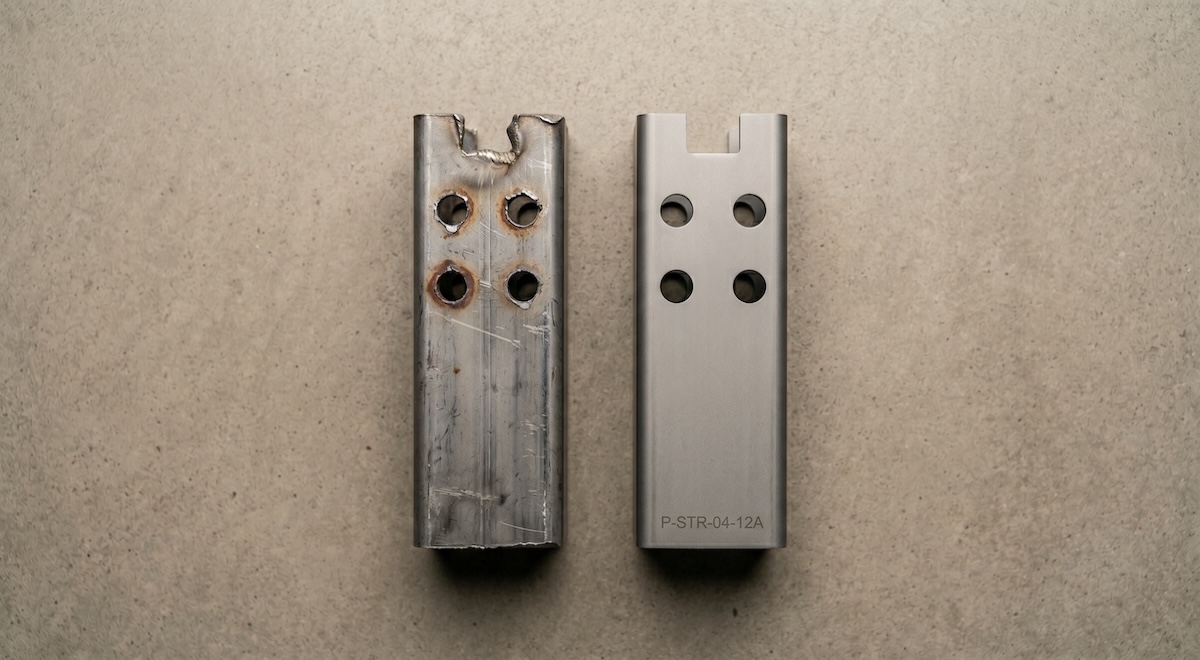
Bodor lists what can go wrong when cuts, holes, or notches cross a seam: poor edge quality, more wear on nozzles and lenses, and weak points in the final product. BLM adds that standard cutting parameters may not be effective when cutting across the weld seam.
What to do on a drawing
Pick a seam location that clears your features. Many designs have a face with no cuts on it. Put the seam there and say so.
If a feature must cross the seam, flag it. The shop can then plan the cut instead of finding out at the machine. Our post on the heat affected zone in tube laser cutting covers another edge-quality detail worth checking.
Where should the seam go if the tube gets bent?
Place the seam near the neutral axis, at the top or bottom relative to the bend plane. Machine Design calls this the standard rule of thumb. The seam then avoids the stretching and compression that happens on the outside and inside of a bend.
BLM advises against putting the seam on the extrados, the outer side of the bend, because the weld can lead to cracks. Machine Design adds that tight-radius bends take more torque, which can cause cracks along the seam.
BLM also warns that letting the seam land randomly produces different springback effects from part to part. Consistent orientation keeps a batch consistent.
| Operation | Where the seam should sit | Why (source) |
|---|---|---|
| Laser cut holes, slots, notches | Away from cut features | Edge quality, nozzle and lens wear, weak points (Bodor, Machine Design) |
| Bending | Near the neutral axis, top or bottom of the bend plane | Avoids stretch and compression on the seam (Machine Design) |
| Bending | Never on the outside of the bend | Weld can lead to cracks (BLM Group) |
| Appearance-critical parts | Called out on the drawing | Fabricator needs the location in the file (Machine Design) |
How do tube lasers find the seam?
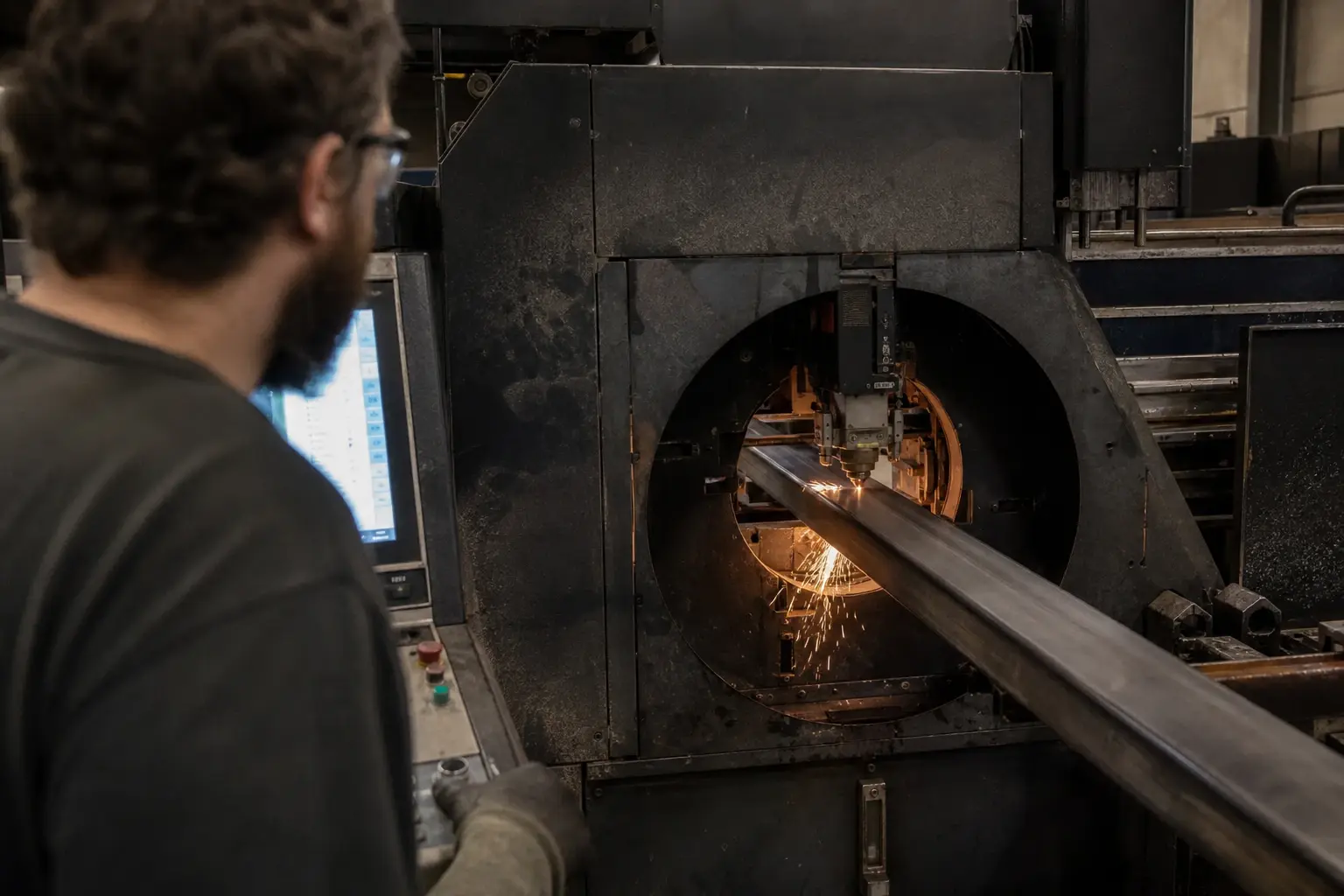
Many tube lasers use a camera or sensor to locate the seam, then rotate the tube so cuts land where the program says. Machine Design describes seam detection as typically integrated with the machine for exactly this reason.
BLM describes a camera system that lights the tube to show the seam, inside or outside, and turns the tube so the job starts at the programmed angle. Bodor describes a vision system that finds the inner seam position and can rotate it to a chosen angle, such as the 6 o'clock position, or away from cutting zones.
Not every machine has this option. When you request a quote, ask how seam position is handled on your part. If the seam is visible only on the inside, BLM notes an operator can mark the outside with a line.
How do you call out the seam on a drawing?
Add a seam note to the drawing or the quote request. State the clock position or face, and say whether the location is critical. Machine Design notes that where appearance matters, the seam location is called out in the drawing file or communicated to the fabricator.
A short checklist helps:
- Name the seam face or clock position.
- Say if the part will be bent, and show the bend plane.
- Mark any cut feature that must cross the seam.
- Note whether the seam will be visible in service.
Machine Design also advises checking seam consistency across each batch before loading. Ask your shop how it handles that on repeat orders.
A scale example
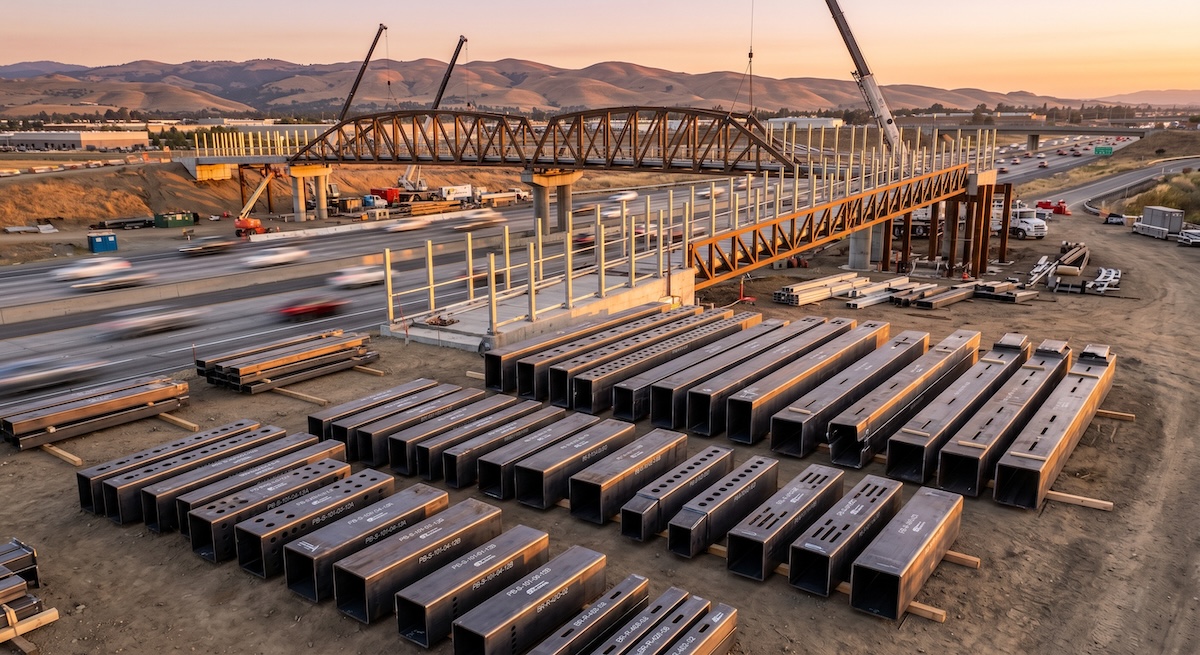
Blueline processed more than 500,000 lbs of steel for the Caltrans I-5 pedestrian bridge in Irvine in 2025. On work at that scale, one clear drawing note that applies to many parts is easier to hold than seam decisions made one part at a time.
Frequently asked questions
Does every steel tube have a weld seam?
No. Welded tube has a seam. Tube made without a weld does not. Welded tube is more readily available and sometimes more economical, so seams are common in everyday fabrication.
Can a laser cut through the weld seam?
It can, but it is not ideal. BLM notes standard parameters may not be effective across a thick seam, and Bodor lists poor edge quality and extra nozzle wear as risks. Design around the seam when you can.
Where should the seam go on a bent tube?
Near the neutral axis, at the top or bottom relative to the bend plane. Keep it off the outside of the bend, where the weld can lead to cracks.
Do I need to specify the seam on every drawing?
Specify it whenever cuts, bends, or appearance depend on it. A one-line note is cheap compared with scrapped parts.
Is the seam always on the outside of the tube?
No. It may be visible inside, outside, or both, depending on the tube. BLM describes detection of a seam either inside or outside the tube.
Get seam details right before you send the file
Seam orientation is a small note that protects cut quality and bend reliability. Review your features, pick a seam face, and put it on the drawing.
Explore tube laser cutting services and precision tube fabrication at Blueline, then Get a Quote or call (951) 833-5597.