Quick Summary
- Machine frame tube fabrication goes best when every hole, slot, and mounting face is dimensioned from one datum.
- Cutting holes and slots in the same operation as the tube cut removes a source of drift between features.
- Tell your shop which faces mate, which holes locate, and which dimensions are critical.
- Blueline cuts the tube parts for frames in Chino, CA. Assembly details stay with your build plan.
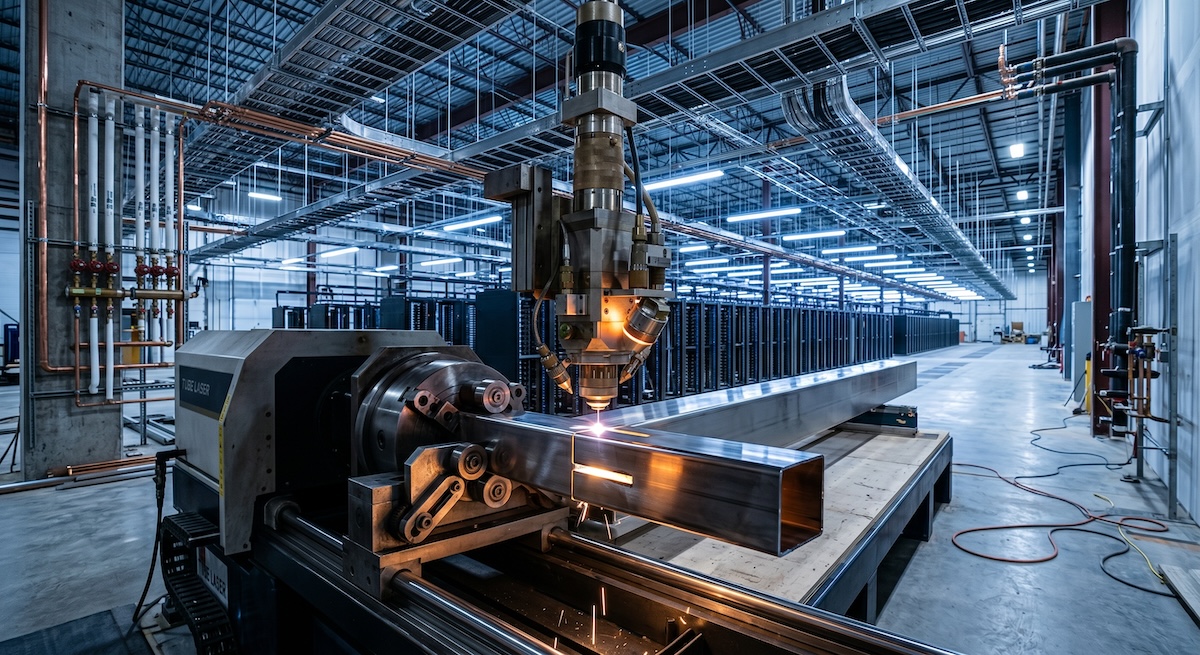
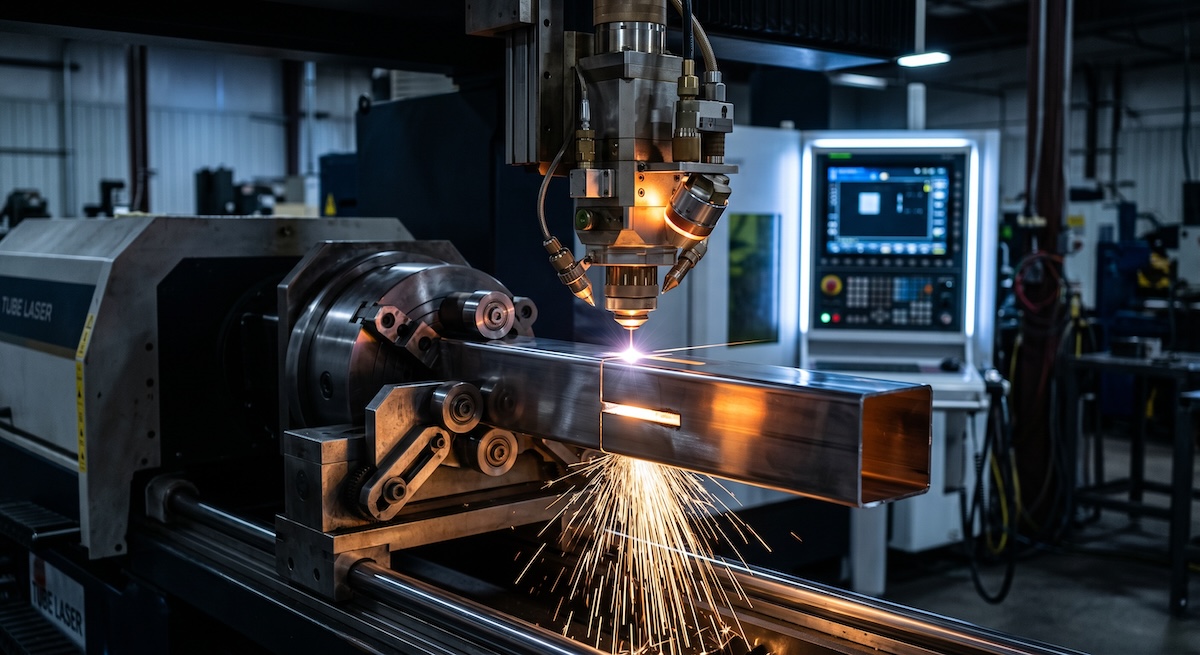
Machine frame tube fabrication is accurate when every feature on every tube is measured from one agreed datum. Blueline Industries, a tube laser cutting shop in Chino, CA, cuts the tube parts for equipment frames with holes, slots, and end profiles made in a single operation. This post explains how to set a datum, what to dimension, and what to send when you request a quote.
A datum is a reference point, line, or face that every other dimension is measured from. A frame is the rectangular or square tube skeleton that holds a machine, enclosure, or equipment base.

What is machine frame tube fabrication?
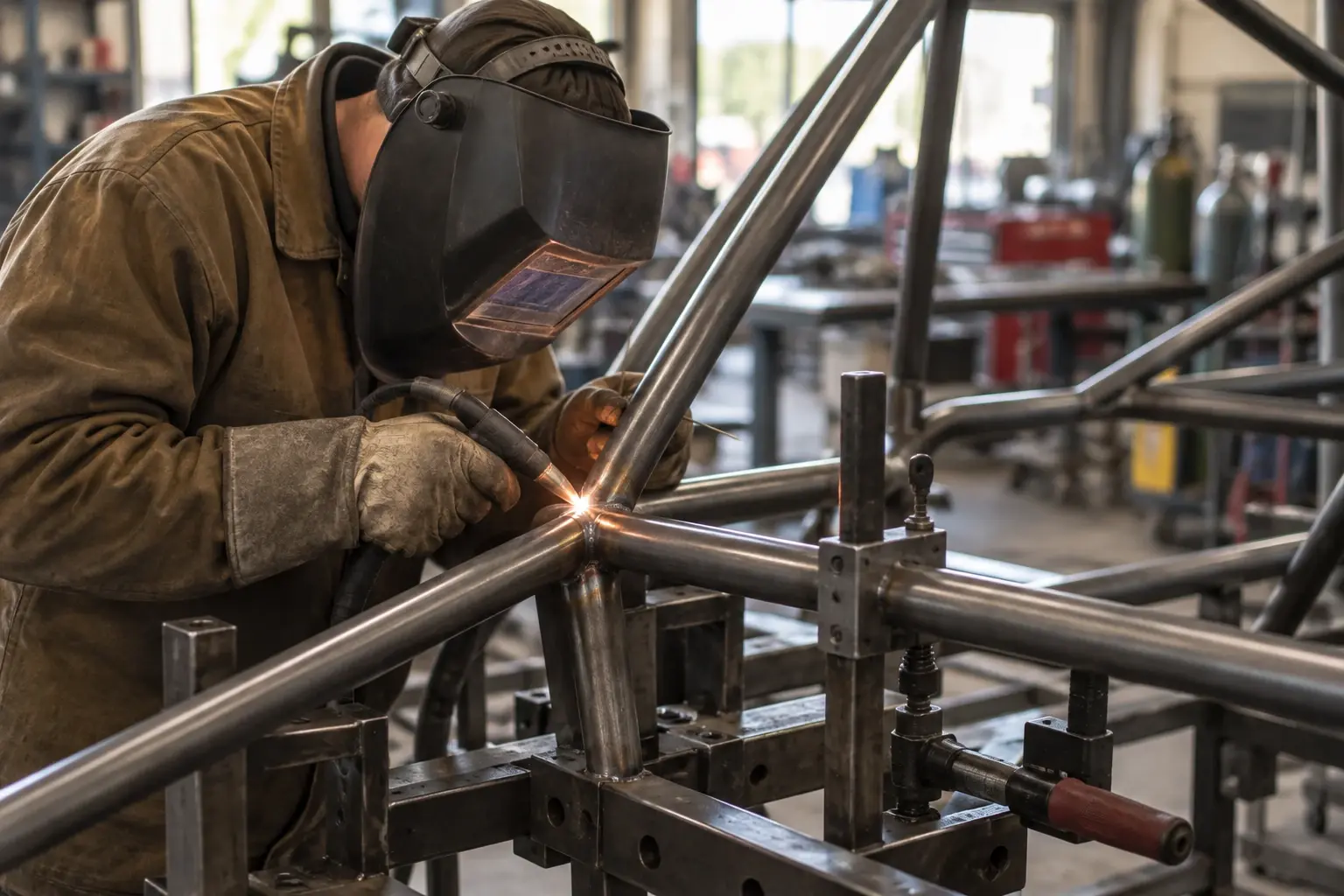
Machine frame tube fabrication is cutting steel or stainless tube into legs, rails, and cross members, then assembling them into a base that carries equipment. The tube parts need accurate lengths, end profiles, and hole patterns so mounting faces end up flat and in line. Accuracy at the cut sets the starting point for the whole frame.
OEMs build frames for production equipment, enclosures, test stands, and carts. The shapes differ, but the fit problem is the same: many small errors add up across a long frame.
Why does one datum matter on a tube frame?
One datum keeps errors from stacking. When every hole and slot is dimensioned from the same face, each feature carries its own small error only once. When dimensions chain from one feature to the next, the errors add up along the chain.
This is basic tolerance stack-up, and it is general engineering practice. It applies to any assembled frame, not only tube.
Pick the datum for the function, not the drawing
Choose the face that the machine bolts to, or the face that sets the frame on the floor. Dimension the critical holes from that face. Leave non-critical features with looser tolerances.
Mark the critical dimensions
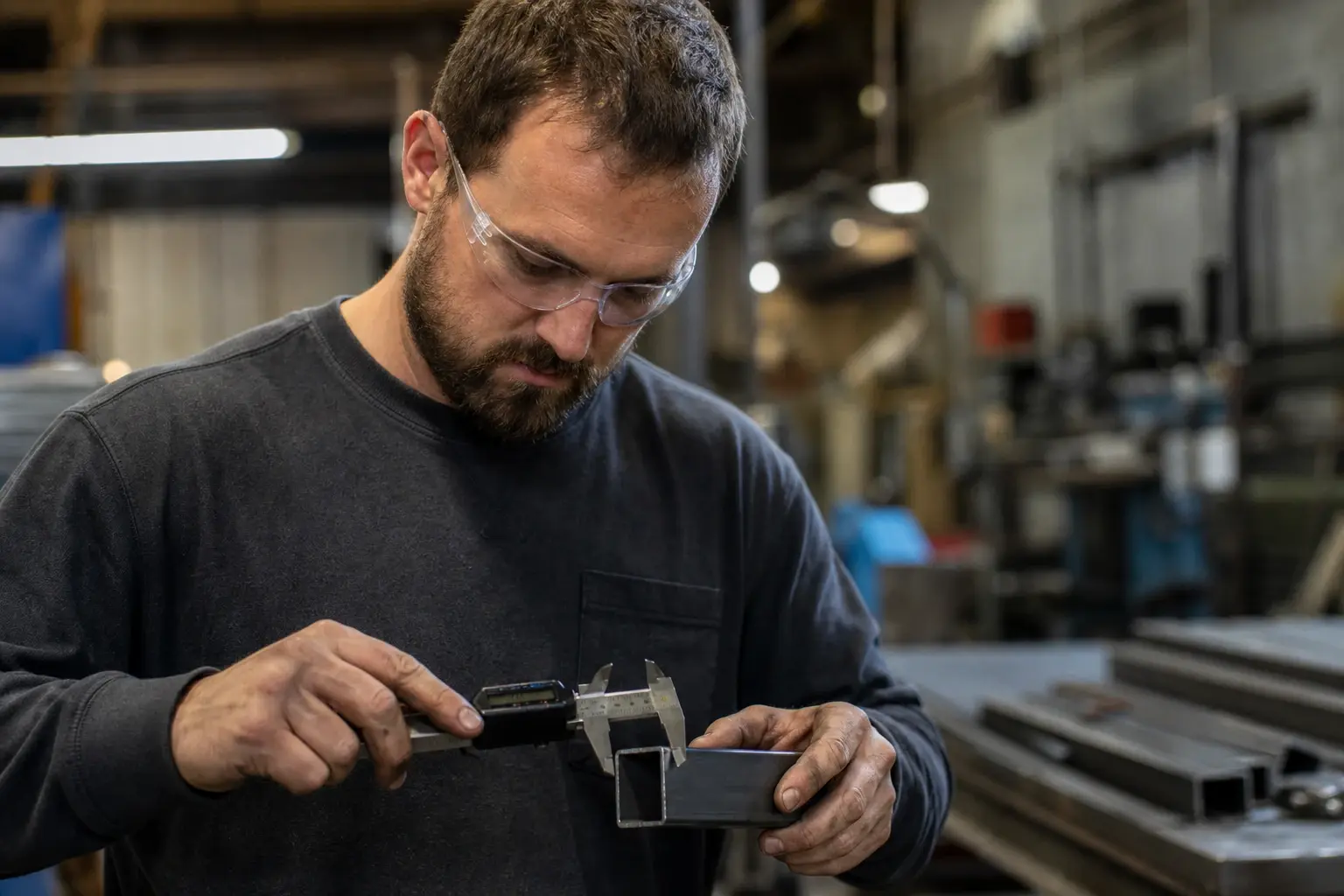
If every dimension is tight, the shop has no way to tell which ones matter. Mark the few that do. That helps the shop check what counts.
How does tube laser cutting help frame accuracy?
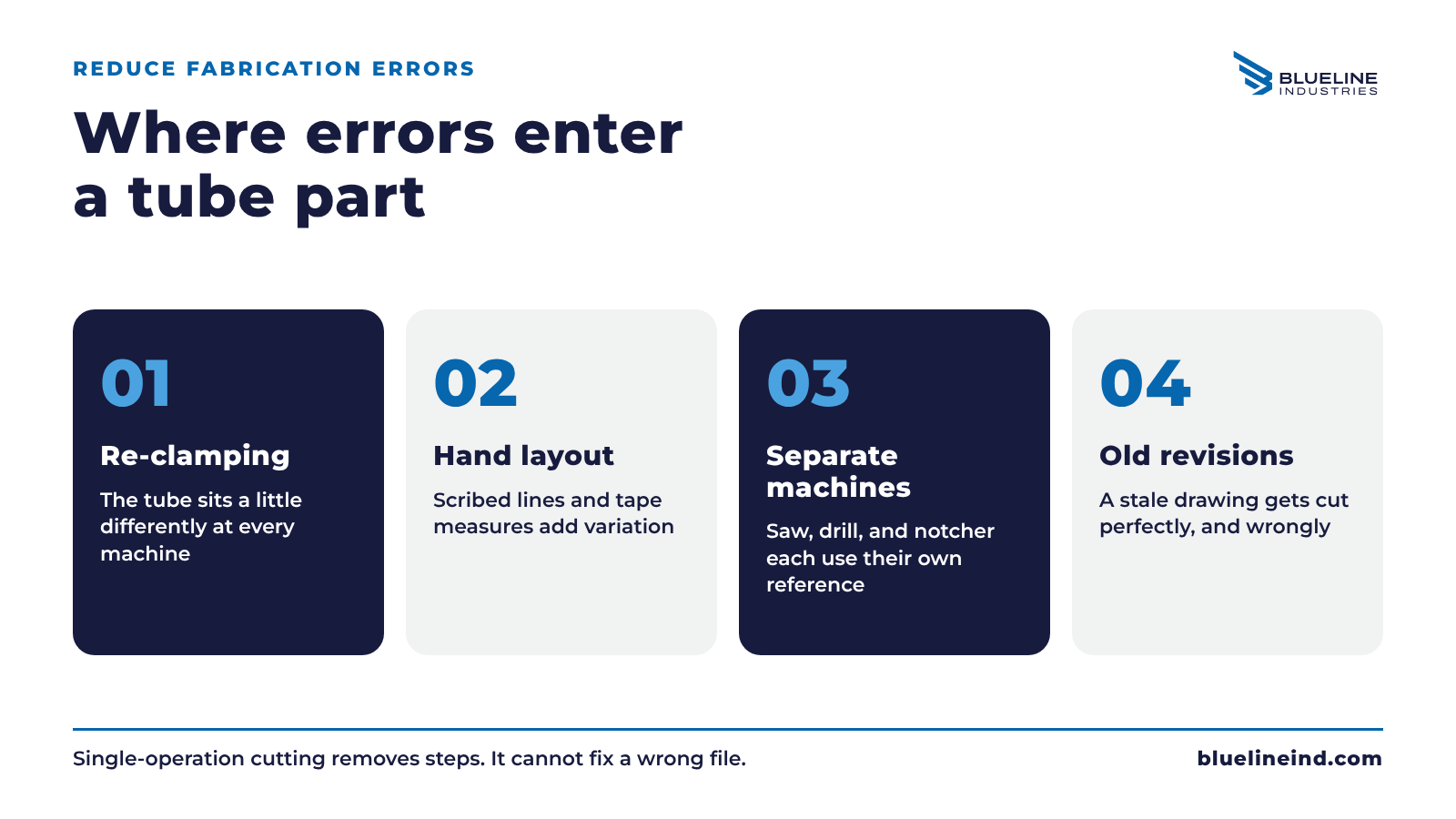
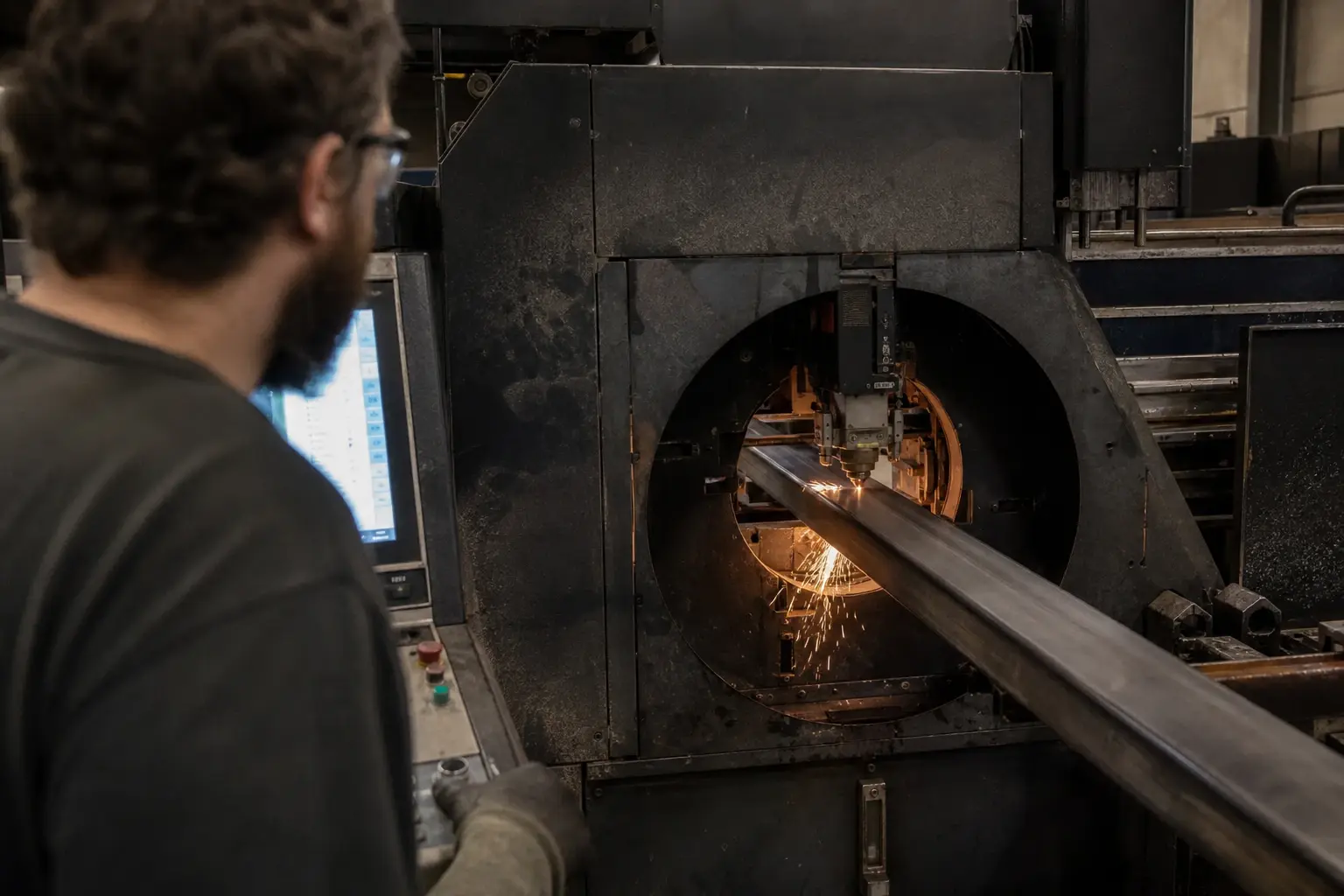
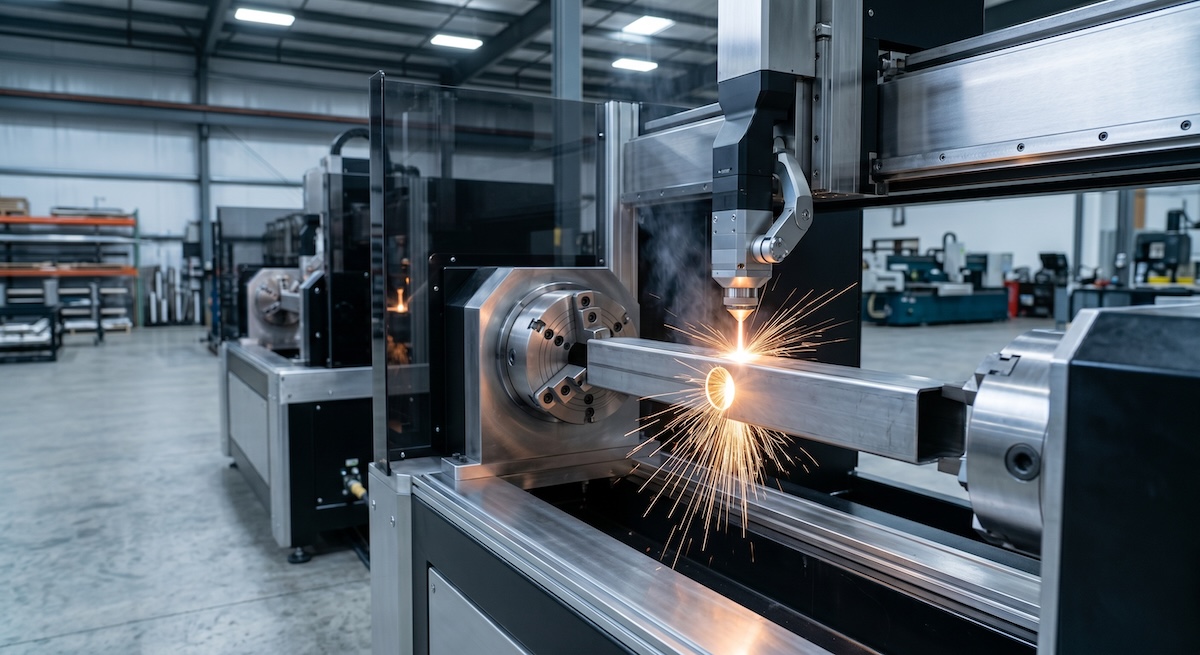
A tube laser cuts the length, end profile, holes, and slots from one clamped position. Because the features come from the same setup, their positions relate to each other directly. A saw-then-drill process sets each feature in a separate step.
Blueline states that its single-operation processing reduces error rates by up to 70%. According to Blueline, it also holds tolerances of plus or minus 0.003 inch. Both are company statements, so confirm them against your own part and drawing.
Equipment Blueline lists
Blueline lists LT7 tube lasers at 4kW, fully automatic, for tube up to 6 inches square or round. It also processes tube up to 13 inch diameter with 5-axis beveling capability. Check that your tube size falls inside those ranges.
Which frame features should a laser cut?
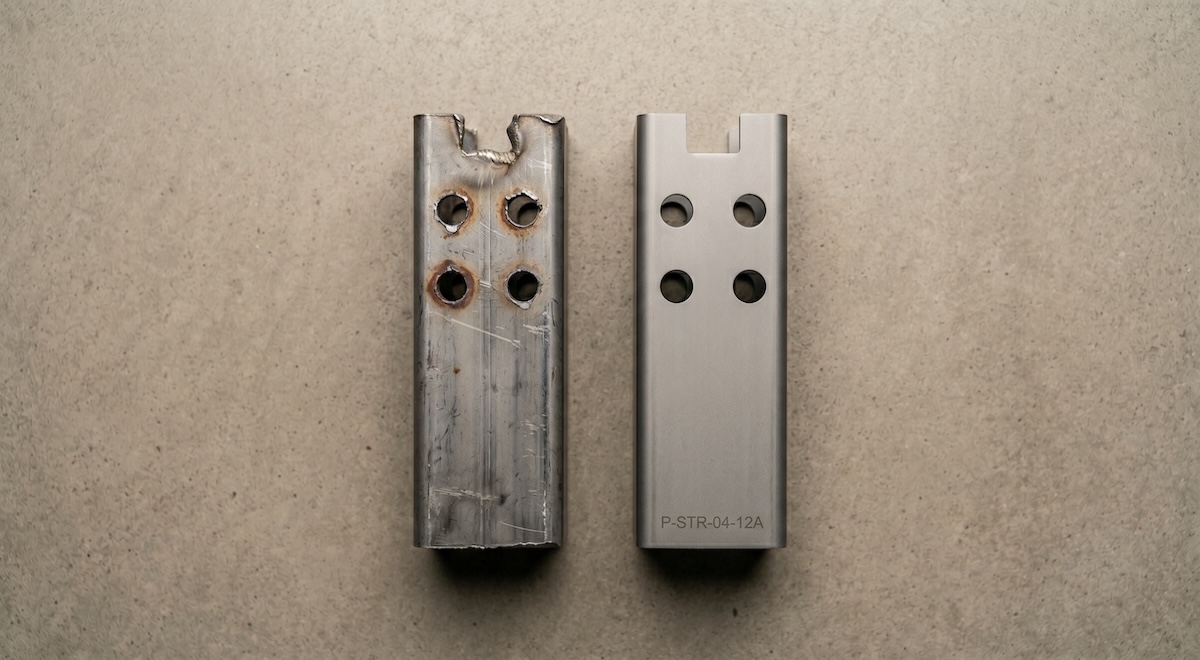
Cut the features that locate other parts: mounting holes, slots for brackets, notches for crossing members, and end profiles for joints. Features that locate parts benefit most from being made in the same operation as the tube cut. Features that only need to be roughly right can stay simple.
FeatureWhy cut it with the tubeWhat to sendMounting holesPosition relates to the same setup as the tube ends.Hole size and location from the datum face.Slots and tabsParts can locate each other before welding.Slot width and the mating part thickness.Notches and copesCrossing tubes meet without hand fitting.Tube sizes and the joint angle.Access holesWiring or fasteners reach inside the tube.Size and which face they sit on.End profilesJoint faces are ready for the next step.Angle, and whether a bevel is needed.
For more on features that locate each other, see laser cut tube assemblies for OEMs. For file-level choices, see design for tube laser cutting.
What mistakes break frame fit?
Most frame fit problems come from unclear drawings, not from the cut. The three most common are chained dimensions, missing mating-part data, and unmarked critical features. Each one forces the shop to guess.
Chained dimensions
If each hole is dimensioned from the last one, the shop cannot tell which face you care about. Re-dimension from the datum before you send files.
Hole sizes that ignore the finish
Paint or powder coat adds thickness inside a hole. If a bolt must pass after finishing, tell the shop the hardware size and the finish plan so the hole size can be reviewed.
No note on mating parts
A slot cut for a plate needs the plate thickness and the fit you want. Add the mating part to your note, or attach its drawing. That one line saves a round of emails.
What should you send for a frame quote?
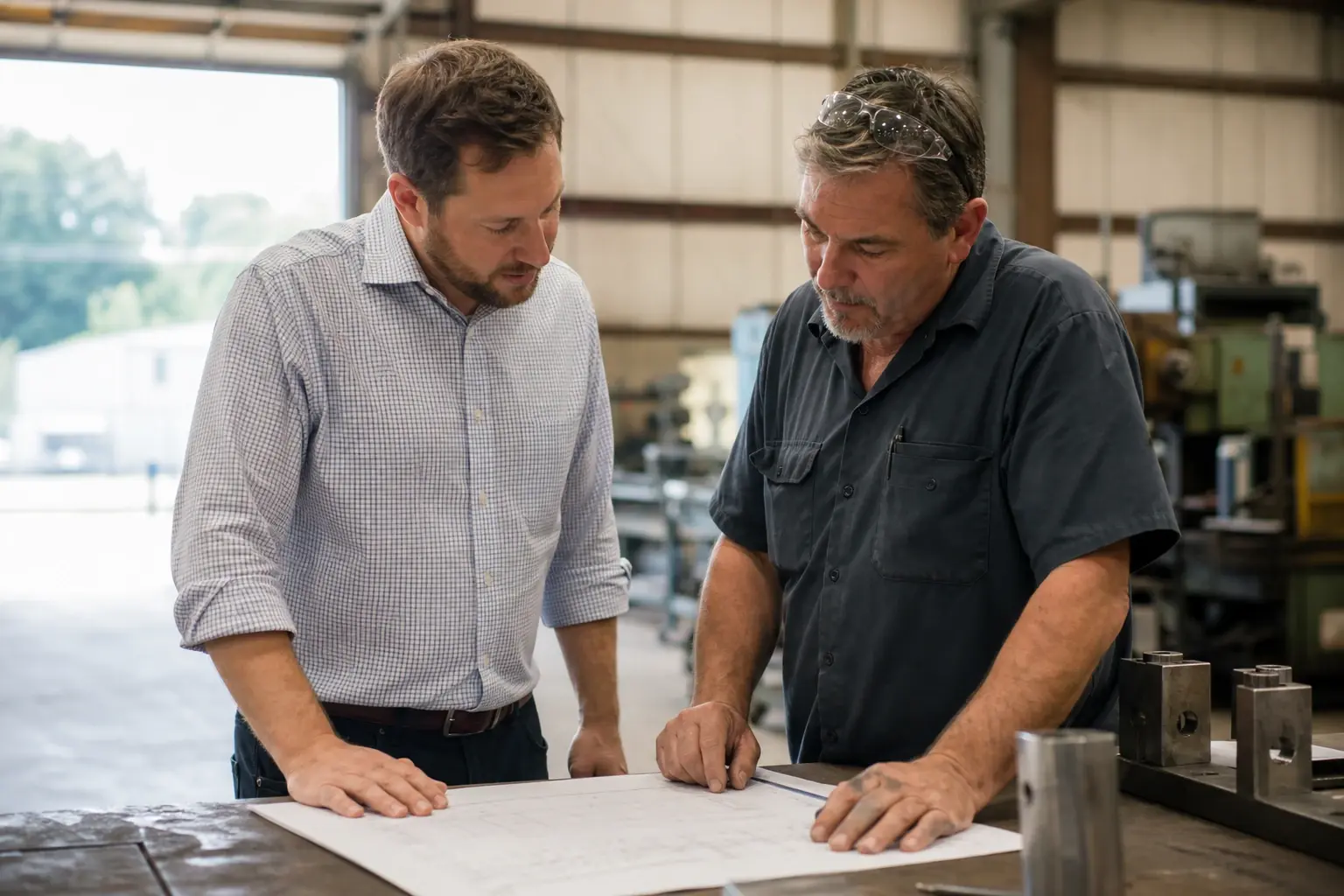
Send a 3D model or drawing, a parts list, the datum face, and the critical dimensions. Add the material, tube size, wall thickness, and quantity. Tell Blueline whether you need a prototype, a short run, or repeat production.
Here is a short checklist:
- Model or drawing with the datum face marked.
- Part list with tube size, wall, material, and quantity.
- Critical dimensions flagged, with tolerances.
- Mating parts or hardware that hole and slot sizes depend on.
- Finish plans, such as paint or powder coat, that may affect hole size.
- Required delivery date, so the shop can say what is realistic.
Blueline does not promise turnaround before it sees your files. Ask for a schedule with the quote.
Prototype first when the frame is new
A short prototype run proves the datum scheme before you commit to volume. Blueline offers custom tube prototyping and short run fabrication for that step.
Frequently asked questions
Does Blueline weld and assemble frames?
Blueline's listed services center on tube laser cutting, slotting, notching, hole cutting, press brake bending, and precision tube fabrication. Ask Blueline directly about any assembly you need.
What is tolerance stack-up?
Tolerance stack-up is the way small errors add together across several features or parts. Dimensioning from one datum limits how much each feature can drift.
Which tube shapes work for machine frames?
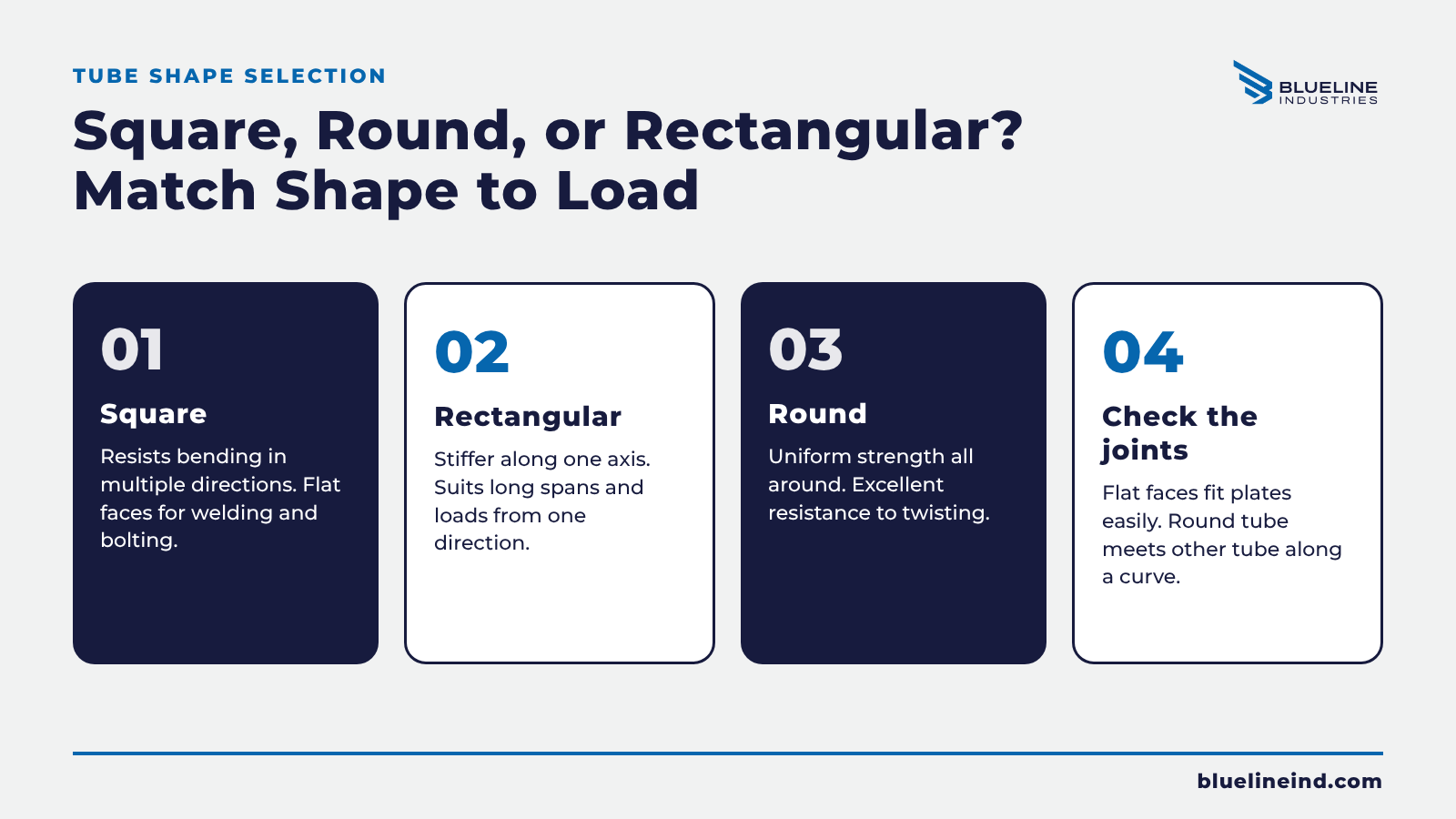
Square, rectangular, and round tube are all used. Your design load, mounting method, and welding plan decide which fits. See square vs round vs rectangular tube.
Can I order a single prototype frame?
Blueline lists prototyping and short run work among its core services. Send your model and quantity so Blueline can respond to your case.
Where does Blueline ship from?
Blueline operates one facility in Chino, CA. It ships to and serves buyers across the western US, including the cities on its service area page.
Next step
Send Blueline your frame model, mark the datum, and flag the critical dimensions. Learn more about tube laser cutting for manufacturing OEMs and precision tube fabrication.
Get a Quote at bluelineind.com/contact-us or call (951) 833-5597.