Quick Summary
- Volume work is won before the first cut. Freeze the file revision, the material spec and the inspection plan first.
- An approved first article gives the whole run a reference part to match.
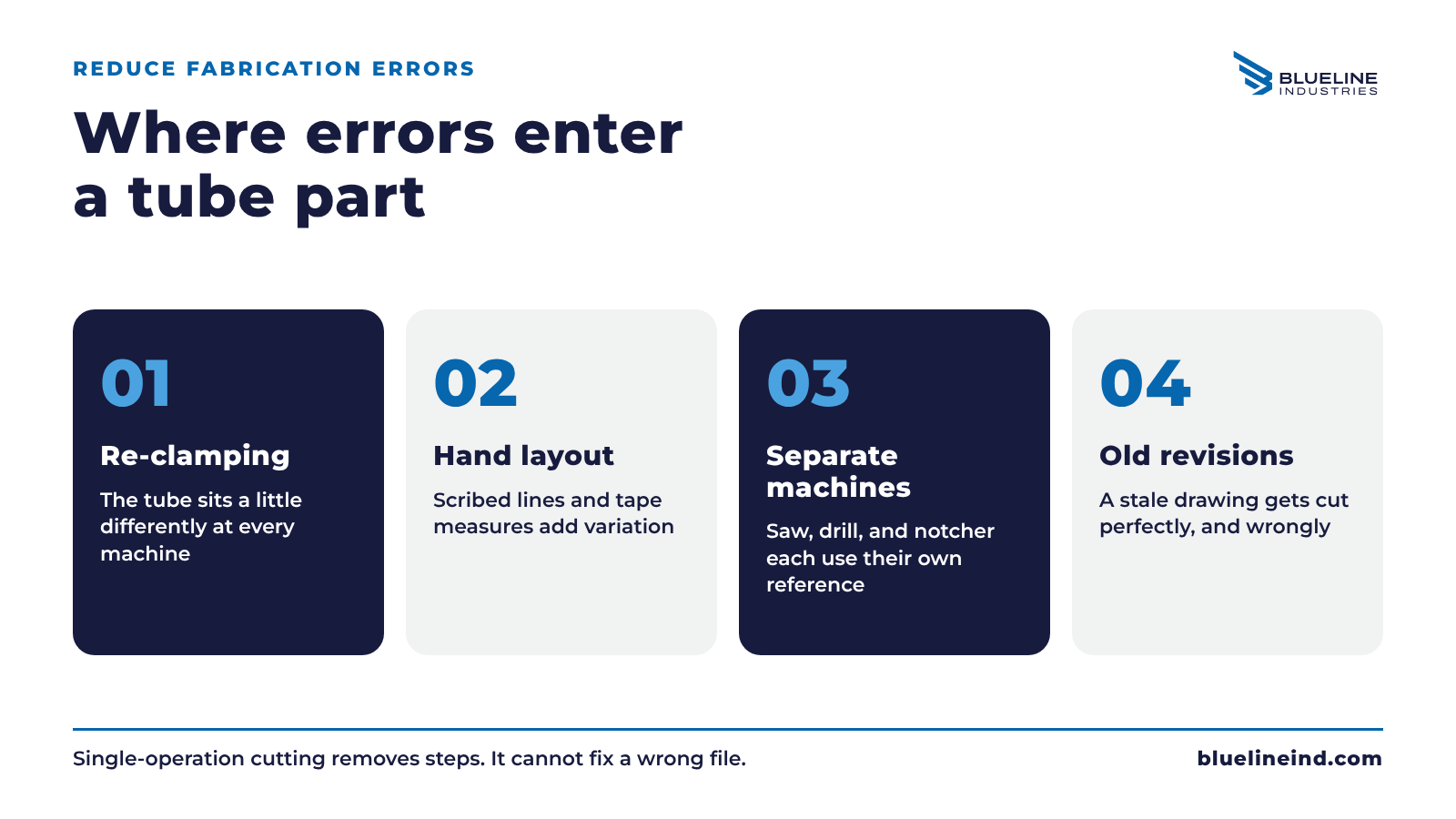
- Self-locating slots and tabs cut fixturing and handling, and fewer touches mean less variation.
- Share your forecast and release plan early so material and setup match the work.
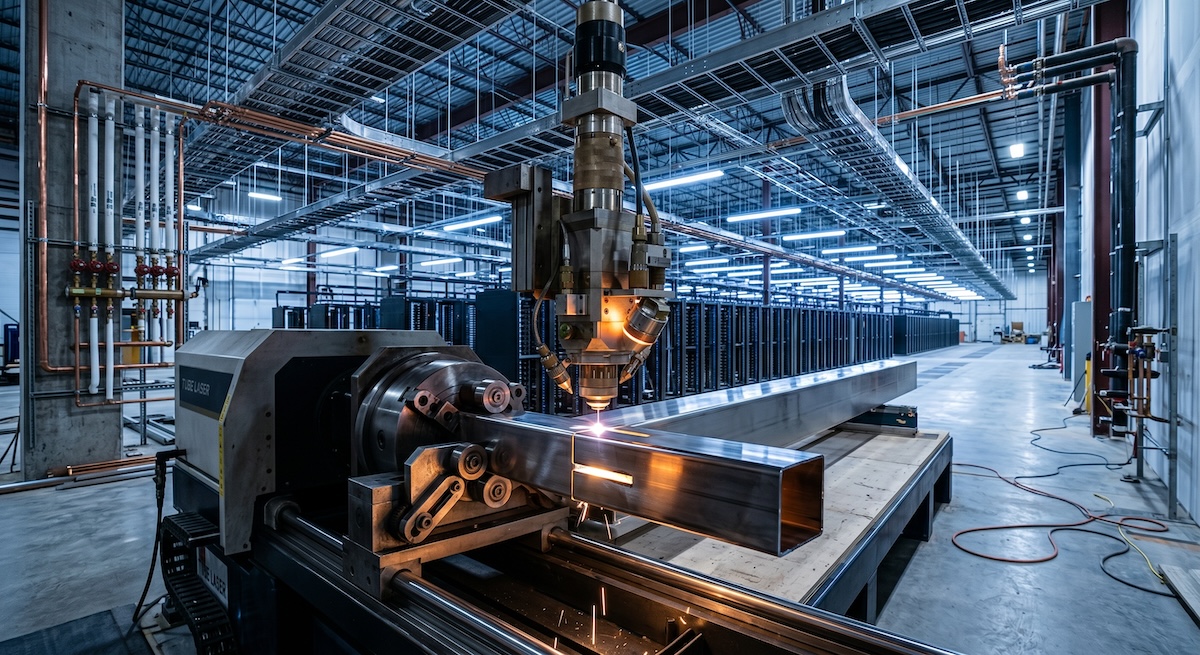
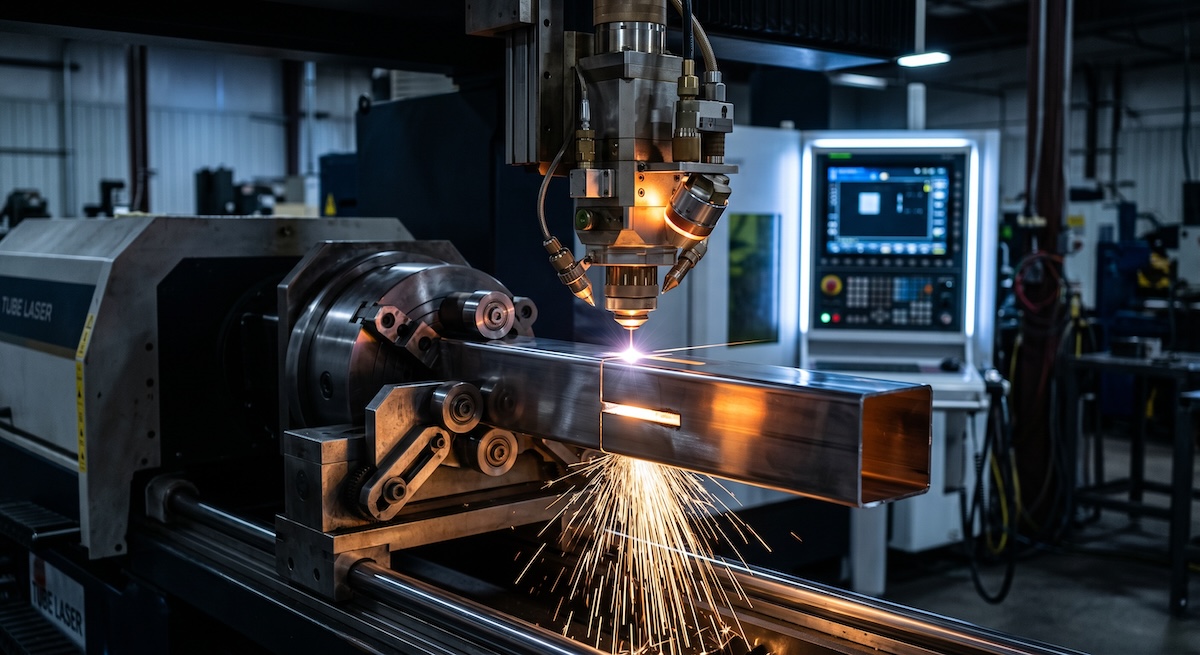
High volume tube fabrication stays consistent when the file, the material and the first approved part are locked before the run begins. Blueline Industries is a tube laser cutting and precision metal fabrication shop in Chino, CA. This post shows OEM buyers and manufacturing engineers how to set up a repeat tube run so the last part matches the first.
Volume changes the risk. One bad assumption on a prototype costs a few parts. The same assumption on a long run costs every part that follows it.

What makes high volume tube fabrication different from prototype work?
Prototype work asks whether a design works. High volume tube fabrication asks whether the same part can be made the same way every time. That shifts attention from design freedom to repeatability: a frozen revision, a defined material, a proven cut program, and a short list of inspection checks that never change.
On a prototype, engineers expect changes. They tweak a slot, move a hole, swap a wall thickness. That is healthy, and a shop that offers custom tube prototyping and short run fabrication expects it.
Once the design moves to production, the goal flips. Every change now needs a revision, a date and a decision about parts already cut. The cleanest runs are the ones where the change stops before release.
How do you keep every part identical across a long run?
Lock four things before release: the drawing and CAD revision, the material specification, the cut program and the inspection checks. Approve a first article against the drawing, then run to that reference. When any of the four changes, treat it as a new revision and say so in writing.
Here is how those four locks work in practice.
Freeze the revision
Send one file set and name the revision on every drawing. If two versions of a model are floating around, the shop cannot know which one is current. Retire old files in writing when a new revision is issued.
Define the material
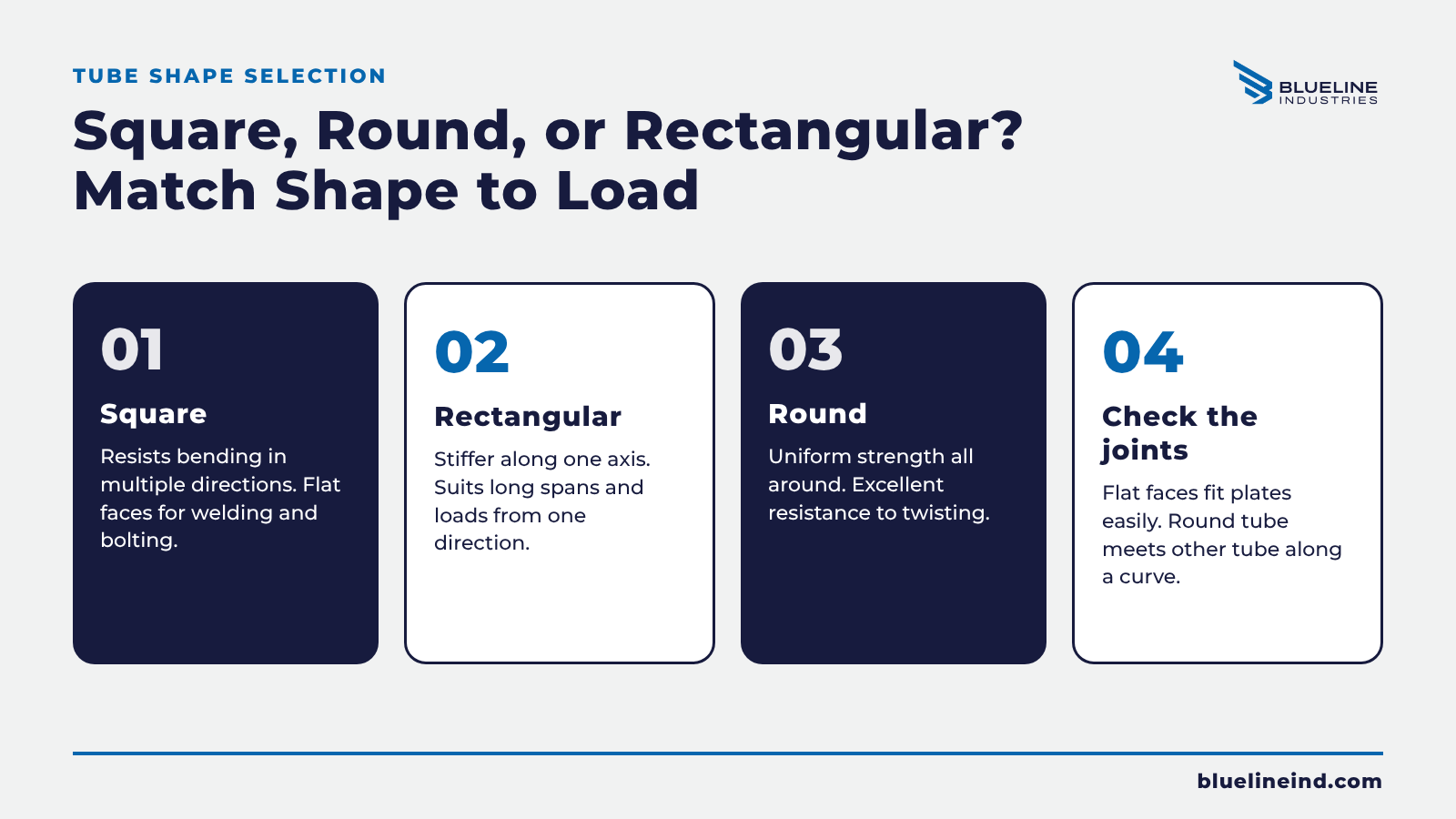
Say what tube you need: shape, size, wall, grade and finish. Tube is not all alike, and welded and seamless products behave differently when cut. Our guide to ERW, DOM and seamless tube explains what to specify.
Approve a first article
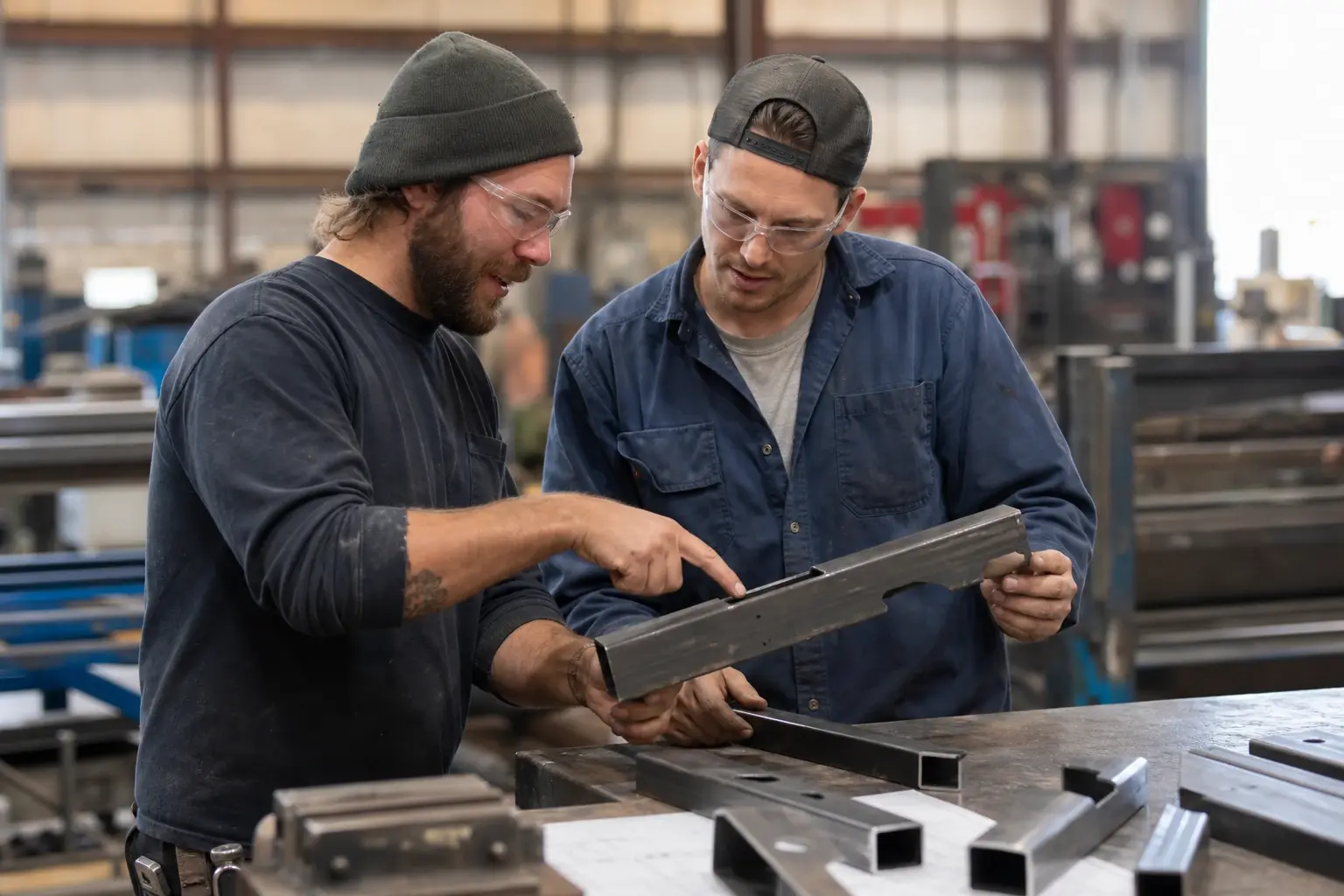
A first article is the first part cut to the final program, measured against the drawing. Approve it before the run is released. See First Article Tube Parts: Approve a Run Before Release for the full checklist.
Agree on inspection checks
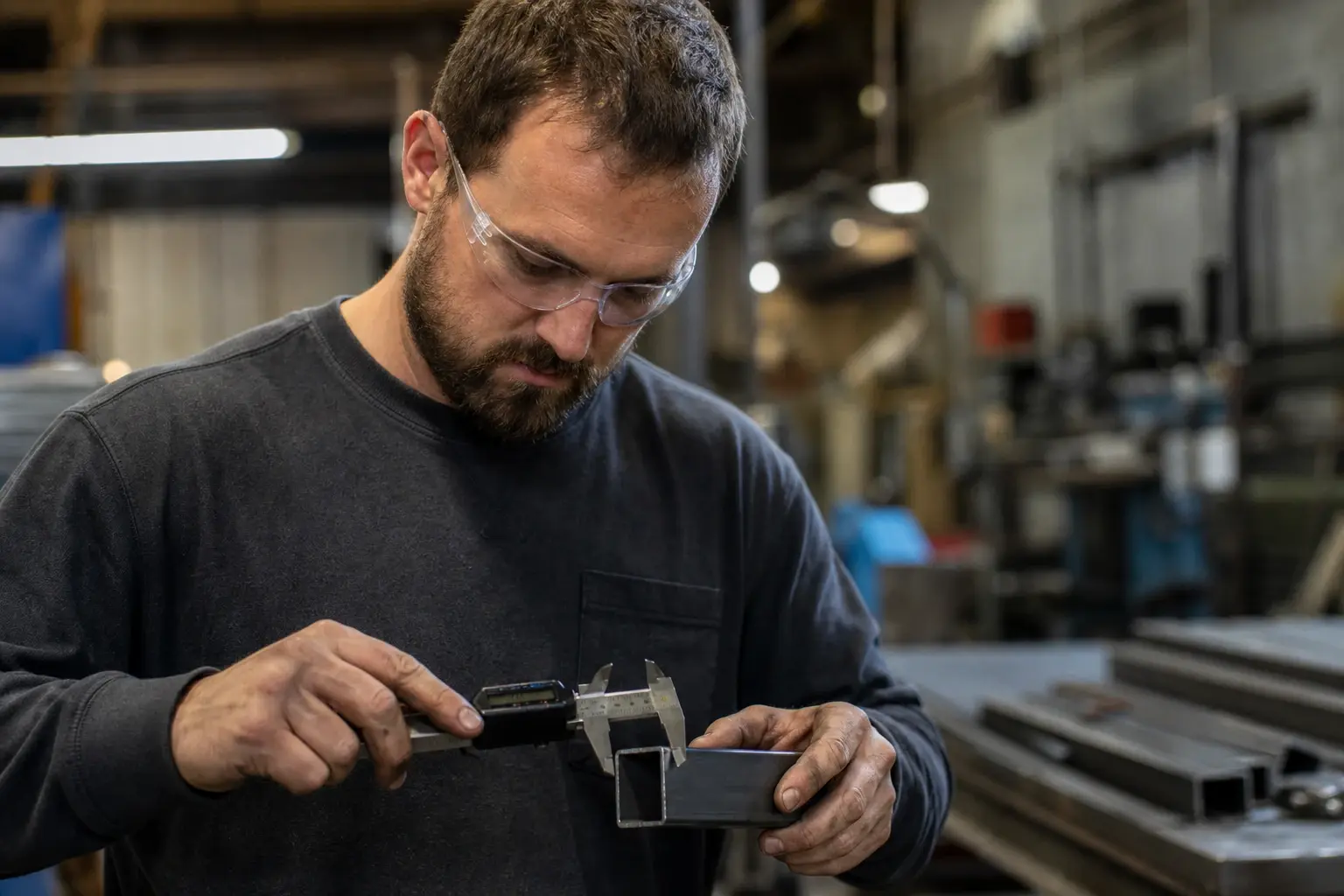
Pick the few dimensions that decide fit and function, and check those the same way every time. A long list of checks that nobody has time for is worse than five that happen on schedule.
Which design choices cut touches per part?
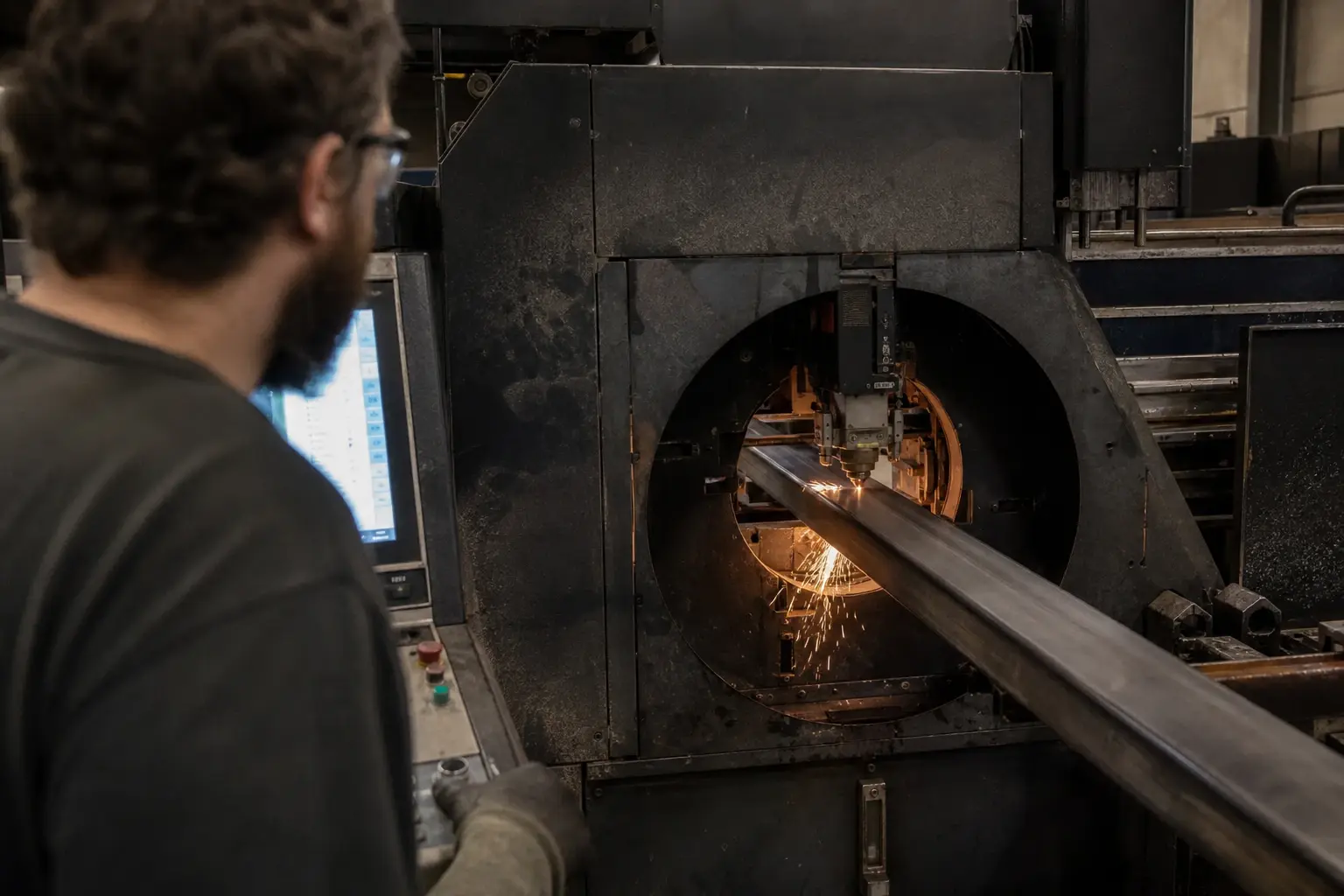
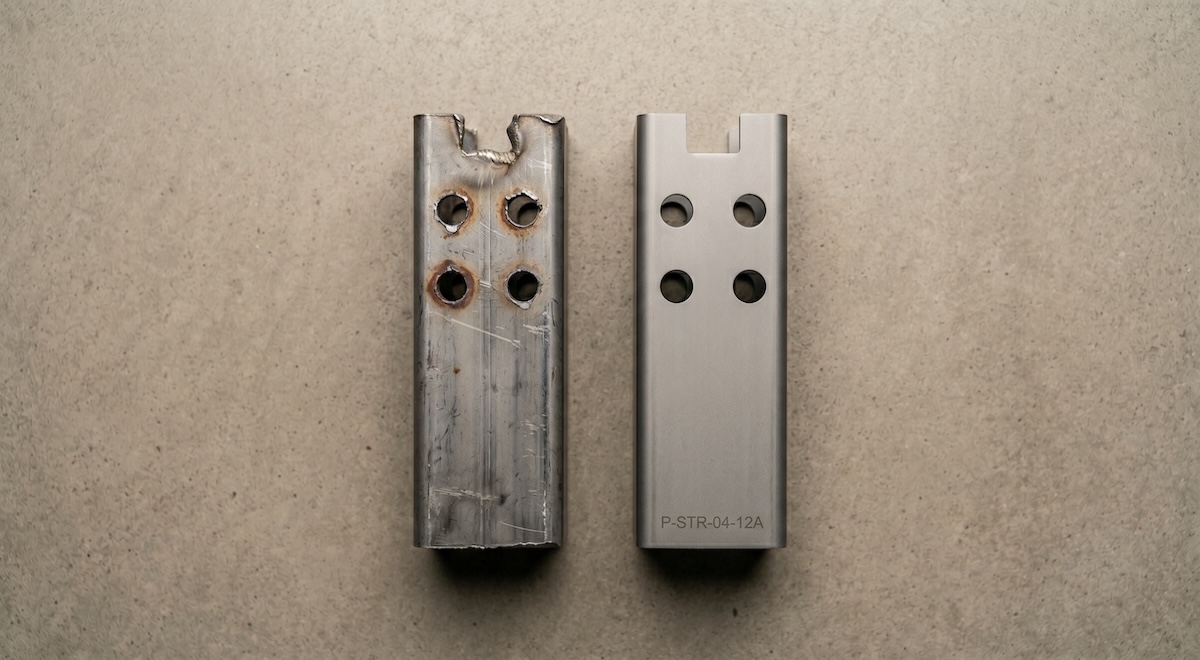
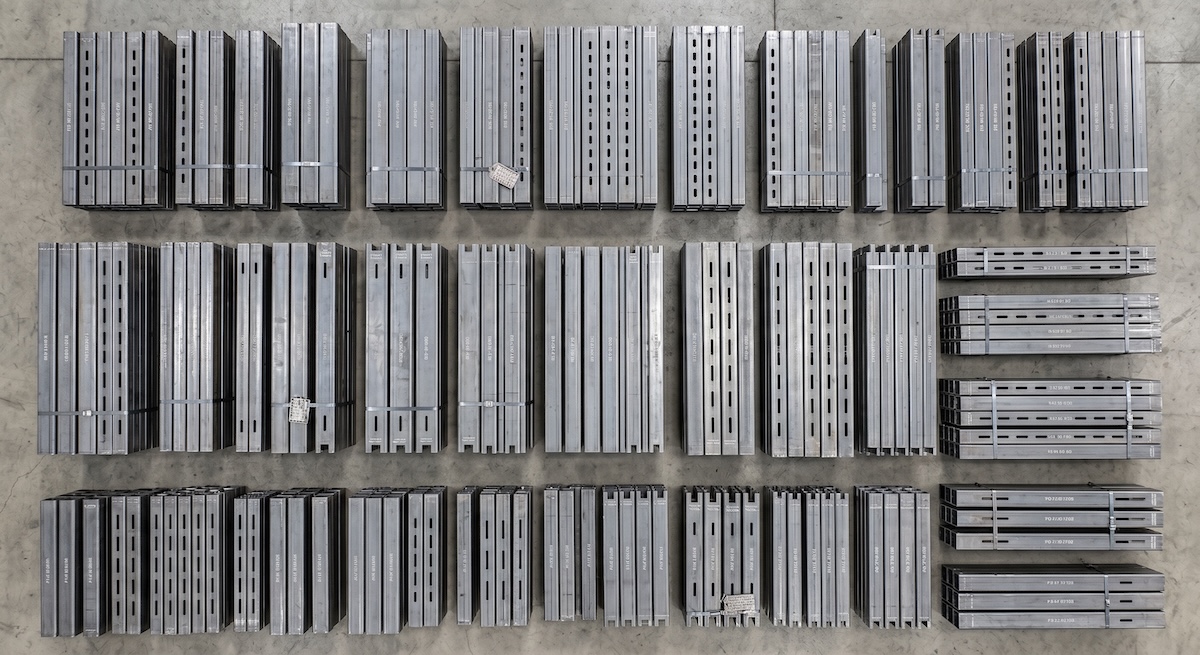
Choices that let parts locate themselves and combine features cut touches the most. Self-locating hook and slot joints reduce fixturing. Cutting several features in one pass avoids extra setups. Each touch removed is one fewer place for variation to enter, which matters most when you repeat the part thousands of times.
The Fabricator's Tube and Pipe Journal has long made the same point. An article on designing for laser cutting says you can reduce or eliminate fixturing costs with self-fixturing hook-and-slot designs. It also notes that better accuracy from laser cutting helps eliminate joint fit-up problems. The piece is from 2007, and its author is affiliated with a laser equipment vendor, but the logic holds up on a shop floor.
Blueline's process follows the same idea. According to Blueline, single-operation processing removes multiple machining steps and reduces error rates by up to 70%. Blueline also states tolerances of plus or minus 0.003 inch. Confirm any tolerance against your own drawing and part, since results depend on material, geometry and setup.
The table below compares a stepwise process with single-operation processing for a repeat part.
FactorSaw, drill and notch in separate stepsSingle-operation tube laserHandlingPart moves between stationsPart is cut and finished in one setupFixturingEach step needs its ownSelf-locating features can replace someVariation sourcesEvery setup adds oneFewer setups to driftChange controlUpdate several programs or toolsUpdate one program
For more on how joint features affect repeat builds, read Laser Cut Tube Assemblies for OEMs: Parts That Self-Locate.
How should an OEM plan releases and material for repeat runs?
Share your forecast, your release schedule and your material needs as early as you can. A shop that knows what is coming can plan tube stock, programs and machine time around it. Releases that arrive without warning force trade-offs that hurt consistency.
Blueline does not promise lead times in a blog post, because they depend on the part, the material and the schedule. What a buyer can control is the quality of the information.
What to send with a repeat-run request
- The current drawing and CAD files, each marked with a revision.
- Tube shape, size, wall, grade and finish.
- Expected quantity per release and how often releases will come.
- The dimensions that decide fit and function.
- Any finish or coating that follows cutting, such as galvanizing or paint.
If a repeat part also needs bending, the same discipline applies to press brake work. Blueline runs ProBend all-electric press brakes alongside its tube lasers, so cutting and bending can be planned together.
What does volume look like on a real Blueline job?
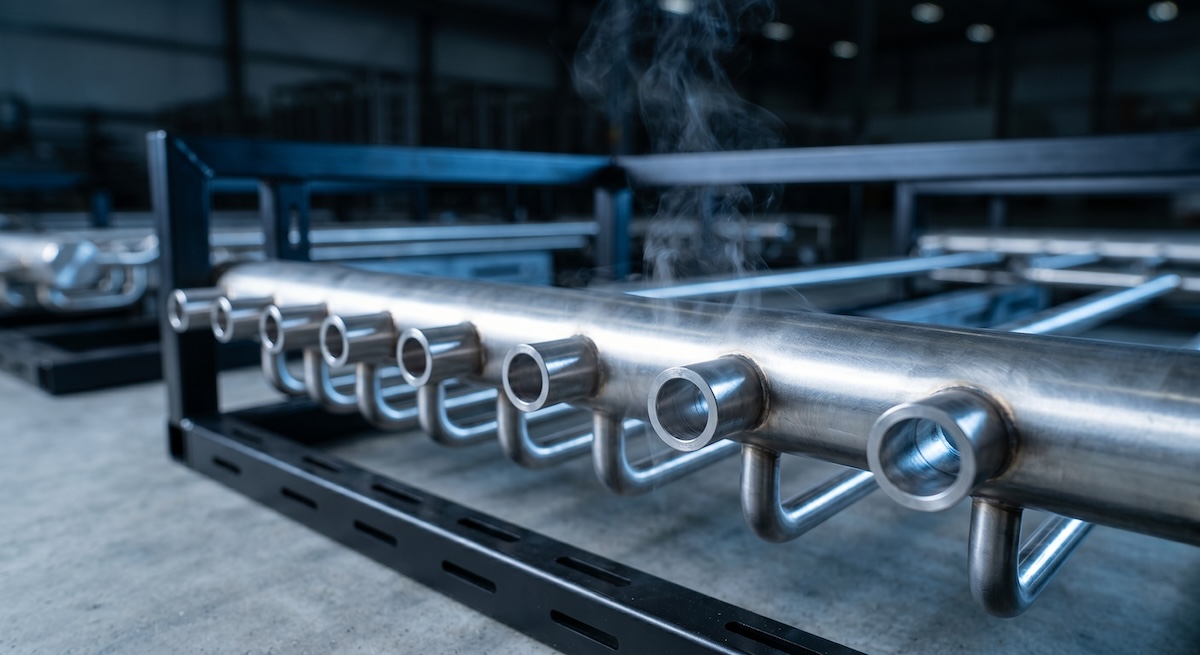
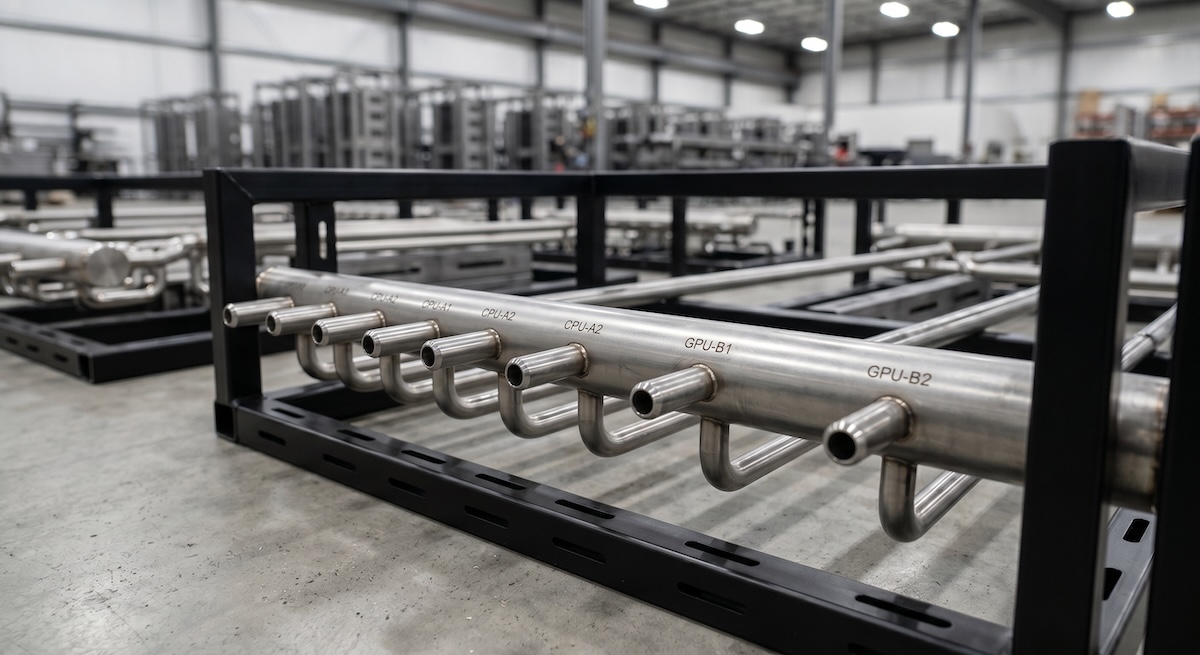
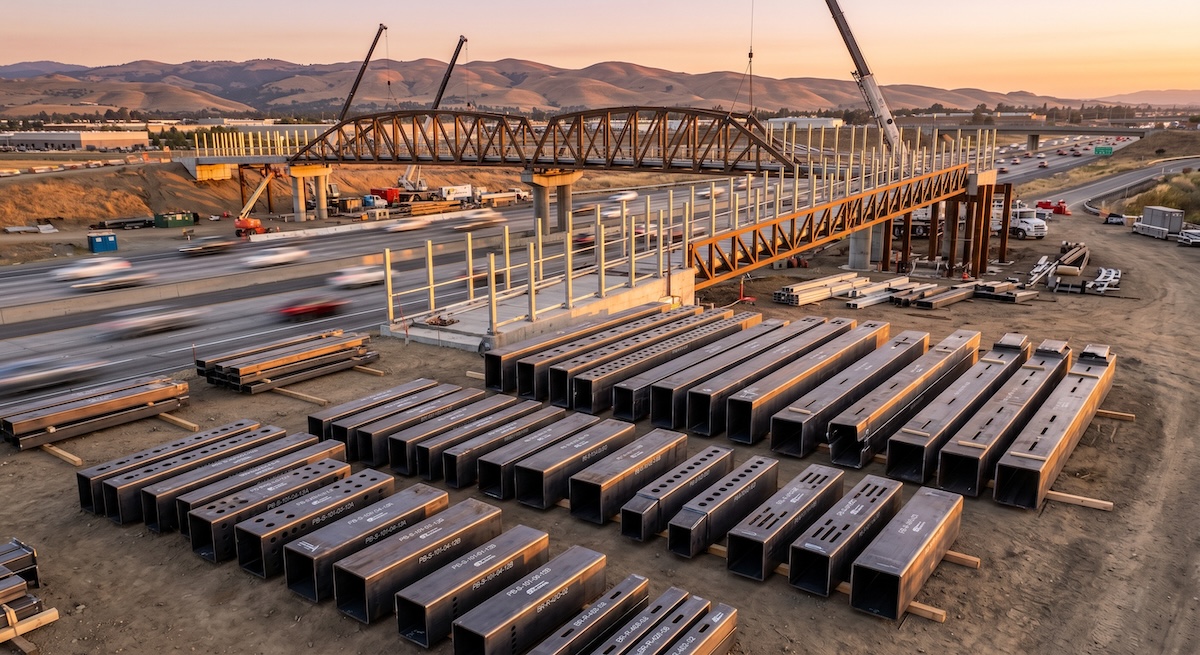
Blueline has handled large volumes of steel. A 2025 AI data center cooling project in Sacramento involved 16 truckloads of stainless steel. Coachella's Sahara Stage in 2025 involved more than 1 million pounds of steel. Volume at that scale is where early process decisions pay off or cost you.
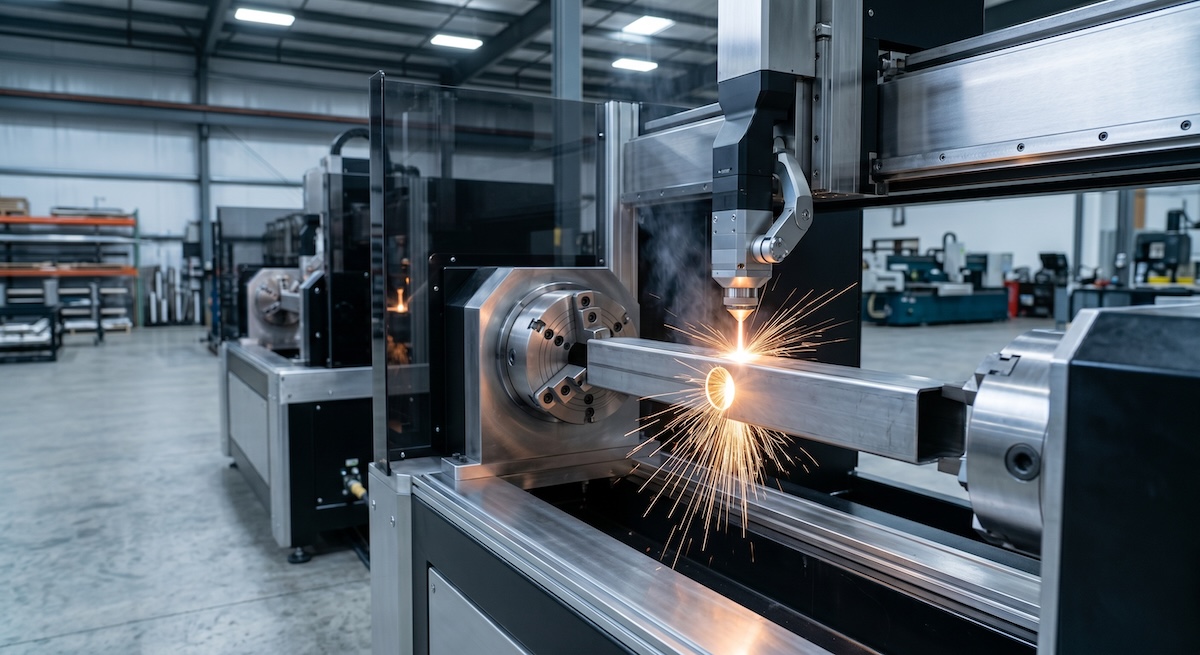
These examples show scale, not a specific repeat part, so do not read them as a promise for your part. What carries over is the approach: set the process early and hold it steady. Blueline's tube lasers support that approach. The LT7 machines are fully automatic, with a 4kW source, and handle tube up to 6 inch square or round.
For work beyond that size, Blueline states that it processes tube up to 13 inch diameter with 5-axis beveling capability. Check the range against your part before you commit to a design.
FAQ: High volume tube fabrication
How many parts count as high volume?
There is no fixed number. High volume means the part repeats enough that small variation adds up and process control matters more than design flexibility. A run of a few hundred and a run of several thousand both qualify when every part must match.
Can a short-run design move to volume without changes?
Sometimes. Most designs benefit from a review before release. Look for features that need extra setups, slots that depend on hand fitting, and tolerances that are tighter than the function needs. Fix those first, then approve a new first article.
Do tolerances stay the same on a long run?
They can, if the file, material and program stay locked. Blueline states tolerances of plus or minus 0.003 inch. Raw tube varies from piece to piece, so confirm the tolerance on your part and agree on how it will be checked.
Does single-operation cutting really reduce errors?
According to Blueline, single-operation processing reduces error rates by up to 70%. The logic is simple: fewer setups and fewer handoffs leave fewer places for an error to enter. Your actual result depends on the part.
What should I send to get a quote on a repeat run?
Send drawings and CAD files with revisions, tube specs, quantities per release, release timing and the dimensions that matter most. A complete package lets the shop quote the work you actually need.
Repeat tube work rewards planning. Lock the revision, define the material, approve a first article and agree on a short list of checks. Then the thousandth part has a fair chance of matching the first.
Ready to talk about a repeat run? Get a Quote or call Blueline Industries at (951) 833-5597. Learn more about tube laser cutting for manufacturing OEMs and our precision tube fabrication services.