Quick Summary
- Table bases go together faster when joints, holes and tabs are cut into the tube in one pass.
- Pick the tube profile first, because it decides how the legs meet the rails.
- Miter, butt and cope joints each leave a different seam to weld and finish.
- Cut every base in a run from one file so legs and rails match across the set.

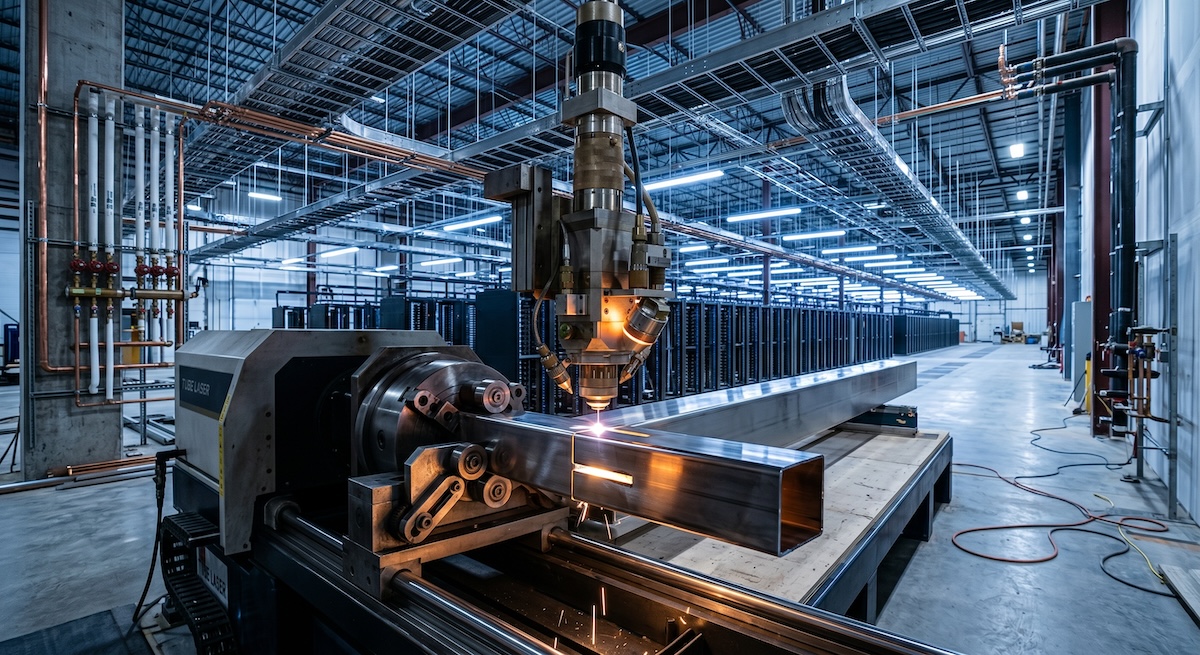
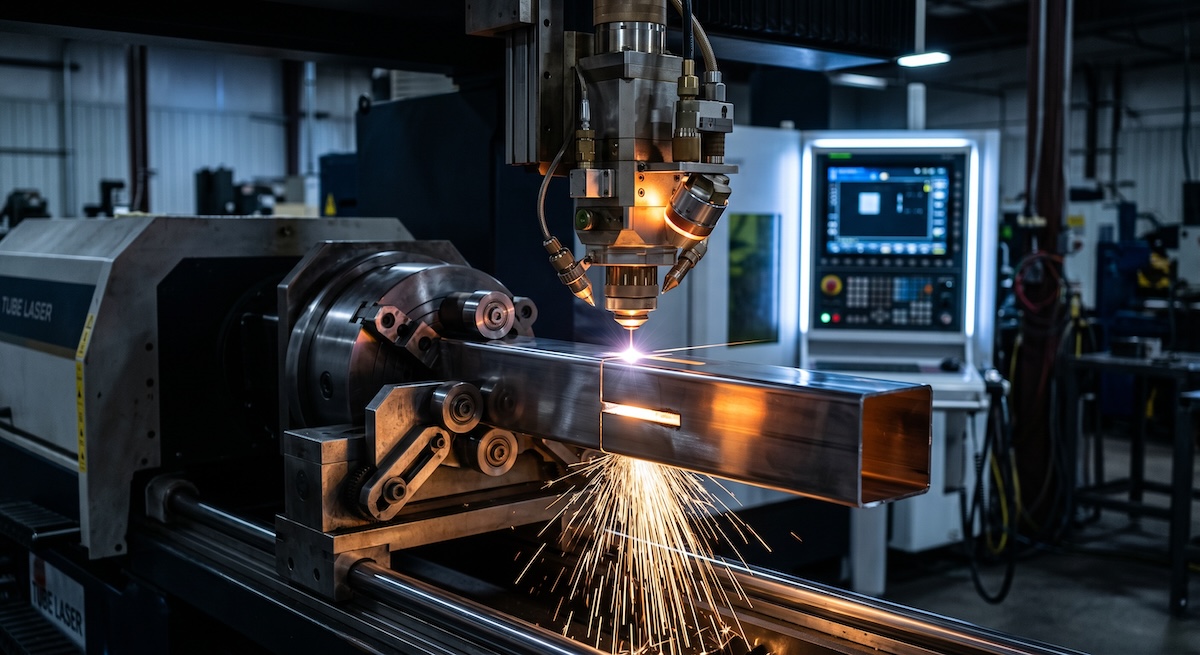
Metal table base fabrication goes faster when the leg joints, hardware holes and rail lengths all come from one cut file. Blueline Industries is a tube laser cutting shop in Chino, CA, and we cut square, round and rectangular tube so table bases arrive ready to weld and finish.
A table base looks simple. Four legs, a few rails, maybe a foot plate. But each joint has to sit square, and every base in a run has to match the last one.
This post covers the choices that matter before you send a file. It is written for furniture makers and OEM buyers who want fewer surprises at assembly. For the bigger picture, see our guide to tube laser cutting services.
What tube profile works best for a metal table base?
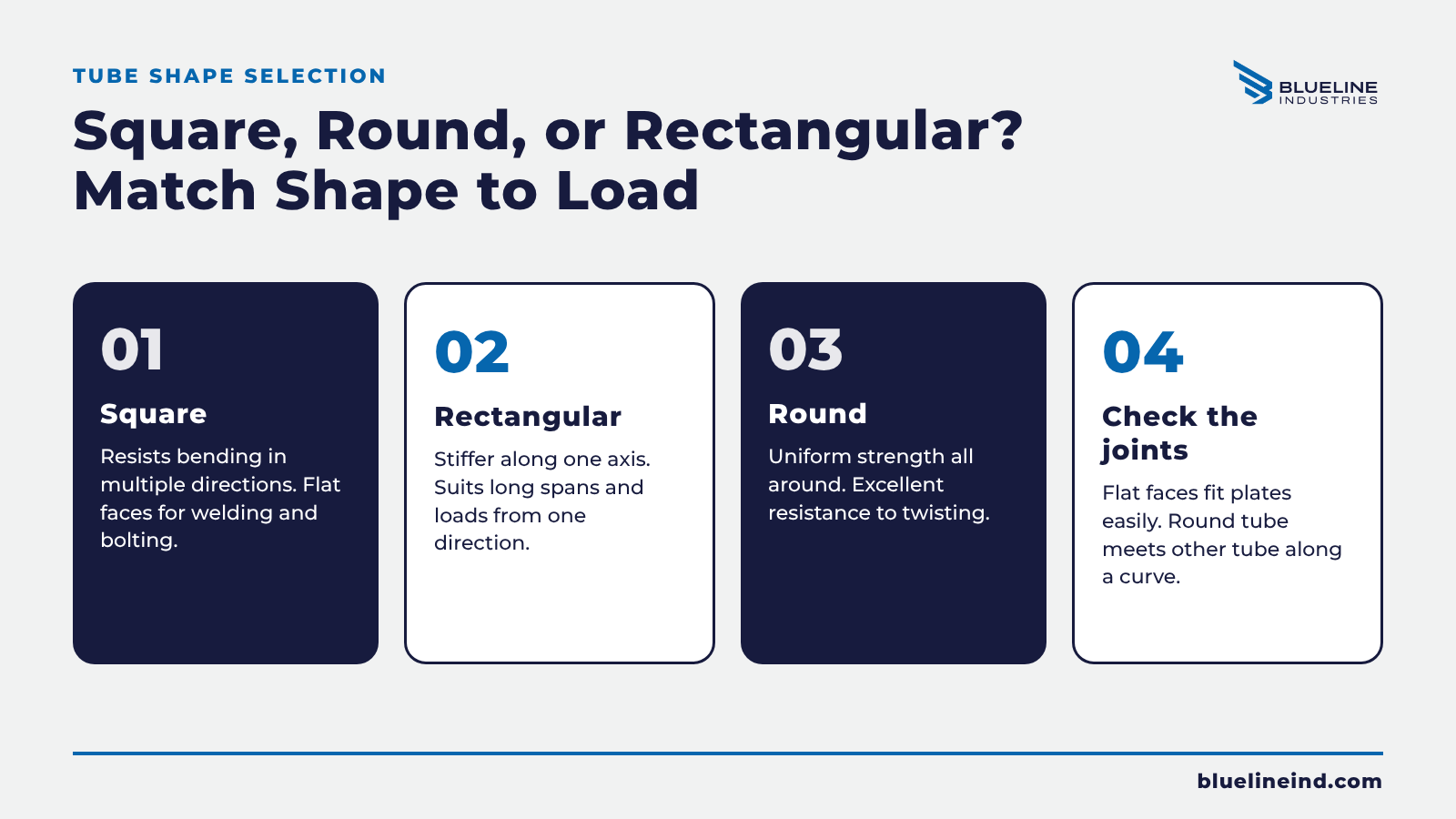
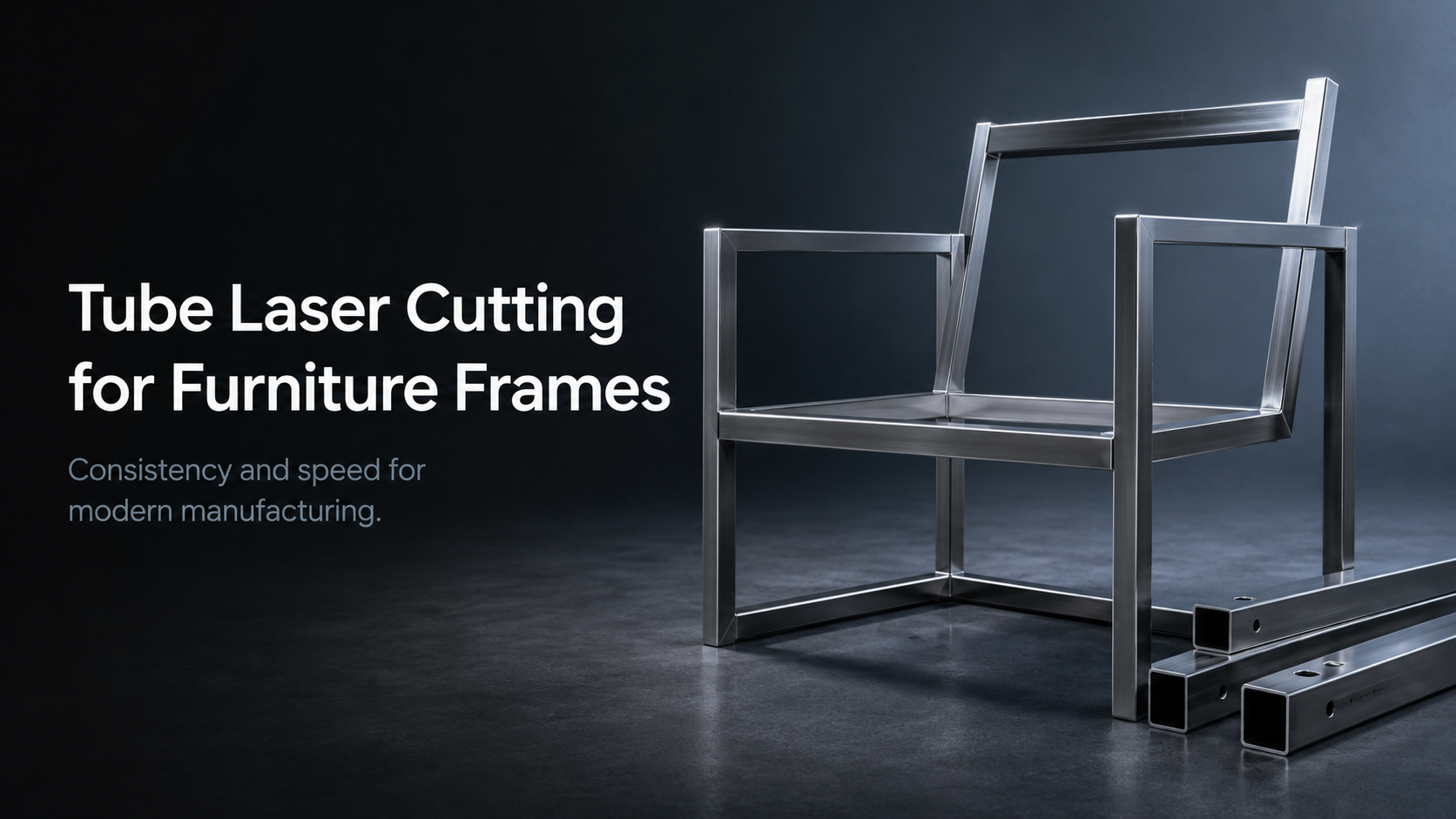
Square and rectangular tube suit modern, flat-faced bases and give a clear surface for joints. Round tube suits softer designs but needs curved cuts where it meets another tube. Pick the profile from the look you want, then let the joint follow.
Profile also changes how a base is held during welding. Flat faces rest on a fixture without much help. Round tube usually needs a cradle or a locating tab.
Think about the floor too. A table base meets the floor at four points, so foot plates or leveling hardware matter as much as the tube itself. A design that sits flat on a shop floor can still rock on a tile one if the legs differ by a hair.
Wall thickness and size
Wall thickness affects weight, stiffness and how a joint fits. Call it out in decimal inches on the drawing, not only by gauge. We explain why in our post on tube wall thickness vs gauge.
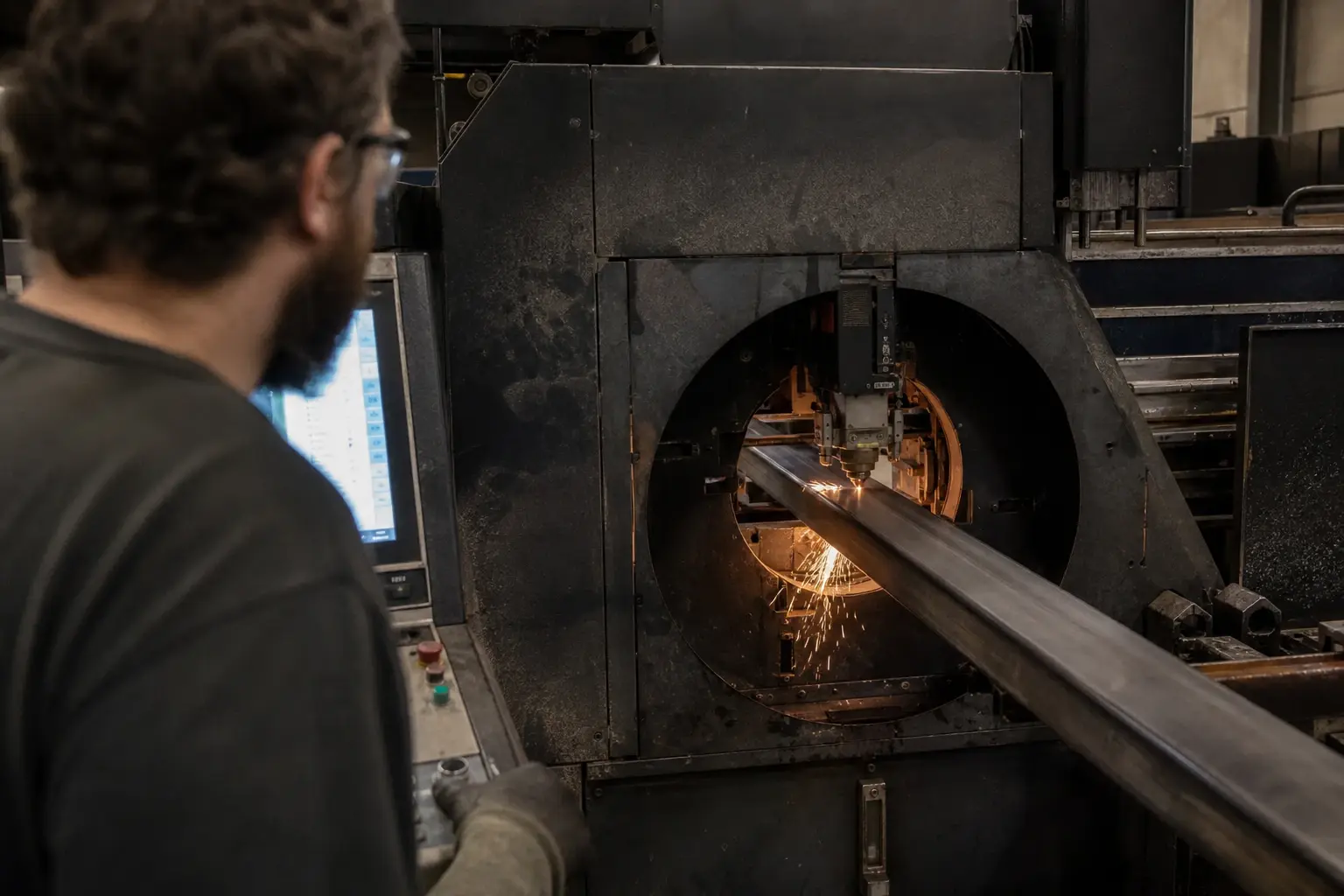
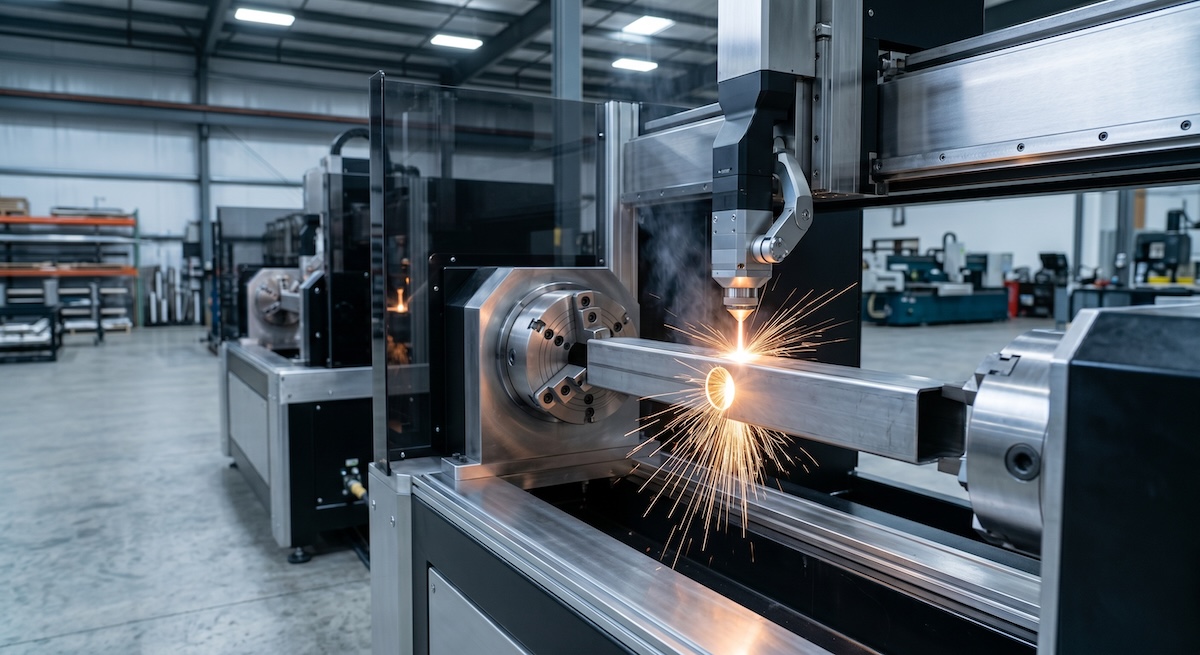
Blueline states that its LT7 tube lasers handle tube up to 6 inches square or round, fully automatic. Most table legs sit well inside that range.
How do you join table legs to rails?
Most table bases use a miter, a butt joint or a cope. A miter cuts both tubes at an angle so they meet at a corner. A butt joint ends one tube square against the face of another. A cope shapes the end of one tube to wrap around the other.
The right choice depends on what the customer sees. An exposed corner needs a clean seam. A hidden joint can be simpler.
| Joint | What it looks like | What to plan for |
|---|---|---|
| Miter | Clean corner, seam runs diagonally | Angle must be exact on both tubes or the corner opens up |
| Butt | One tube ends flat against another | Visible end face, so plan an end cap or a hidden location |
| Cope | End shaped to wrap a round or square tube | Best fit for round tube; needs a precise cut profile |
We cover the cope and notch side in more detail in Tube Notching and Coping: Joints That Fit Off the Machine.
Which hardware features can be cut into the tube?
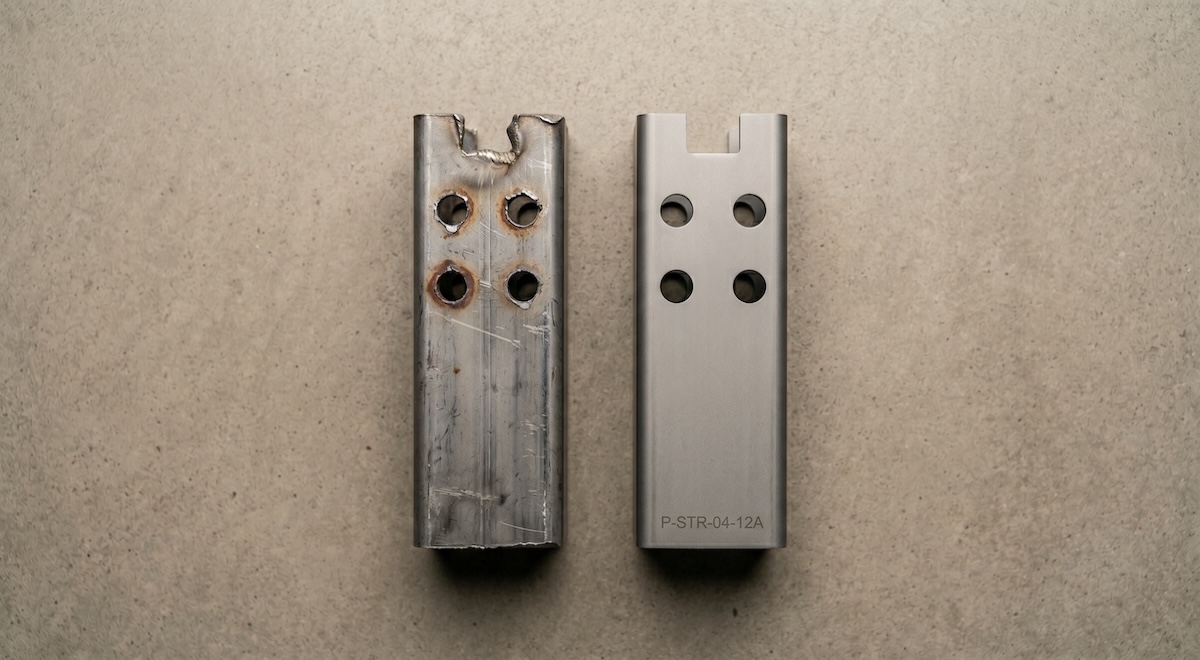
A tube laser can cut holes, slots and tabs into the tube in the same pass as the length cut. That includes holes for leveling feet or glides, slots for top brackets, and tabs that locate one tube against another.
Cutting these features early removes later steps. It also keeps hole positions tied to the same file as the lengths. Our precision slotting, notching and hole cutting service is built for exactly this.
Rails and cross braces deserve the same attention. A long table needs stiffness between the legs, and that usually means a rail or an under-brace. Slots and tabs let those parts self-locate, so the welder is clamping a fit instead of measuring one.
What to decide before you send the file
- Which hardware you plan to use, and the hole size it needs.
- Where the top mounts, and whether brackets need slots or holes.
- Whether tabs should locate rails for welding.
- Which faces will be visible, so seams land out of sight.
If an insert or fastener has a strict fit, tell us at quote time. We can then flag any cut that needs a second look.
How do you keep a set of bases matching?
Cut every base in the run from one file, and hold one set of tube stock. When legs and rails come from the same file, lengths and joint angles repeat. The weld shop then builds the tenth base the same way as the first.
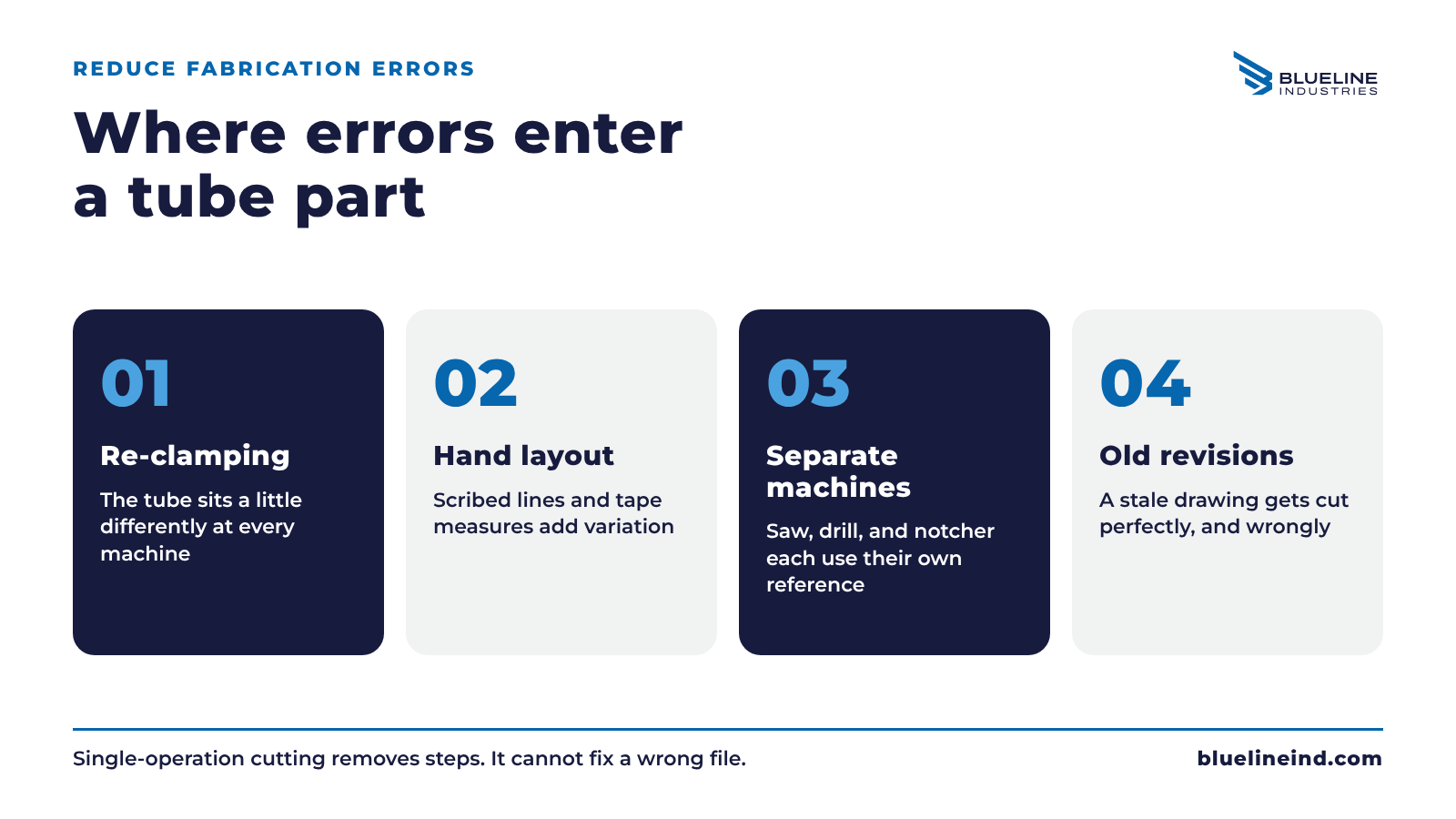
Blueline states that single-operation processing reduces error rates by up to 70%. The reason is simple: fewer handoffs between cutting, drilling and coping means fewer places for a mistake. Blueline also states tolerances of plus or minus 0.003 inch.
For a deeper look at repeat runs, read Furniture Tube Laser Cutting: Build Frames That Repeat. For finish planning, see Metal Furniture Frame Fabrication: Plan the Finish First.
Common mistakes that cost time
- Drawing a perfect corner but not a weld gap, so parts bind at assembly.
- Leaving hardware holes for a later step instead of adding them to the cut file.
- Changing leg length on one drawing but not on the cut list.
- Mixing two tube suppliers in one run, which can change wall and corner shape.
Each of these is easy to fix on paper and expensive to fix on a weld table. A short review before cutting catches most of them.
How should you start a new table base program?
Start with a small prototype run. Check fit, leg height, joint seams and hardware holes on real parts, then lock the file and scale. Our custom tube prototyping and short-run fabrication service supports this path.
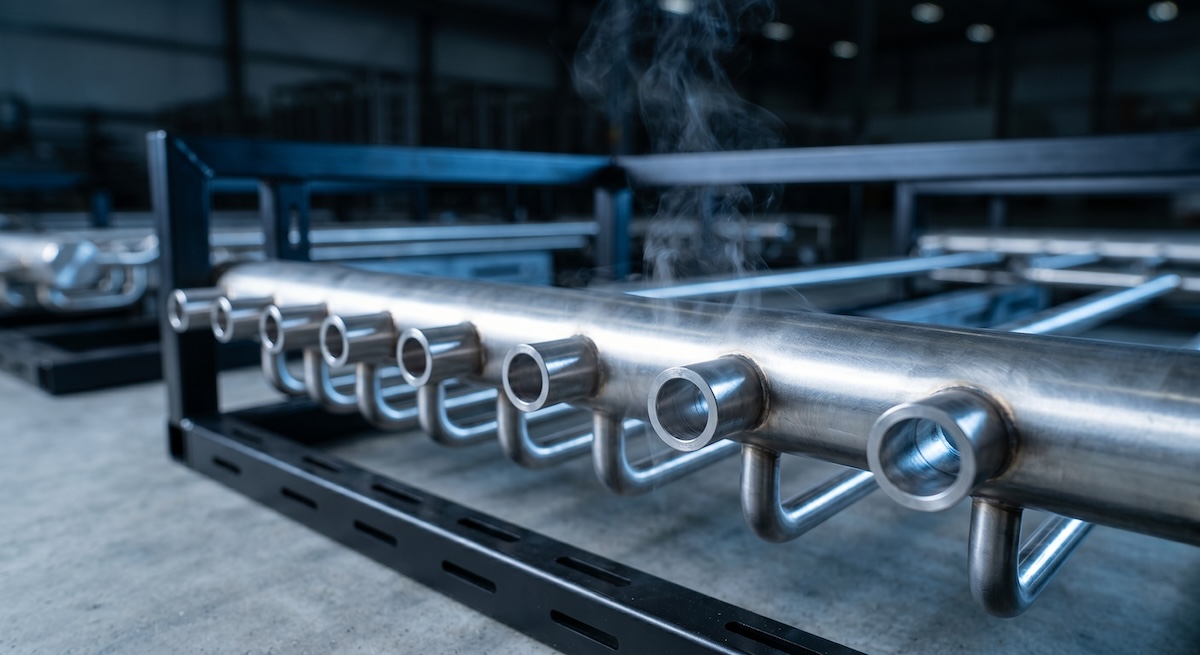
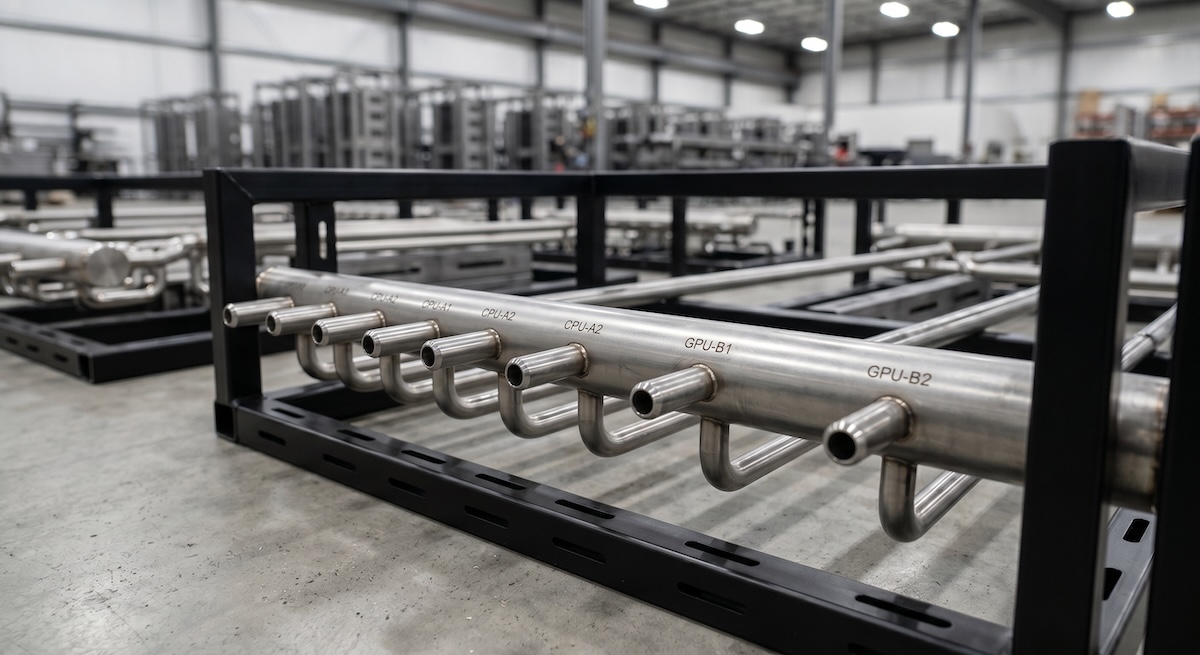
Scale is not a concern for Blueline. In 2025 the shop processed 16 truckloads of stainless steel for an AI data center cooling project in Sacramento. A table base order is smaller, but it benefits from the same discipline: one file, one setup, repeatable parts.
FAQ
What tube shapes work for a metal table base?
Square, round and rectangular tube all work. Square and rectangular give flat faces for joints. Round gives a softer look but needs cope cuts where tubes meet.
Can the laser cut holes for leveling feet?
Yes, holes and slots can be cut into the tube during the same pass as the length cut. Tell us the hardware and hole size you need when you request a quote.
Does Blueline weld and finish table bases?
This post covers the cutting side. Ask about welding, bending and finishing steps when you request a quote, and we will tell you what we handle on your job.
Can I order a prototype base before a full run?
Yes. Blueline offers custom tube prototyping and short-run fabrication, so you can check fit before you commit to volume.
What should I send with my request?
Send your CAD file, tube shape and size, wall thickness in decimal inches, material, and the quantity you expect. The more complete the file, the faster a quote moves.
Next step
A good table base starts with a good cut file. Blueline Industries cuts tube in Chino, CA, and ships to customers across the West. Send your drawing and we will tell you what to adjust before the first cut.
Get a Quote: send your cut file and tube specs through our contact page or call (951) 833-5597.