Quick Summary
- A miter cuts a tube end at an angle so two tubes meet at a corner. A cope shapes one tube end to wrap around the face of another tube.
- Use a miter for corners. Use a cope for tee and branch joints.
- Gap at the joint drives weld quality. A published AISC-based limit is up to 1/16 inch as detailed and up to 1/8 inch for fit-up.
- Send a solid model and a joint angle list so cuts match the weld plan.

Miter and cope cuts in structural tube solve different joint problems. A miter joins two tubes at a corner angle. A cope shapes one tube end so it sits against the side of another tube. Blueline Industries is a tube laser cutting shop in Chino, CA, and we cut both so fabricators and steel erectors get tube ends that fit before welding starts.
Choosing the wrong cut costs time on the shop floor. This post explains when to use each one and what to check before you send a file.
What is the difference between a miter cut and a cope cut?
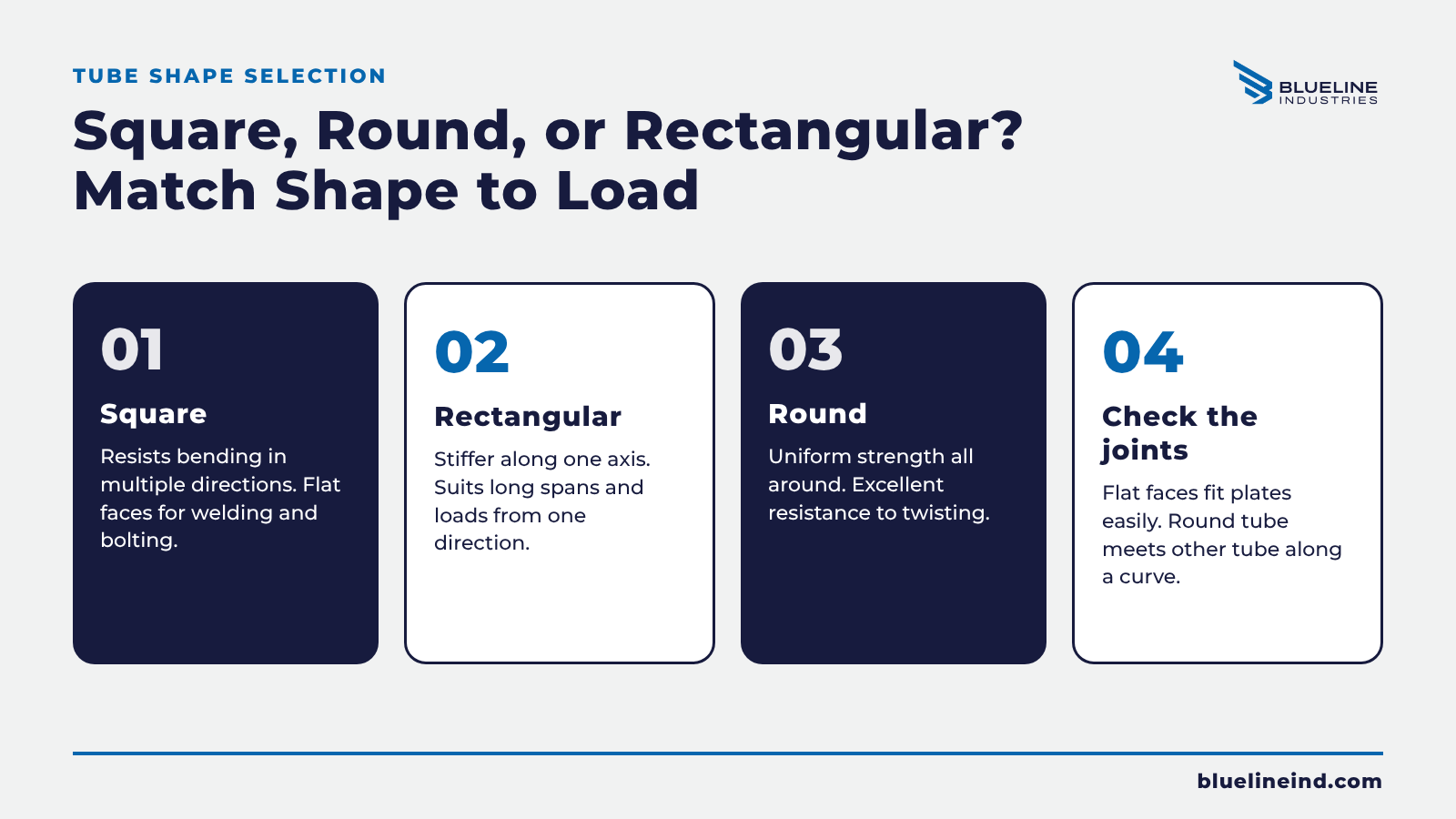
A miter is a single angled cut across the tube end, so two tubes meet at a corner. A cope is a shaped cut that follows the surface of the tube it joins, such as a saddle or notch. Miters make corners. Copes make tees and branches.
| Feature | Miter cut | Cope cut |
|---|---|---|
| Typical joint | Corner between two tubes | Tee or branch onto another tube |
| Cut shape | One angled plane | Profile that follows the mating tube |
| Mates with | Another tube end | The face of a tube |
| Main fit-up check | Angle and member length | Profile and gap at the joint |
Both cuts sit in the same family as notching. For the broader picture, see our post on tube notching and coping. This post narrows in on the choice between a miter and a cope in structural work.
When should you use a miter cut in structural tube?
Use a miter when two tubes meet end to end at a corner, such as a frame corner. The angle is the whole job. If the angle is right and the length is right, the joint closes cleanly and the weld has an even root.
Miters are simple to inspect. A fitter checks the angle and the member length. If either is off, the gap opens on one side of the joint.
The common mistake is assuming the model angle is the shop angle. Wall thickness, tube corner radius, and weld prep all change how the joint closes. Tell the shop which side of the joint is the weld side.
When should you cope a tube instead of mitering it?
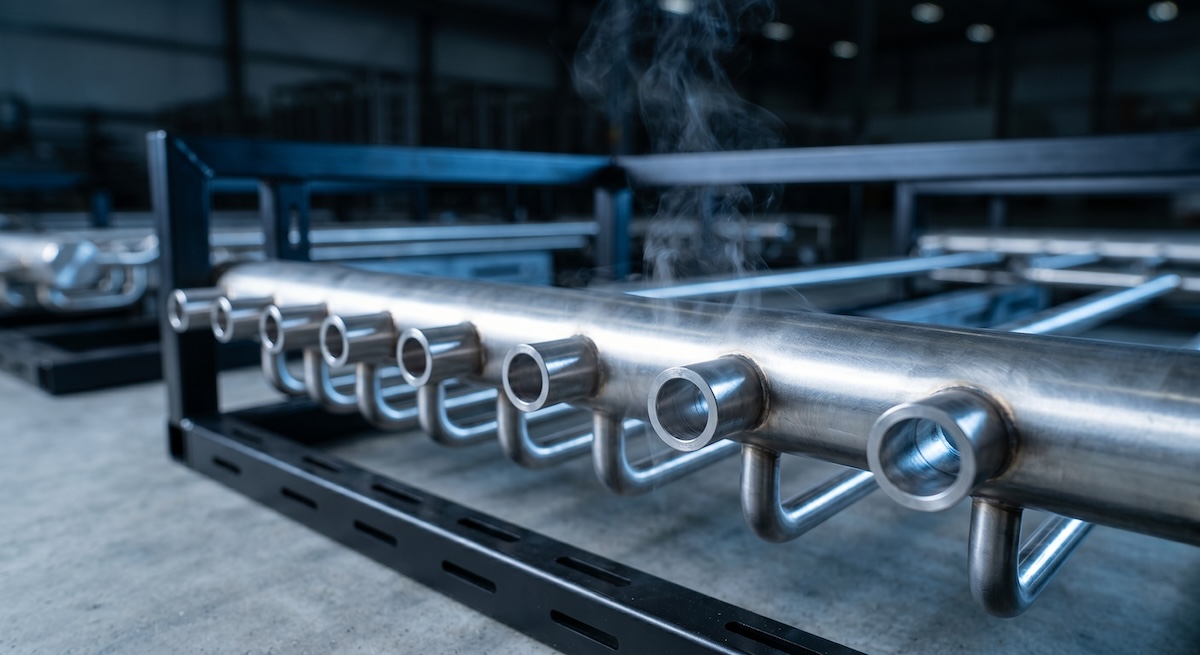
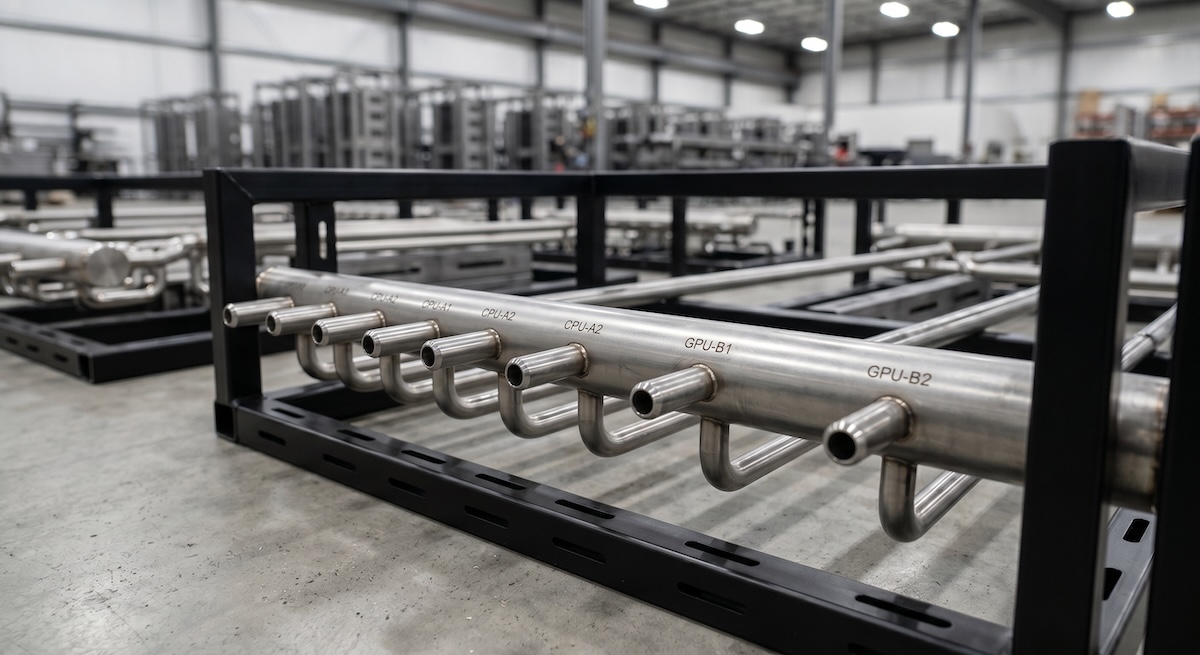
Cope a tube when its end lands on the side of another tube, like a brace into a column or a rail into a post. A straight cut leaves a large gap there. A cope profiles the end to follow the mating surface, which closes the gap.
Coping gets harder as tube size and angle change. The profile must follow the mating tube's corner radius and wall, not just its flat face. That is why copes are best cut from the solid model, not hand-marked.
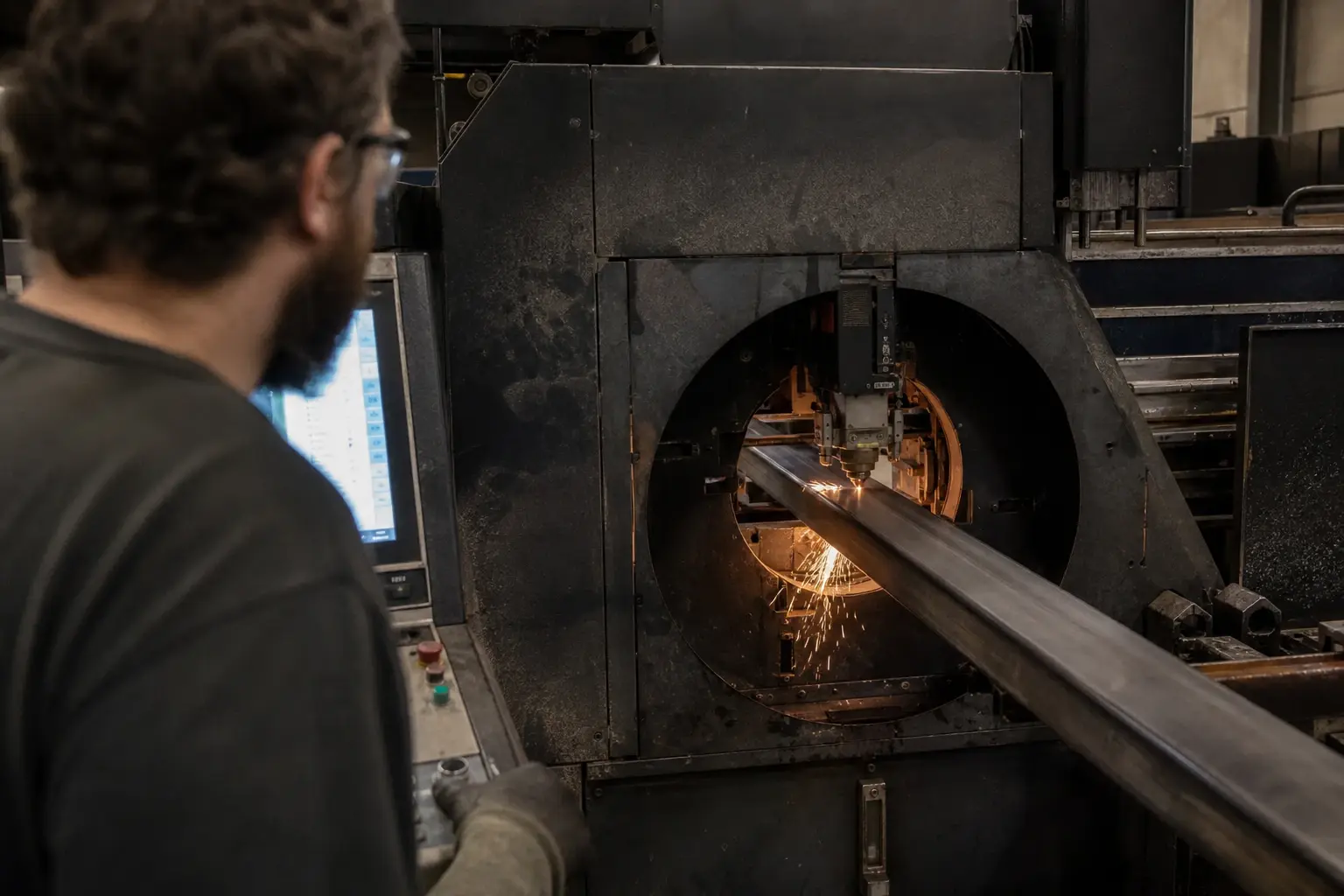
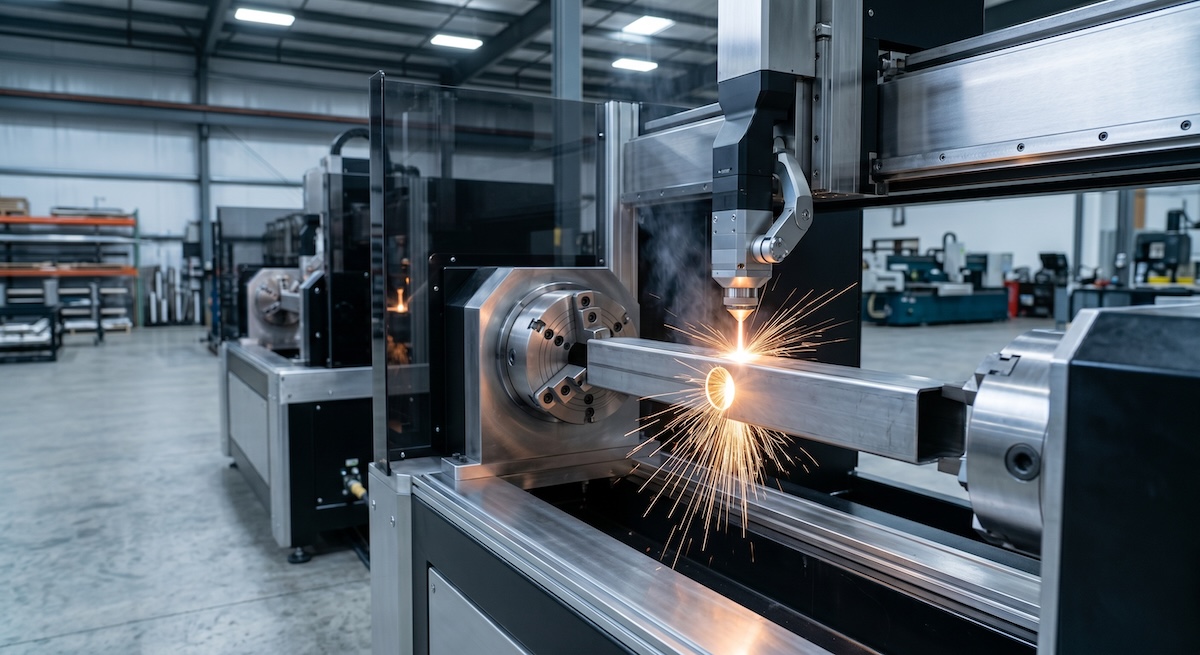
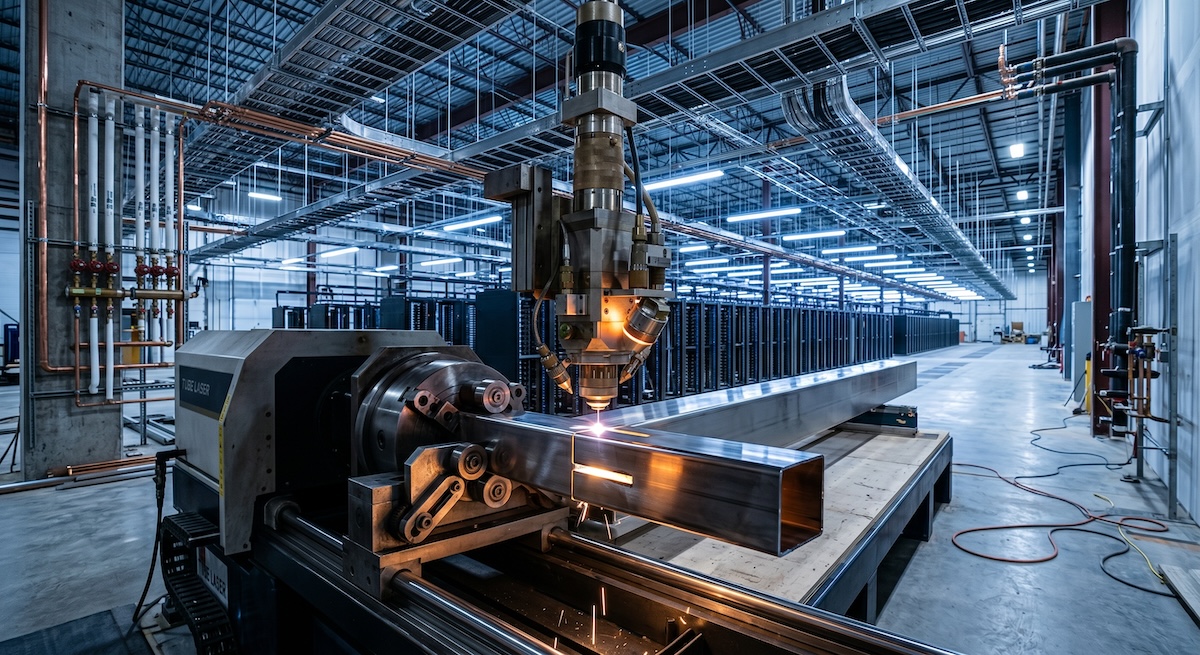
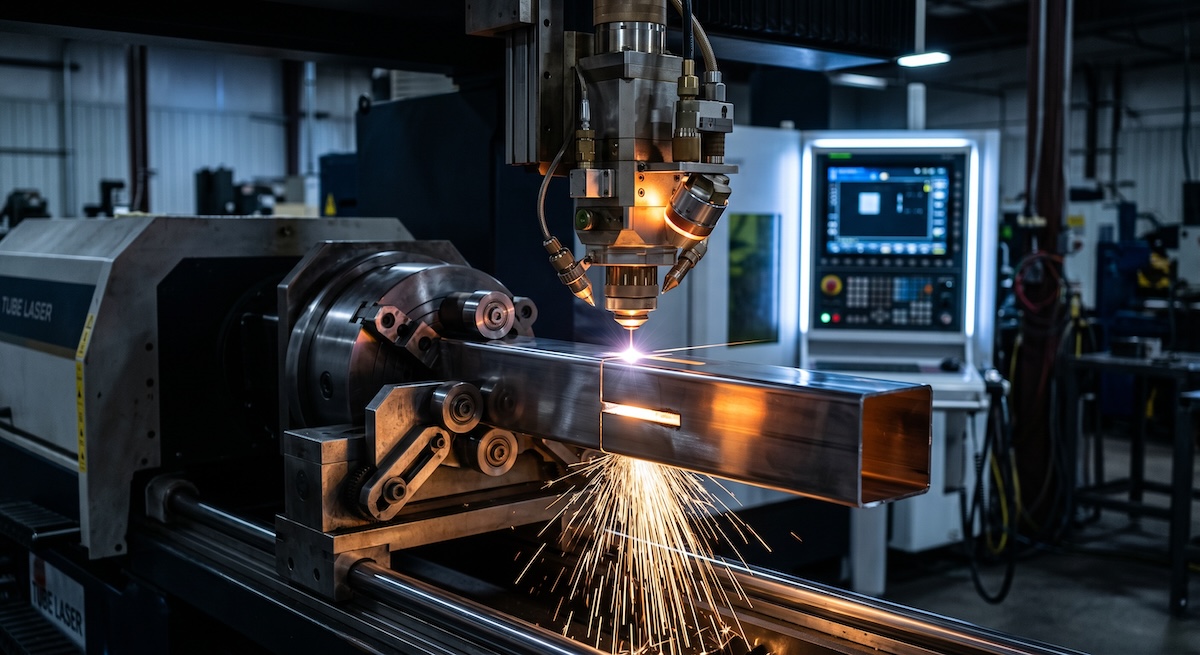
A tube laser cuts this profile directly. It can also cut weld bevels on the tube end. Blueline's equipment processes tube up to 13 inch diameter with 5-axis beveling capability. See what 5-axis tube beveling is for the weld-prep side.
How much gap is acceptable at a tube joint?
Published guidance cites a nominal weld root opening of zero, with tolerances of up to 1/16 inch as detailed and up to 1/8 inch for fit-up. A gap beyond that needs a better profile or backing. Tighter cuts reduce how often fitters have to fix a joint.
These figures come from an article in Structure magazine on HSS welds, which cites the AISC Steel Manual. The same article says that when the gap between the chord corner radius and the branch wall is too large, you can profile the branch to fit around the chord or add steel or weld material for backing.
The article also advises using stepped connections instead of matched ones where possible, because matched rectangular connections need both fillet and the more costly flare-bevel groove welds. That is a design choice, but it shows how joint geometry drives cost.
A second AISC source notes that a gapped K-connection needs only one bevel cut per branch member. It also lets a truss be tack welded and fully assembled before final welding, which helps confirm fit-up. Cut accuracy supports that kind of tack-first workflow.
How do cut quality and scale affect structural fit-up?
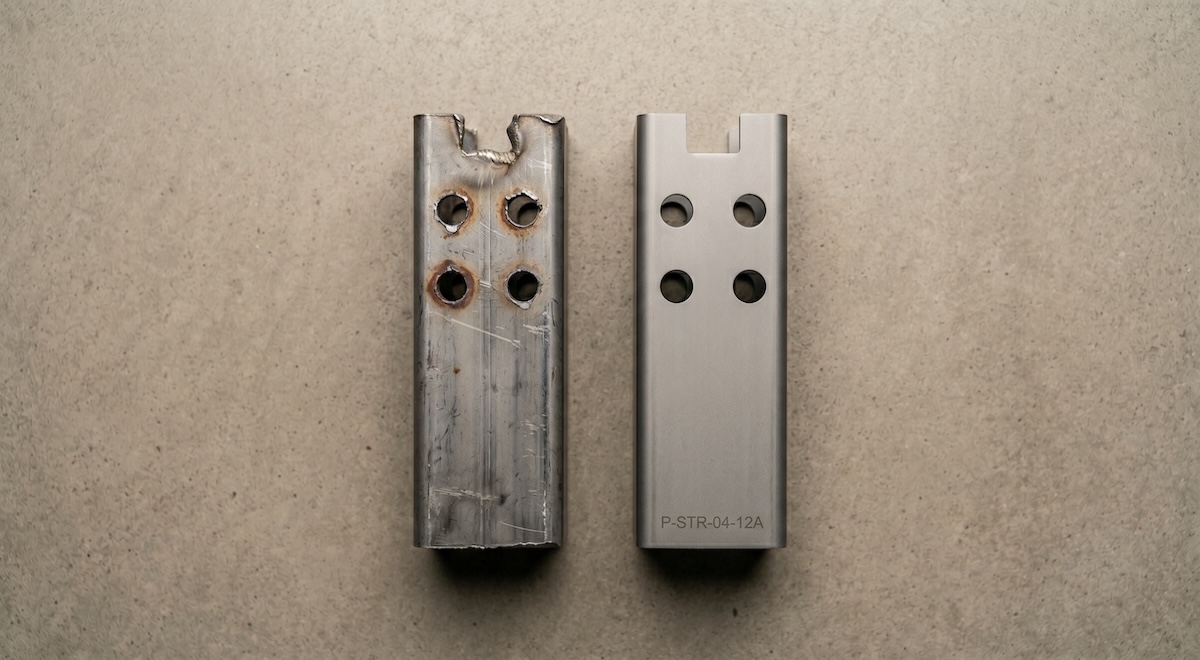
Cut quality decides how many joints a fitter must adjust. When tube ends arrive profiled to the model, fit-up becomes a check instead of a fix. At large tonnage, the savings from fewer adjustments add up across thousands of joints.
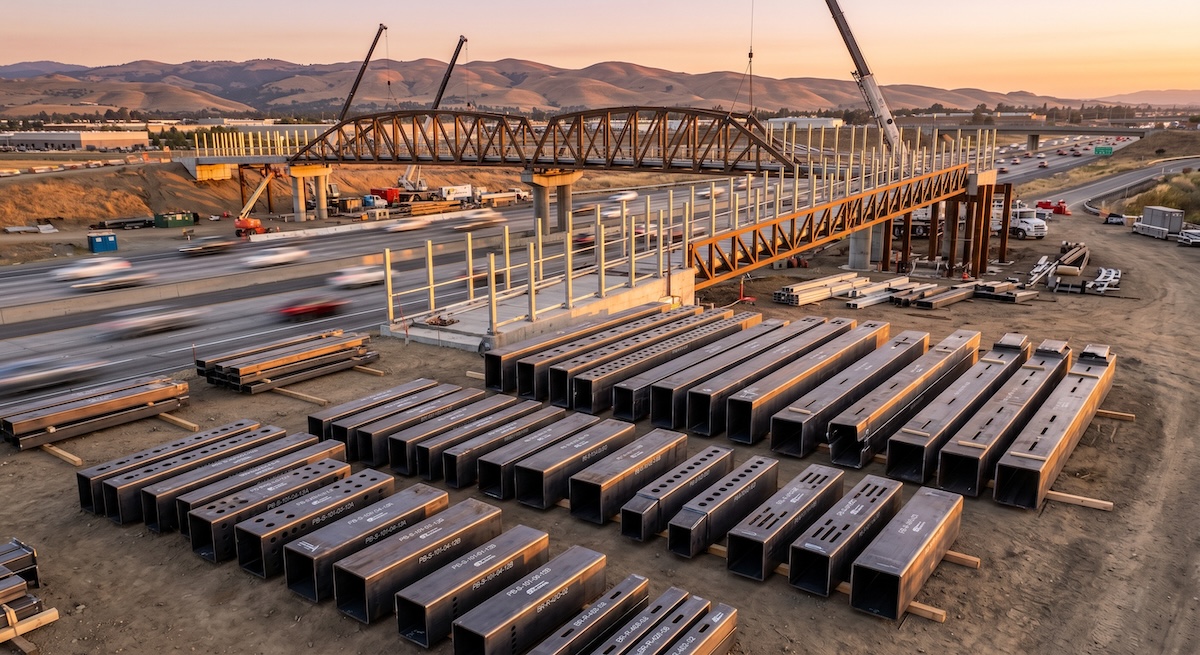
Blueline processed more than 500,000 pounds of steel for the Caltrans I-5 pedestrian bridge in Irvine in 2025. Projects at that weight reward cuts that repeat. We make no claim about the joints on that job here. The lesson is general: repeatable cuts keep a large erection schedule moving.
Blueline states tolerances of plus or minus 0.003 inch, and says single-operation processing reduces error rates by up to 70%. Confirm those figures against your own joint and material. For more on this work, see our tube laser cutting for construction and infrastructure page.
What should you send for a miter or cope quote?
Send a solid model, a joint list with angles, the tube size and wall for each member, and the weld plan. Mark which side of each joint gets the weld. With those, the shop can set cut geometry and bevels to match your process.
- A 3D model of the assembly and individual part files.
- Tube profile, size, wall thickness, and material.
- Joint angles and which joints are miters or copes.
- Weld type and which side is the weld side.
- Quantity, delivery site, and installation sequence.
Frequently Asked Questions
Is a miter or a cope better for structural tube?
Neither is better in general. A miter suits corners. A cope suits tee and branch joints. Pick the cut that matches how the two tubes meet.
Can a tube laser cut a cope profile?
Yes. A tube laser follows the model to cut the profile directly, including notches and bevels, in one setup.
What tube sizes can Blueline cut?
Blueline's LT7 tube lasers handle up to 6 inch square or round tube. The shop processes tube up to 13 inch diameter with 5-axis beveling capability.
How tight does fit-up need to be?
Guidance cited in Structure magazine lists up to 1/16 inch as detailed and up to 1/8 inch for fit-up, based on the AISC Steel Manual. Check your own code and weld procedure.
Does Blueline ship outside California?
Blueline works from one facility in Chino, CA, and ships to customers across the West, including the cities listed on our service area page.
Ready to Quote Your Tube Joints?
Send the model, the joint list, and the weld plan to Blueline Industries in Chino, CA. We will review the cuts before any steel is processed. Get a Quote or call (951) 833-5597.