Quick Summary

Metal furniture frame fabrication goes best when the finish is planned before the first tube is cut. The finish decides how tubes are joined, where holes go, and how clean the welds must be. Blueline Industries is a tube laser cutting shop in Chino, CA. We cut square, round, and rectangular tube for makers who want frames that fit the first time and repeat on the next order.
This post covers what to decide before you ask for a quote. It stays practical: joints, finish, and the jump from prototype to production.
What should you decide before cutting metal furniture frames?
Decide four things first: tube profile and wall thickness, joint style, finish type, and quantity range. Those choices set the cut geometry. Changing the finish after parts are cut can force new holes, new weld prep, or a redesign. A short written spec avoids that rework.
Most frame problems start with a missing decision, not a bad cut. A designer picks a joint that looks clean in the model. Then the finisher cannot reach inside it, or the welder cannot get a torch to it.
Ask three questions early. Which joints will customers see? Which joints will carry load? Which surfaces must stay clean for the finish? The answers tell the shop where precision matters most.
Why does finish planning change the frame design?
Finish planning changes the frame because coatings need access and clean surfaces. Hollow tube also needs a way for air and liquids to move through it during finishing. Holes, weld seams, and edge quality all follow from the finish you pick, so choose it before you lock the cut file.
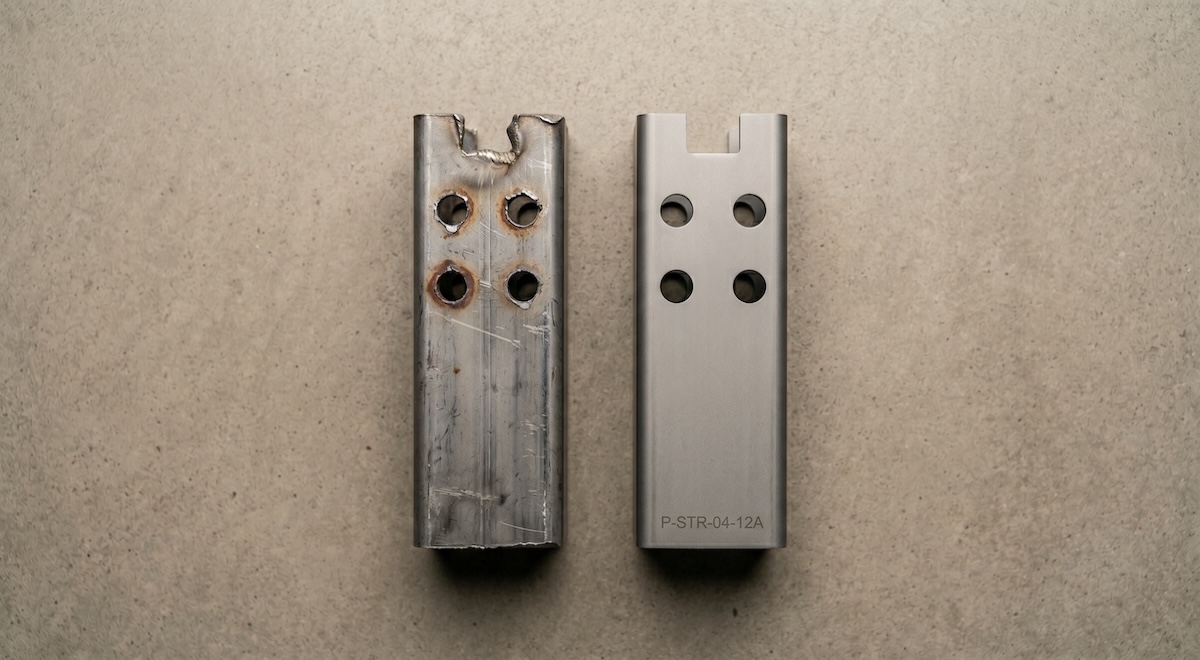
One furniture manufacturer's published process page describes hidden weep holes laser-cut into the bottom edges of tubular sub-assemblies. The same page lists chemical degreasing and pretreatment before powder coating. The point for a designer is simple: finishing steps can ask for features in the tube itself.
The table below shows what each finish tends to ask of the frame. Treat it as a planning prompt and confirm details with your finisher.
Finish planWhat to check in the frame designPowder coatAccess to joints and inner surfaces, plus hole placement so hollow sections can vent and drain during pretreatment and curing.Wet paintWeld seams and cut edges show through thin coats, so plan cleanup time and edge quality.Raw steel or clear coatEvery cut edge and weld stays visible, so joint fit and weld appearance matter most.Stainless, brushed or polishedSurface marks from handling and welding show up, so plan how parts are cut, moved, and joined.
How does a laser-cut joint reduce welding on a furniture frame?
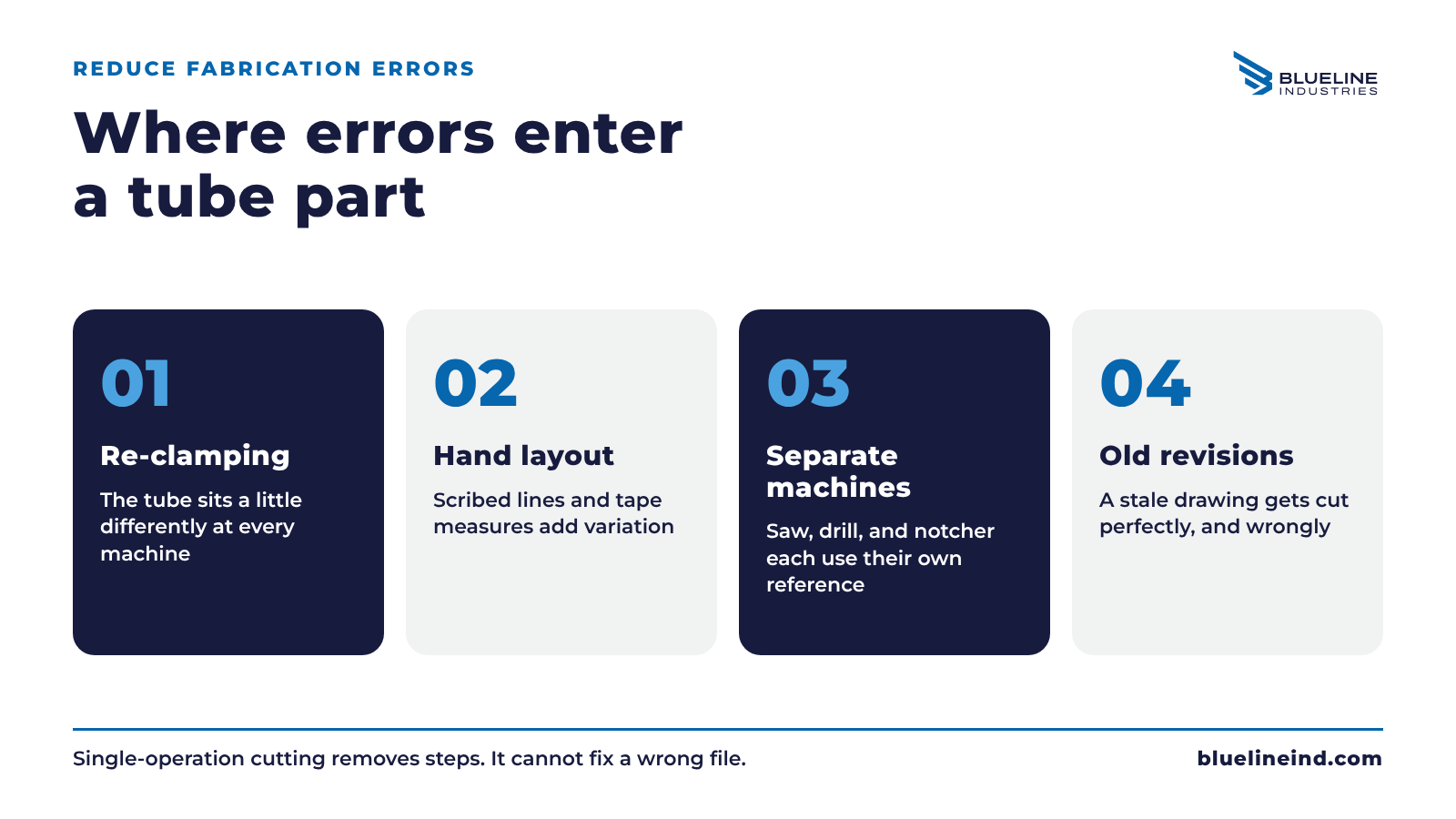
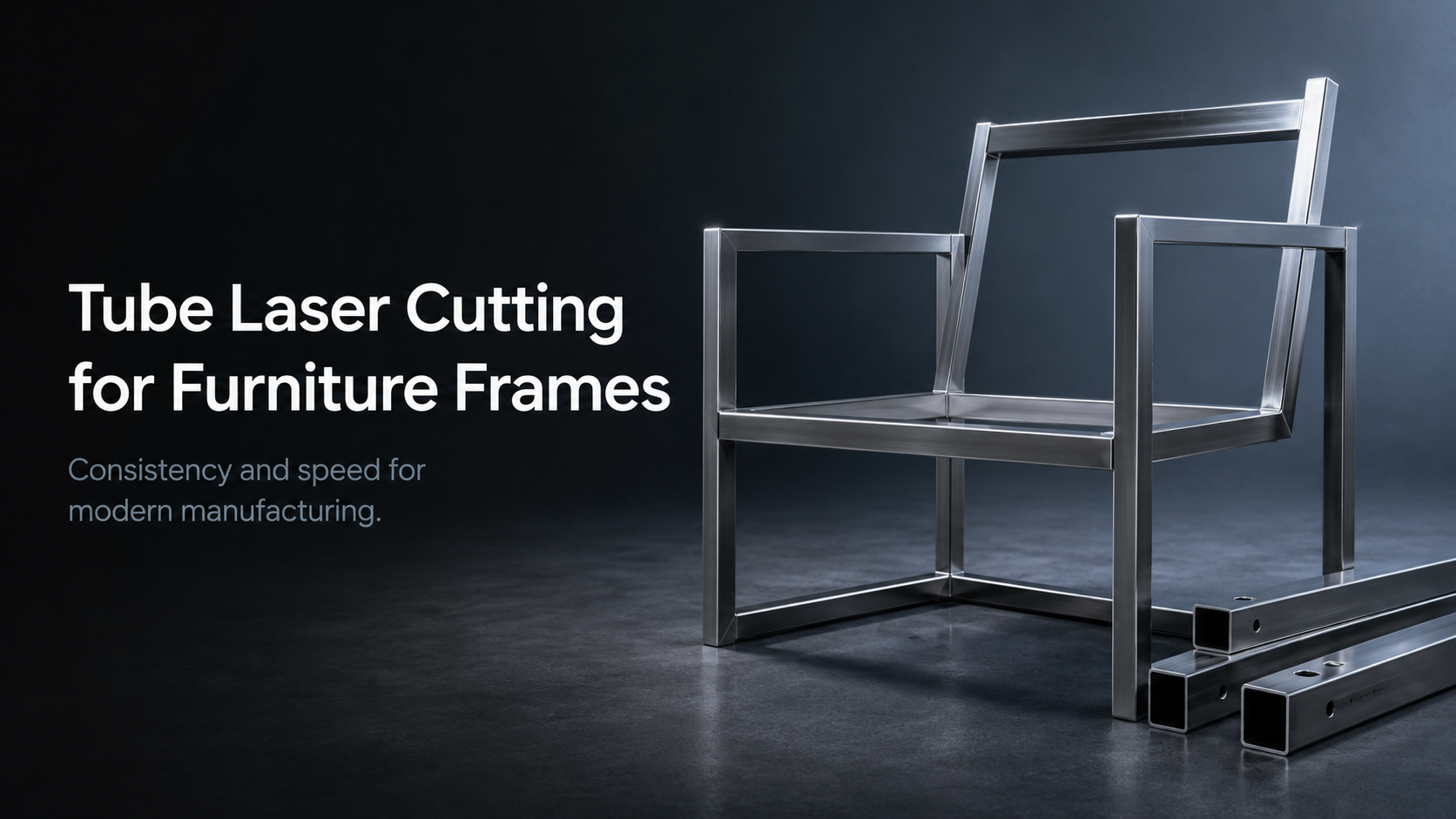
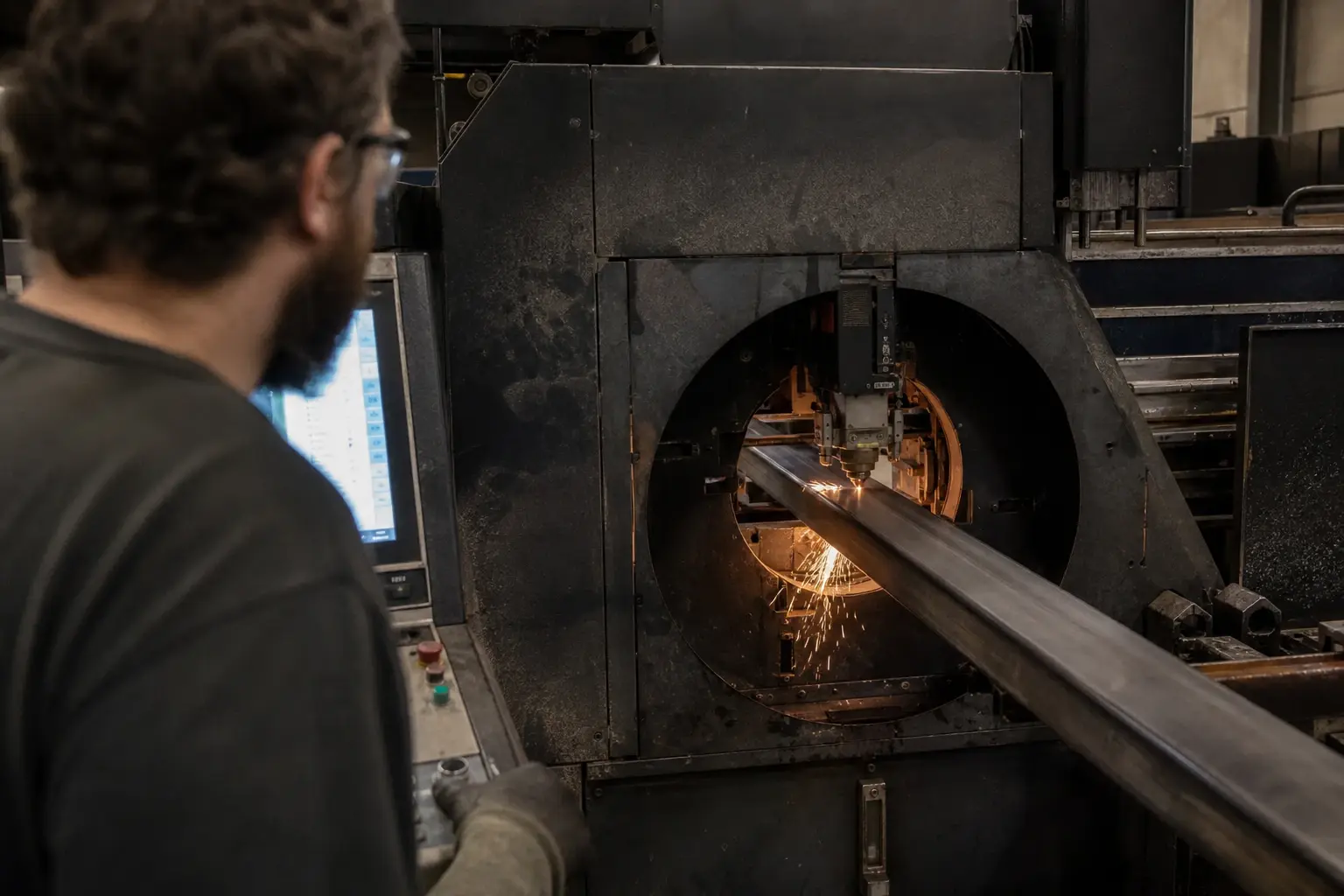
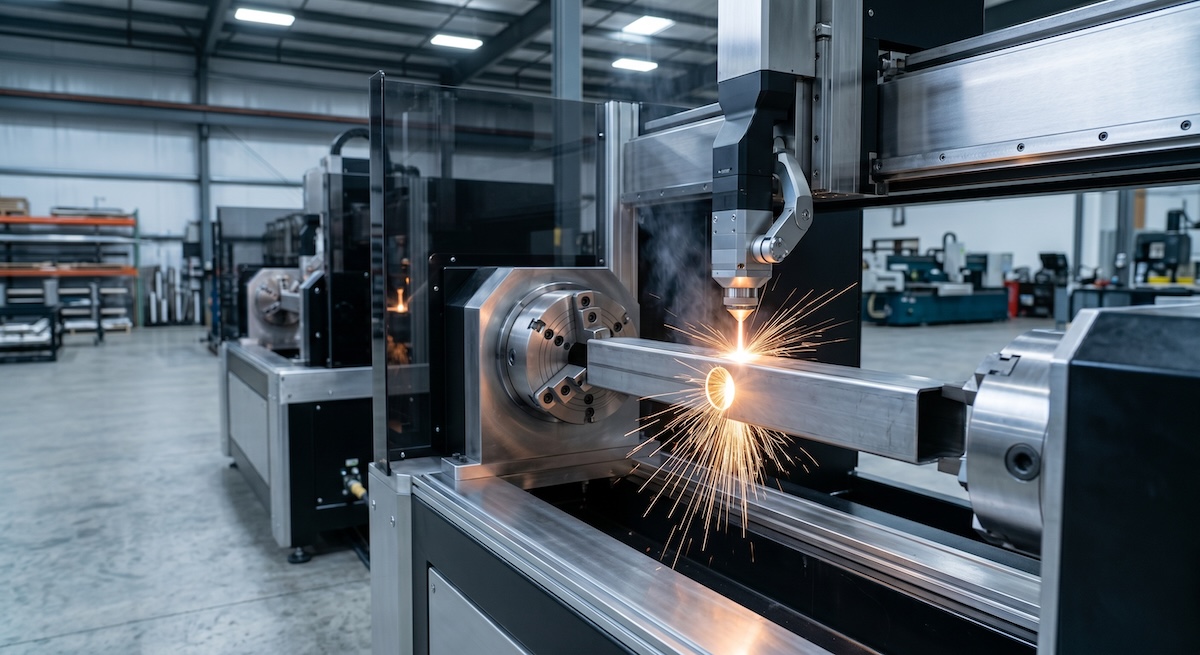
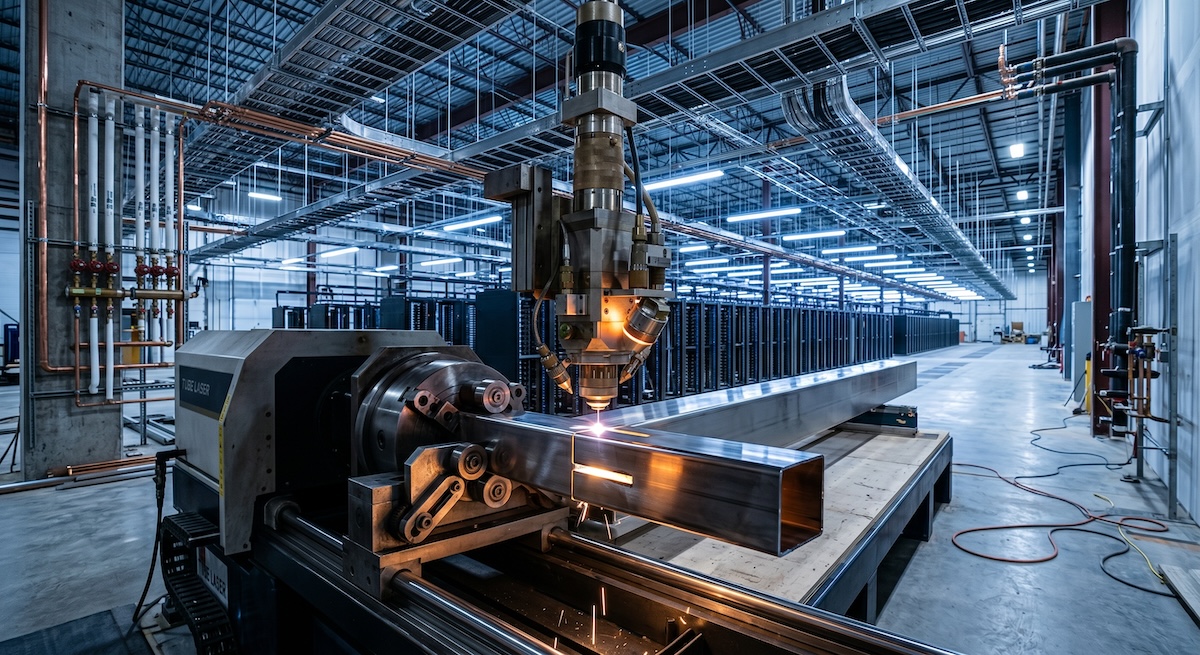
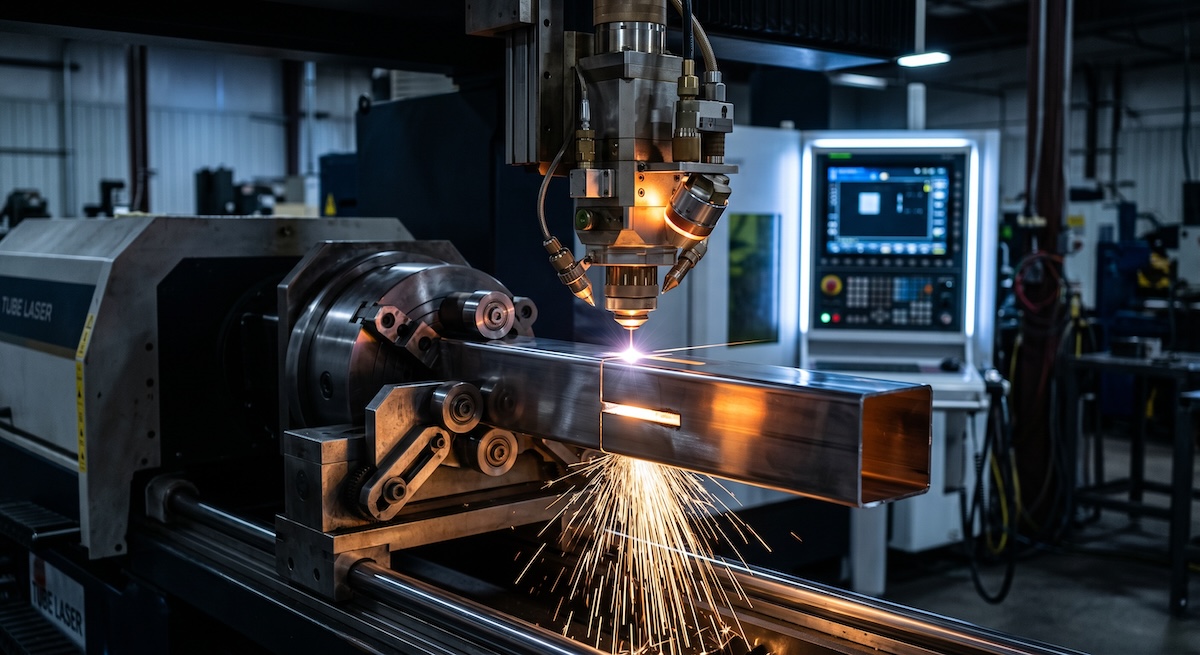
A tube laser can cut slots, tabs, and notches into tube ends and walls in one setup. Parts then seat into each other and hold position before welding. That reduces the clamps and fixtures an assembler needs and helps keep each frame close to the last one.
Think of a frame with a cross rail. Instead of measuring and marking each rail, the shop cuts a slot where the rail lands and a tab on the rail that fits it. The assembler drops the parts together and tacks them.
This is where single-operation processing earns its keep. According to Blueline, running cutting, slotting, and hole work in one operation reduces error rates by up to 70%. Fewer handoffs mean fewer places for a dimension to drift.
For a deeper look at repeatable frame builds, read our earlier posts on furniture tube laser cutting for repeatable frames and the manufacturer's guide to custom metal furniture frames.
What changes between a prototype frame and a production run?
The design stays the same, but the questions change. A prototype asks whether the frame works. A production run asks whether the frame repeats at the quantity and schedule you need. Move from one to the other only after the first frames pass a fit and finish check.
Use the prototype to test joints and finish
Build the first frames in the real material with the real finish. A frame that looks right in the model can still rack, rattle, or trap coating where it should not. Fix those issues while the quantity is small.
Lock the file before you scale
Once the prototype passes, freeze the cut file and the revision number. Every later order then starts from the same geometry. Blueline offers custom tube prototyping and short-run fabrication for exactly this step.
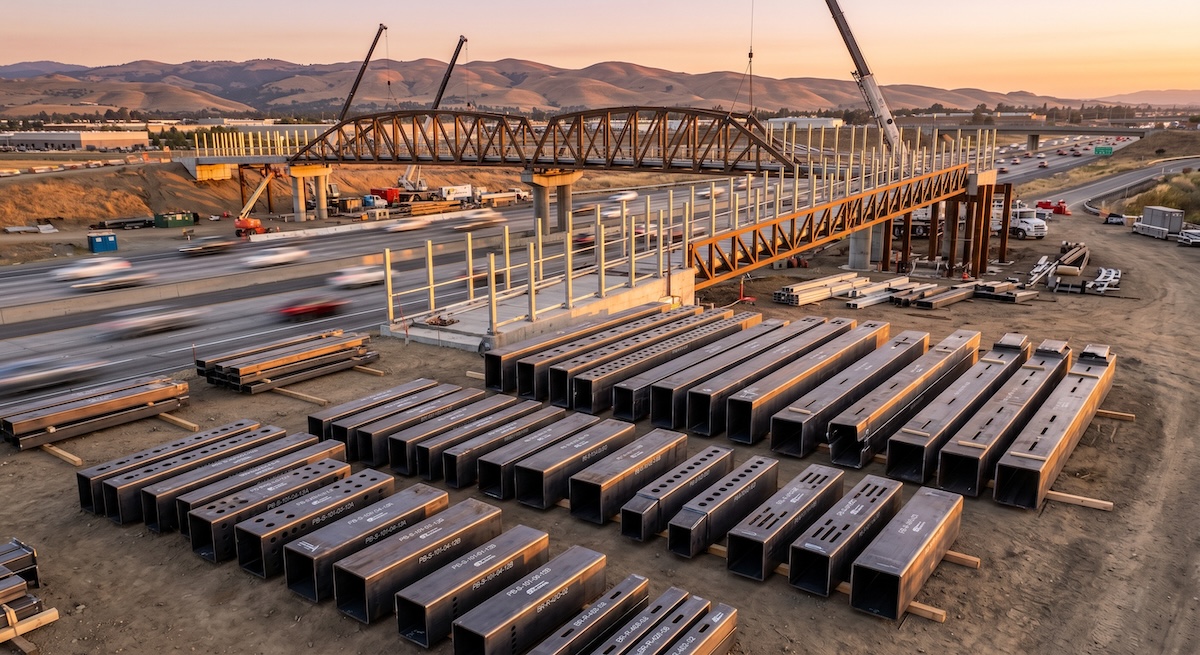
Scale is a matter of habit, not size. Blueline processed more than 1 million pounds of steel for the Coachella Sahara Stage in 2025. Furniture frames are a far smaller job, but the same discipline applies: lock the design, cut it the same way every time, and check the first parts.
What should you send with a furniture frame quote request?
Send a solid model, the material and wall thickness, the finish type, and a quantity range. Add a note on which joints are visible. With those five items, a shop can judge cut complexity and flag problems before any metal is cut.
On tolerance, Blueline states it can hold plus or minus 0.003 inch. Confirm that figure against your own part and material before you design around it.
Frequently Asked Questions
What tube shapes work for metal furniture frames?
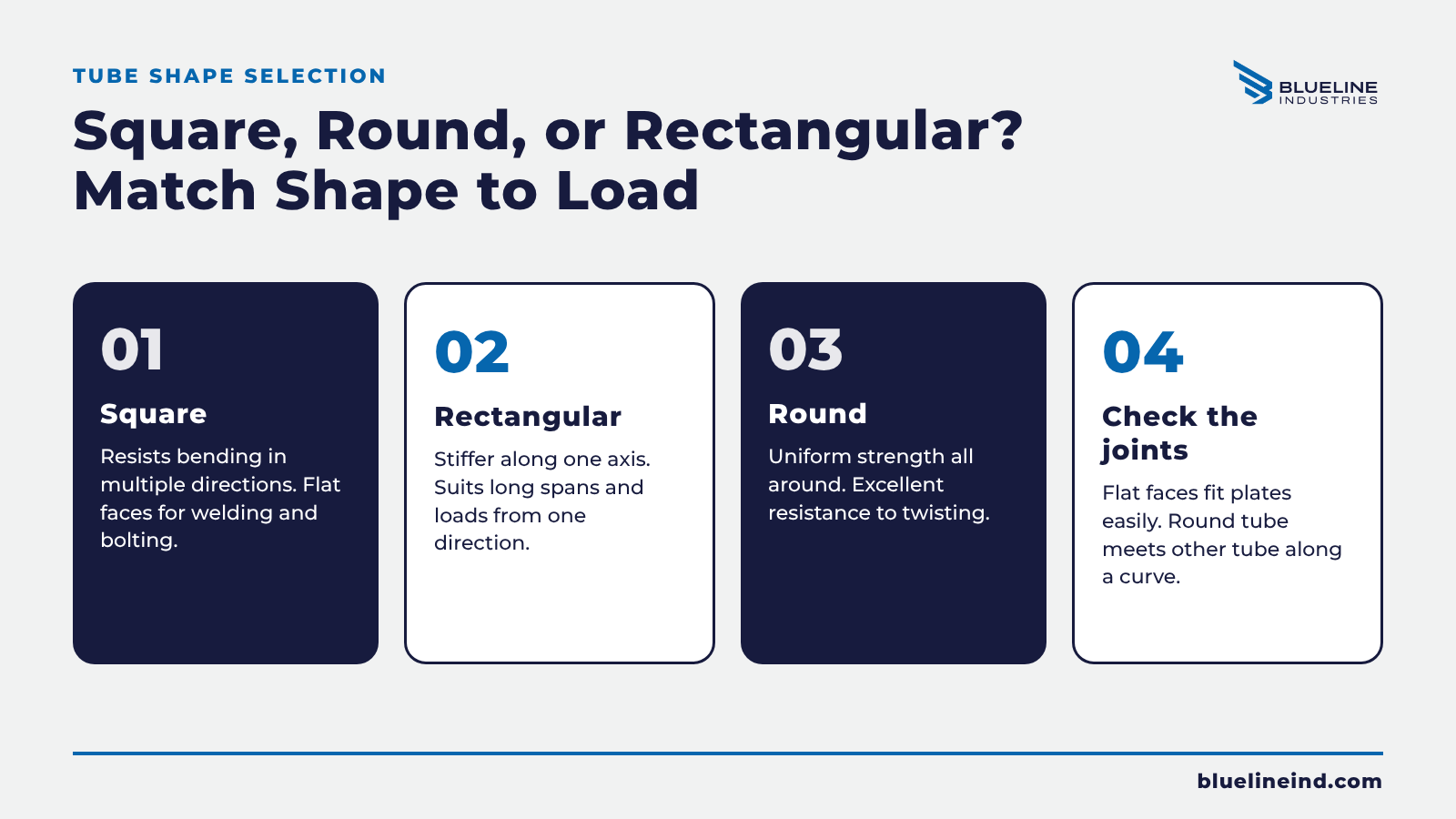
Square, round, and rectangular tube are the common choices. Blueline's LT7 tube lasers handle up to 6 inch square or round tube, and the shop processes tube up to 13 inch diameter. Most furniture frames sit well inside that range.
Can a tube laser cut stainless steel furniture parts?
Yes. Blueline processes both steel and stainless steel tube. Tell us the grade and wall thickness when you request a quote so we can plan the cut.
Should I order a prototype before a production run?
Yes, in most cases. A short run lets you test joint fit and finish on real parts. You can then lock the design and scale with fewer surprises.
How do slots and tabs help assembly?
Slots and tabs let parts seat into each other before welding. The assembler spends less time measuring and clamping. The result is a more repeatable frame.
Where do I send my frame files?
Use the contact page or call the shop. Include the model, material, finish, and quantity range so we can respond with useful questions instead of guesses.
Ready to Plan Your Frame?
A good frame starts with a clear spec: joints, finish, and quantity. Send yours to Blueline Industries in Chino, CA, and we will tell you what we see before any steel is cut. Get a Quote or call (951) 833-5597.