Quick Summary

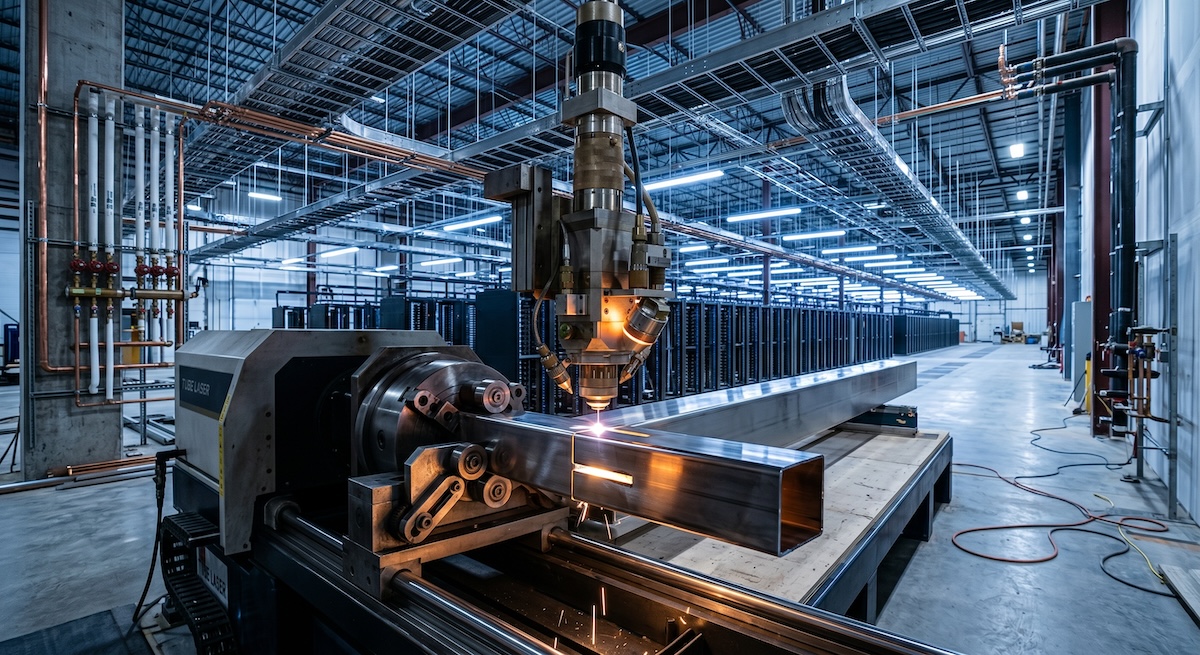
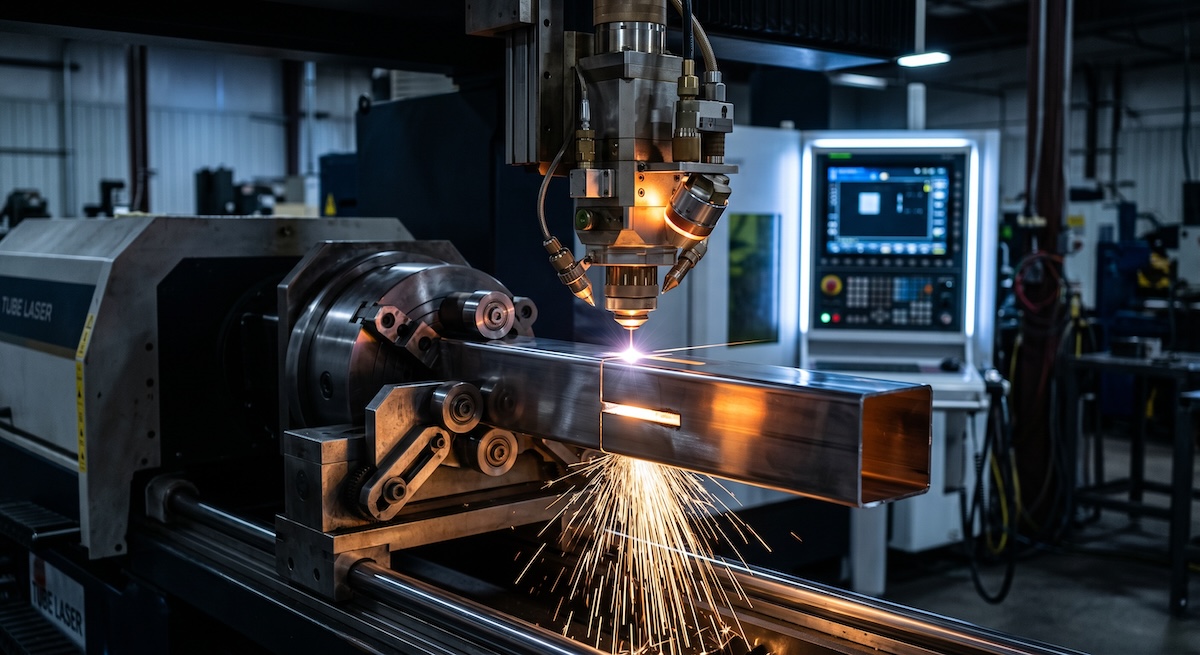
Tube laser prototyping services let you cut a real part from real tube, check it, change the file, and cut again. Blueline Industries runs this loop at its tube laser cutting shop in Chino, CA, so engineers can prove geometry before committing a design to a run. The goal is simple: find the problems on part one, not part one thousand.
This post covers what prototyping includes, how to run a useful prototype round, and what to send for a quote.
What are tube laser prototyping services?
Tube laser prototyping services are small-quantity cuts of tube parts made to test a design before production. The shop cuts your parts from your file, you check fit and function, and you revise. Blueline lists custom tube prototyping and short-run fabrication as a core service.
Because prototypes and runs come from the same shop, what you learn on the first parts carries straight into production.
Why prototype in tube before production?
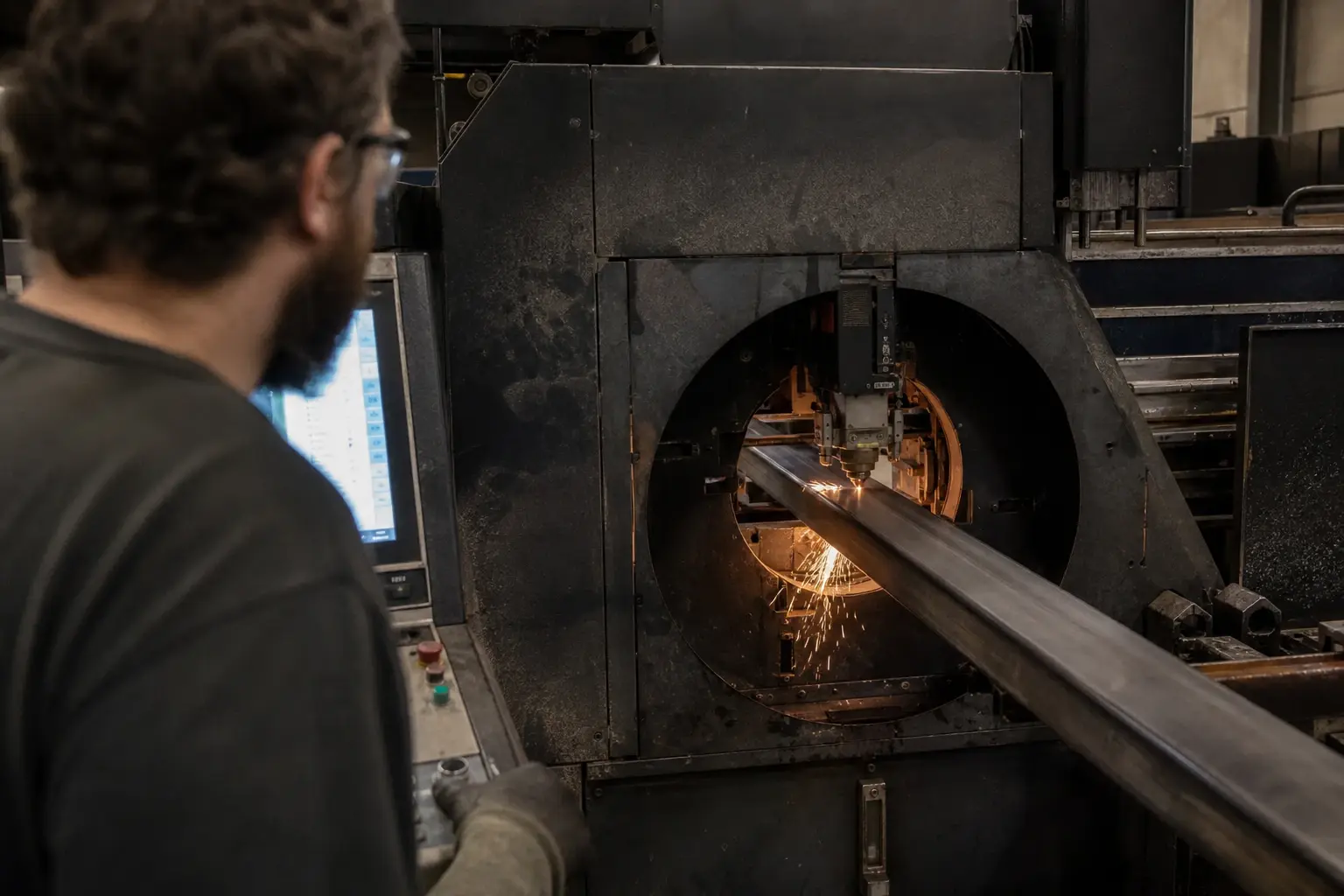
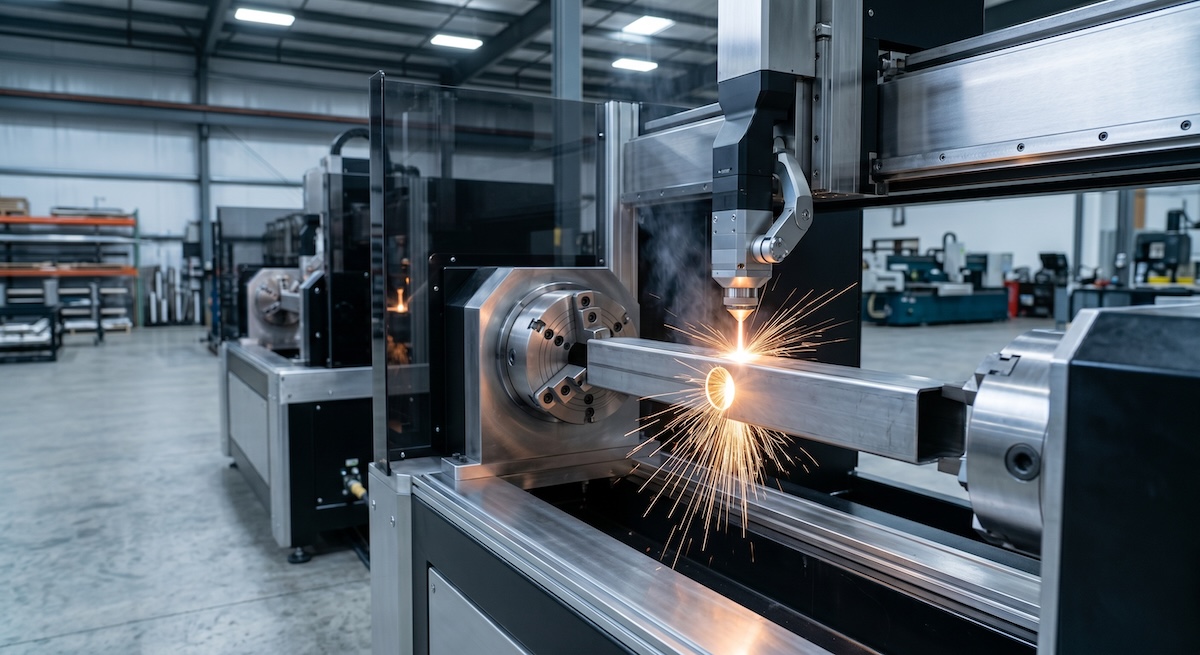
Prototyping in tube shows you how joints and cuts behave in real material. The Fabricator article on designing for laser cutting says a laser tube cutter can take a part from concept to fabricated tube in minutes. It also says this allows multiple prototype iterations, and that engineering changes can be made through simple programming changes.
That speed changes how engineers work. You can test a hook-and-slot joint, a changed notch, or a new hole pattern without building fixtures first. The same article says self-fixturing hook-and-slot designs can speed up manufacturing and eliminate assembly errors. A prototype round is where you prove that claim for your own part.
What a prototype will not tell you
A small batch cannot prove every production issue. It will not show how a long release schedule behaves or how parts pack for shipping. Plan a short run after the prototype for that. Blueline covers the next step in Short Run Tube Fabrication: Prove the Design Before Scaling.
How do you run a useful prototype round?
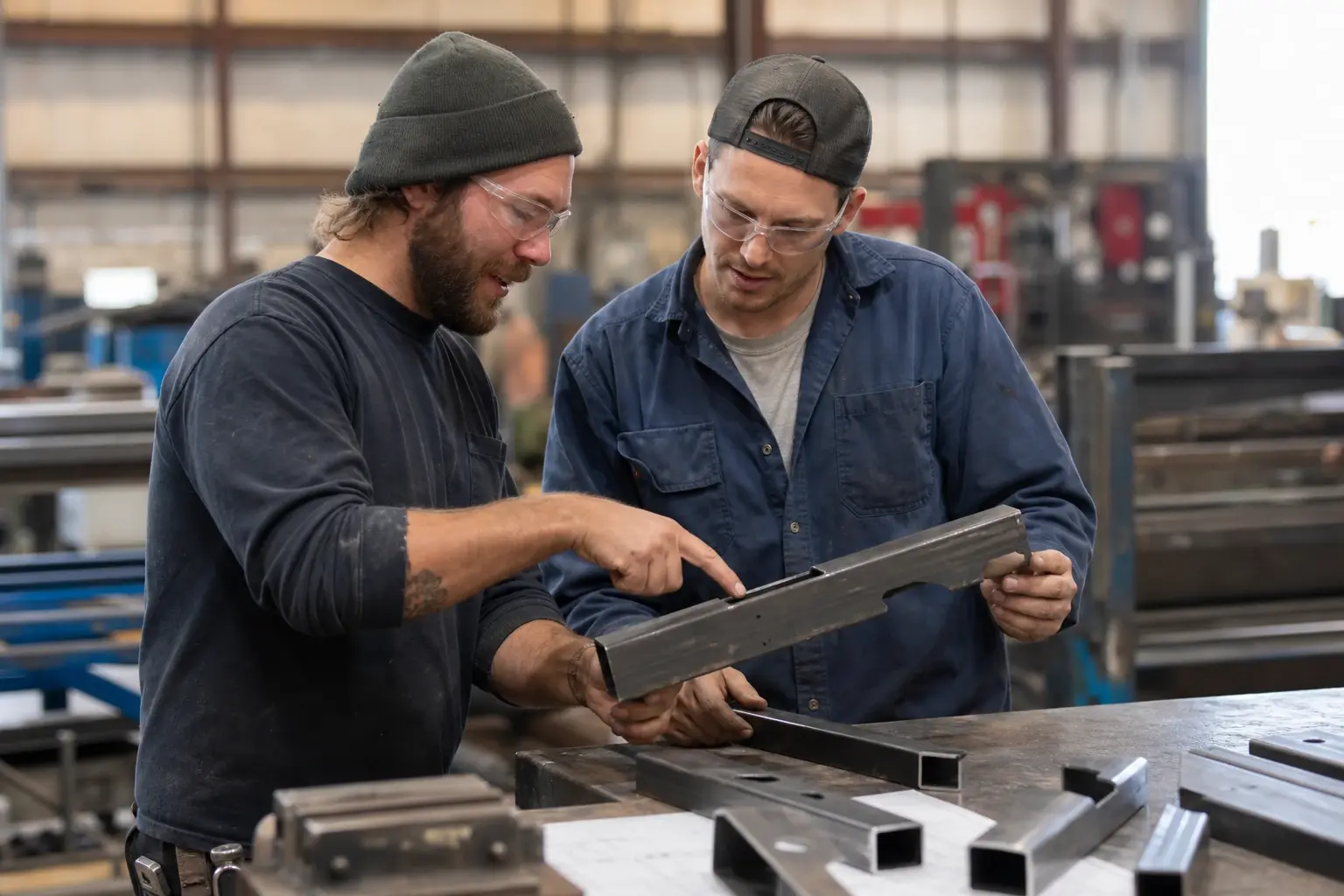
Treat the first cut as a test with questions, not as a sample. Decide what you want to learn, tell the shop, and check those items when parts arrive. Then log every change against a revision number.
Keep the list short, and write the answers down when the parts arrive, so the next revision starts from facts. A prototype that tries to answer twenty questions usually answers none of them well.
What should you check on the first parts?
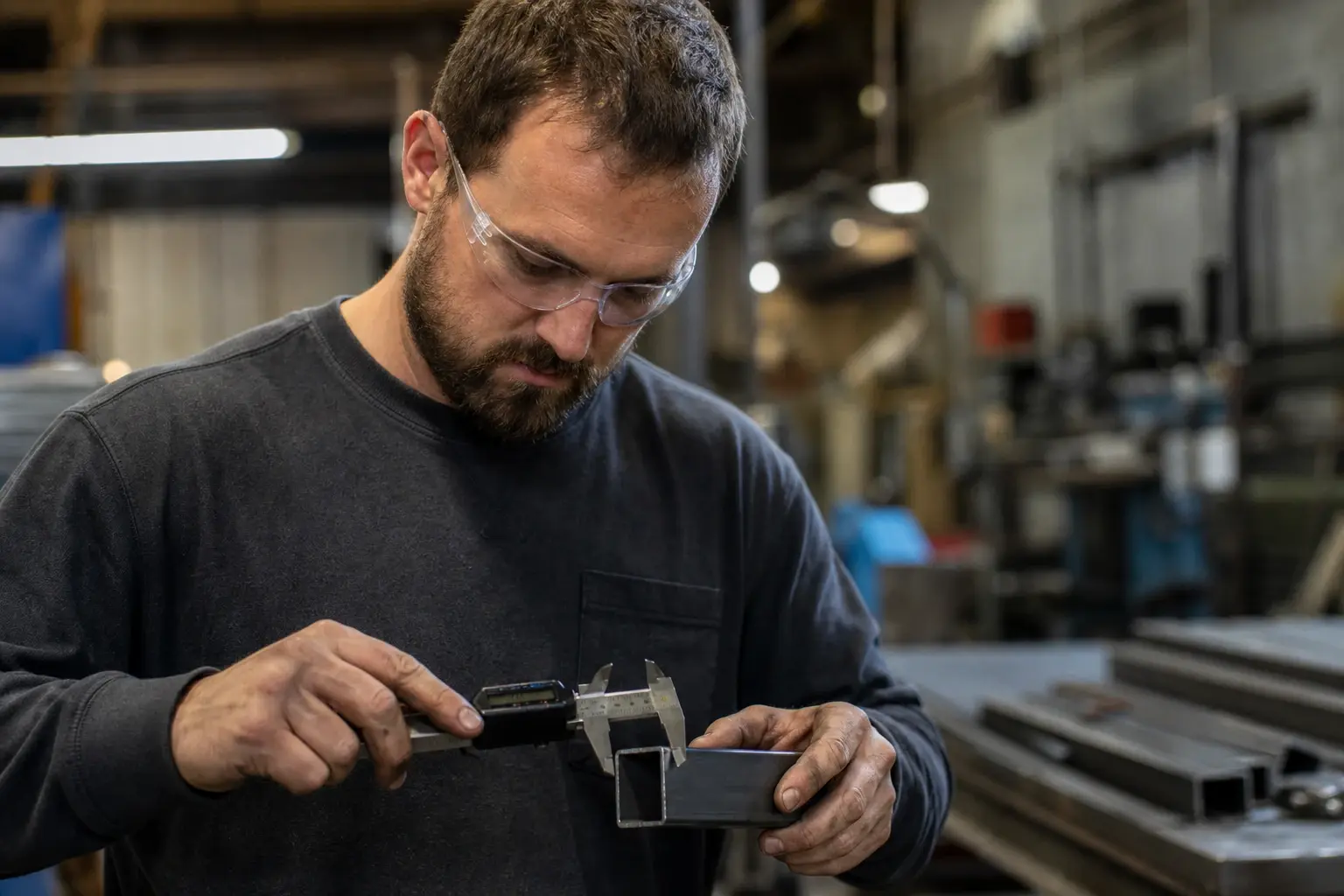
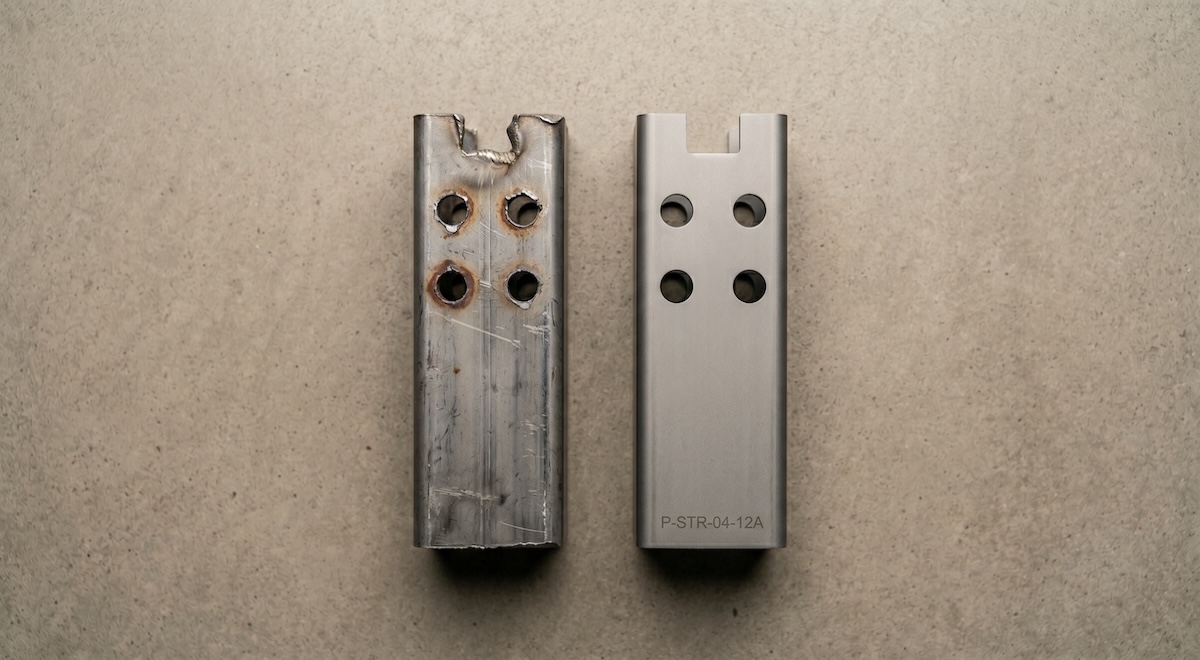
Check the features that drive assembly: joint fit, slot and hole position, and cut-to-length. Blueline states it holds tolerances of plus or minus 0.003 inch. Use that as the starting point and confirm what applies to your profile and wall.
CheckWhat it tells youJoint fit against the mating partWhether notches and copes close without forcing.Hole and slot positionWhether fasteners and tabs line up in assembly.Part lengthWhether stack-up across the assembly works.Fit of self-locating featuresWhether the design can drop a fixture.Marking and part IDWhether parts can be sorted and bundled by part number.
For file-side checks before you send anything, read Design for Tube Laser Cutting: Choices That Cut Rework.
Who gets the most from a prototype round?
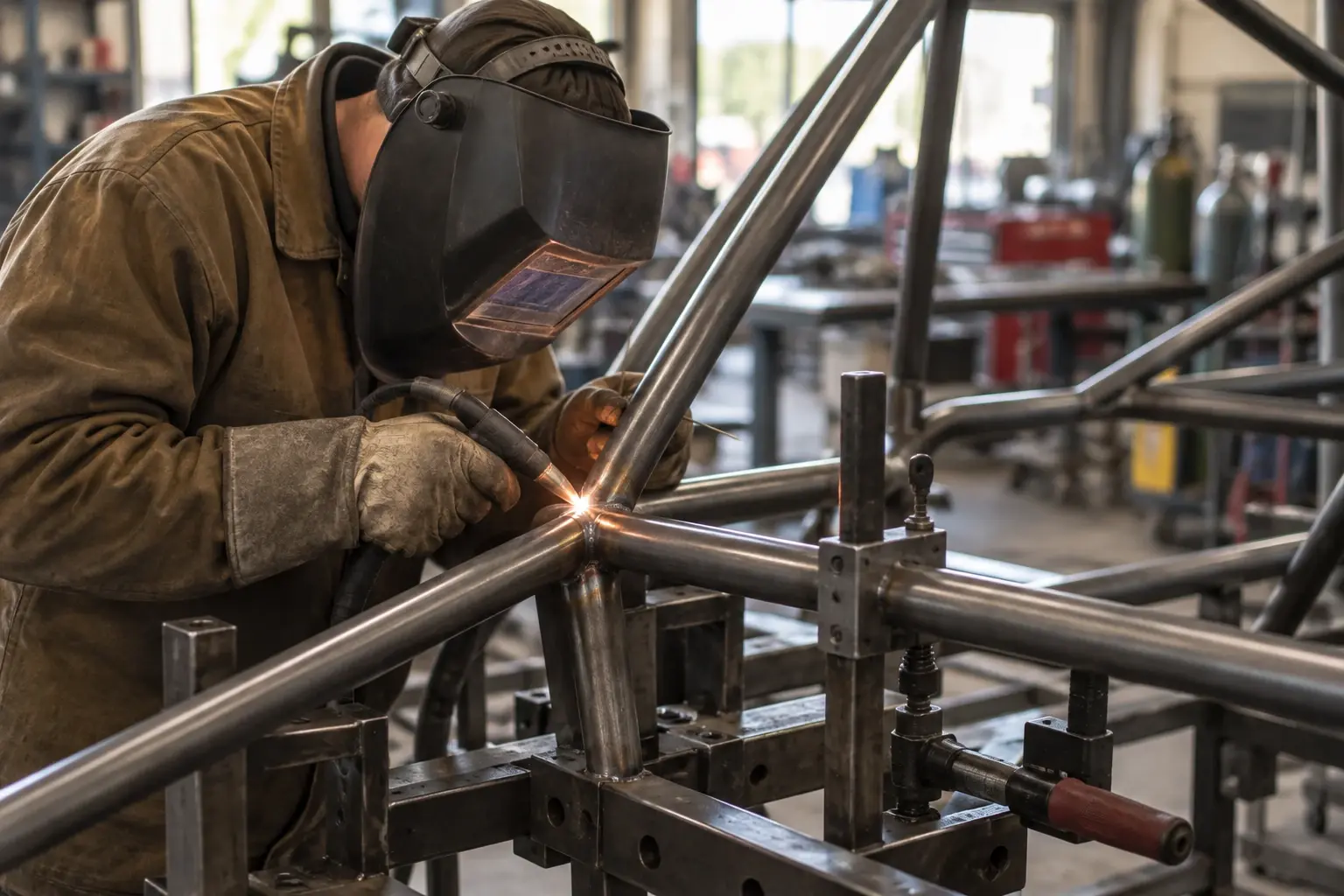
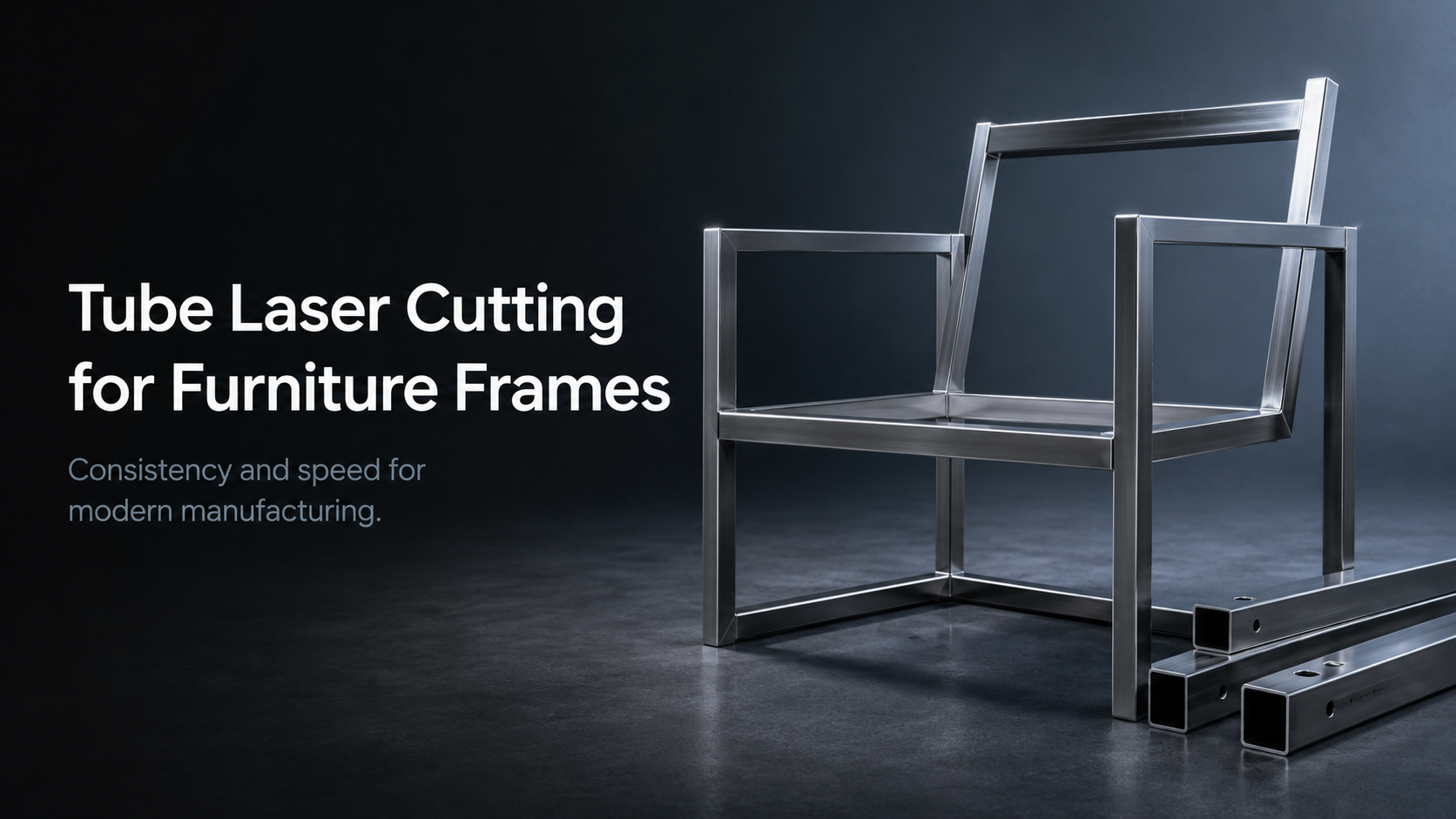
Any team that is about to commit to a tube design gets value from one. Manufacturing engineers at OEMs use prototypes to prove assemblies before release. Motorsports and automotive aftermarket fabricators use them to confirm notches and fit on frames and cages. Aerospace and furniture manufacturers use them to check geometry before they scale.
The common thread is cost of change. A bad joint found on a prototype costs a revision. The same joint found in a full run costs scrap, rework, and schedule. That is why a short round up front is usually the cheaper path, even when the schedule feels tight.
For related reading on how tube geometry affects prototypes, see Blueline's post on aerospace tube prototypes.
What should you send for a prototype quote?
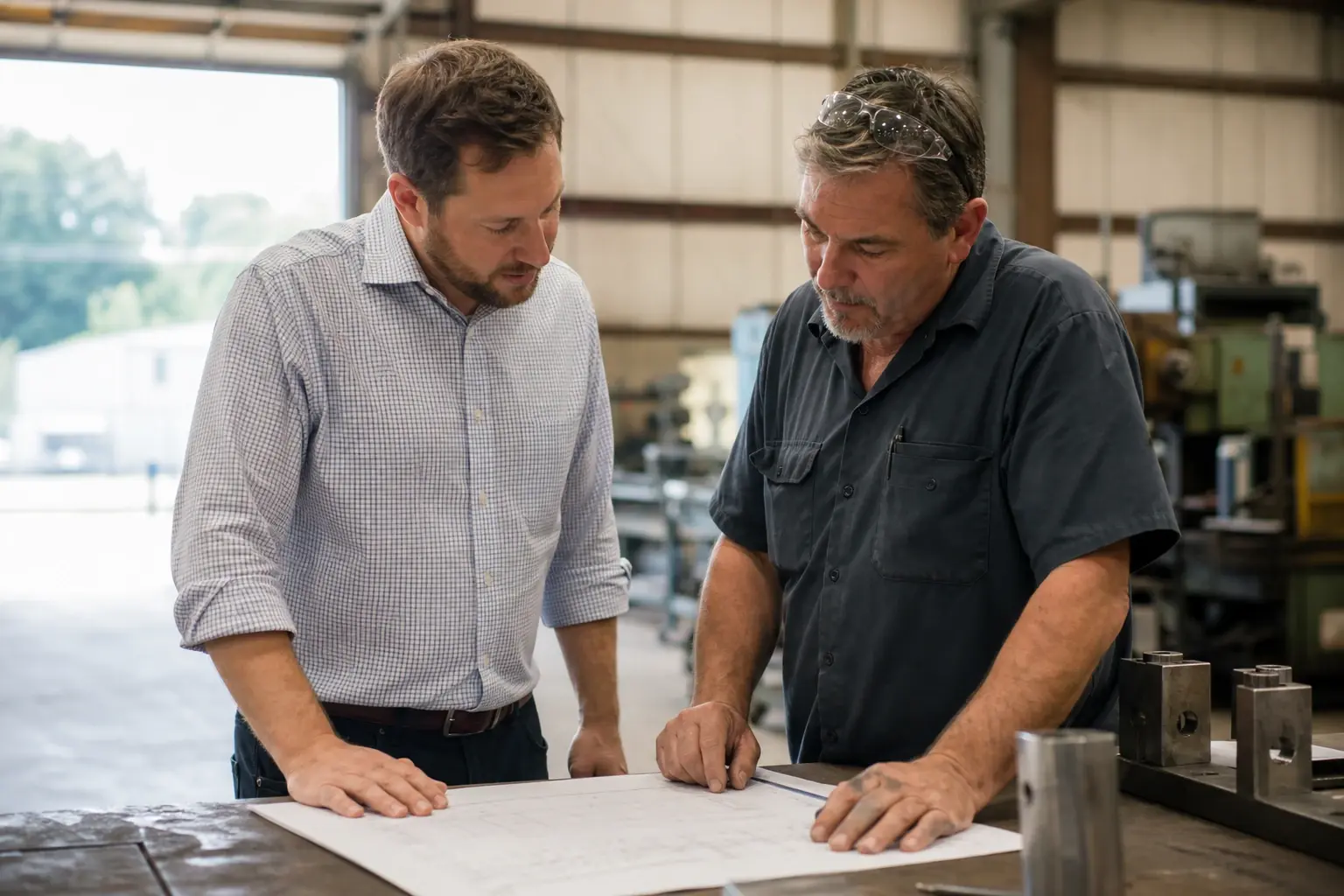
Send the 3D model or drawings, material, tube profile, wall thickness, quantity, and the questions the prototype must answer. If you expect a short run after the prototype, say so. Blueline can then plan the file for both steps.
Blueline serves Portland, Tucson, San Francisco, San Diego, Seattle, Salt Lake City, Las Vegas, San Jose, and Los Angeles from its one Chino facility. Blueline quotes each job on its details.
How do prototypes connect to production?
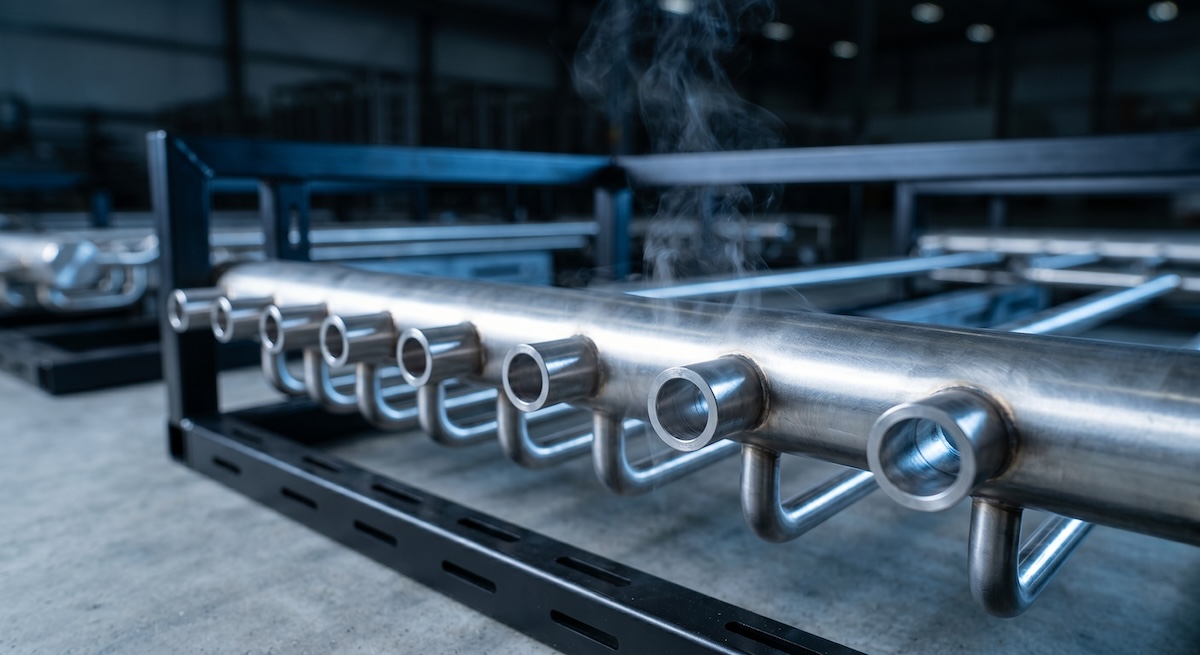
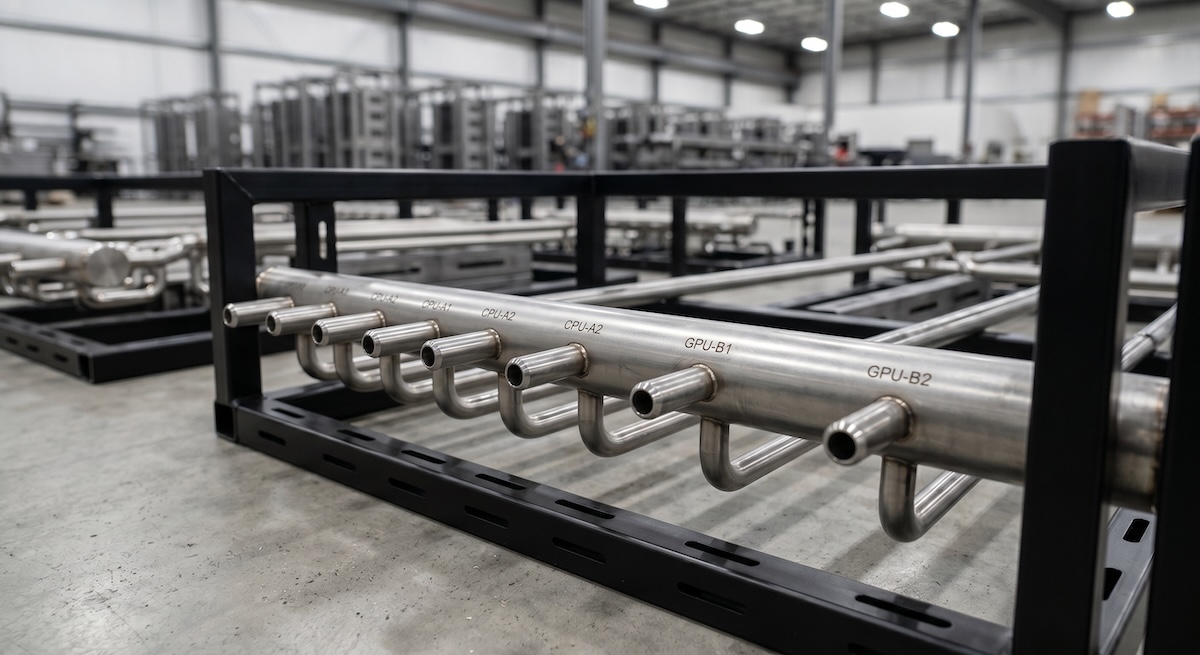
A prototype round sets the file, the revision, and the habits you will use on a run. The same programming approach carries from one part to a full order. Blueline's verified work spans that range. In 2025 it processed 16 truckloads of stainless steel for an AI data center cooling project in Sacramento.
The lesson for engineers is plain. Lock the file after the prototype passes, and treat later changes as new revisions. For prototype services and short runs, see Blueline's custom tube prototyping and short-run fabrication and precision tube fabrication pages.
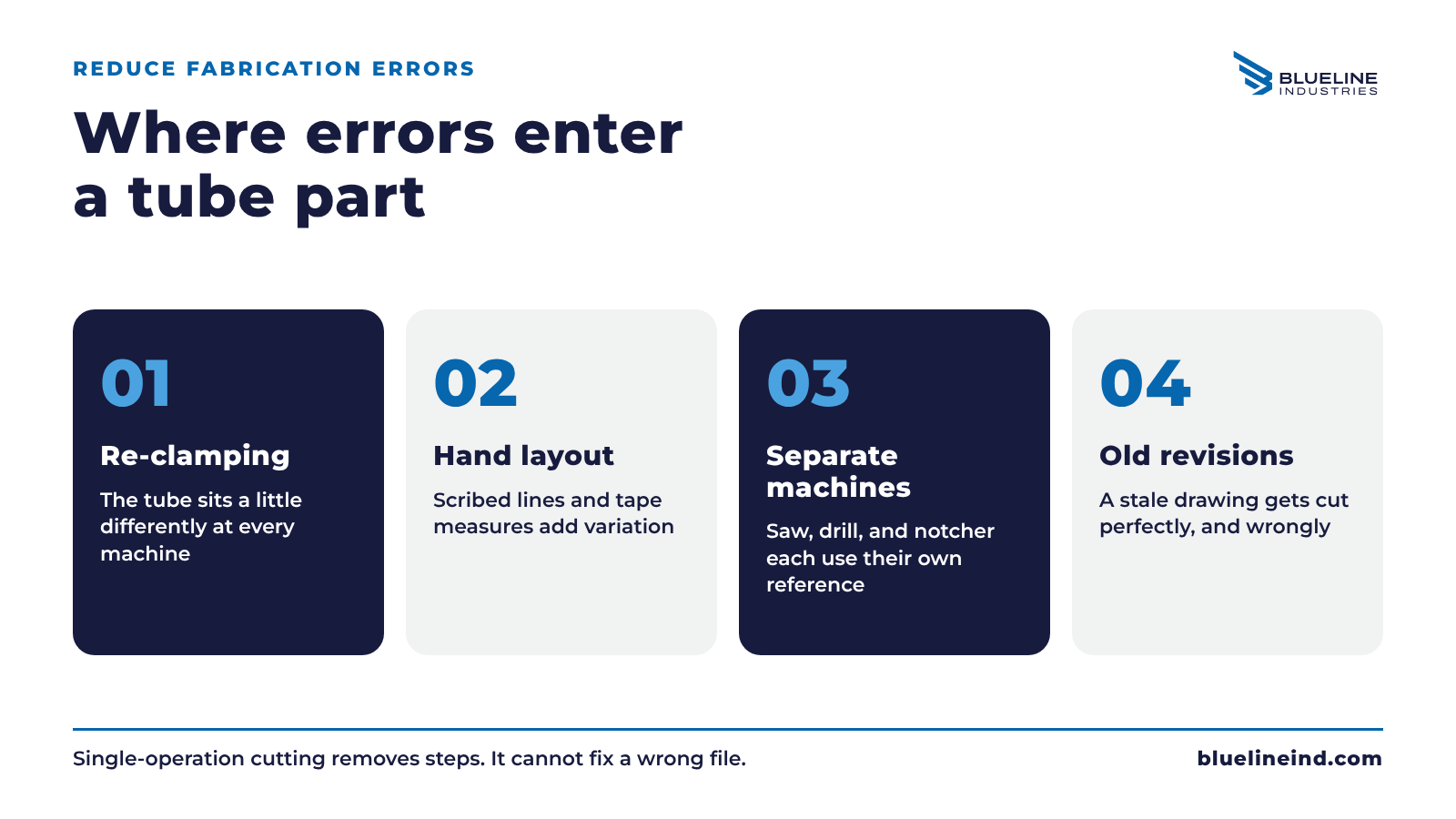
Blueline also states single-operation processing reduces error rates by up to 70%. That is Blueline's figure, so ask how it applies to your part.
FAQ
How many prototype parts can I order?
Quantities are quoted per job. Tell Blueline how many you need and whether a short run may follow. Call (951) 833-5597 to discuss your part.
Can I change the design between prototype rounds?
Yes. A tube laser cuts from a file, so changes are programming changes. The Fabricator notes that engineering changes can be made through simple programming changes. Send each change as a new revision.
What tolerance does Blueline state?
Blueline states tolerances of plus or minus 0.003 inch. Confirm the figure for your profile, wall, and material before you finalize a drawing.
Are prototypes and production parts made in the same shop?
Blueline lists prototyping and short-run fabrication as one service, run in its Chino, CA shop. Ask which machine fits your profile when you quote.
Where is Blueline located?
Blueline has one facility, in Chino, CA 91710. It ships to buyers across the service area, including Los Angeles, San Diego, Las Vegas, and Seattle.
Prove it on part one
Prototypes work when the first cut is a test with a plan. Send your model and your open questions, and we will cut the parts that answer them.
Get a Quote: https://www.bluelineind.com/contact-us or call (951) 833-5597. Made in America, built on integrity.