Quick Summary
The main difference between a fiber laser and a CO2 laser for tube cutting is wavelength and how the beam travels. Fiber runs near 1.06 microns through a fiber-optic cable. CO2 runs near 10.6 microns through a path of mirrors. Blueline Industries, a tube laser cutting shop in Chino, CA, answers this question for buyers comparing quotes, so here is a plain answer.
Most of the published comparisons come from machine makers and resellers, and many are about flat sheet. We read four of them and one tube-specific article. We flag below which claims are vendor claims. Blueline does not state which laser source its machines use in this post, so ask us directly if that matters for your part.
What is the difference between fiber and CO2 laser cutting?
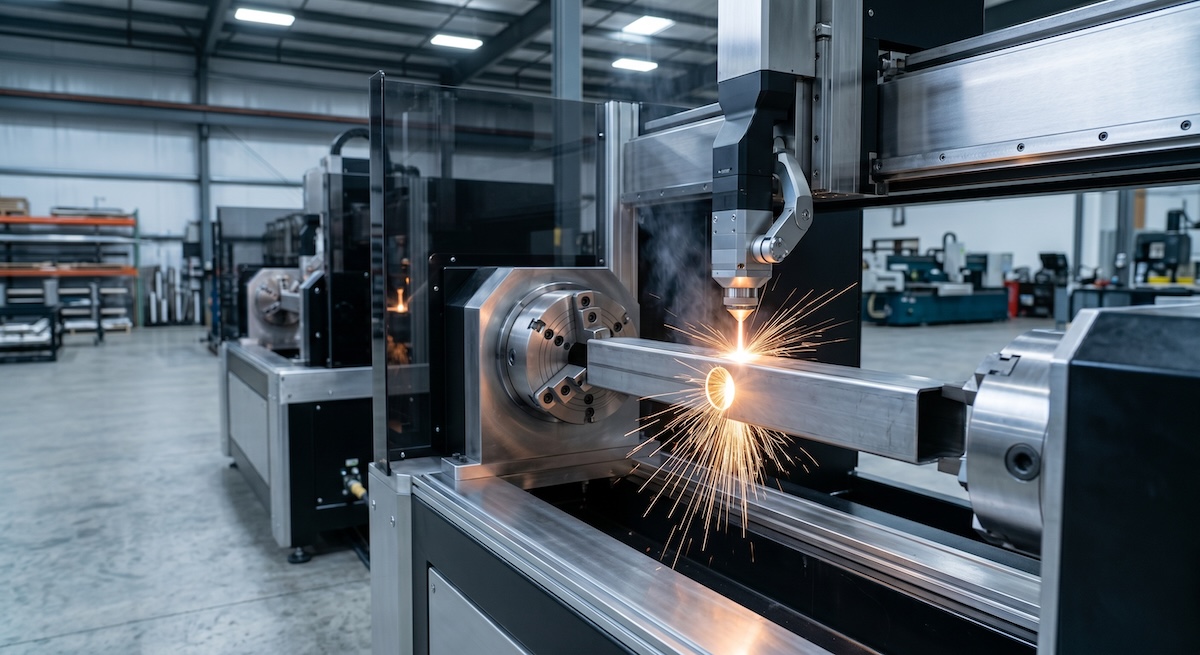
A fiber laser generates light in a solid-state source and carries it through a fiber-optic cable to the cutting head. A CO2 laser generates light in a gas mixture and steers it through mirrors. The wavelengths differ by about ten times: roughly 1.06 microns for fiber and 10.6 microns for CO2.
That wavelength gap explains most of the downstream differences. Fiber has a smaller beam and different absorption in metal. CO2 has a longer path to keep clean. Selmach, a fiber-laser reseller, says CO2 spot sizes can run up to 90 percent larger. That is a vendor claim, but the direction is consistent across sources.
Which laser cuts reflective tube like brass, copper and aluminum?
Fiber lasers are the usual answer for reflective metals. Several machine makers say CO2 beams can reflect back off brass, copper and aluminum and damage optics. The Fabricator article adds that a fiber-optic beam path removes the risk of damage to the entire beam path.
Our reading: if reflective tube is on your bill of materials, confirm the shop's process for it before you send the RFQ. Not every material fits every machine or setup. For a rundown by material, read what materials a tube laser can cut.
Does the laser source change cut speed on tube?
It can on thin material, but tube cycle time is more than cut speed. BLM Group's Robert Adelman writes that the real focus should be how long it takes to load a tube, index it, pierce and cut it, and unload the part. He also says speeds up to 500 inches per minute are possible on tube, but not always realistic.
Vendors claim bigger gaps on thin sheet. AccTek says fiber can cut thin stainless or aluminum up to three times faster than CO2. Selmach says twice or even three times on thin gauge. Treat these as sheet-focused vendor claims. They are not tube cycle-time guarantees.
How do the two compare side by side?
Here is a summary of what the sources we opened say. Vendor pages are marked, because makers and resellers have a stake in the answer.
FactorFiber laserCO2 laserSourceWavelengthAbout 1.06 micronsAbout 10.6 micronsAccTek, Selmach, The FabricatorReflective metalsCan cut brass, copper, aluminumBack-reflection risk to opticsThe Fabricator, AccTek, BLM GroupBeam deliveryFiber-optic cableSeries of mirrorsThe Fabricator, SelmachUpkeepNo mirror cleaning neededMirrors need cleaning and checksThe Fabricator, SelmachThin-material speedVendors claim two to three times fasterSlower on thin gauge, per vendorsAccTek, Selmach (vendor claims)Energy useLower, per all sourcesHigher, per all sourcesBLM Group, AccTek, Selmach
One caution on the numbers. The Fabricator article says the fiber wavelength is 10 percent smaller than CO2, but 1.06 against 10.6 microns is closer to 90 percent smaller. We use the microns, which every source agrees on.
What does tube add that sheet comparisons miss?
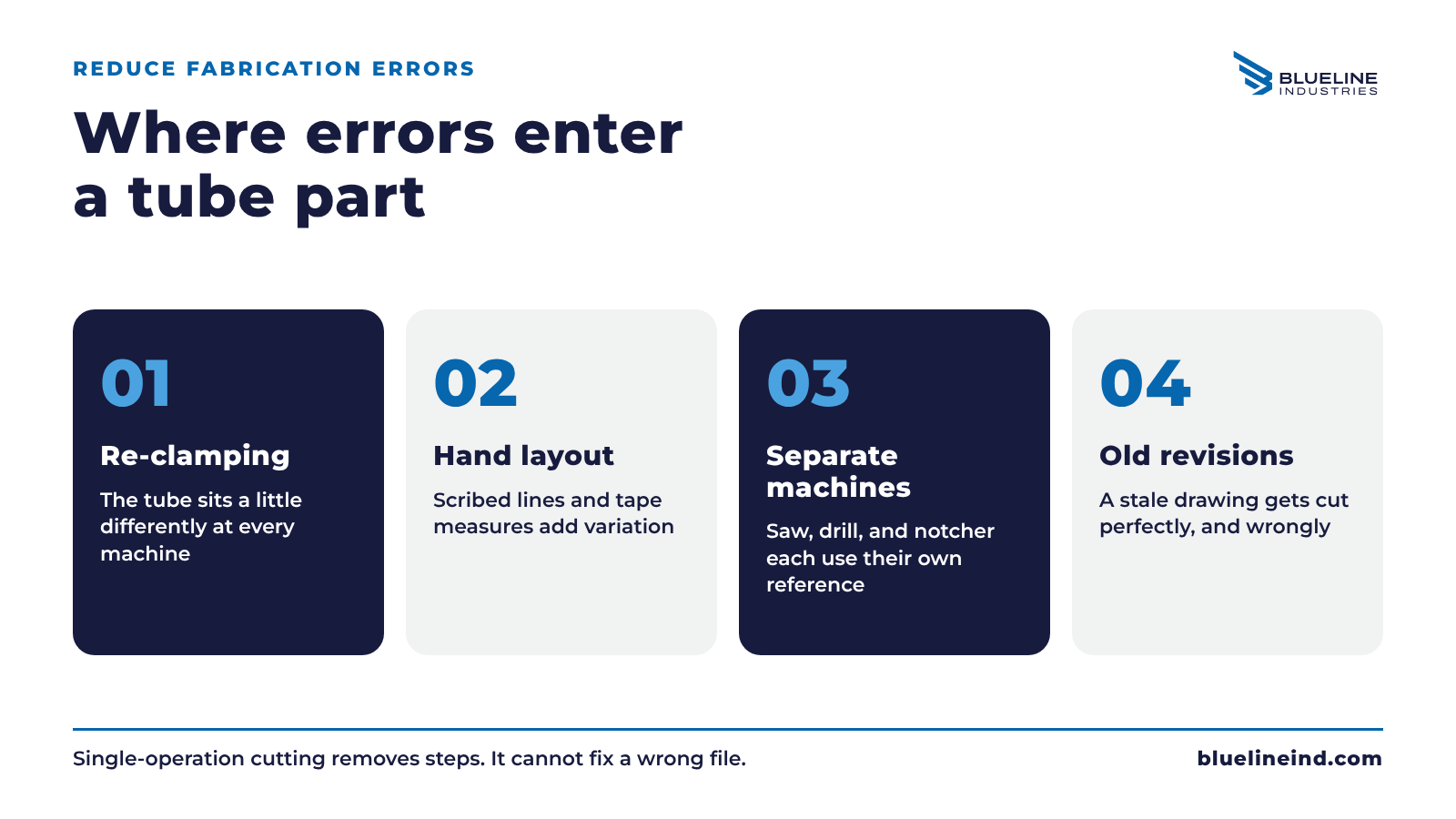
Tube adds round geometry, weld seams, bow and long stock. The Fabricator article notes that tube lasers usually need a maximum of 5 kW, because a more powerful laser would blow through the far wall. Flat-sheet machines can run far higher. A sheet watt rating tells you little about a tube job.
The same article notes that weld seams cut differently, that raw tube has bows, and that standard stock lengths in the U.S. are 24 feet. So the machine's handling, support and measuring matter as much as the source. For more on what a tube machine can take in, see what tube sizes a tube laser can cut.
What should you ask a shop about its laser?
Ask what it means for your parts, not for a spec sheet. A shop that cuts your material, profile and size reliably matters more than the logo on the resonator. Bring these questions to any quote:
Blueline lists its equipment on its site, including LT7 tube lasers (4kW, up to 6 inch square or round, fully automatic), and processes tube up to 13 inch diameter with 5-axis beveling capability. See our tube laser cutting services page for the full picture.
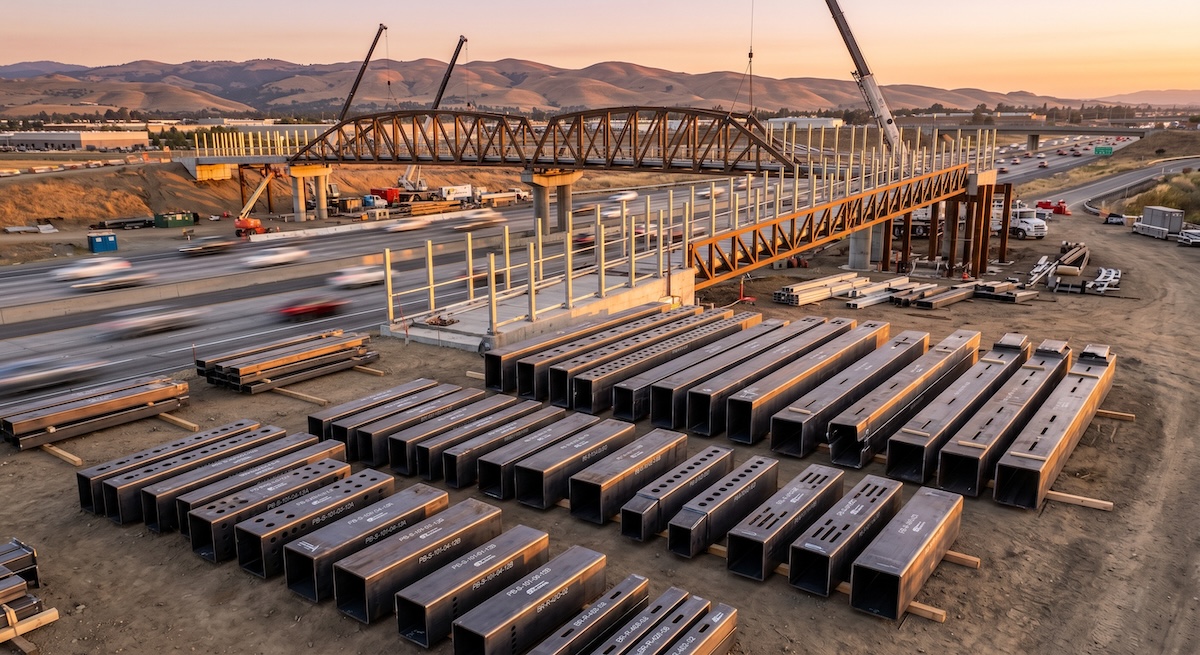
The scale of recent work shows what buyers care about. Blueline's 2025 Coachella Sahara Stage project used over 1 million pounds of steel. At that size, the questions are about fit and repeatability, not beam physics.
FAQ
Is a fiber laser better than a CO2 laser for tube?
Not automatically. Fiber has clear advantages on reflective metals and upkeep, per the sources we read. But tube cycle time depends on loading, indexing, piercing and unloading too. Judge a shop by the parts it makes, not the source alone.
Can a CO2 laser cut aluminum tube?
Selmach says CO2 can cut aluminum but has a drawback, because a large part of the beam reflects back toward the optics. Other sources say CO2 struggles with aluminum. Ask the shop how it runs your grade.
Does more laser power mean a better tube cut?
No. The Fabricator article says tube laser machines usually need at most 5 kW, since more power would blow through the other side of the tube.
Why do vendors give different speed numbers?
Most speed claims come from sheet cutting with specific materials and thicknesses. Tube adds loading, indexing and unloading. Treat any single multiplier with caution.
How do I get a tube laser quote from Blueline?
Send drawings or models, material, tube size, wall thickness and quantity through the contact page, or call (951) 833-5597.
Next step
If you are comparing quotes, send us the print and ask the five questions above. We will tell you what we see. Get a Quote or call (951) 833-5597.
Sources: Robert Adelman, BLM Group USA, What you need to know about laser tube cutting, The Fabricator. AccTek, fiber laser cutting vs CO2 laser cutting. Selmach, Fibre laser or CO2 laser?. BLM Group, laser cutting.