Quick Summary
- Tube notching and coping cut the end or side of a tube so it sits tight against another member.
- Done by hand, these cuts need layout, grinding, and test fits. Done on a tube laser, they are cut in the same cycle as length cuts, holes, and slots.
- Send the mating tube size, joint angle, and weld prep with your file so the cut matches the joint.
- Blueline Industries cuts notches and copes on its tube lasers in Chino, CA and ships to buyers across the West.
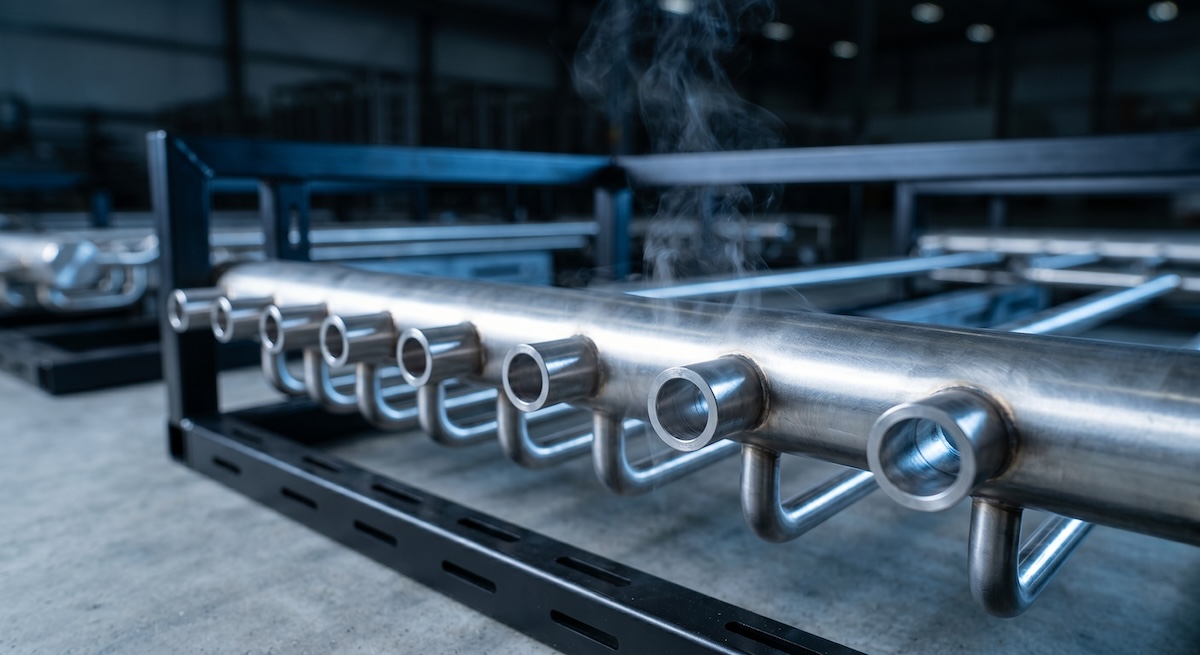
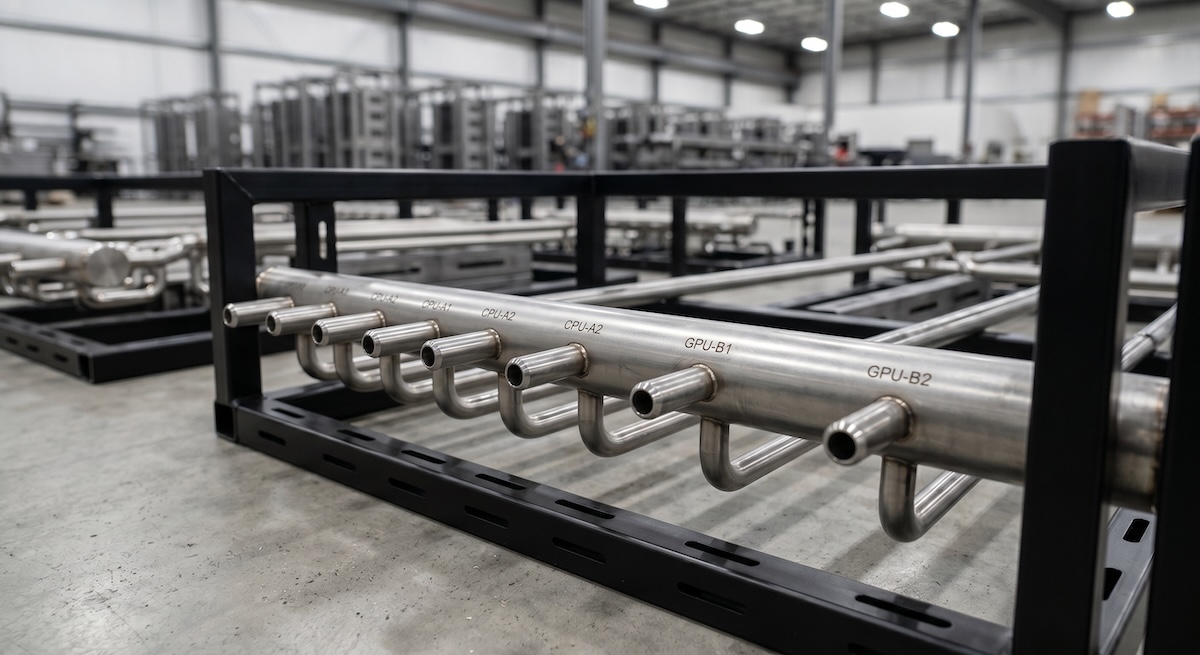
Tube notching and coping cut the end or side of a tube so it sits tight against another member. A tube laser cuts these shapes in the same cycle as the length cut, holes, and slots, so joints arrive ready to fit instead of ready to grind.
Blueline Industries is a tube laser cutting and precision metal fabrication shop in Chino, CA. This post explains what notches and copes are, why they are slow by hand, how a laser handles them, and what to send with a quote request. It is written for fabricators, frame builders, and buyers who weld tube into frames and assemblies.
What are tube notching and coping?
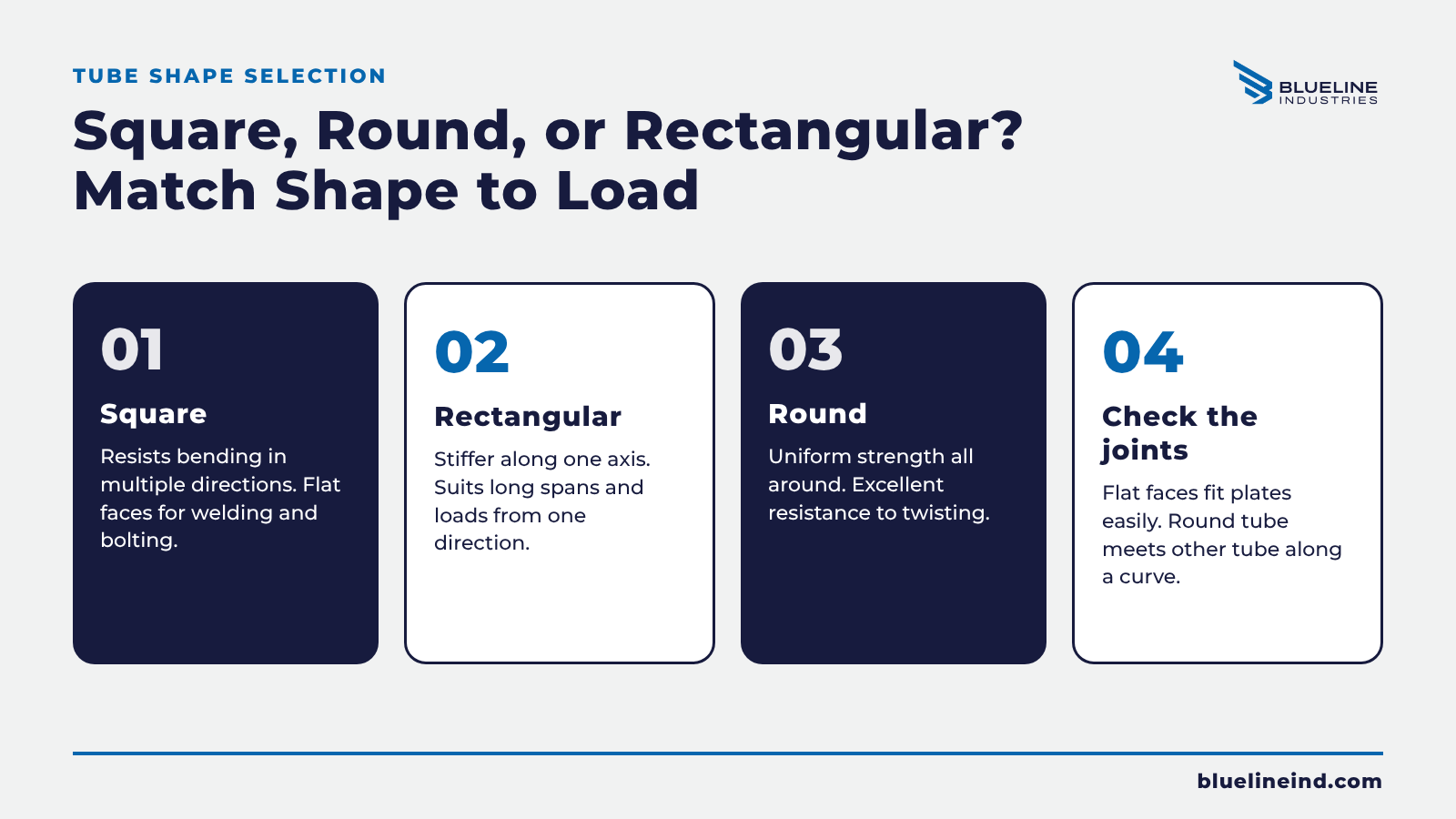
A notch is material removed from a tube so it fits against or around another member. A cope is a notch shaped to match the curve of the mating tube, often called a fish mouth or saddle. Both exist so two tubes meet with a tight, even joint.
Notch
A notch is a relief cut in the end or side of a tube. One source describes notches as relieved ends for fitting into adjacent members. Notches let tubes cross, nest, or sit flush.
Cope
A cope is the curved cut that lets one round tube meet the side of another. The same idea applies to square and rectangular tube, where the cut follows the mating shape. The goal is a small, even gap for welding.
Miter
A miter is an angled end cut for a corner joint. It is not a cope, but it is cut on the same machine and often sits on the same part, so it belongs in the same drawing review.
Why are manual notching and coping slow and inconsistent?
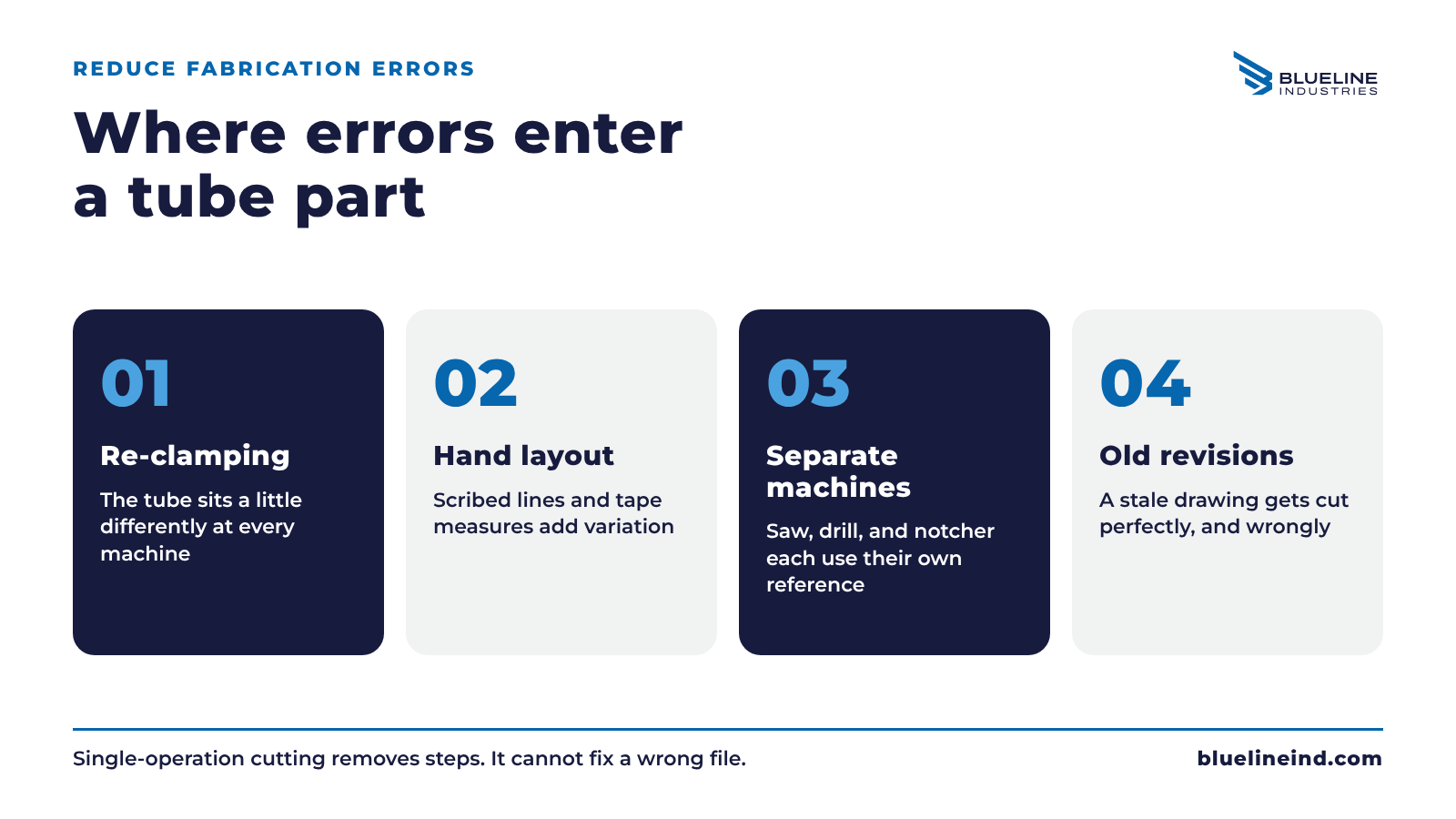
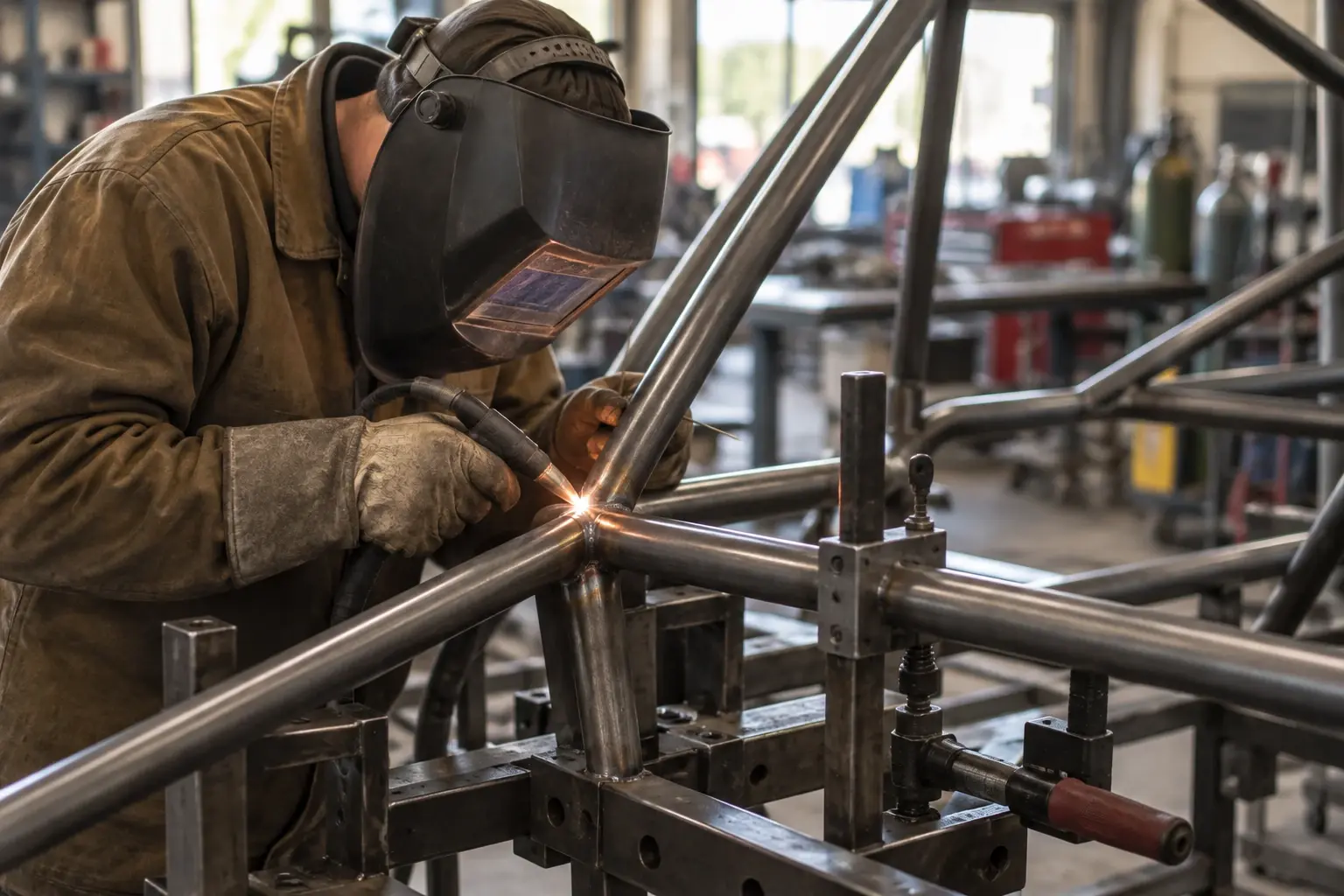
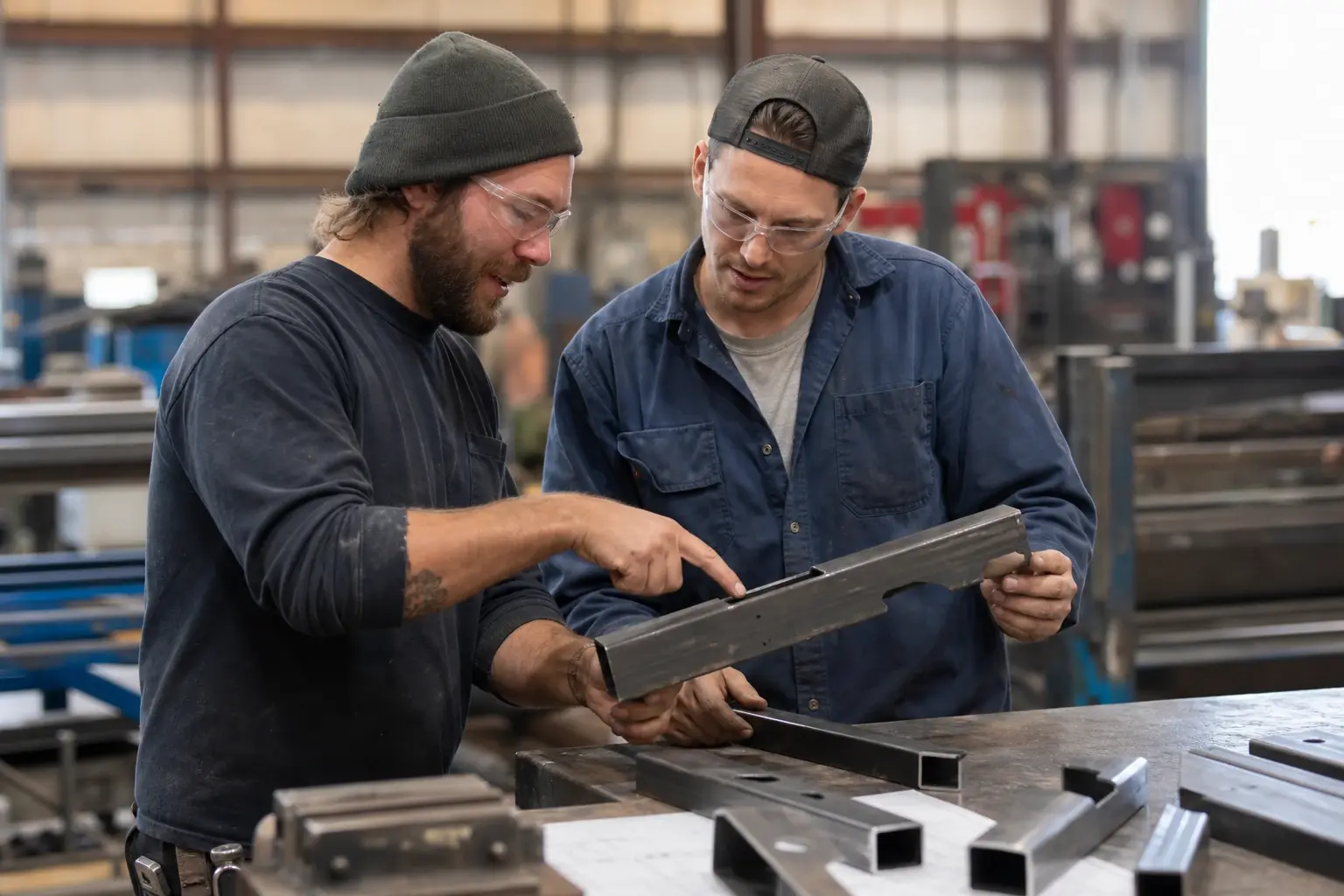
Because each joint needs layout, cutting, and fitting by hand. A person marks the shape, removes material with a saw, notcher, or grinder, then test-fits and corrects. The result depends on that person's eye and the tool, so no two joints match exactly.
One equipment supplier calls milling notches or fish-mouth saddle joints a labor-intensive process that requires high-end tooling, multiple setups, and hours of manual grinding. A steel fabricator makes a similar point: a grinder can cope a joint but leaves rough, variable edges that need rework before welding.
That same fabricator says hand-coping takes 15 to 30 minutes per joint, while a laser does it in under a minute. Those are the vendor's own figures, not Blueline's. Use them as a sense of scale, then ask any shop for numbers on your part.
On a frame with dozens of joints, the time is not the only cost. Every hand-cut joint is a chance for a gap, an angle error, or a part that does not match its twin.
How does a tube laser cut notches and copes?
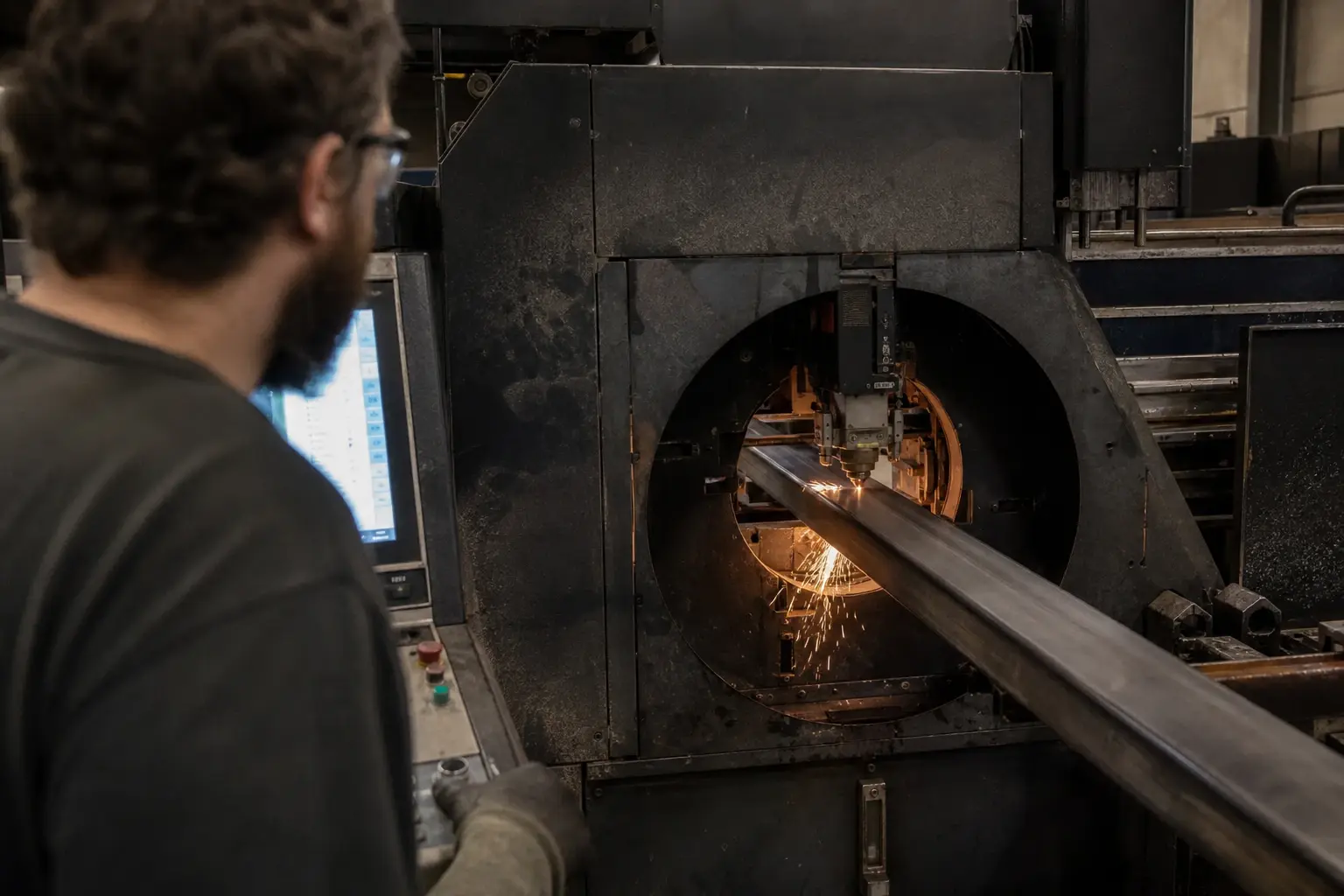
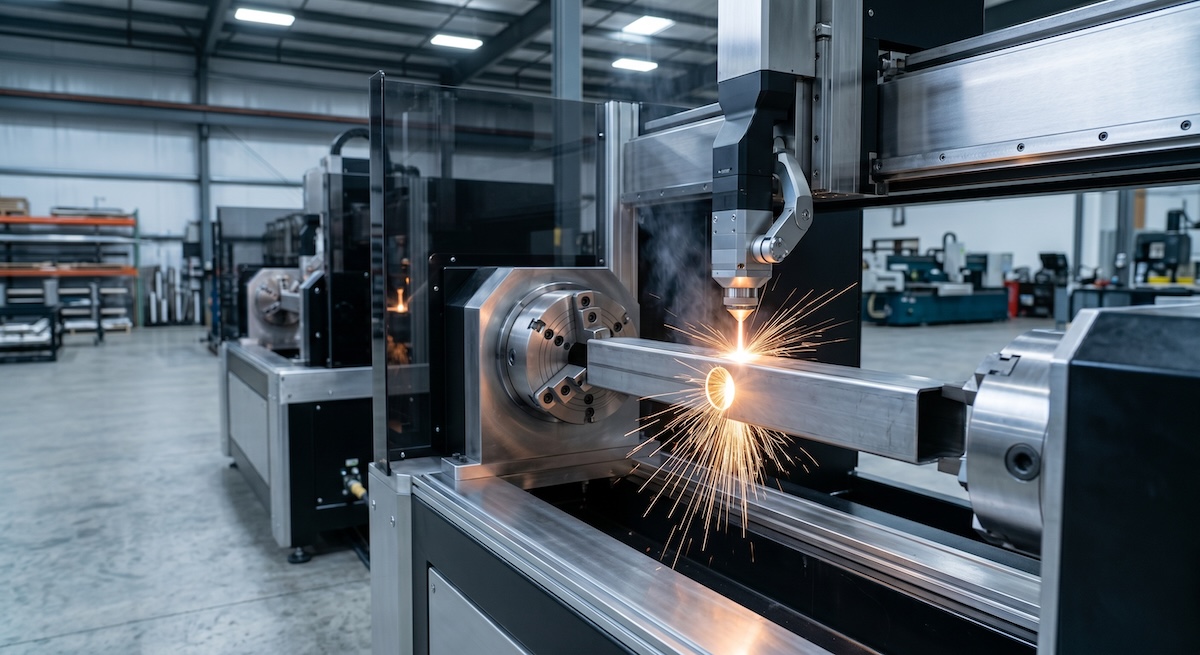
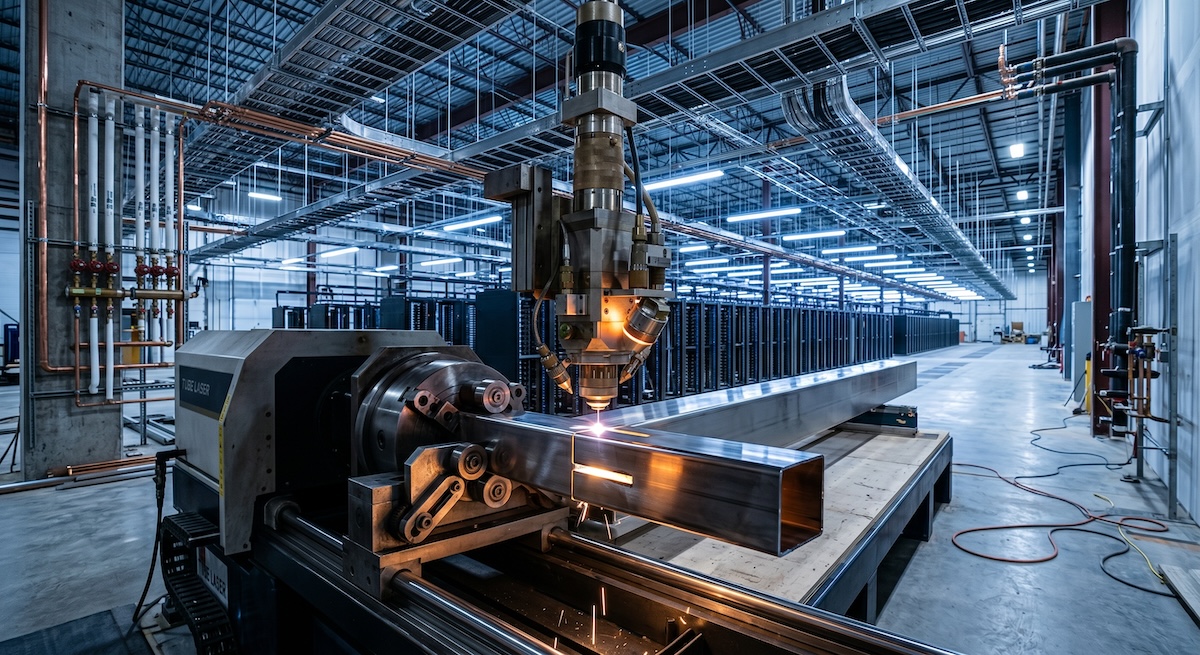
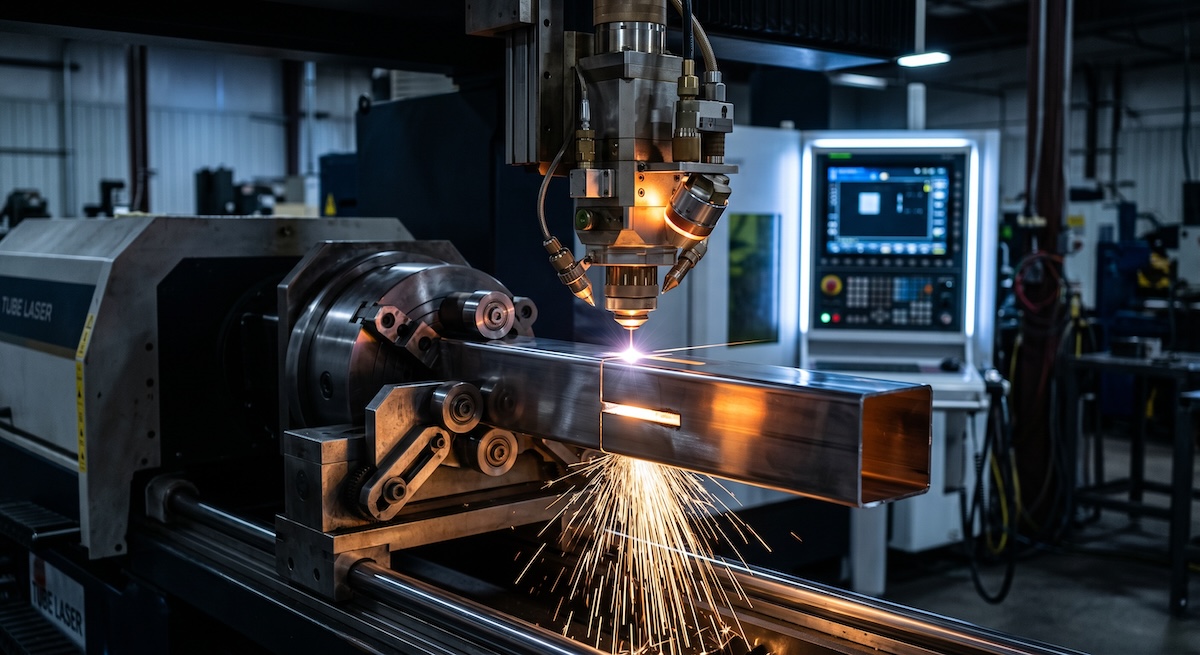
A tube laser holds the tube, rotates it, and moves a cutting head around it. A 3D head follows the joint shape from your CAD file. Notches, copes, miters, slots, and holes are cut in one cycle, so the tube is not moved between machines.
That matters for fit. Blueline states that its LT7 tube lasers process square and round tube up to 6 inches, and that it processes tube up to 13 inches in diameter with 5-axis beveling capability. Beveling puts an angled edge on the cut, which can prepare the joint for welding.
Blueline also states that it holds tolerances of plus or minus 0.003 inch and that single-operation processing reduces error rates by up to 70%. Those are the shop's own claims, so confirm what applies to your tube and joint when you request a quote.
The equipment supplier notes that a 3D laser head handles these geometries as part of the primary cutting cycle. It adds that parts can act as their own jigs during final assembly, which cuts down on welding fixtures.

Manual cutting versus the tube laser
| Step | Hand layout and grinding | Tube laser |
|---|---|---|
| Layout | Marked by hand on each tube | Programmed from the CAD file |
| Setups | Saw, notcher, or mill, then grinder | One cycle on one machine |
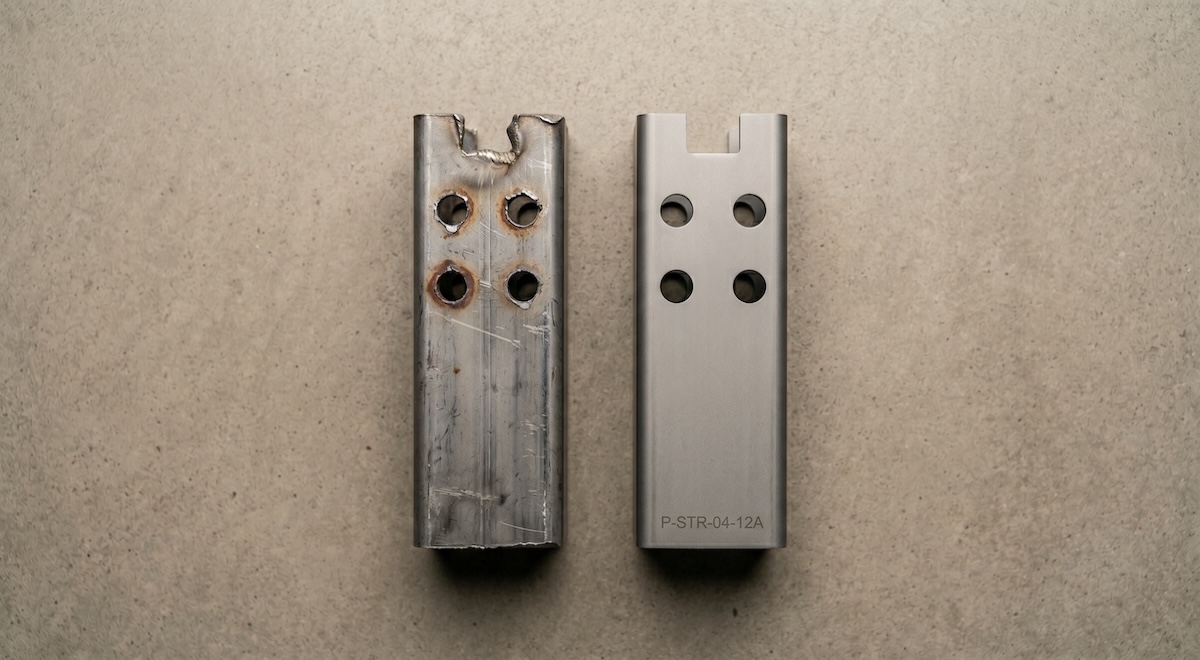
| Edge for welding | Rough or variable until reworked | Clean cut edge, with beveling available |
| Matching parts | Depends on the person and the tool | Same program, same cut |
| Fit-up | Test fit and correct | Parts can self-locate with tabs and slots |
What should you send for a notching or coping job?
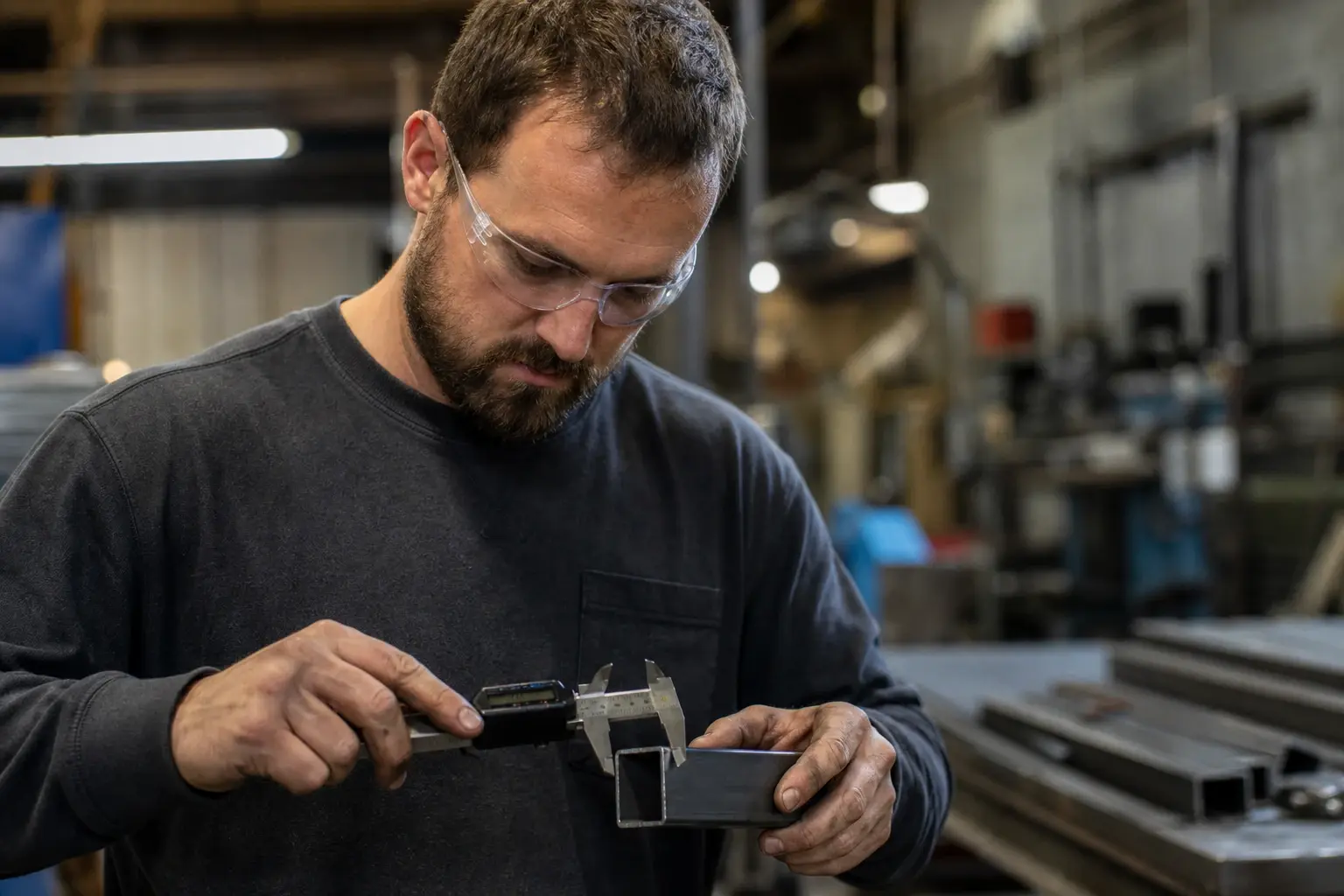
Send the tube size, wall thickness, and material, plus the size and angle of the mating member. Add the joint type, weld prep, quantity, and a CAD file. The laser cuts what the file says, so the joint details have to be in it.
- Tube shape, outside size, wall thickness, and grade of the tube being cut.
- Size and shape of the tube it meets, and the angle between them.
- Whether you need a plain cut or a bevel for weld prep.
- Any holes, slots, or tabs that should be cut in the same pass.
- Quantity, and whether the part is a prototype or a repeat order.
Our CAD file checklist covers file prep in more detail. If your joint is complex, mark which features are critical and which are not.
When is a laser not the right tool for a cope?
A laser is a poor fit when the tube is outside machine capacity, when you need a single field fix, or when the shape cannot be defined in a file. It shines on repeat parts and joint-heavy frames, where consistency matters more than any one cut.
Check your tube size against capacity first. Our post on tube sizes a tube laser can cut explains the limits. For a side-by-side look at older methods, read tube laser vs saw and drill.
A project where repeatable joints mattered
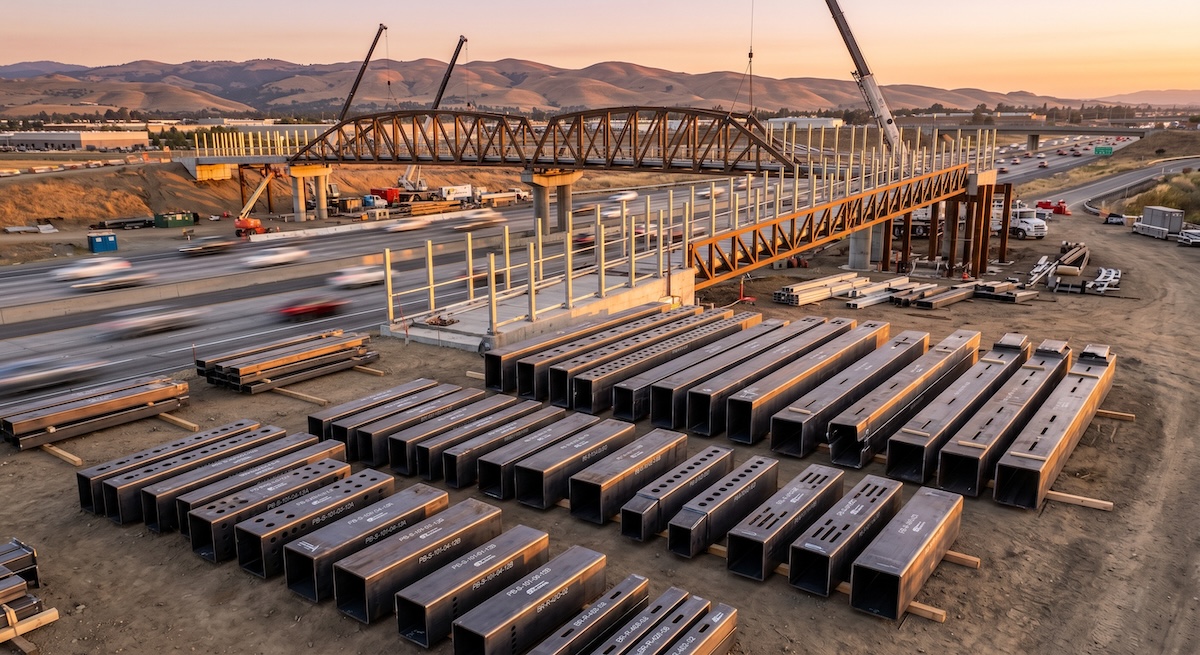
Blueline processed more than 500,000 pounds of steel for the Caltrans I-5 pedestrian bridge in Irvine in 2025. On a job that size, any cut that repeats hundreds of times has to repeat the same way. That is the case for programmed cuts over hand layout, whatever the joint type.
Frequently Asked Questions
What is the difference between notching and coping?
A notch is any relief cut that lets a tube fit around or against another member. A cope is a notch shaped to the curve of the mating tube, often called a fish mouth or saddle. Every cope is a notch, but not every notch is a cope.
Can a tube laser cut a fish-mouth joint?
Yes. A 3D tube laser head follows the joint shape from your CAD file, so a fish mouth is cut in the same cycle as the length cut. Send the mating tube size and angle so the cut matches the joint.
Does laser coping remove the need for grinding?
It reduces it. A steel fabricator says laser-cut joints need minimal weld prep, while hand-coped joints often need rework. You may still deburr or clean parts to suit your weld process, so ask your shop what finish to expect.
What tube can Blueline notch and cope?
Blueline works with steel and stainless steel tube. It states that its LT7 tube lasers cut square and round tube up to 6 inches and that it processes tube up to 13 inches in diameter. Send your tube size with your quote request to confirm.
Can the laser add weld bevels while it copes?
Blueline states it has 5-axis beveling capability, which puts an angled edge on a cut. Tell the team which joints need a bevel and at what angle, and they can advise how it fits your part.
Get joints that fit off the machine
Notching and coping do not have to be a grinding job. Send your drawing and tube specs to the team in Chino, CA, and they will tell you how the joints can be cut.
Ready to start? Get a Quote or call (951) 833-5597. You can also review our precision slotting, notching, and hole cutting service and our tube laser cutting services.